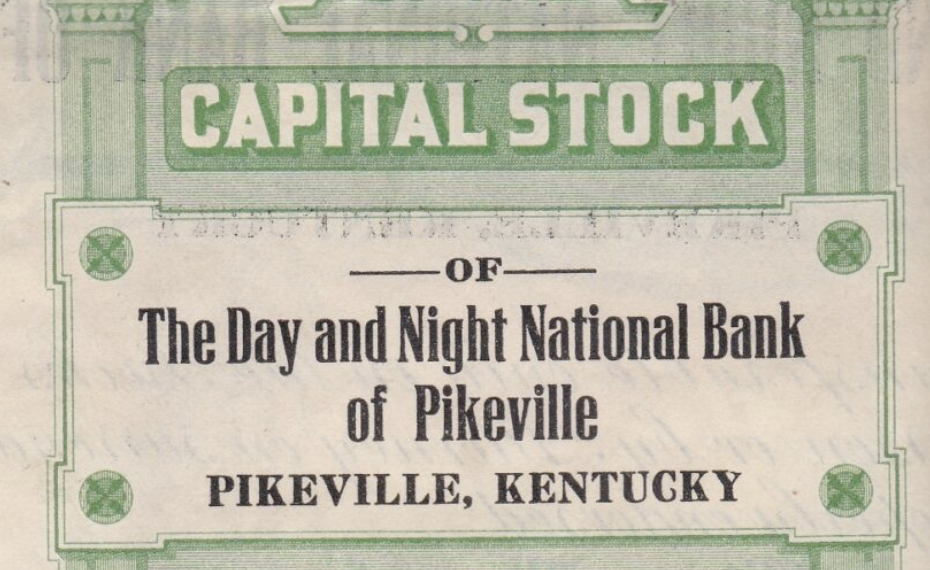
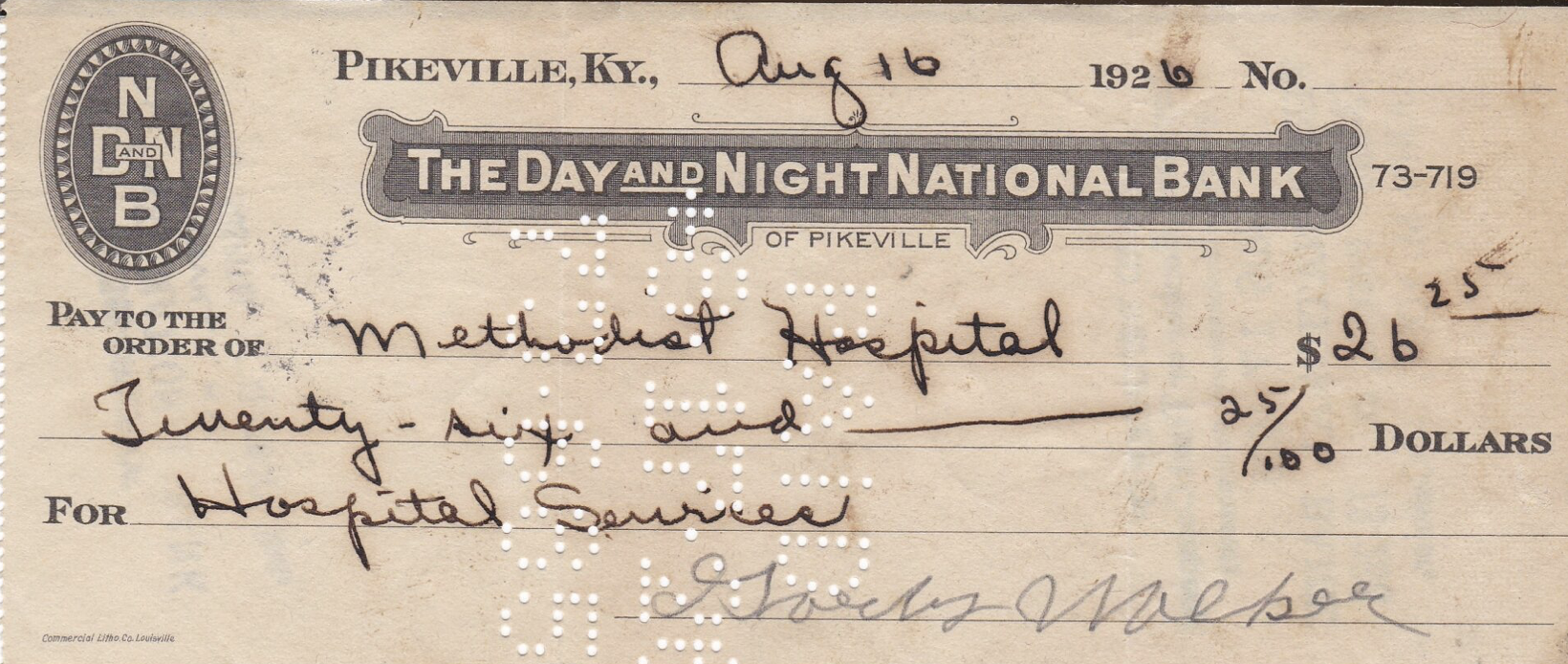
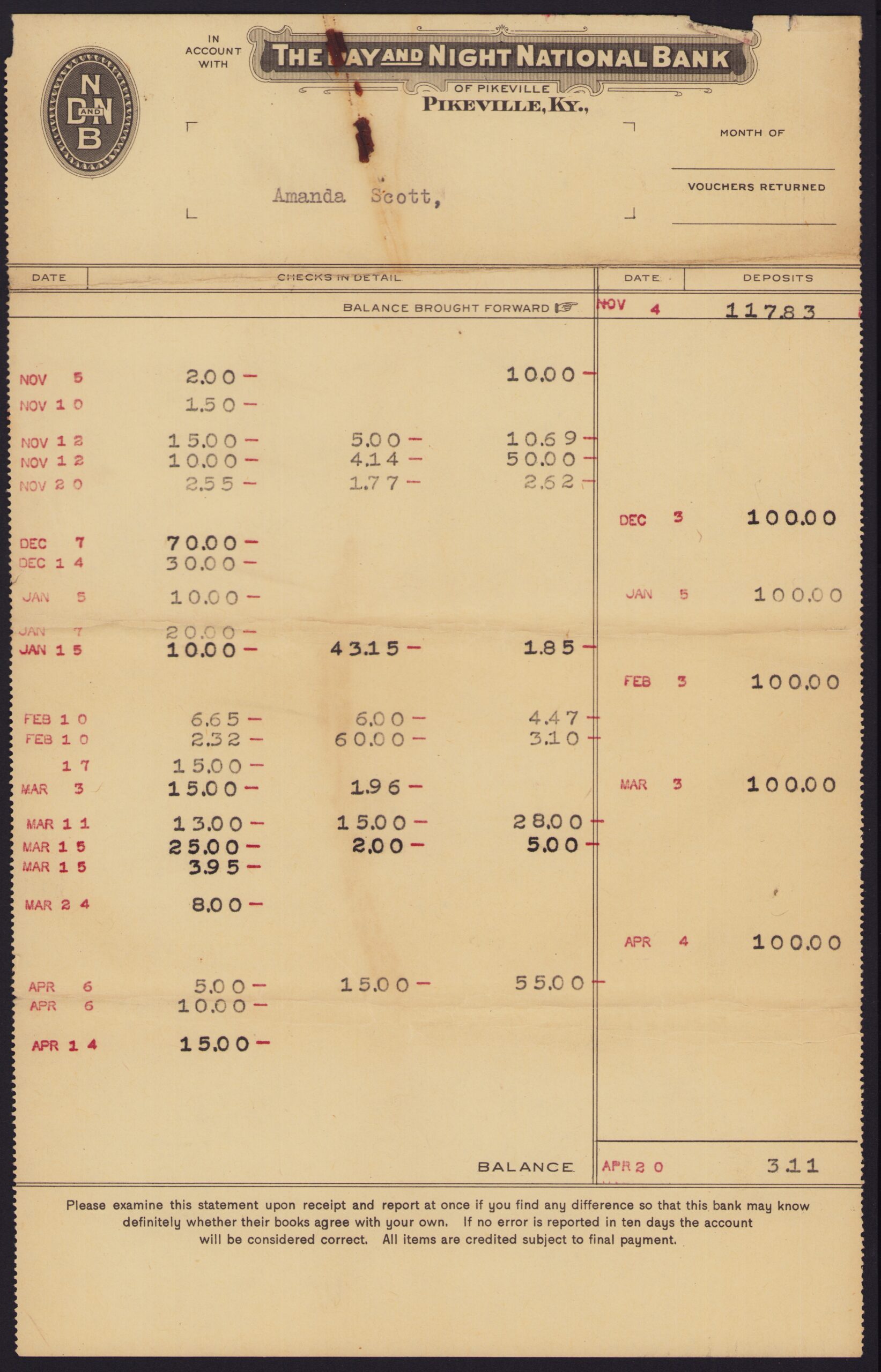
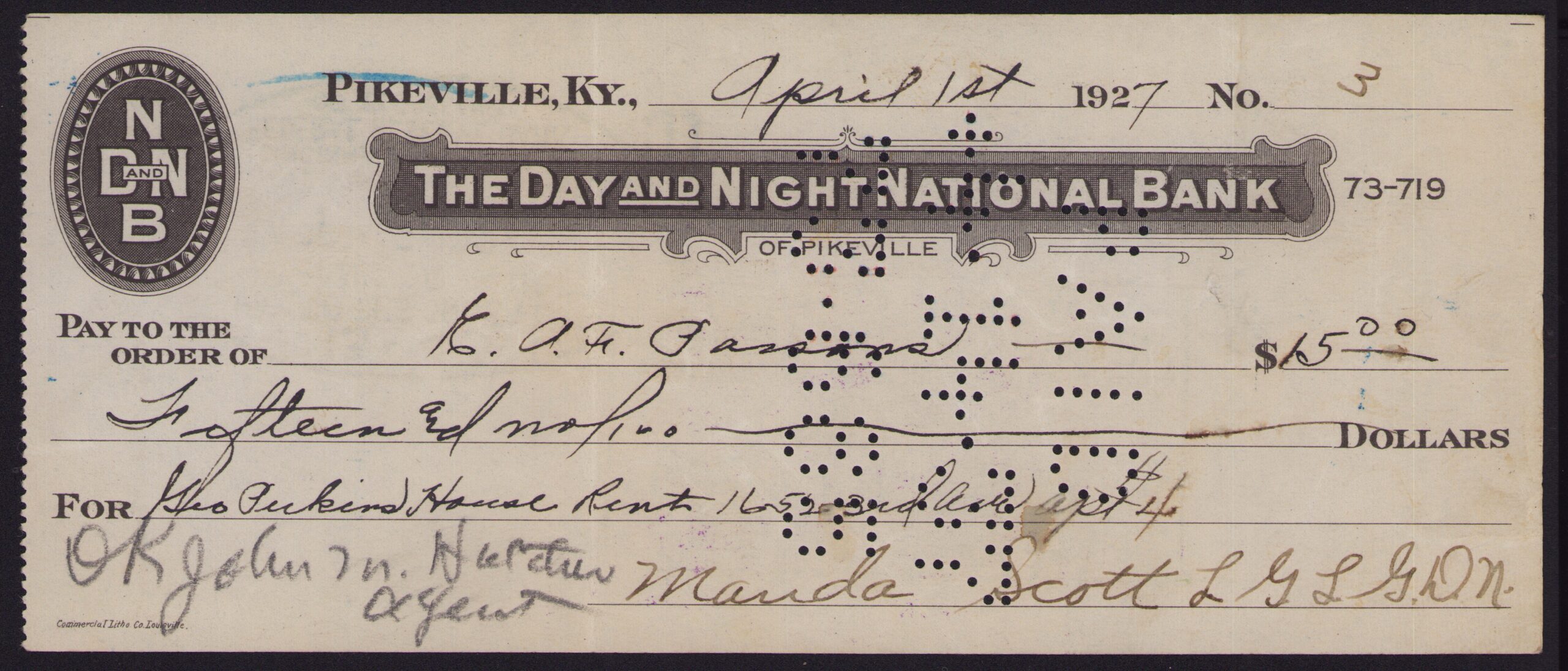
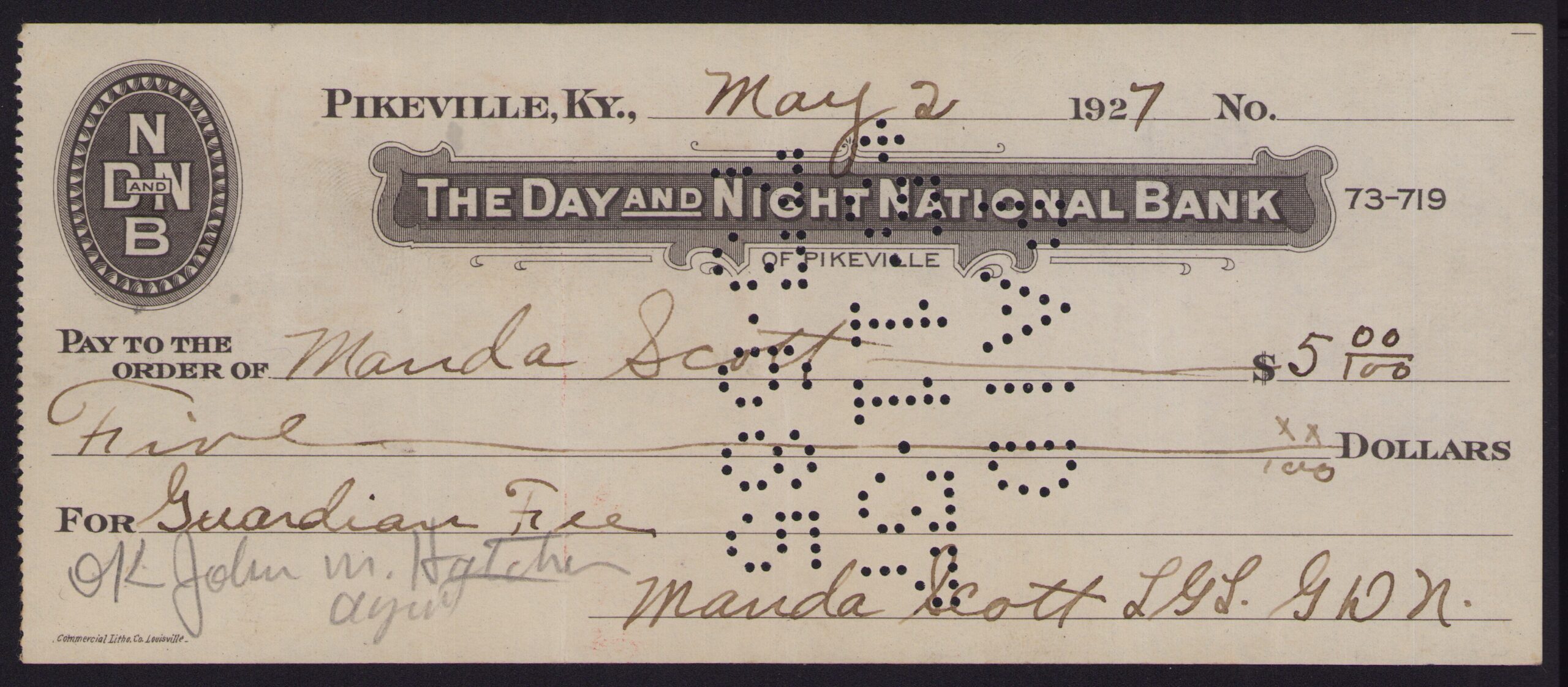
The Day and Night Bank of Pikeville National
It is after dark. You have just gotten off of work and need to make a bank deposit in order to “beat” a check. However, there is one problem. It is past 4 p.m. and the bank is closed. Use: the automatic teller machine? No. The year is 1921 and such a device has yet to be invented. Now what? Well, if you are in the neighborhood of the Day and Night National Bank of Pikeville, Ky., you are in luck. It stays open till 8:30 p.m.
The bank was located in Pikeville, Ky., a city of 2,500 inhabitants that supported three national banks and one state-chartered institution during the 1920’s! Pikeville, the seat of Pike County was originally named Piketon, after General Zebulon Pikas a is, decided os change the name of the post office to Pikeville.
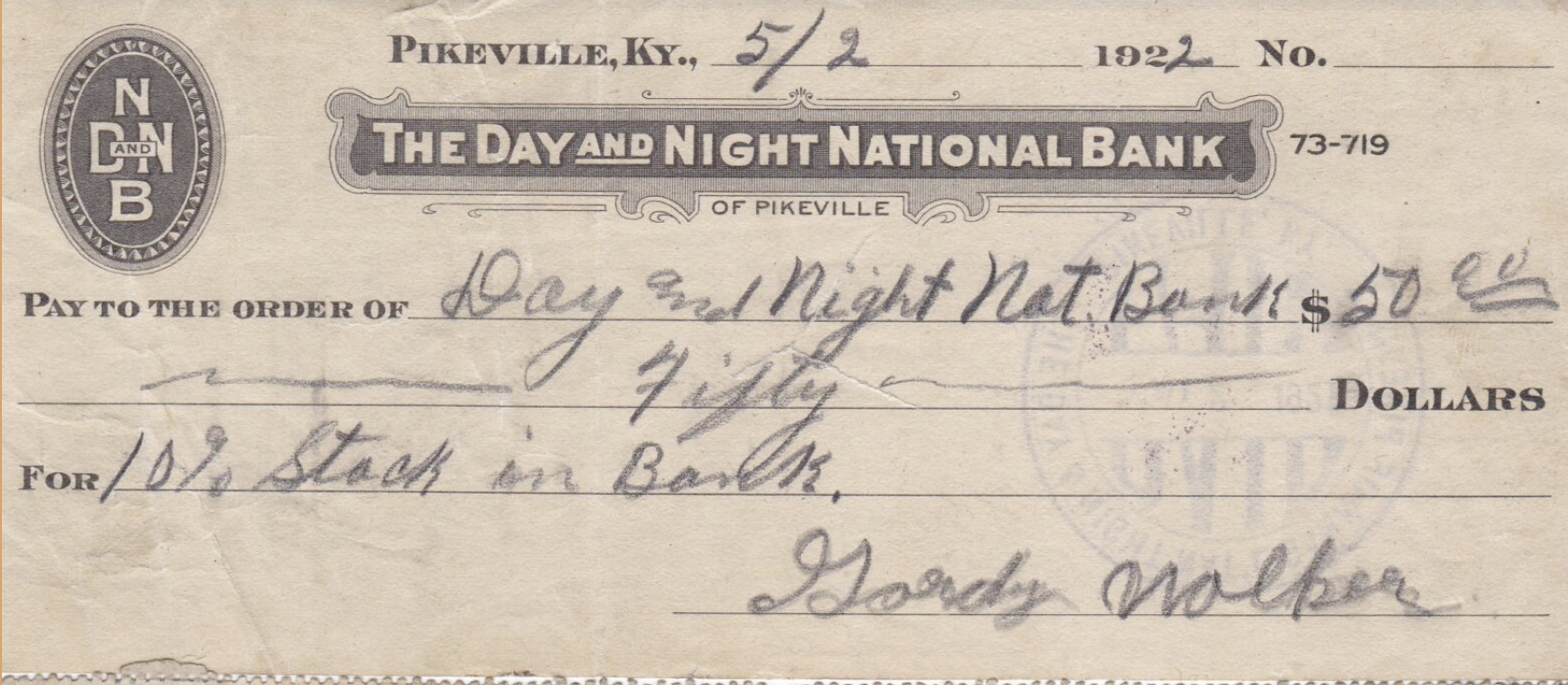
The town sits in a rich coal region of the. Cumberland Plateau in eastern Kentucky. To the north lies Mingo County, West Virginia, which is across the Tug Fork of the Big Sandy River. This territory was the site of the Hatfield-McCoy feuds of the 1880s and 1890s. To the east and south is the state of Virginia.
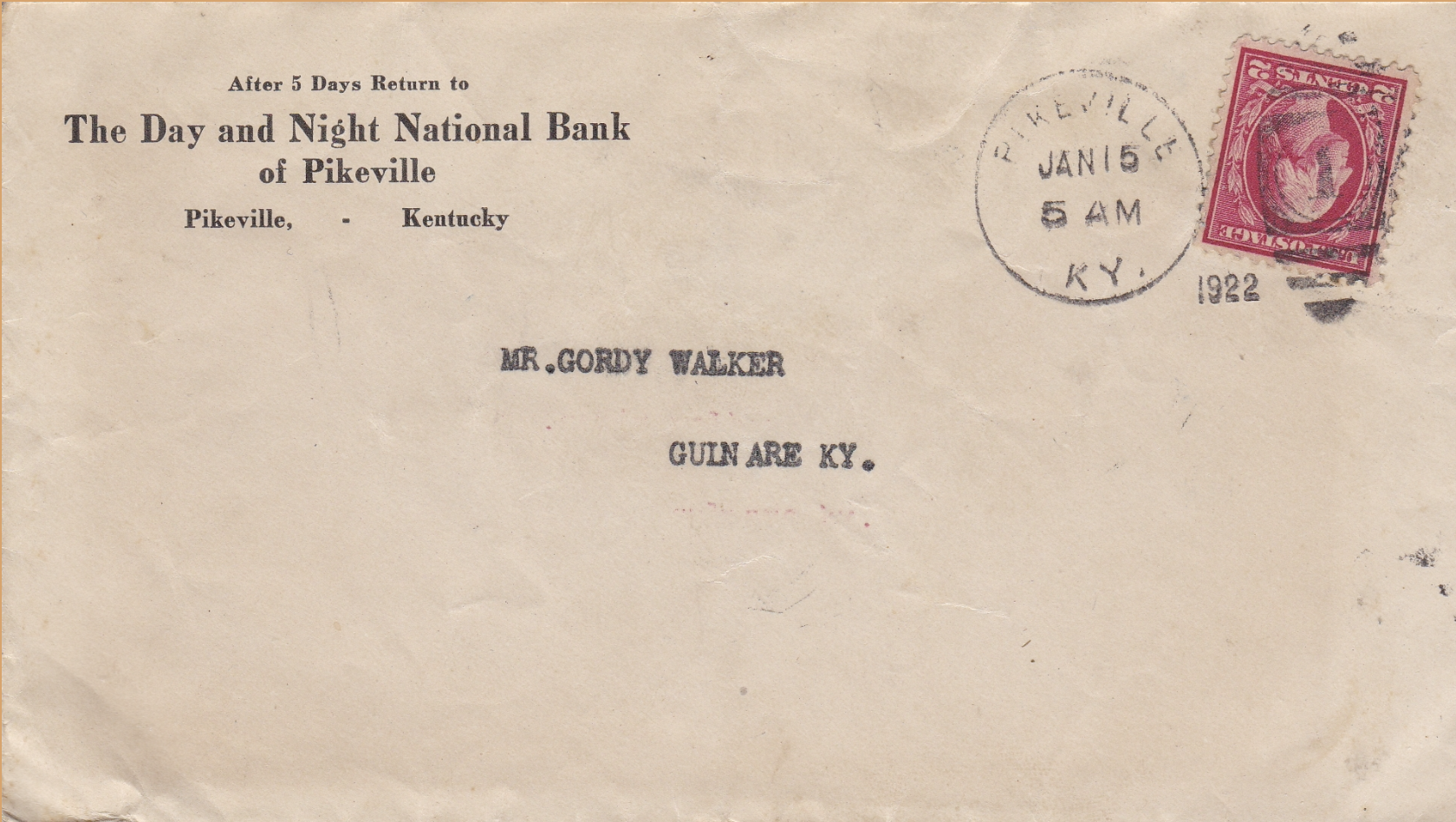
The entire tri-state region is rich in bituminous coal reserves which were first tapped after eastern states timber barons stripped the land of its virgin forests during the latter part of the 19th century. Rich coal seams were discovered in the area 30 years prior to the opening of Pike County to the world in 1905 with the coming of the railroad, but it was not until this time that Pikeville and Pike County began to see unprecedented growth population, wealth and finally banking.
The first bank in Pikeville was named the Bank of Pikeville, which was charter by an act the Kentucky Legislature in 1889. The bank received a federal charter in 1903 and became the First National Bank, Charter 6622. Later in 1903, a few prominent businessmen got together and formed the Pikeville National Bank, Charter 7030.
The growth rate of the two national banks was slow but steady until 1915, when an increasing demand on coal utility companies and steel plants demanded sizable shipments of coal out of the county to markets in Pittsburgh, Cincinnati, Chicago and other cities. Then came the presidential election of 1920. This was a contest between Ohio Republican Warren G. Harding, and Ohio Democratic candidate James M. Cox. The election was practically a landslide for Warren Harding. In those days in the “mountain areas” Kentucky, politics was a serious business. The year 1920 was definitely not an exception in Pikeville.
The president of Pikeville National Bank, Fon Rogers, was a Republican and a strong backer of Harding. Tom Williamson, a Democrat, was an equally strong supporter of Cox. During the closing days of the election campaign in Pikeville, the two men who were good friends and business associates, became angry towards one another. Williamson, who was the operator and general manager of the Pikeville Builders Supply Company, began circulating anti-Harding pamphlets and signs around town. Rogers followed Williamson around town on election day and tore down the signs that Williamson and friends had posted. Williamson received word that Rogers and his cronies were destroying these “libelous” signs, and Williamson pursued Rogers to settle the matter. When the two men approached one another, harsh words were spoken and the two men almost came to blows. Williamson had a fair amount of money on deposit at Pikeville National Bank. Just after the election, Williamson withdrew his money at Pikeville National and moved his accounts to the People’s Bank of Pikeville. Since Pikeville National’s inception in 1903, Williamson had been a depositor, but no more. Another prominent Pikeville resident, Hatcher, decided he and Williamson would raise the required capital and form their own national bank.
On December 14, 1920, Hatcher, Williamson and US Senator AO Stanley of Kentucky, contracted
Stanley of Kentucky, contacted the “outgoing” democratic Comptroller the Currency, John Skelton, Williamson asked his department to reserve the title, “Day and Night National Bank and Trust Company,” for their new bank. Also, on Dec. 14, 1920, Sen. Stanley wrote the Comptroller, “The intention of the organizers of the institution is to conduct both a banking and trust company with a capital stock of $300,000, and to, keep same open for business both day and night, the night service being desirable because the peculiarly large volume business to be done with miners and others who visit the town only at night.”
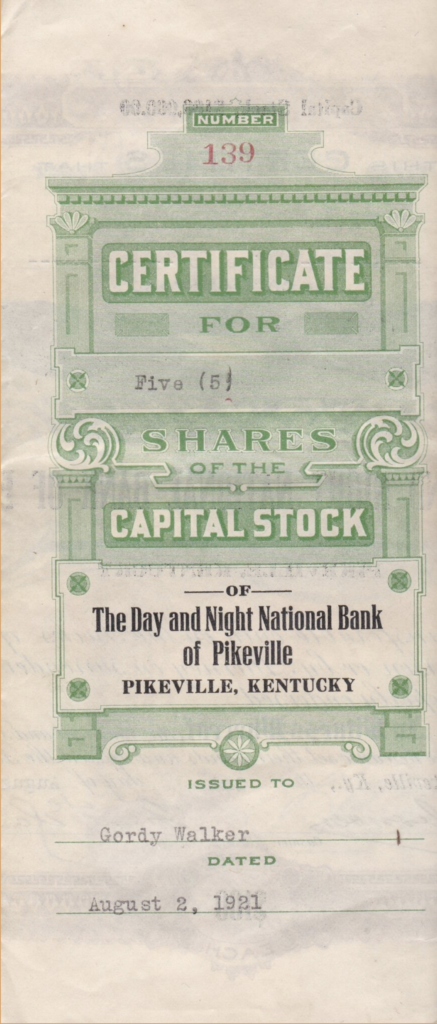
Later, the night portion of the business was amended. The incorporators did not intend to keep the bank open 24 hours a day. With the personal visit of these three men to the Comptroller’s office and the follow-up letter by Sen. Stanley, the door was open for the new bank to be granted a charter to begin business. The Application to Organize a National Bank was returned to the Comptroller bearing the date of Jan. 1, 1921, along with the new requested title, “The Day and Night National Bank of Pikeville.” A bank draft was sent along with, the application to the Comptroller’s office for $100. The $100 was the minimum fee acceptable to cover Bank costs of a district National examination recommendations for or against charter.
Of course, there was a need to expedite the granting of this charter. Williams, the Comptroller of the Currency, was departing with the Wilson administration, and the chances were significantly reduce having a charter granted reduced having under the new administration because of the political disputes that led to the application organize the bank.
Upon receipt of the application fee, the comptroller’s office on Jan. 7, 1921, directed the National
Bank Cleveland, Examiner at Ohio, William J. Schechter, to authorize an agent to travel to Pikeville to conduct an investigation. Mr. then recommended bank examiner John Chenault of Maysville, Ky., to travel to Pikeville. Rep. John W. Langley a Republican, who’s hometown was Pikeville, telephoned the Comptroller on
Jan. 22, 1921 requesting that he delay action on the application. No doubt Langley was pushing for delay in hope the new administration would deny the proposed bank’s charter. Langley was also a personal friend Fon Rogers, president of the Pikeville National Bank.
On Jan. 24, 1921 investigator the sent to Pikeville wired his boss in Cleveland that he did not the “another institution, in the meantime, throughout January • and early February 1921, Pikeville’s merchants were actively engaged in a letter writing campaign directed at the comptroller against organization. On Jan. 31, 1921, National Bank Examiner Chenault issued his recommendations against organization, and I paraphrase from a letter on file at the National Archives Washington D.C. standing “on the character the applicants good, and each has attained success in their respective line of business; but not one of them has ever had any experience in the banking business, and prospective officers have been selected. The number of subscribers to the new stock is large and widely distributed, over 225, “It appears to me that the existing banking facilities are the expense of the now existing banks, which are rendering satisfactory service to the community…” Chenault elaborates further, “…it is my opinion that the sober second thought of the best interest of this community does not approve of the division of its banking business along political lines. I therefore recommend that the application be disapproved.”
On Feb. 5, 1921, Chenault’s superior, Mr. Congdon, agreeing in principle to Chenault’s opinions came to a different conclusion and the charter. 1921, Comptroller Williams advised the proposed bank’s main Tom Williamson to organizer, lower the capitalization to $100, 000 instead of the original $300,000.
The Comptroller’s only reservation for the Charter was that experienced bank man be secured to run the day-to-day operations of the bank. In several letters dated Feb. 16, 1921 to Sen. Stanley, Sen. Beckham of Kentucky, Williamson, the and Comptroller finally approved the application. The Day and Night National Bank of Pikeville, Ky.
On Feb. 18, 1921, a five-page letter delivered to the comptroller: from Fon expressing Rogers, outrage Williams granted the charter. All of this was done just two weeks prior change administrations. On March 2, 1921, the charter certificate assigning number 11944, was sent to F. Tom Hatcher, the new president of The Day and Night National Bank. Williamson was appointed cashier of the new bank. Carl Williamson was formerly the First National Bank assistant cashier. Thus, Comptroller’s stipulation that an experienced bank man be found to operate the bank was met. On April 11, 1921, Tom Hatcher advised Comptroller’s office that the bank had commenced business on that day.
BY Aug. 3, 1921, the last of seven installments on the $100,000 capitalization was paid to
Treasury department by the bank.
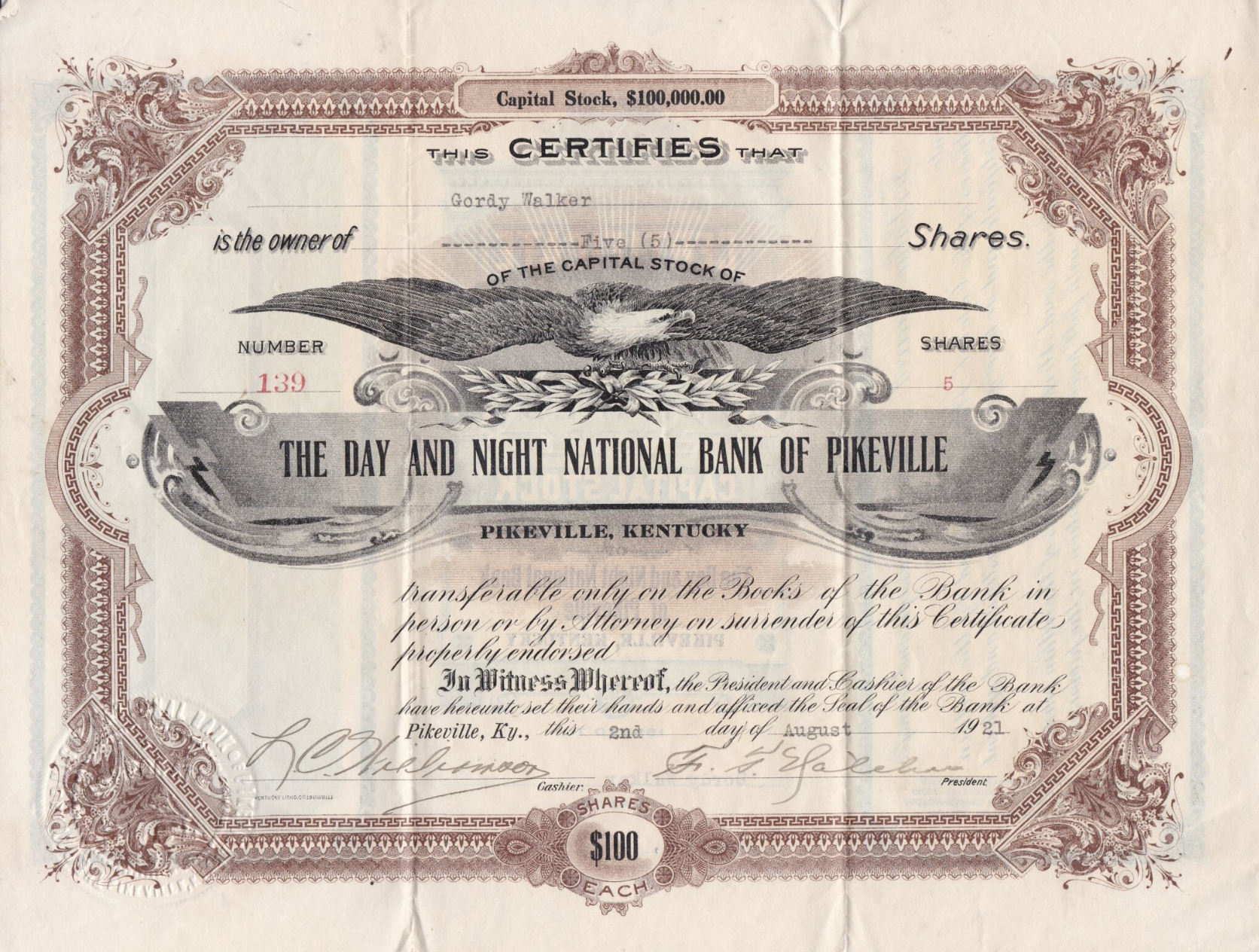
The banking hours were set at 8:00 a.m. to 8:30 p.m. daily, excepting Sunday’s and holidays. These hours were unusual for a big city bank, let alone unusual for a small-town bank. The later arrival a small-town main passenger train to Pikeville was a primary reason for the late closing hour. The 4 p.m. closing time set by the two other National Banks inconvenienced some residence and visitors. Some visitors would have to spend the night in town if they needed to conduct banking business. The Day and Night Bank’s conclusion would be better served by extending banking hours.
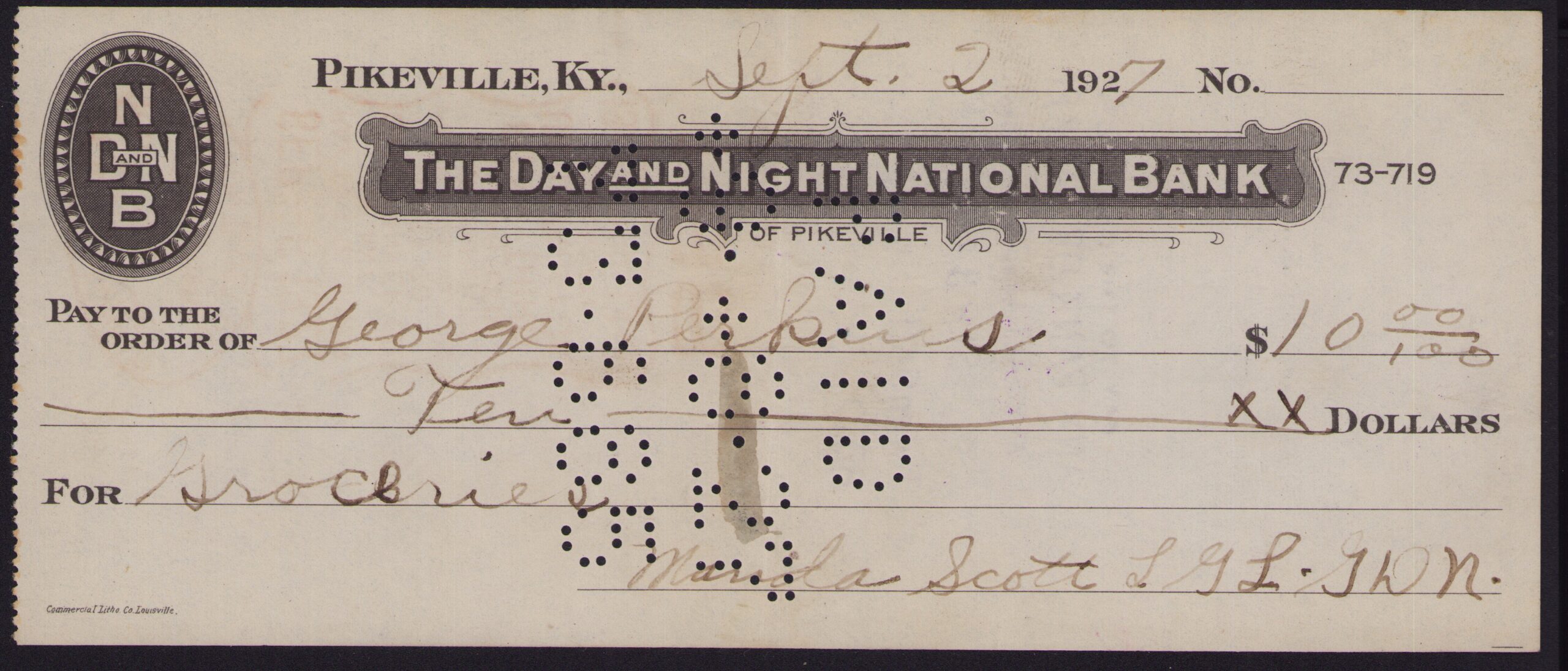
Advertising from 1924
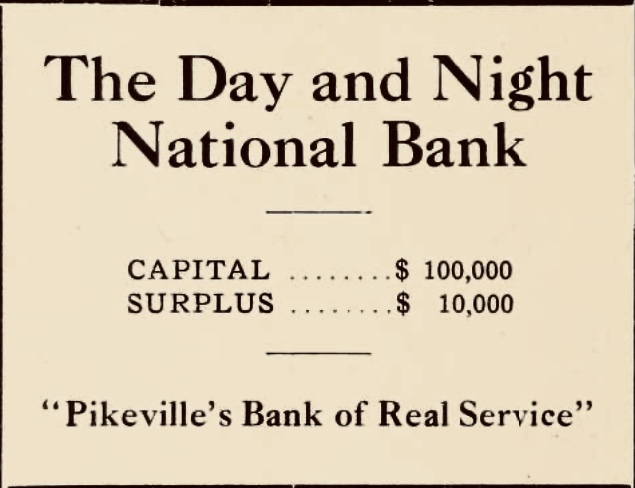
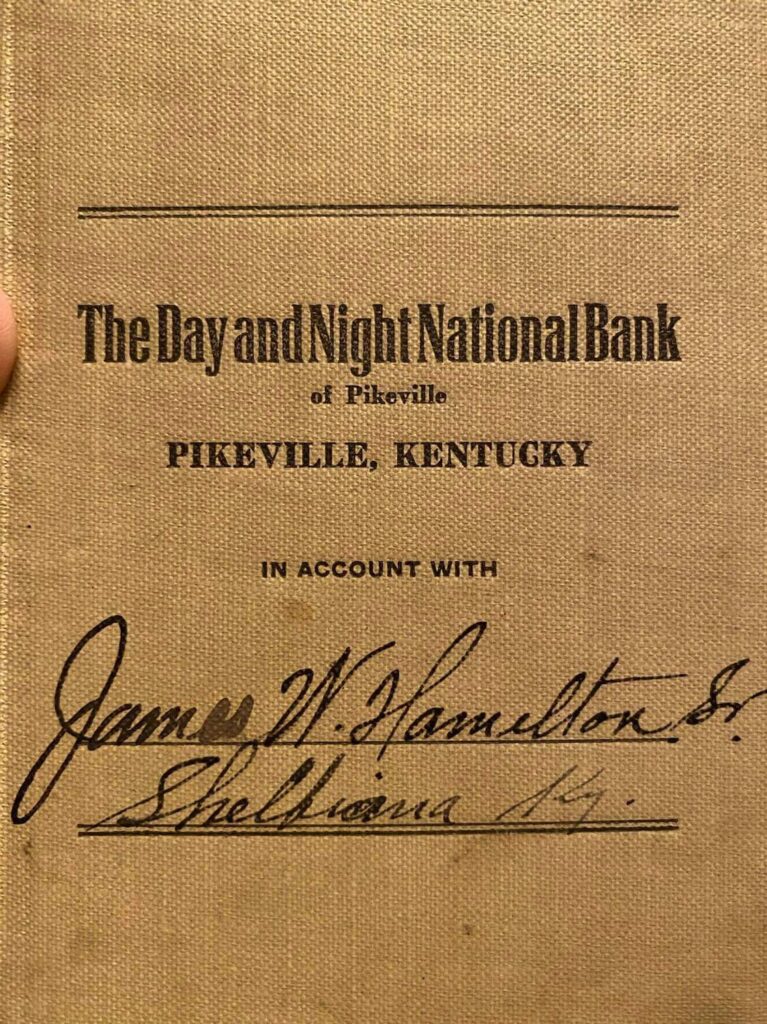
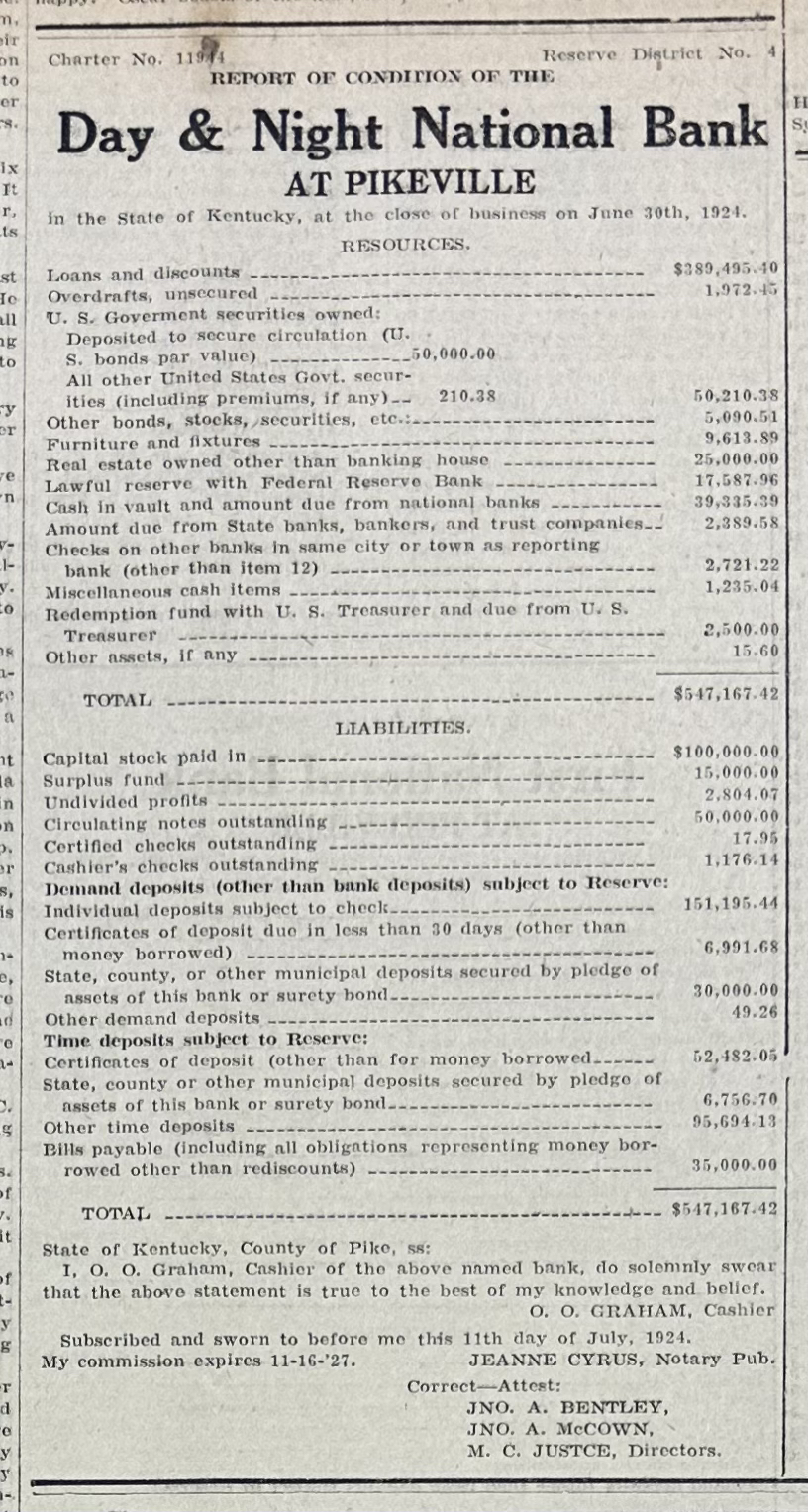
July 18, 1924. Pike County News
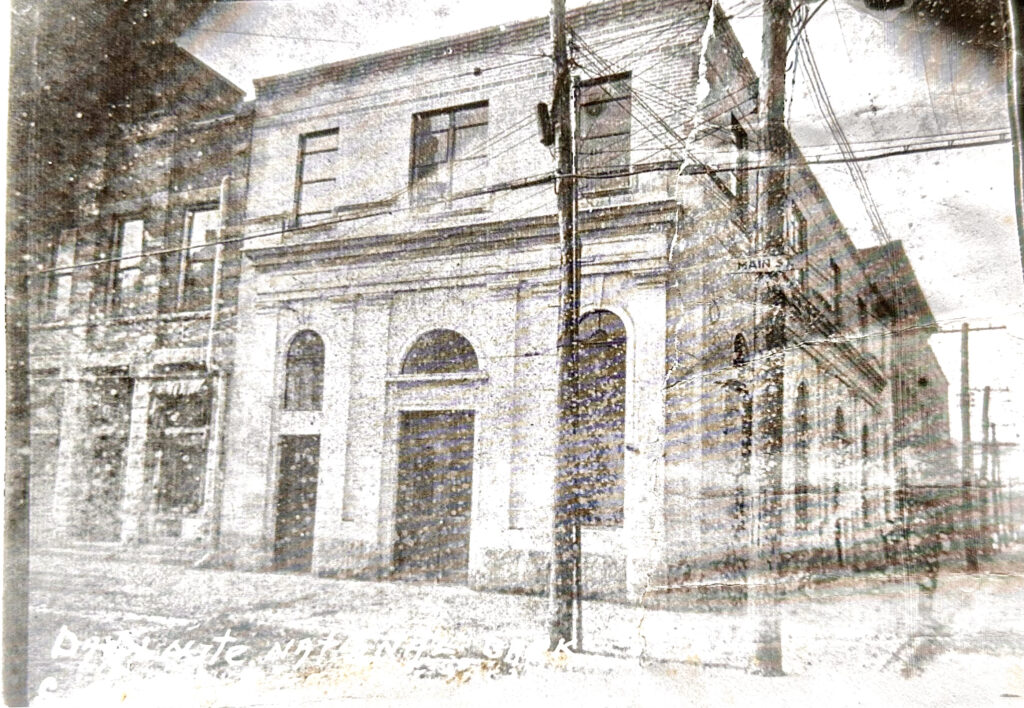
There was a total of 11 men elected to the board of directors, all Democrats. One thousand shares of bank stock were approved and issued. The bank rented out original quarters from 1921 to 1927. The original building was located on northwest corner of Main and Division Streets. In 1926, the board decided to build a edifice worthy of a bank 44 with their title. After an expenditure approximately $80,000, construction on the new building was started. The new structure stood on the southwest corner of Main and Division Streets.
This new building was built of Indiana limestone and was completed December 1927. The bank opened its doors for business in the new quarters on Jan. 2, 1928. The new fireproof structure was two stories in height, with a mezzanine level on the main banking. The upper floor housed a variety of offices and businesses.
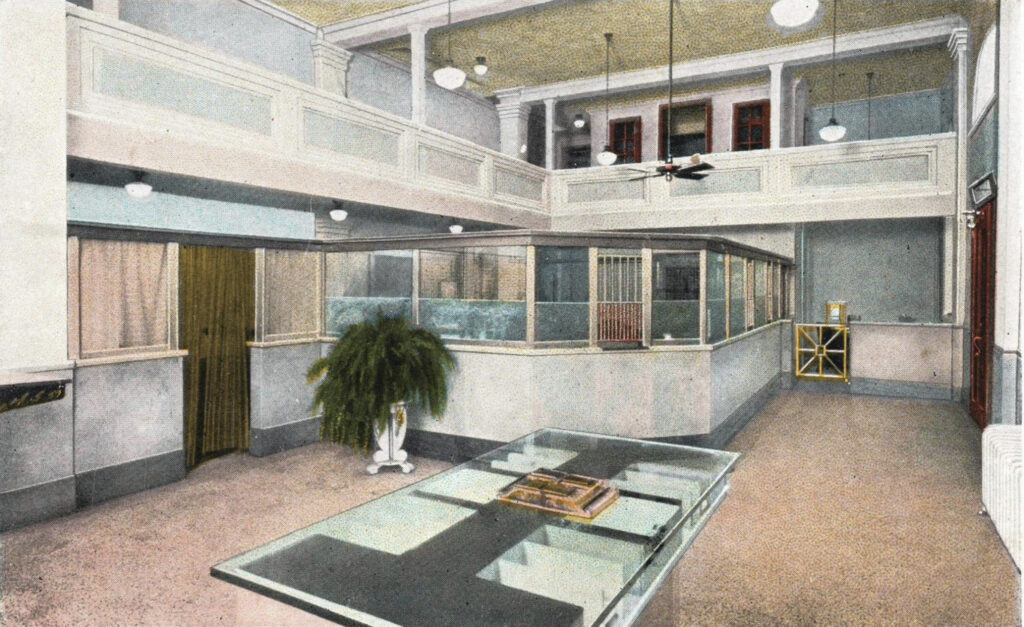
The bank was especially proud of a feature in its new building– It housed the ladies’ restroom, equipped with toilet, lavatory, toilet articles, etc. The bank advertised, “No Lady would be a stranger or not, need to hesitate to make use of our conveniences, which have been constructed for their used benefit.” The directors of the Bank were no doubt soliciting accounts of Pikeville women.
Day & Night National Bank Lobby 1928
The Day and Night Bank of Pikeville National experience more than just organization problems in its short history. When the bank opened its new building in 1928, John Yost, the young Vice President and cashier of the First National Bank, had a private investigator from Cincinnati hired and brought to Pikeville to conduct an investigation with regards to the stability of the Day and Night National Bank. Yost asked, “How could they build a new building, while the other two banks were struggling just to maintain assets and resources at 1924 levels?” Pikeville, at this time was experiencing high unemployment due to the closings of some major coal mines. Available cash was truly scarce.
October 9, 1930 / Pike County News
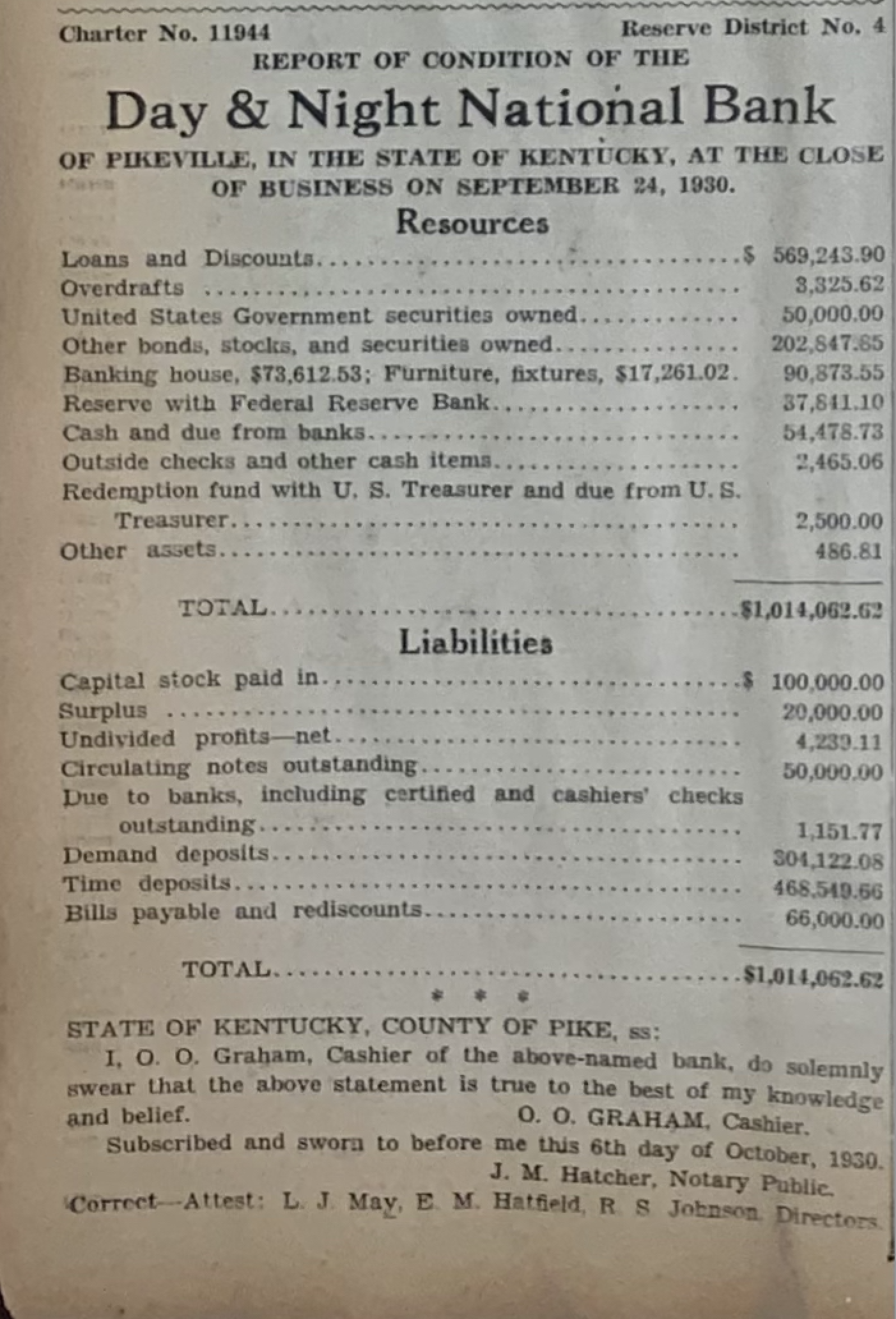
Pike County News, September 25, 1929
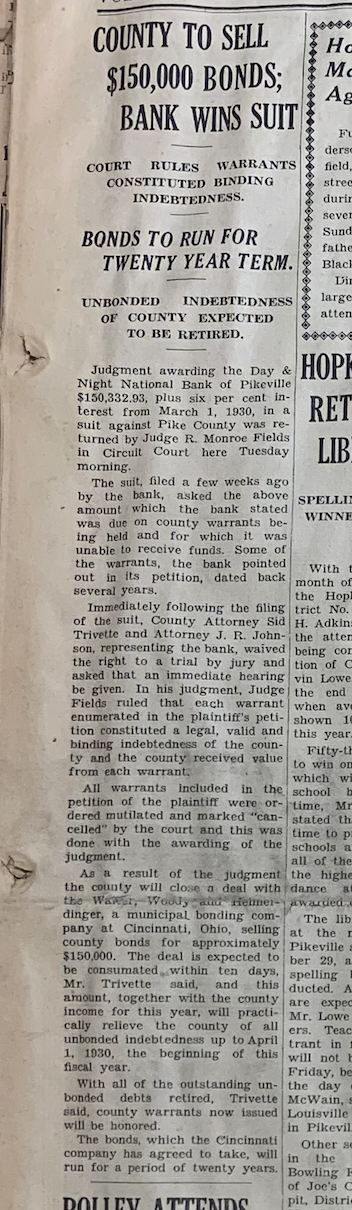
Ironically, the Day and Night National Bank merge with Pikeville National Bank on December 13, 1930, when all assets were purchased, save one, the cows knew Day and Night Bank building. According to Pikeville National Bank president, JJ Moore, negotiations were underway for s and several months to take over assets of Day and Night National Bank. In December 1930, the comptroller of the currency granted approval for the merger, in order to save depositors of the Day and Night National Bank from loss. The entire board of both banks approved the merger unanimously. Most employees of the bank were hired by the successor bank, and a few by first national Bank of Pikeville.
A combination of heavy debt burden the bank was under for financing, the new building, plus the local and nationwide Depression, contributed greatly to the voluntary liquidations of the Day and Night National Bank. It was not until 1938 that the national Bank receiver could close the messy books of the Day and Night National Bank
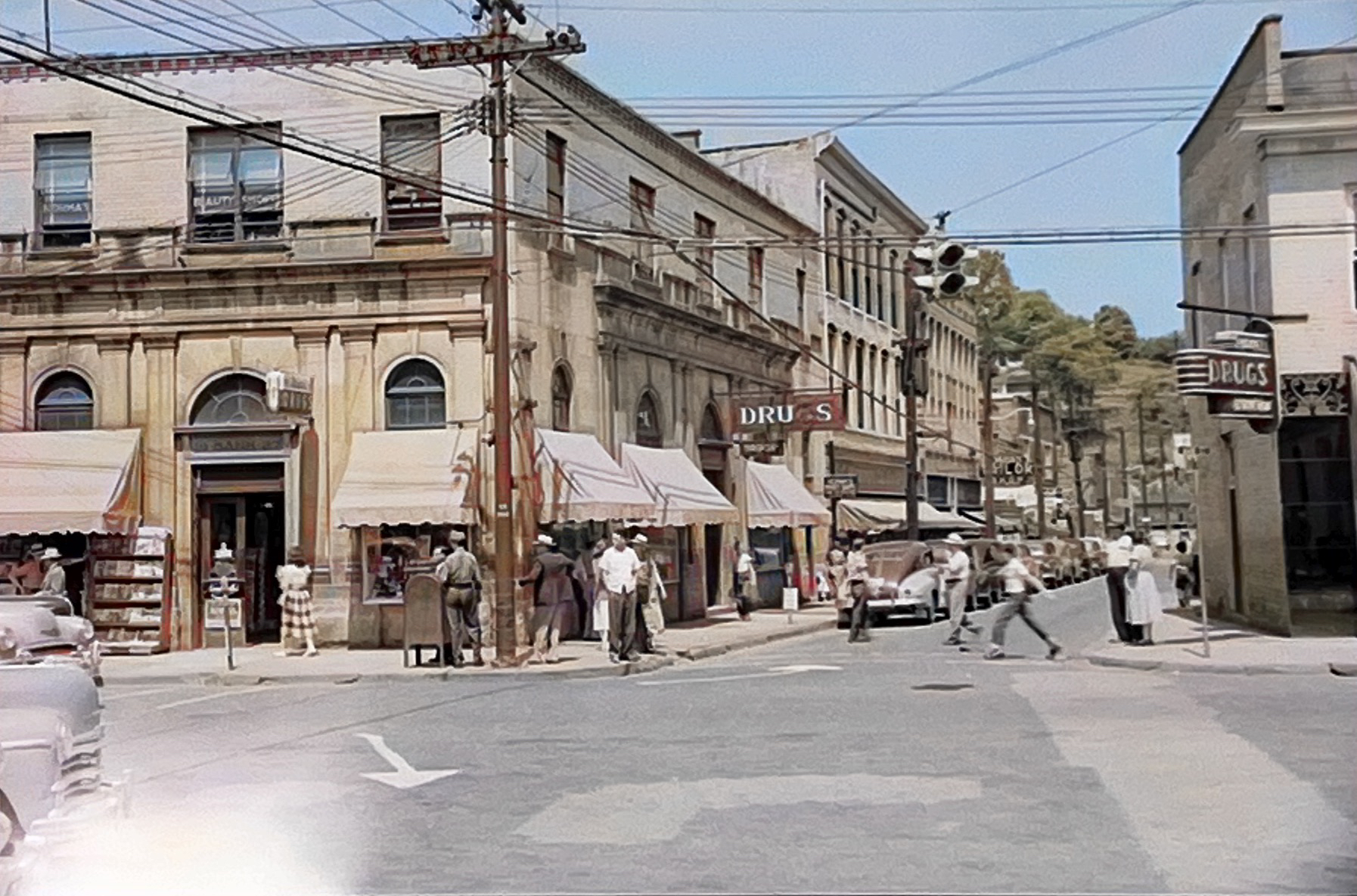
The Old Bank Building is still standing today, photo era 1950’s
Presidents and Cashiers of the Day and Night National Bank were.
President
F. Tom Hatcher 1921–1922
T.J. Williamson 1923–1928
Tom Williamson 1928–1929
George W. Coleman 1930
Cashiers
L. C. Williamson 1921
Onus O. Graham 1921–1930
Sources:
Pikeville National Bank
Appalachian News Express
National Archives
Interviews By Bertha Ridenour, Harold Swords, John Forsyth Sr. (now deceased), James Thacker, Brant Mullins and Lon B. Rogers. Special Thanks to Connie Maddox and Mike Little for give us permission to Post this story on the Pike County Historical Society Site
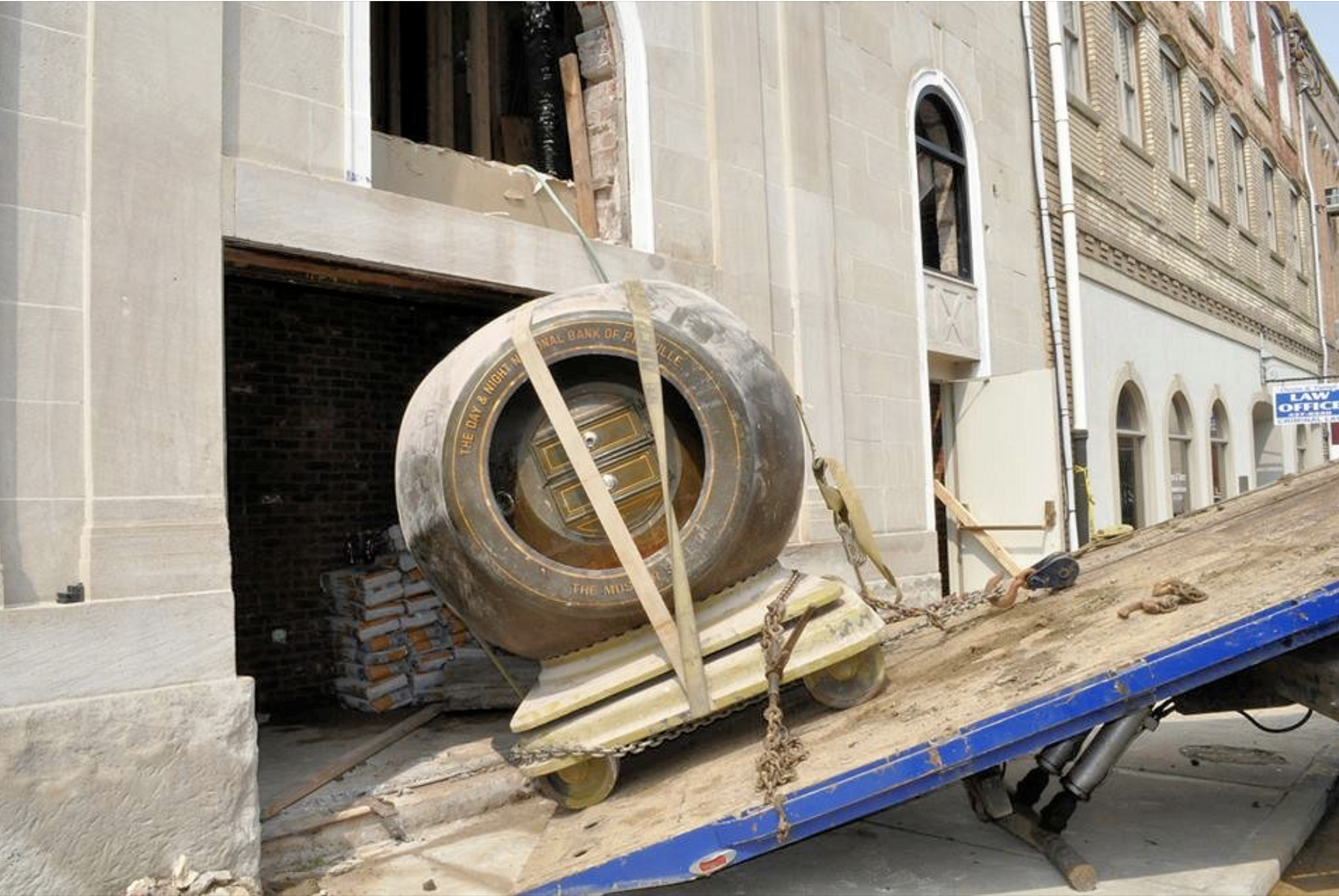
Day and Night Bank Vault