Legend of Mathias Harman
Storyteller is Mathias Harman
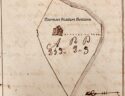
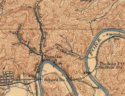
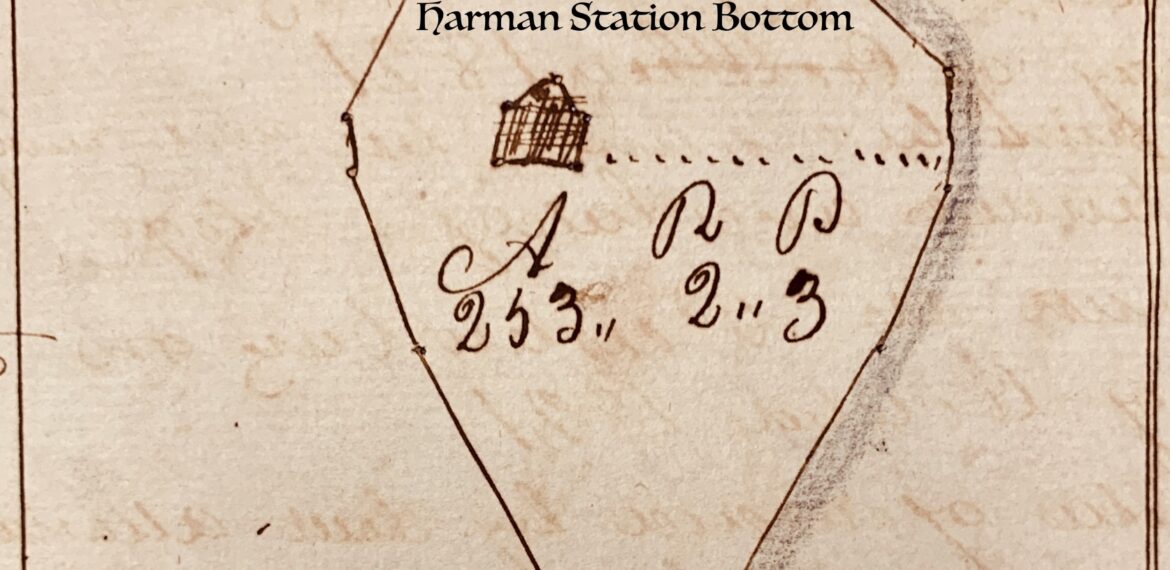
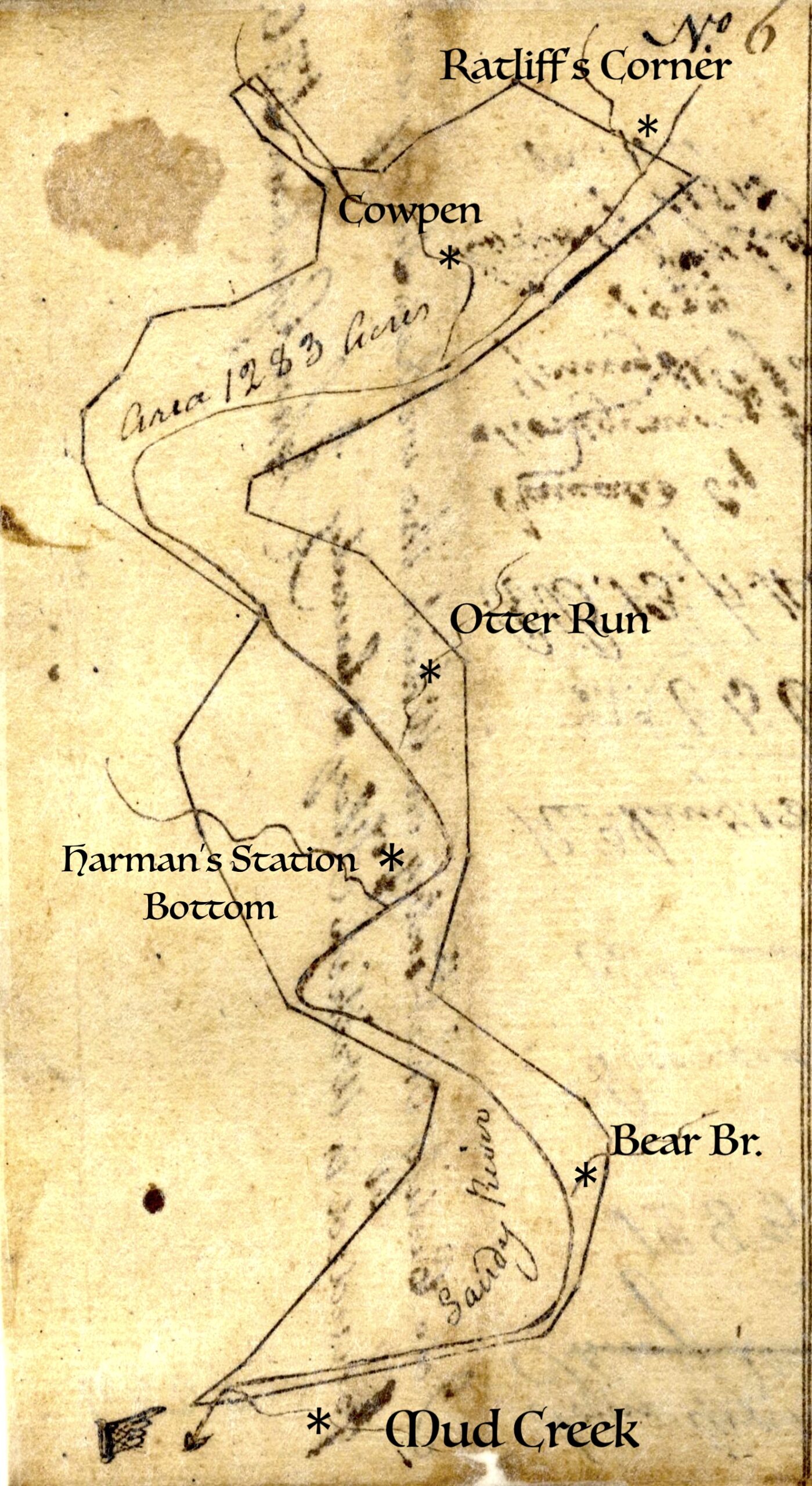
The province on Mathias Harman is not of the usual story and is based on the 1787 contract with one John Preston, John Smith, Henry Skaggs, and me Mathias Harman to settle in what was then Mason County, originally Bourbon and then Floyd County after 1799. Images shown in the following illustrates where Mathias Harman’s Plantation Bottom was located based on future litigations involving the 400 acre tract. In the winter of 1821 Pike County was established.
Mathias Harman, a man of small physical structure, but the Indians dreaded seeing Mathias Harman because he was known as a fierce fighter, a man forged by the rugged landscapes and the untamed wilderness, is a name synonymous with adventure and exploration. His story is deeply intertwined even long before the early beginnings of Pike County history and the surrounding regions.
But I was long gone by then.
In the early days, Mathias Harman and his companions faced numerous challenges as they navigated the formidable terrain and established their settlement. The initial contract signed in late of 1787 was a pivotal moment that marked the beginning of their arduous journey. Their relentless efforts and unwavering spirit led to the successful establishment of a new thriving territory.
Mathias Harman’s legacy is characterized by his indomitable spirit and his contributions to the development of the region. His knowledge of the land and expertise as back woodsmen and a surveyor were instrumental in transforming the rugged wilderness from a hostile inhabitable lands, in a country that is enjoyed by several thousands of generation that has followed his paths to Eastern Kentucky, Alongside Henry Skaggs, Charles Skaggs and Daniel Harman, Harman’s dedication to exploration and settlement laid the foundation for what would eventually become Pike County.
The establishment of the fort in 1789 marked a turning point in their endeavors. The fort provided a sense of security and stability, allowing the settlers to focus on the development of a new outpost community. Their extensive surveying efforts ensured that the lands were meticulously mapped, creating opportunities for future growth and prosperity.
Mathias Harman’s story is one of perseverance, bravery, and a deep connection to the land. His contributions to the region are celebrated and remembered, as they paved the way for the establishment of Pike County and the thriving communities that followed.
———-
Mathias Harmans quest to establish a plantation on the Louisa Fork is told in his own words, testimony as it follows the courthouse cases within the Floyd, Wythe, Tazewell, and Pike Counties.
———-
I was born in 1736. The son of Heinrich and Louisa Harman, from the anglicized name of Hermann, and German heritage. I was married to Lydia Skaggs and she bore me nine children. Every one of which a man can be proud.
I’ve always been a hunting man, a wayward sort I suppose. Living off the mountain land while making a few silver coins on furs and ginseng.
I’ve also been known as a surveyor. This is what brought me to this new place, just a few poles above Mud and down steam from Cowpen Creek. My brother Daniel Harman, with Charles and Henry Skaggs, one day, was approached by John Smith and John Preston of Wytheville, two men who trusted our knowledge of the Kentucke side of the Valley. Knowing we had traveled and hunted this area since young’uns. Where I got my wandering ways.
Now, those men approached us under the guise of the Loyal Land Company, which I had numerous dealings with over the years.
Our deal was struck, Daniel, Charles, Henry and I would survey all the lands on the Sandy River and its tributaries, from Paintsville and towards the present day Virginia State line. Our agreement was created in 1787, and this deal gave us adventurers a small part of the surveyed lands, on which to live and start a new settlement. We wrote and surveyed up the patents and trusted Preston and Smith to warrant them in Kentucke and Virginia, which they did, as was our deal.
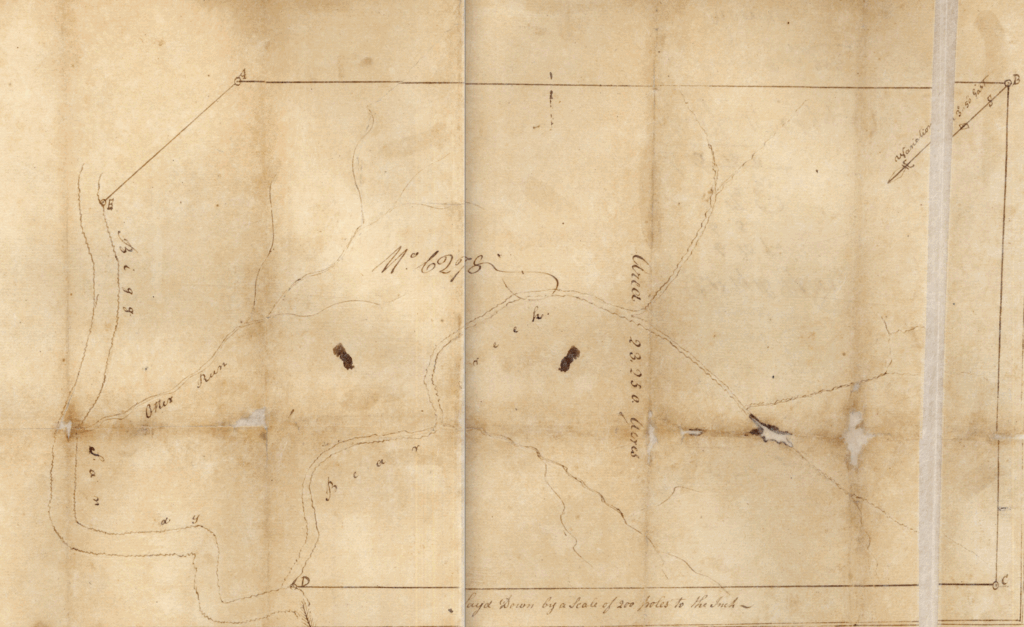
We all settled on Sandy, on a nearby crick, (actual stream) I named crick after my giving last name and erected a fort there in 1789, on more or less than four hundred acres. Took us two years to erect this settlement while surveying. Just a couple years before, George Lewis deputy surveyor for his boss James Garrard, surveyed a large tract of land on the East side of the Sandy River, two big cricks overrun with wildlife called Otter Run and Bear Creek, just West of the Station Bottom. We were the first adventurers to settle here in this area.
My ventures took me to various places, but settling in Sandy River Valley was one of the most strategic choices I made. With the aid of my brother Daniel Harman, Charles Skaggs, and Henry Skaggs, we explored and surveyed the land extensively. Our knowledge of the terrain and its resources was unmatched, leading to the successful establishment of our settlement. We engaged with the Loyal Land Company, securing our rightful portions of the surveyed lands. In 1787, our agreement was solidified, granting us a chance to build a new life on the lands we had painstakingly mapped out.
.
Our efforts bore fruit as we laid the foundations for a thriving community. I recall vividly the laborious days spent marking boundaries, preparing homesteads, and fostering relationships with fellow settlers. The establishment of Pike County in 1821 was a testament to our relentless pursuit of progress, even though my time there had long passed. The courthouse cases that followed within Floyd, Wythe, Tazewell, and Pike Counties were a testament to the enduring legacy of our pioneering spirit.
However, the beauty of the land was often marred by conflict. One such heart-wrenching tale was that of Mrs. Jenny Wiley.
Up by Louisa a man named Charles Vancouver tried his hands in settling a plot near the Tug and Levisa Forks (Louisa), but the Indians drove him off. They took all his horses and pack. A man by the name of Hanks stayed for a while, tried to make a go of it. It took some time for others out of Virginia to come to settle because the Indians became a problem. In the summer of 1888, they killed old Cornelius Roberts, and three others name of Elam while picking Ginseng, minding their own business. My family was not afraid of them redskins and found them troublesome with many of rendezvous.
I remember well the lady named Mrs. Jenny Wiley. Her husband being Thomas Wiley and there was some children. The Indians weren’t so kind to her and killed those children, all but one at the time. Those renegades took her and that babe from over in Virginia, off Walker Mountain in October of 1789. Them Indians, a rogue bunch, tried to take her across the Ohio, but the rains had other plans. While on her trace across Virginia, they killed her baby by bashing its head on a tree to quiet its hunger. Instead of taking her into Ohio, they took her into Kentucke and held her until she one day escaped. Brave woman that Mrs. Wiley. While in captivity, she gave birth to a baby, which they took from her. She never seen that baby again. One day, Mrs. Jenny hearing there were white men in the area made her escaped, making her way down to the Big Sandy River, she run into some of Vancouvers men, who happened to be near one of my surveying cabins up that way. I was up at Vancouvers looking for Whiskey, our men had run out. When Vancouvers men brung Mrs. Wiley back up to Vancouvers Station, they made plans to get her back to Virginia. I took her home. Later years she and her husband made Kentucke home.
In 1789, my family and I settled on Station Bottom, being one of the first to do so. We planted a large garden and many peach trees. Just up the Sandy from here., I had new neighbor, who just moved across from Sandy Ridge Territory by the name of Silas Ratliff. I later sold my land in 1803 to William McGuire of Tazewell County, and he in return sold it to John F. Hackworth. Old man John Preston had issues back in Virginia before the sale of land, and even though Preston had two claims by warrants, he never sent us adventurers our legal claim to the settlement lands. Though, we had the contract and a survey of which our land was shown. Later young John Graham, making a name for himself, had caused us a large legal battle over our Harman Station land. We Harmans never take a fight on our backs and won that legal battle. A few years later after helping Graham and others to settle Prestonsburg, our families moved back to Tazewell where I suppose I would die.

Testimony in the case of Harman vs McGuire tells us the Harmans and Skaggs men were the first adventurers and that their land was in what is now Pike County. Mathias Harman died on April 2, 1832. His son Mathias Harman Jr had settled his estate.