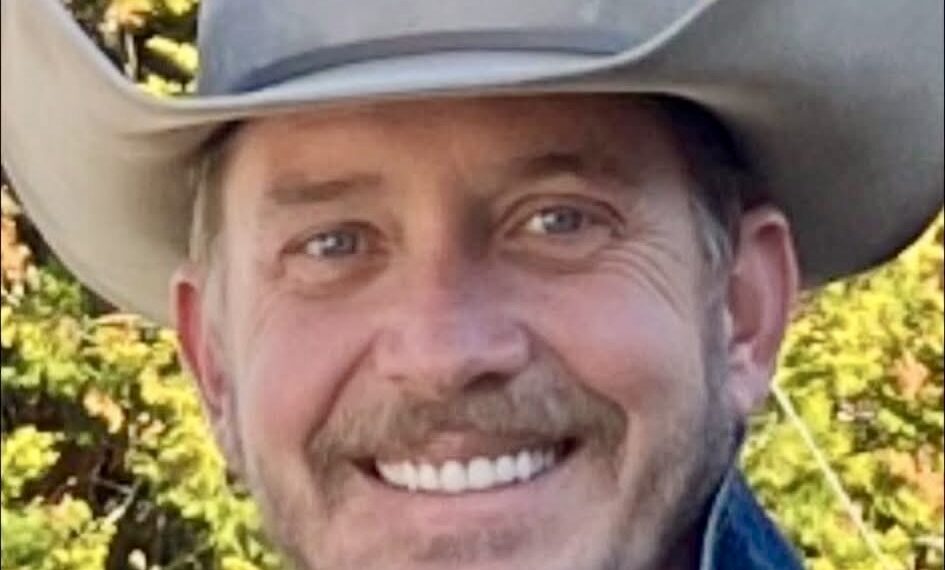
Based on the Eulogy Delivered by his Uncle April 26, 2026
It was 2001, and Sheldon Lee Compton needed a job.
“Any dumb hillbilly can learn to operate a forklift in ten minutes.” That’s what Steve, Parts Manager at the Caterpillar store, told my nephew Sheldon on his first and last day on the job.
Sheldon had taken the job with some trepidation. He was a newspaper man currently between jobs, a roving reporter one might say. He had been hired on my dubious recommendation. I toiled in the undercarriage office, writing work orders and taking calls from irate customers, a factotum, sort of like the poet Charles Bukowski.
I was on my nine o’clock break, drinking coffee and eating a stale honey bun from the vending machine, when Steve rang my extension.
He said, “I hate to tell you, but I had to let your nephew go.”
“Let him go! He just started. You mean you canned him?”
“Canned, axed, the old boot–I had no choice.”
“Lord, what has he done?”
“You ain’t gonna believe it. I had him on Number 4, the newest and safest tow motor on the hill. In less than an hour he turned over two pallets of gear grease, scattered a bin of o-rings to hell and back, busted nine bags of oil dry and ran over the day truck driver’s foot. It’s some kind of record.”
I fumbled for words, needing to say something in my nephew’s defense. I felt a vicarious responsibility for his ineptitude, for this calamitous conclusion of his employment. “Sheldon is a good writer,” I said, rather lamely.
“Writer, my ass! I don’t need Hemingway here. I need a forklift operator. A writer, is he? When you see Sheldon, tell him I said to write a novel, write a poem, write obituaries–write his granny, but stay the hell away from manual labor. The world will be a safer place!”
It was good advice and Sheldon took it, quite literally.
Twenty-five years later Sheldon Lee Compton is remembered as one of the most accomplished and well-loved writers in Appalachian literature.
From the time he was a child, Sheldon Compton had one goal in life, to be a published writer. When he was a skinny little fellow of eleven, he would come to me carrying a grimy little composition book and a new story he had written. I had published several stories and poems myself, here and there, and he thought I ought to know something. “Tell me if it’s any good,” he’d say hopefully. After treating myself to some wild adventure from his big imagination, I would hand it back. “It’s pretty good,” I’d say, patting him on the back. “Now, let’s see how we can make it better.”
I don’t claim to be a great teacher, but I’m prepared to defend the advice I gave him as he grew older. “You can’t become a writer without first becoming a reader.” I told him, not too gently. “Read voraciously. Read Flaubert, Melville and Thomas Wolfe. Read Don Quixote for the fun of it. Read Henry James and Faulkner to learn how not to write. Read James Still and Larry Brown to learn how to write. Avoid popular bestsellers. They have nothing to teach you. Imitate no one. Find your own voice.
“Write only if you have to,” I warned Sheldon. “It’s a hard life, but a true writer has no choice.”
It was a hot June day in 2012 when Sheldon proudly handed me a copy of his first book, The Same Terrible Storm. Inside he had inscribed these words: “There is simply not enough room here to thank you. This happened by your example.” I was just as proud as he was.
Ernest Hemingway said, “an unhappy childhood is the best training for a writer.” This is not to say that Sheldon’s childhood was always unhappy, especially when he joined his fun-loving cousins at his grandparents’ house in Virgie. Tom, Gary, Todd, Sheldon, Rosa and Suzette, hyped up on Slurpees, Hi-Noon bars and 16-ounce Pepsi, would cause Satan to have a nervous breakdown.
Sadly, too much of Sheldon’s childhood was spent in the dark shadow of his father, a brilliant but depressed man who barricaded himself in a back room that reeked of tobacco smoke and despair where he’d spend weeks reading Schopenhauer and studying calculus. His father’s troubles became an incubus that would ride Sheldon’s back throughout his life. He sought refuge in his writings and found inspiration for several novels, most notably, Dysphoria, a confessional Appalachian Gothic.
Ironically, it was Orville, Sheldon’s father, who recognized his son’s potential, encouraged him to read and helped him get his first library card. In an essay called “Dangerous Stories,” Sheldon recalls one of the most exciting days in a nine-year-old boy’s life, the grand opening of the Vesta Roberts Library at Virgie.
“I was the second person issued a library card. The first was my father who promptly directed me to the juvenile biography section. I wouldn’t emerge from this section for another three years. In that time, I read every book published in what collectively remain my favorite books of all time, the Childhoods of Famous American series. After a time, reading the books wasn’t enough. I wanted to write my own.”
Sheldon Lee Compton’s meteoric career has produced an astounding body of work. Adam Van Winkle, editor of Cowboy Jamboree Press, called him “a giant, a talent like no other.” Writing in the twin genres of Southern Grit Lit and Appalachian Noir, the domain of Chris Offutt, Harry Crews, Barry Hannah and Donald Ray Pollack, he has to his credit more than a dozen books, both fiction and non-fiction.
Forthcoming in 2026 is the novel, The Old Invisible, as well as Shark Life, a prose poetry collection. Fallujah Boy and Other Stories is due in 2027.
His novels, short stories and essays have earned him numerous awards and honors. He has been nominated twice for the Chaffin Award for Excellence in Appalachian Writing. In 2012 he was a finalist for both the Still Fiction Award and the Gertrude Stein Fiction Award. His stories have been cited in Best Small Fictions for 2015, 2016 and 2022. He is also the editor of Airgonaut, a journal of narrative concerns.
Like one of his favorite literary gods, Los Angles street poet Charles Bukowski, Sheldon worked at a variety of menial jobs, slate picker at a coal mine, for instance, as well as some lucrative and prestigious ones. He called it “surviving.” Combined they provided an eclectic background for his stories. At age 14, and a sophomore in high school, he became a stringer for the Floyd County Times, covering local sports. He would work for the Times, off and on for many years. After graduating from the University of Pikeville, he taught briefly at the Piarist School in Martin. After receiving his MFA degree in Creative Writing at Spalding University, he taught for one year at Big Sandy Community and Technical College, before returning to journalism.
For seven years he was a Kentucky Board Certified Alcohol and Drug Counselor at Behavioral Health Group in Paintsville. From 2020 to 2024 he taught in the Master of Fine Arts program at Concordia University in St Paul. At his death he was employed by Mountain Top Media in Pikeville as news reporter and sports director.
One wonders how he ever found time to write.
One year ago, I reviewed his novel Angels of Oblivion on Good Reads and on Amazon. I was much taken by the story of a dysfunctional Appalachian family besieged by alcohol addiction and trapped between love and reality. I held my breath when I came across the words: “An evening radiance of cardinals.” It was a line worthy of Keats or Mary Oliver. Quintessential Sheldon Lee Compton, it is what David Joy called “the definition of what Faulkner meant when he described the closeness between the short story writer and the poet.”
“April is the cruelest month,” This bold opening line of T.S. Eliot’s epic poem “The Wasteland” presages something of the tension between life and death, hope and despair. I never understood the truth or knew the heartbreak of those words until this moment. It has been four years, almost to the day, when I last talked to my nephew Sheldon. When I turned eighty-one last November, I was thinking how it won’t be long before Sheldon, perhaps with a tear in his eye, would be standing in this very spot struggling to say something nice about his old uncle. Fraught with guilt I keep asking God why it turned out this way.
Following a massive heart attack and intensive surgery at age thirty-seven, Sheldon told his mother he would never live to be fifty. At the time, he had published three books, been married and divorced three times, and fathered two children, a son, Tyler Lee, by his first wife Carrie, and a daughter, Natlie Grace, by his second wife, Linda. Despite his experience as an alcohol and drug counselor, when it came to alcohol, he did not always heed his own counsel. He was also a heavy smoker. He had settled into a long and happy relationship with Heather McCoy, when he succumbed to a second heart attack April 13, 2026. He was ten days away from his fiftieth birthday.