
Emma Katherine (Gudger) Langley
1888-1948
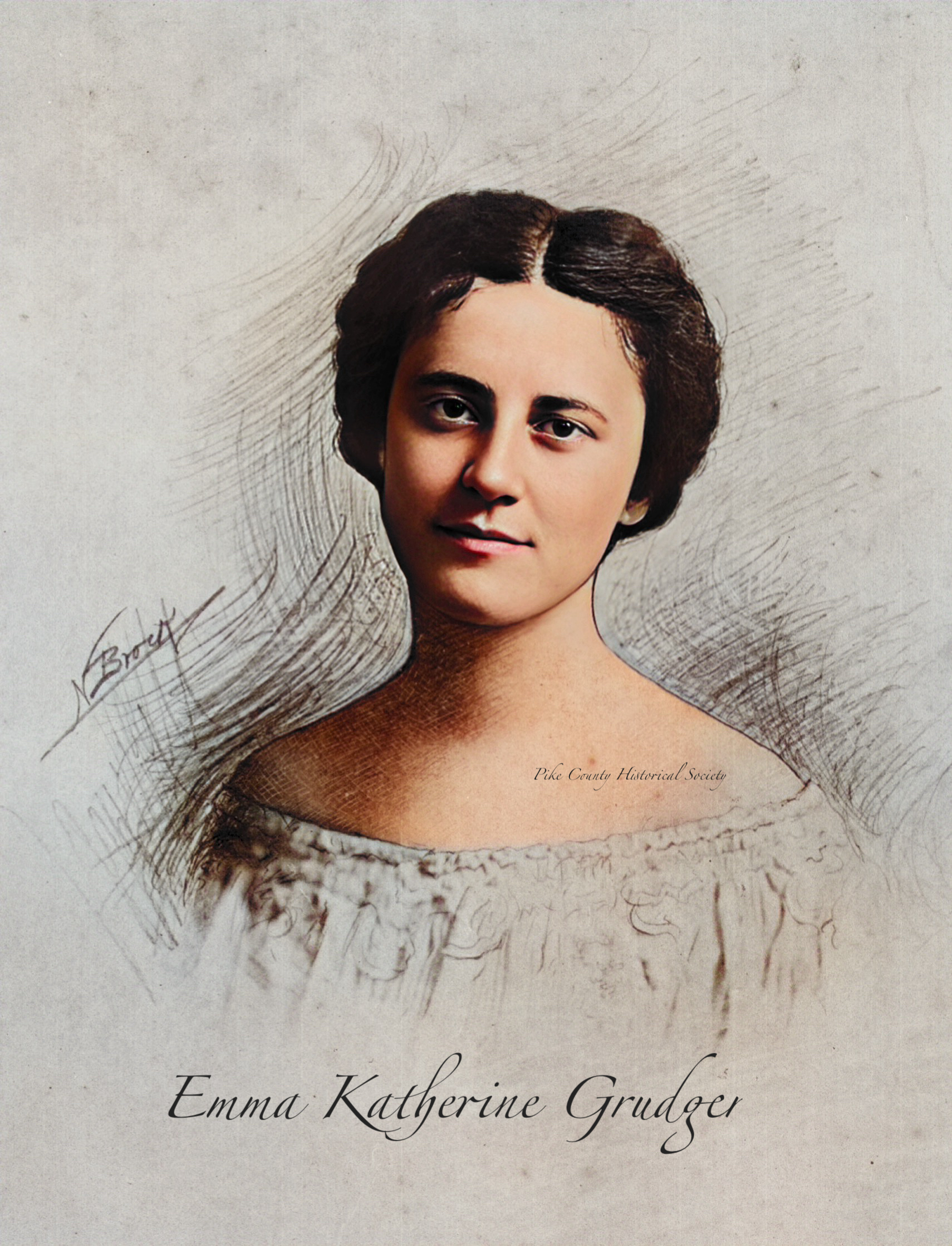
Katherine Gudger was born near Marshall, North Carolina, on February 14, 1888, to James Madison Gudger and Katherine Hawkins.* Gudger graduated in 1901 from the Woman’s College in Richmond, Virginia, and went on briefly to Emerson College of Oratory in Boston. A short teaching job in speech in Tennessee ended when she left for Washington, D.C., in 1904 to become her father’s secretary when he was elected U.S. House of Representative from North Carolina on the Democratic ticket.

Katherine (Gudger) Langley story begins with her husband, John Wesley Langley.
John Wesley Langley was born January 14, 1868, near the close of the Civil War in Floyd County, Kentucky. He was a descendant of the Langley family of North Carolina and the Robinson family of Virginia, both of Revolutionary tradition.
On his mother’s side came the strain from the Salmons and Click families of Virginia and Kentucky. His maternal ancestors were Edith MacAlpine, who married Archibald MacGregor, and Edith’s daughter, Ann MacGregor, who married Captain Henry Connelly. John’s descent, therefore, traces from the MacAlpine Clan, the first of the famous Scottish Highland clans. Through John’s mother’s line he inherited a considerable element of German blood.
The far-off days of his youth were tough ones, and it took nearly 50 years for John W. Langley to get an education. John remembers, as a barefoot boy, trudging down the road to the little country school in the in the Kentucky hills. He recalls sitting up into the early morning hours at home pouring over his lessons until he got them perfect and reading every book he could lay his hands on.
At the age of 16, John W. Langley was granted a teacher’s certificate in Floyd County, receiving the highest rating in the county. He taught school for three years and in 1882, received a clerkship in the Pension Office in Washington, D. C. After returning to Kentucky, he was twice elected to the Legislature of that state (1887-89). At the beginning of his second term, he received caucus nomination of his party for Speaker of the House, constituting minority leadership.
After those early arduous school days came brighter times, when John took first honors in the National University Law school at Washington, which he attended at night while spending days on duties in one of the Government offices. From that city’s famous seats of learning he came away with the degrees of A.B., LL.B., and LL.M., Doctor of Civil Law and Master of Diplomacy, the highest working honors conferred by any university in the country.
In 1890 he was honored with a membership in the Board of Pension Appeals at Washington. He attended the law department of the National, Georgetown, and Columbian (now George Washington) Universities in Washington, D.C., for an aggregate period of eight years.
John W Langley
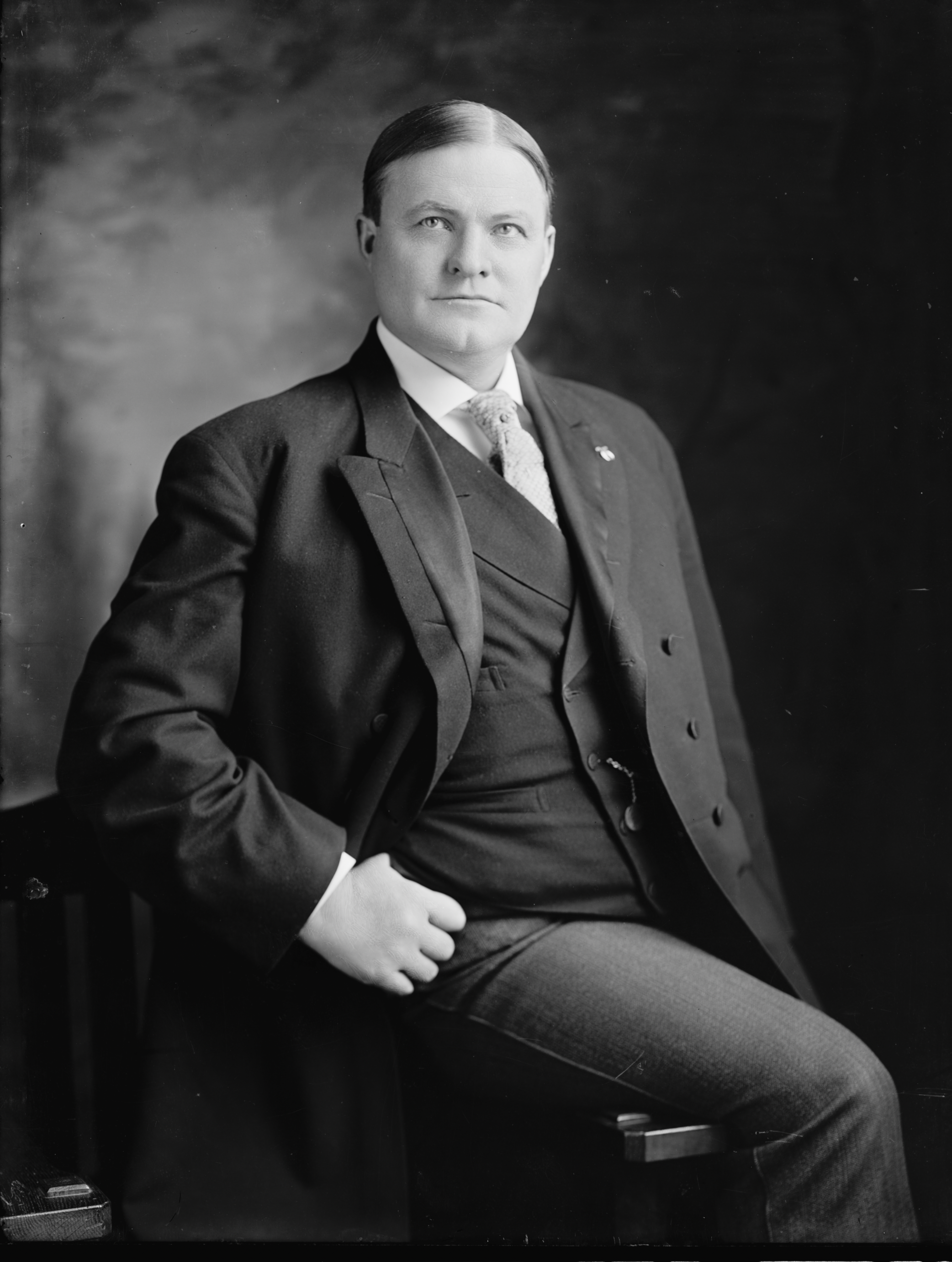
Once more, in 1895, John returned to his native state and resumed the practice of law. In 1896 he received the Republican nomination for Congress but, contesting a district overwhelmingly Democratic, was defeated by less than 1,000 votes. In 1899, the position of Appointment Clerk in the Census Office was conferred upon him and later combined with the office of Disbursing Clerk at a $500.00 increase in salary. He held these consolidated posts until his second nomination for Congress in 1906-when he was triumphantly elected.
John W. Langley served in the State House of Representatives from 1886 to 1890.
At the end of Langley’s term in the Kentucky State Legislature, U.S. Congress was kicking around the idea of a Federal Flat Rate Income Tax. By 1894 Congress passed a 2 percent tax on incomes above $4000 annually, which the Supreme Court shot down as unconstitutional.
Langley was Examiner in the Pension Office, a member of the Board of Pension Appeals, Law Clerk in the General Land Office, and from 1899 to 1907, Distribution and Appointment Clerk of the Census Office.
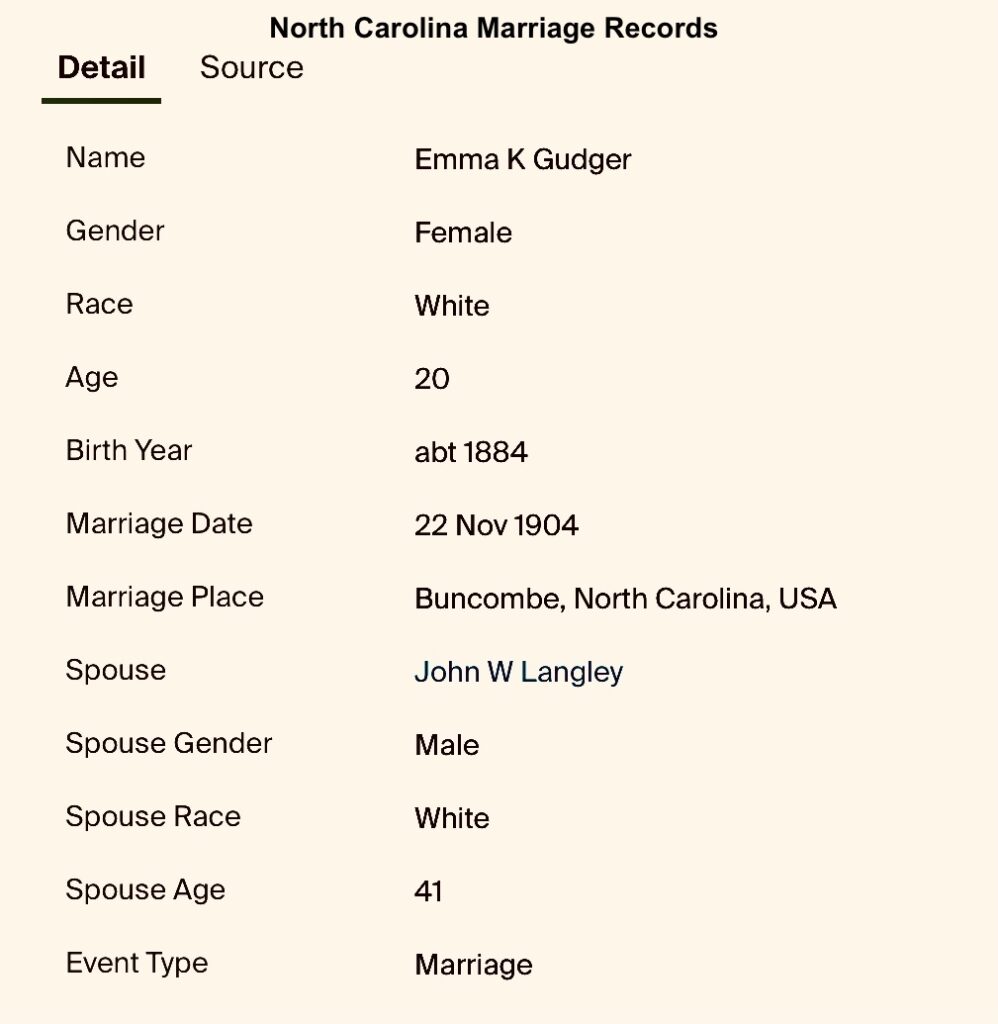
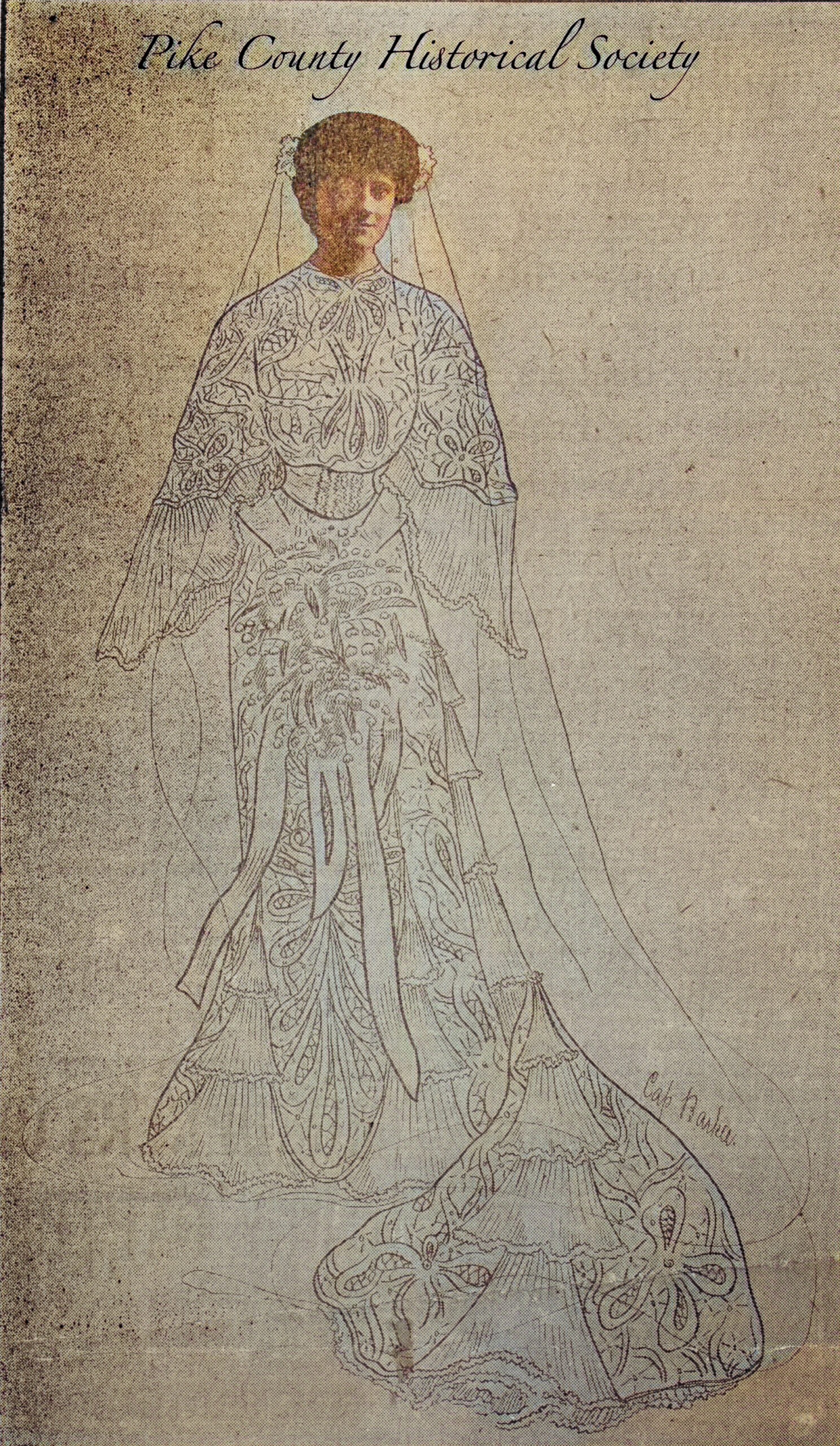
Wedding Day
John W. Langley was elected to the U.S. House of Representative, serving in the Kentucky 10th, on March 4, 1907, as a Republican to the Sixtieth, and to the nine succeeding Congresses where he became known as “Pork Barrel John.” He served as chairman of the Committee on Public Buildings and Grounds (Sixty-sixth through Sixty-eighth Congresses).
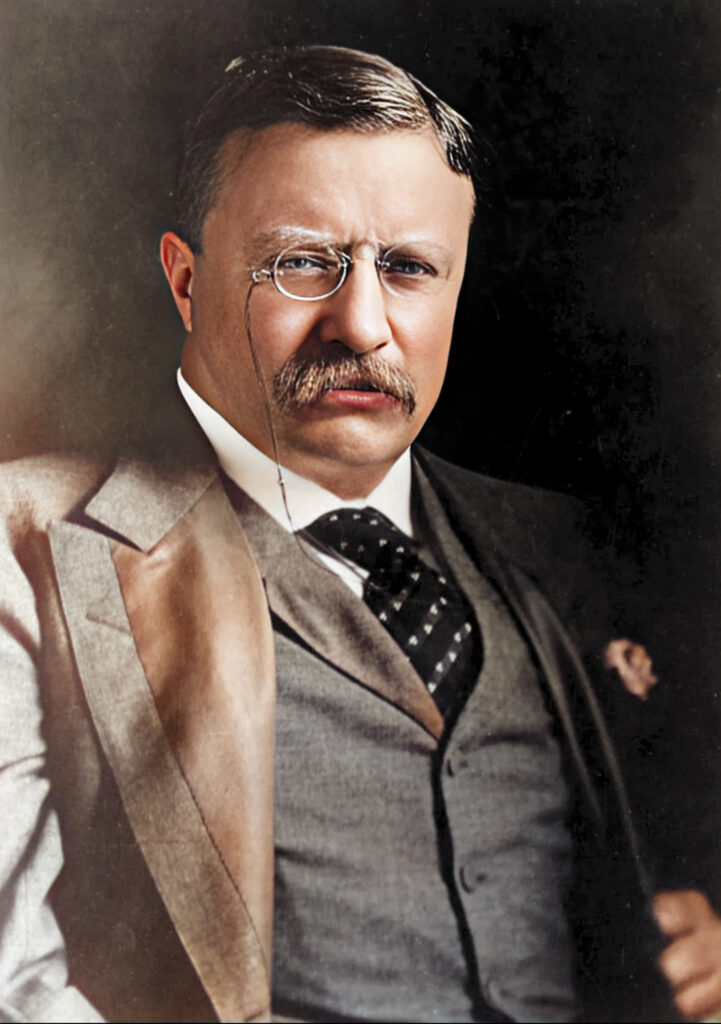
Theodore ( Teddy ) Roosevelt, Very Trusted and Close Friend of John W. and Katherine Langley
Photo Credit Library of Congress, Teddy’s Younger years. Color Accents added by the
Pike County Historical Society
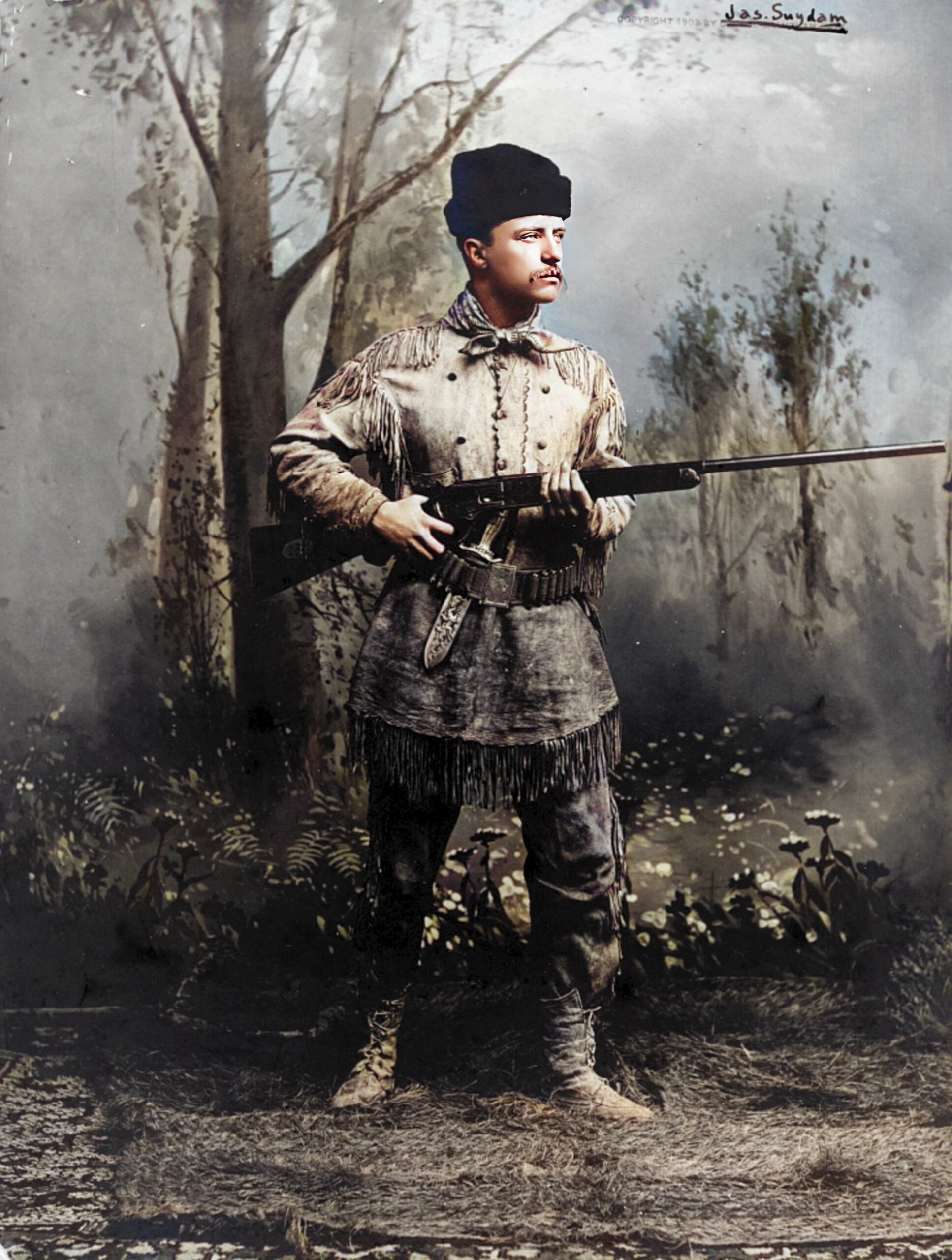
It is not strange, nor was it John W Langley’s happy experience, that during his long incumbency in the halls of Congress and elsewhere at the Capitol, he should have the good fortune to know, both as acquaintances and intimates, many of the most celebrated personages gracing the last three decades of our national history.
Perhaps the closest and dearest friendship was that of the late President Theodore Roosevelt, known affectionately to thousands by the diminutive “Teddy.” John would use one of his friend’s memorable phrases as the sub-title of his book. In his tempestuously brilliant career Teddy came to be both loved and hated, as is the lot of many great figures. From his knowledge of Roosevelt, John would say that even with his faults, and no one was more willing to admit them than himself, he was a loveable person. He enriched our English speech with many phrases that fall from men’s lips today and his dynamic vigor seems without parallel in American public life. His every word and action resonated with a febrile virility. Although he admonished the macho attitude in one of his immortal catchphrases, he seldom walked softly himself—but always “carried the big stick” of his overwhelming personality and Niagara-like eloquence.
The first time John Langley laid eyes on Roosevelt was in 1884 at the Republican National Convention when Blaine and Logan were nominated. John had just attained his majority; his first vote having been cast for this ticket. He was seated in the gallery and, being a Blaine rooter, felt quite antagonistic to those opposing his nomination.
In the seat next to John was an old gentleman, thought to be from Maine, with whom he made acquaintance. Noticing in the New York delegation a sprightly looking young man who seemed to be very active in his opposition to Blaine, John inquired of his new acquaintance: “Who is that youngster making so much noise down there against Blaine?” He replied, “Why, that is Theodore Roosevelt, who is a member of the New York Legislature. Haven’t you heard about his wonderful record there?” John had to confess that he was ignorant of the importance of either the measure or the man. Little did John dream at that moment of the personal contact he was to have later with Teddy or the idolatry in which John was to hold him.
In 1893 when Cleveland began his second term as President, John was a member of the Board of Pension Appeals. Knowing that when the Democratic administration began, he would be removed from his job, John sought transfer to a classified roll. Roosevelt was at the time a Civil Service Commissioner and John made his argument before him, claiming eligibility to this switch. Roosevelt promptly approved his argument; the transfer was made and that was the real beginning of their friendship. John was not thrown into closer relations with him, however, until the Republican National Convention at Philadelphia. Roosevelt, then Governor of New York State, was chairman of his delegation. Senator Bradley of Kentucky and John W. Langley were seated together just across the aisle from the New York contingent. Roosevelt always arrived before the convention was called to order, and each time, John would cross the aisle and shake hands with him, always receiving a cordial greeting.
John reminisces about the gavel his father sent him just prior to the Convention, cut from a cedar tree under which Joseph had seen General Garfield standing during the Civil War, watching his troops through his field glasses. These glasses, John might incidentally remark, were then in possession of an old Kentuckian near his home and naturally possessed a peculiar historical importance. The glasses had been forgotten by Garfield on the river steamer, “The Big Sandy” upon which he returned after the battle of Middle Creek, March 1862.
On one occasion when Langley conversed with James Rudolph Garfield, he told him where the glasses were. He urged John, if possible, to secure them for the Garfield collection at Mentor, Ohio. John finally, was able to help carry out his wishes.
Getting back to the subject of the gavel which John presented to the permanent chairman, Senator Lodge, he got a chance to show it to Governor Roosevelt but did not let anyone else know anything about it, not even Senator Bradley who was his desk-mate. John told Roosevelt of something he was thinking about saying concerning the gavel. He was soon addressed and recognized by the permanent chairman.
With the gavel in his pocket John sprang into the center aisle. As he began speaking, he reached into his pocket for the gavel. Amid a chorus of uncontrolled laughter one of the New York members cried: “Look out! That Kentuckian is going to pull a gun!” The scene may be better imagined than described.
Senator Chauncey M. Depew of New York, who was sitting near John, threw his head back and roared with laughter until he almost slipped from his chair. Some others close by began shouting: “Platform! platform! John, glad to escape embarrassment, strode immediately to the rostrum and was greeted and introduced by Chairman Lodge, whom he already knew. Naturally John felt very nervous, but before he had finished his first sentence, he regained his self-possession. On reaching the part of his remarks that touched upon what he had previously indicated to Roosevelt, he was greeted with many rounds of applause, in which Teddy actively joined.
Following is the verbatim report of John W Langley’s speech from the printed minutes of the 1900 National Republican Convention:
“Mr. Chairman and Gentlemen of the Convention: Up among Kentucky’s mountains, in the valley of the Big Sandy, there is a humble country home, wherein dwells an old man—a soldier of Republicanism who has spent his life in battling for the redemption of Kentucky from the thralldom of Democracy. He lives at the foot of the hill upon whose summit the great Garfield won a general’s star. (Applause.) That home is my home; that old man is my father.
(Applause.) He has asked me, Mr. Chairman, to present this gavel to you. It is an unpretentious offering from a modest man, but to me the request bears the potency of a sovereign’s decree. It was carved from the tree beside which Garfield stood during the battle of Middle Creek, Kentucky, and beside which he is said to have knelt and asked the God of Battles to give the victory to the Union arms.
Some of Indiana’s soldier boys were in that battle (applause), and they displayed the same heroism and the same courageous devotion to duty that are now being displayed by Indiana’s great Governor (applause) in giving asylum and protection to him who is the rightful Governor of Kentucky (applause), and who is an exile from his native State today, because if there he could not have enforced the constitutional guarantees of life, liberty and due process of law. I do not mean by this to assert that love of liberty is dead in Kentucky, for it still lives in the hearts of all true Kentuckians (applause) and is being suppressed only by unworthy leaders of the people. It will be strengthened by the news of the re-nomination of McKinley. (Applause.)
I present this gavel to Mr. Chairman as a token of our continued devotion to Republican principles, and as a pledge that Kentucky’s electoral vote will be next November for McKinley and Roosevelt.” (Applause.)
THE PERMANENT CHAIRMAN: “The Chair extends the thanks of the Convention to the gentleman from Kentucky, who has presented to him this most interesting gavel.”
It was then and there that John blurted out what he had not planned to say-about giving Kentucky’s electoral vote to McKinley if the Convention would place New York’s eminent Governor on the ticket with him. The meeting received the suggestion with tumultuous handclaps, but Roosevelt’s attitude seemed one of discomfiture. It was, however, the first and only mention of his name for Vice-President, and so that declaration on that rostrum, originally made by John himself, is one he always remembered with inexpressible pride.
A delegate sitting near John later remarked, “You had your nerve to propose Roosevelt for Vice-President with Lieutenant-Governor Woodruff (an active candidate for the honor) and Mrs. Woodruff sitting in the box with you him, not 20 feet away.”
During the session a resolution was proposed to reduce southern representation in the Republican National Convention. Senator Bradley among others of his political faith from the south had indicated vigorous opposition to the proposition. One of the floor boys came to John saying that Senators Platt and Quay wished to see him and John found these notables awaiting him. Senator Quay remarked that John “seemed to know most of the southern delegates,” and that they appeared to be almost unanimous against the resolution to reduce southern representation in the Republican National Convention, Senator Bradley having just finished a very strong speech opposing this. “We will help you defeat this resolution,” said Quay, “if you will help us put Roosevelt on the ticket with McKinley. The Senator here, (referring to Senator Platt) wishes this done to get Roosevelt out of New York politics and John W. Langley wants it done because Hanna is opposed to it.” It will be recalled that Senator Hanna had prevented Quay’s seating in the Senate, to which he had been appointed by the Governor of Pennsylvania.
John unqualifiedly assented to Senator Quay’s double proposition, and after adjournment was invited to visit the Kansas Delegation, which was all for Teddy. John was elected an honorary member and decorated with an artificial sunflower as big as a hat, this being the Kansas emblem. And later in the evening John was parading the streets for Roosevelt with this delegation. Their route included the hotel where he was a guest, and John assumed Roosevelt must have seen them from the window. At any rate, a bellboy approached saying that Roosevelt wanted to see him.
John went immediately to Roosevelt’s room. On entering he saw that Mr. and Mrs. Roosevelt were saying good-bye to a caller. They both greeted him most cordially and then Teddy called him aside and said: “Brother Langley, while I appreciate your partiality and good-will, I hope you will desist in this effort to boost me for Vice-President. It would be a great honor, of course, but I feel that I can be of more use to my party and country by serving another term as Governor of New York.”
In reply John told him of the overwhelming sentiment for him in the convention, but Roosevelt raised his hand deprecatingly and shook his head. John naturally evaded further solicitation at that time, and immediately resumed his march with the Kansas delegation.
It is now a matter of political history that during that night there was a long-distance conversation between Senator Hanna and the White House when it was agreed that the convention was almost unanimously for Teddy’s nomination. When John reached his seat the next morning, the Governor was already surrounded by friends tendering their congratulations. John extended his hand to the governor. He held it silently for a moment and in his characteristic manner, exclaimed: “Well, old man, you struck it right after all.” Before the roll call and the Vice-Presidential nomination were concluded, some of the members decided to catch the earliest train for Washington. Before leaving, John hopped across the aisle, seized Teddy’s hand and said, “Well, Governor, you will be elected beyond a doubt, and the next time we’ll run you for President.” Roosevelt made no response, but extracting from his pocket his convention ticket, and writing something on it, said: “Here, give this to your father.” Across the top he had written in pencil: “Theodore Roosevelt.” That card has always been a treasured heritage of the Langley family.
When Teddy Roosevelt returned from his South African tour, and a reception was being prepared for him at New York, John got a letter from Mr. Loeb, Roosevelt’s secretary, saying that if anyone was entitled to be one of the greeters he certainly thought it was John. He sent two of the best grandstand tickets for John W. and Katherine Langley.
What a scene it was! In New York harbor and along the triumphal route of the parade were cheering thousands! Katherine and John Langley were seated on the reviewing stand before Teddy arrived. As the governor climbed the steps he chanced to see John. Waving his hand, he called out in his old familiar tone: “Hello, Kaintuck!” An unfriendly Kentucky paper awkwardly tried to ridicule the incident by insinuating that John had expected to be embraced instead of hailed by Teddy. As a matter of fact, John thought it was a wonderful compliment to be discovered and greeted in that vast assemblage as the great man elbowed his way through the throngs.
John was the proud possessor of many telegrams and letters from Roosevelt, but we’re able to find space for only a few of them here. A page or so further on John will refer to the most striking of all his letters, of which he has made a reproduction.
John was delighted to accept Roosevelt’s invitation. Upon his arrival he met a number of House members, most of them his intimates. Certain friends were giving Colonel Roosevelt a midday luncheon “across the Rhine,” a very packed affair. Other members besides himself took seats at the far end of one of the large tables. Until then John had not spoken to the Colonel, assuming that Roosevelt was not aware of his presence. Soon, however, a uniformed attendant came down the aisle. “Is Congressman Langley here?”
Presently John was found, and the young man announced himself as Teddy’s aide, and that the Colonel wished John to come and sit with him at the head of the table.
Arising proudly, John facetiously remarked to some members nearest him: “Now, you poor white trash, sit here and eat your grub, I am going to sit with the heroes at the head of the table!” When John reached Roosevelt, he was warmly greeted and seated at the colonel’s right hand. In the ensuing conversation Roosevelt remarked: “Of course you are coming up to Nick’s this afternoon?” and John told him he was. When John reached the Longworth home that afternoon, he glimpsed the Colonel, the center of a group on the lawn. Once more he heard the old-time salute, “Hello, Kaintuck (Langley)!” Presently he took John by the arm saying, “Walk over this way, John.” He then explained that he had some important letters to write, had to get back to New York that afternoon and that John was helping him to make a tactful exit from the party.
At the kitchen door of Nick Longworth’s beautiful residence, Roosevelt paused and remarked: “You don’t know how sorry John, I am that I could not come down to your district and make that speech for you. Next time you run, let me know earlier and I will come. Meanwhile, isn’t there some other way I can help in your campaign? Would a letter from me do you any good?” John Langley assured him that such a letter would be a very great service. Nest day the letter was sent to him from New York City. John Langley reproduces this letter, facsimile, on an adjoining inset. The very same year, and again a year later, Langley used a photo-engraving of this letter to great effect on a campaign sheet.
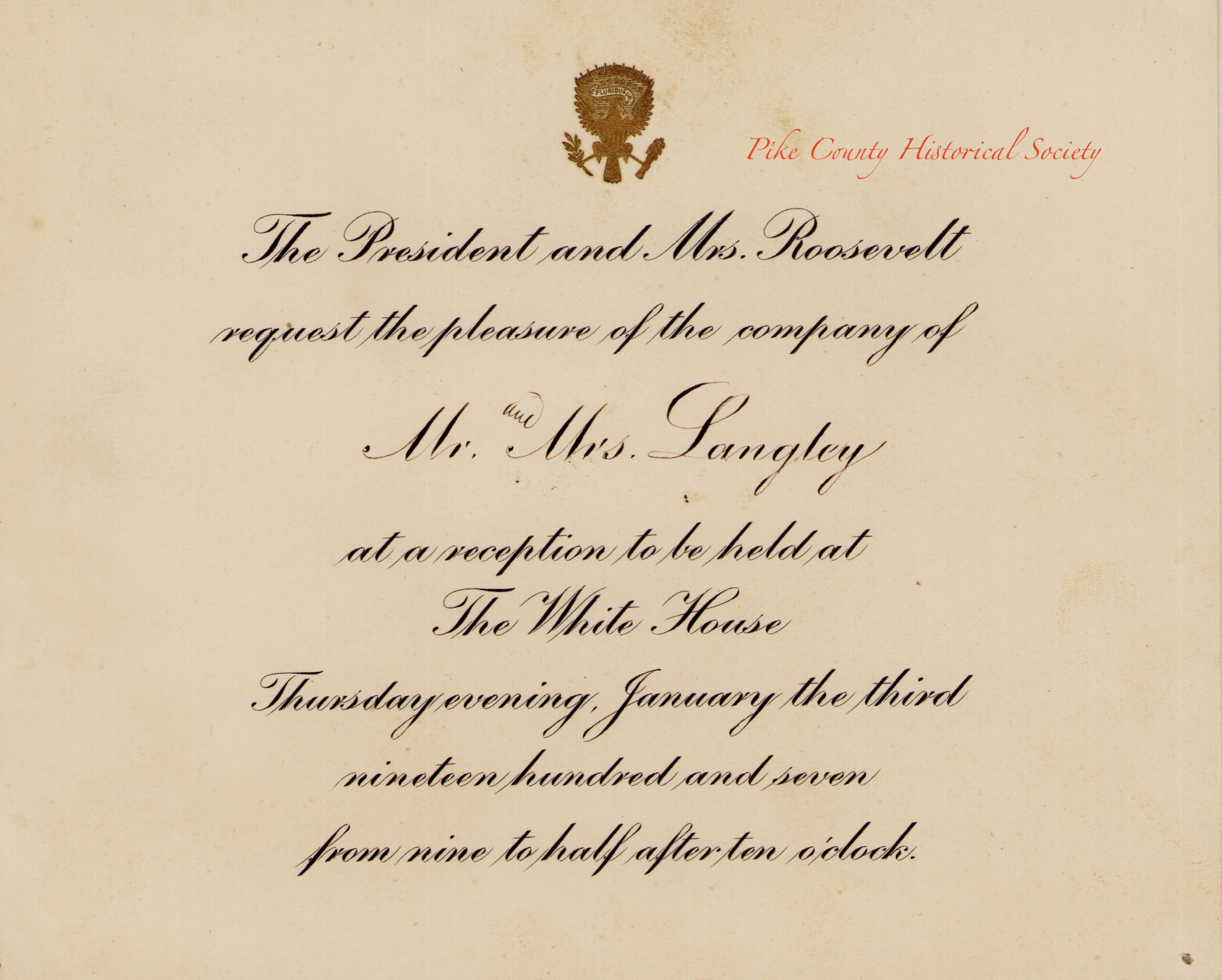
Not long after he had succeeded the lamented McKinley, Roosevelt held an informal reception at the White House for his more intimate friends and supporters. When the president entered, John Langley stood between him and the window and realized Teddy could not see him distinctly. Shading his eyes with his hand, Roosevelt exclaimed: “It seems to me that I have seen that face before.” Someone interrupted: “Why, Mr. President, don’t you remember the little gavel at Philadelphia?” “Oh, perfectly, perfectly,” he replied, and warmly gripped John’s hand.
John Langley saw Roosevelt repeatedly while he occupied the presidential chair. Numberless were the instances of his unflinching loyalties to friends, particularly his beloved Rough Riders. One instance vividly occurred to John. Sitting late at his desk, John received a call from the president’s secretary, Mr.Loeb, who said he was sitting beside the president who wished to inform me tell that a friend of his was coming to meet me the next day. He said that his friend was a man of limited education, but a Rough Rider, and he wanted him appointed to a place in the Census office. John Langley readily assented. When the visitor arrived the next day, John had his director approve the selection. Langley made him one of the assistant appointment clerks. He remained an employee of the Census office until his death.
John W. Langley, Republican for Congress endorsed by a democrat James Click
John W. Langley, Republican candidate for Congress in the 10th district, was rapidly gaining ground, and his election seems practically assured. His opponent, F. A. Hopkins, had become personal in his speeches and taken Mr. Langley to task about his kinsfolk and his plea for their support. Hopkins also charged him with taking care of his skin in a political way, and also having a post office established for his afflicted father. In order to show the reason for Hopkins’ unwarranted ridicule of Langley‘s relatives and his appeal for their suffrage, we provide the following facts:
James Click, the grandfather of honorable John W. Langley, died at the remarkable age of 106 years. A short time before his death, he signed the following statement: To my kindred of all political parties I have watched with pride, the care of my beloved grandson, John W. Langley, and his noble efforts to educate himself; and I have been indignant at the persecution heaped upon him by those who seek to break him down. If I ever run again for Congress, I want all of my relatives to give him their support. I do not want them to change their politics, but I want them to help him. As a life-long Democrat, who has voted the ticket for 85 years, I make this my dying request of them. Signed James Click.
Witnesses:
A.J. Chris
Alex Click
John W Langley beats F.A. Hopkins for Congress
Not long after John Langley was first elected to Congress in 1906 and sworn in March of 1907, perhaps the most cordial congratulatory message he received was from his dear old friend Teddy Roosevelt. John often went to the White House to see him on official business and every time the president caught sight of him, no matter how busy or who was present, he would invariably stop to address John with his favorite salutation, “Hello, Kaintuck (Langley)!” On one occasion when he was ready to receive a delegation John accompanied, Roosevelt came smilingly to the door exclaiming, “Now you Kentuckians, please leave your side arms outside before you come in.” This remark was overheard and given rather wide publicity by the newspapermen.
In 1907, President Theodore Roosevelt tried to reintroduce the income tax, proposing a progressive rate system that would tax each income class according to its means.
In John’s early incumbency in Congress, while Roosevelt was still president, he introduced and the House unanimously passed, a bill providing for a term of Federal Court to be held at Jackson in Breathitt County, his own state. However, the bill met with bitter opposition in the Senate. John was given to understand that the federal judge of the district, John Cochran, disliked holding court in such a remote and wild territory as he regarded Breathitt County. Although Langley used every argument and courtesy he could with individual senators, the bill still stuck in committee.
Finally, John Langley told President Roosevelt of his solicitude concerning the measure, and that he was going with Mrs. Langley to see him. The president very generously assured John and Katherine of his goodwill and help. In spite of the bitter protests of Judge Cochran, the bill promptly passed the Senate.
Eagle’s quill pen with which President Roosevelt signed the bill for a Federal Court at Jackson, Ky., which he presented to the people of that city through the author.
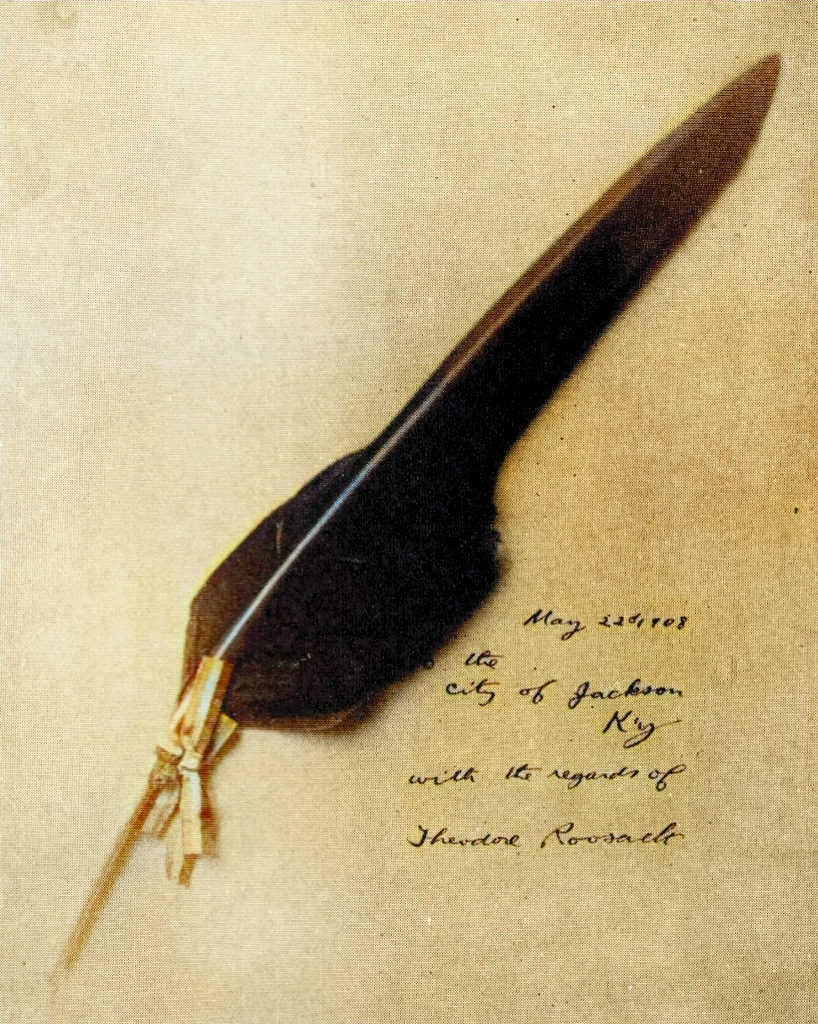
It was understood that John W. Langley was to receive the pen with which Teddy signed the bill, and to have the honor of witnessing his autograph, therefore Secretary Loab made the appointment. Having in his possession a quill from the wing of a massive bald eagle which the late Senator Carter of Montana had presented to the Director of the Census, John made it into a pen, with a striking tricolored ribbon, for the President’s use on the occasion. In the presence of most members of the Cabinet which had assembled for a meeting, John Langley placed the pen in the hands of the president. Teddy hastily jabbed it into the bottle of ink and started to write, but the pen did not work at first. When John started to apologize, the president said, “Oh, never mind, I can write with a stick.” The postmaster general, standing by, humorously added, “The trouble is, Mr. President, that no one can read it when you write.” John often wondered what this remark really meant. At any rate, the president finally scribbled out the words, “Approved, Theodore Roosevelt,” and the bill became a law.
Not long afterwards, Langley presented this same pen (shown above) to the citizens of Breathitt County, at a record-breaking meeting in the Court House yard. He later had the satisfaction of securing erection of a fine government building on the site where the court now regularly convenes. Not long ago, John Langley saw this historic pen beautifully framed and hanging in the residence of his beloved life-long friend, Hon. M. S. Crain, then a resident of Breathitt County, but now a prosperous merchant of Lexington, Kentucky, who sent him this photograph.
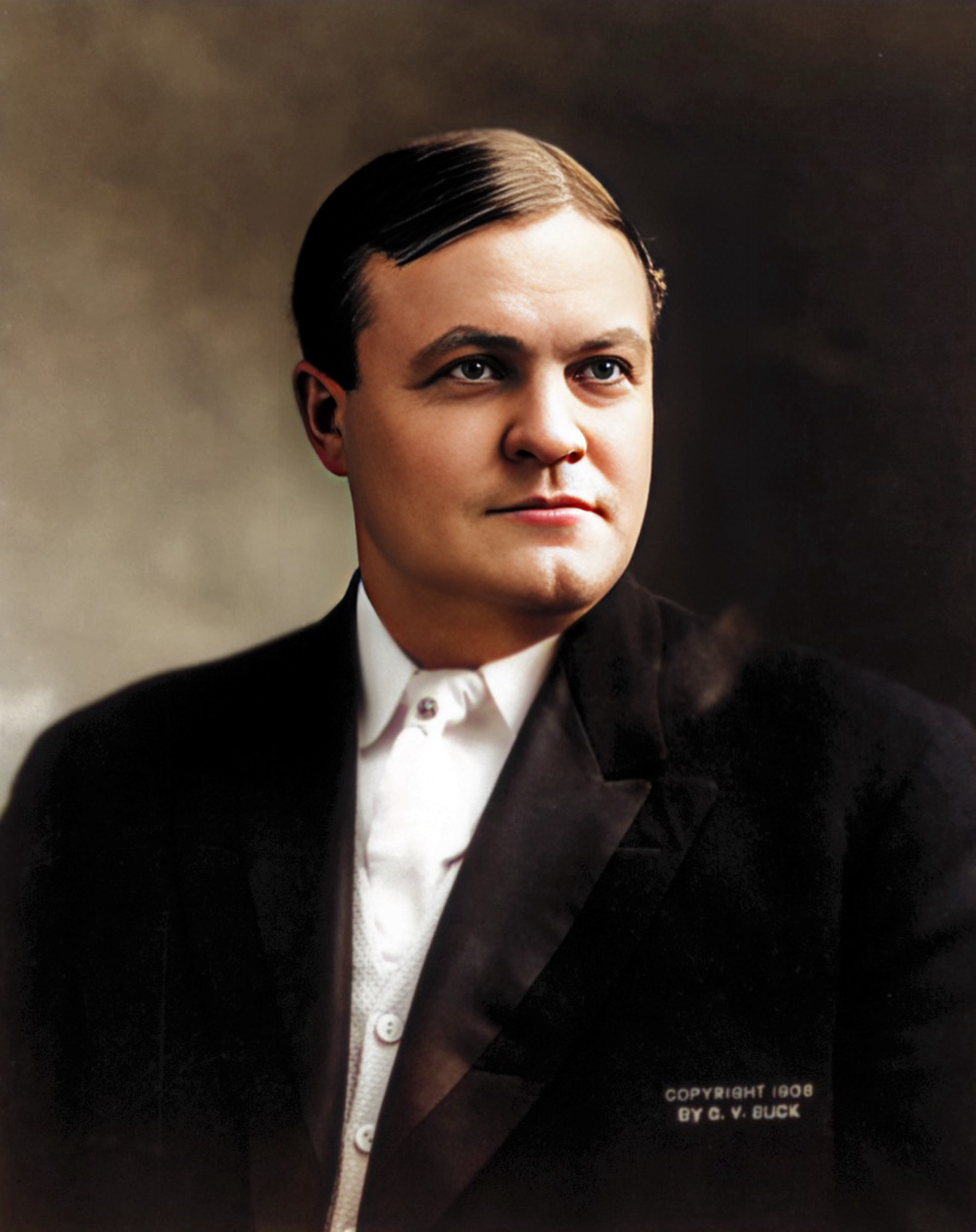
When discussion began as to the Republican nominee in 1908 as Roosevelt’s successor, and while Teddy’s attitude was still unknown, John Langley received a message from Secretary Loeb, while he was visiting in Asheville, North Carolina, stating that the President wished to see John Langley. John took the next train to Washington and was immediately admitted to the President’s private office. After a few moments of desultory conversation, Teddy abruptly asked: “Who is your choice, John, for the nomination as my successor?” John’s reply was, “Mr. President, I did not obey your instructions at Philadelphia, now I wish to reverse matters and support whoever you want.” “Well,” Roosevelt replied, “I think Mr. Taft (using the broad A) is the best man to carry out my policies.” “All right,” John said, “I am for Mr. Taft.” He immediately left the White House and gave a lengthy interview in support of Taft. Alas! for once Roosevelt’s intuitive judgment apparently was at fault.
1908
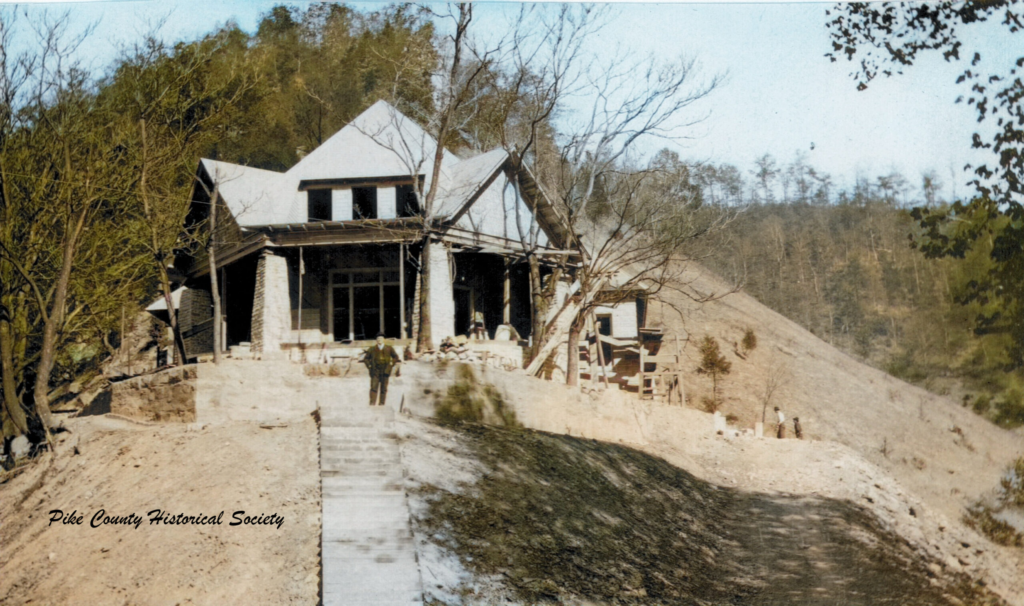
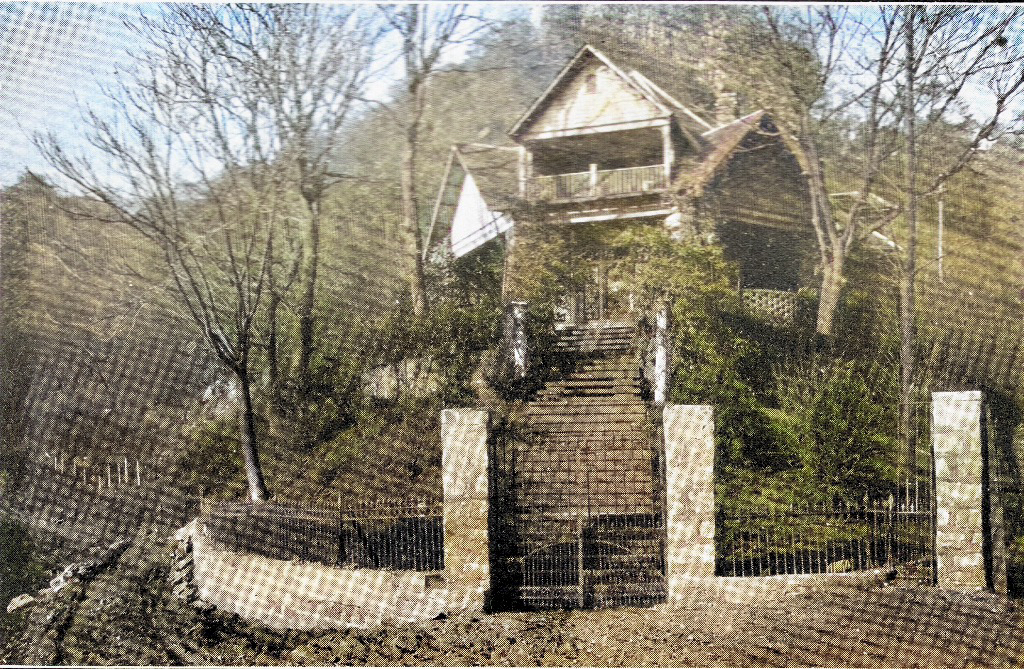
On November 24, 1908, John W. Langley bought his little piece of heaven here in Pikeville, overlooking the Levisa River and Peach Orchard Bottom Point. Here history has been forged ever since the Ratliffs settled its fertile bottoms in 1796. The 45-acre farm was located on the Old James Ferguson Patten.
The Construction of John W. & Katherine Langley’s Home at the Mouth of Ferguson Br.
INJUSTICE TO INDIAN DESCENDANTS, LANGLEY MAKES HIS POINT
Special to Courier-Journal: Washington D.C. February 13,1910. During the discussion of the Indian appropriation bill in the house today representative Langley of Kentucky spoke on the subject of the administration of the estate of five civilized tribes. He referred particularly to the case of the descendants of the Choctaw, Chickasaw and Cherokees, who had lived in his congressional district. He reviewed briefly the legislation on the subject, and contended that injustices had been done the tribes, not only by acts of Congress common, but by the actions of executive officers and all the government, excluding from consideration a number of roles on which he said appeared the names of the ancestors of his constituents. Mr. Langley called attention to the bill which he introduced recently, providing these claimants the privilege of establishing their rights in court. He insisted that such legislation ought to be promptly enacted, in order that the whole controversy, which he termed discretible to the U.S. Government, might be settled once and for all.
Upon conclusion of Mr. Langley‘s address, Vice-President elect Sherman, chairman of the house committee of Indian affairs, who was in charge of the Indian appropriations bill in the house, proceeded to take issue with Mr. Langley on some of his statements. A rather sharp and interesting colloquy issued between them. Mr. Sherman said that Mr. Langley had criticized the administration and the committee of Indian affairs while Mr. Langley insisted that his remarks had been misunderstood by Sherman as far as the application of his criticism. At the same time, he reiterated his assertion that the record show that injustice had been done to many claimants. Mr. Sherman conceded that some injustice had been done but argued that it was not sufficient gravity to justify reopening the whole subject of enrollments of these Indians. The colloquy was of interest in that it indicated that the question of distribution of the estate of the five civilized tribes be made subject of further consideration in Congress. Mr. Langley conceded that legislation on the subject can be secured at this session, but says he expects to continue the fight in the next Congress.
John W Langley, a Junior Congressman from Kentucky is a standout in the National Press Newspapers 1909.
Cincinnati Enquirer, Washington, April 6, 1909. Representative John W. Langley of the Kentucky Tenth District, has taken the leading part in the fight in the House for a more equitable distribution of the nonprotective features of the Payne Bill (later known as the Payne-Aldrich Tariff Act.) Langley made a speech in the House from the standpoint of the Southern Republican, which attracted a lot of attention. He called attention to the fact that the leading industries of his section of Kentucky are either placed upon the free list or given inadequate protection. He referred more especially to lumber, coal, iron ore, hemp and flour, and contented that the provisions of the bill regarding these industries are not in harmony with the doctrines of the Republican Party and is heretofore expounded by the Republican Party.
The reason Langley was adamant about protecting the Timber Trade Tariff Revenue, was because when he was 13 years old in 1881, his father was engaged in the timber business. The Langley logs were floated to the mouth of Mill Creek and a raft floated from there to the Catlettsburg, Kentucky, Market, guided by what John called a “bow and stern” oar. There were about a dozen, requiring a man for each one. John handled the bow oar of one of the rafts, receiving his orders from the steel hand at the rear. It took John and his father three days to get to Catlettsburg. They would tie up about sundown and stay at a nearby farmhouse, and start again, bright, and early next morning. The last day they floated logs, was cold with drizzling rain when they reached Catlettsburg. John was very passionate about putting revenue back in the community of the 10th District. Living very close to the Levisa Fork of the Big Sandy River, he had seen massive amounts of timber resources being harvested from his Congressional District.
Cartoon from 1909
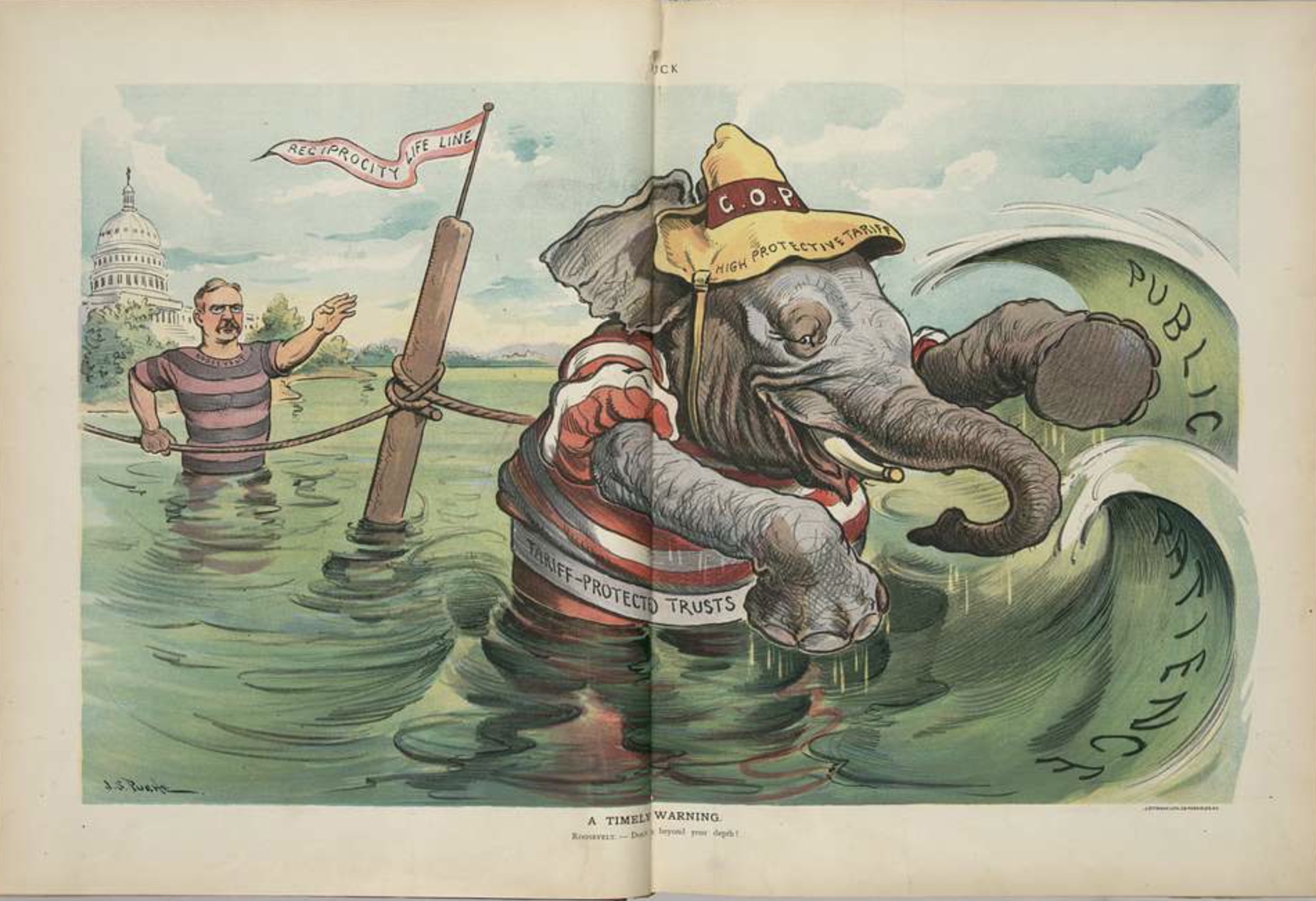
He argued for the retention of the “Dingley Act of 1897” duty of $2.00 (The Actual Number was $2.52 under the 1897 Act ) on lumber sold, the Tariff Rate set under the 1897 Dingley Act ($5.04 P.ct.) Langley believed the duty should be increased rather than decreased since it was the purpose of his party to give proper protection to this industry. His discussion of the lumber question was especially pointed. He showed that lumber is the the second largest industry in the United States and more important than the iron and steel industry, in the sense that ownership of timber is more diversified, embracing almost every State in the Union. Any legislation that would tend to injure this industry would injure a great number of people than adverse legislation touching any other industry in the country. He said that he was an operably opposed to taxing tea and coffee, which are two of the necessaries of life, and added that a tariff on these articles could only be for the purpose of raising revenue, as they did not need protection, and declared that he was in favor of putting an additional tax on beer and whiskey. He did not say that he would vote against the bill but warned the committee that if the bill was defeated, it would be due to the fact that it had not been framed in accordance with the Republican platform nor the traditional doctrines of the Republican party.
Even before Langley was elected to U.S. Congress, the 10th Congressional District was organizing into the largest timber producing region on the Big Sandy River Region. By November 1909 Yellow Poplar Lumber Company was gearing up to send several thousand trees through John Langley’s 10th Congressional District, including Elkhorn Creek and tributaries above Praise on the Russell Fork.
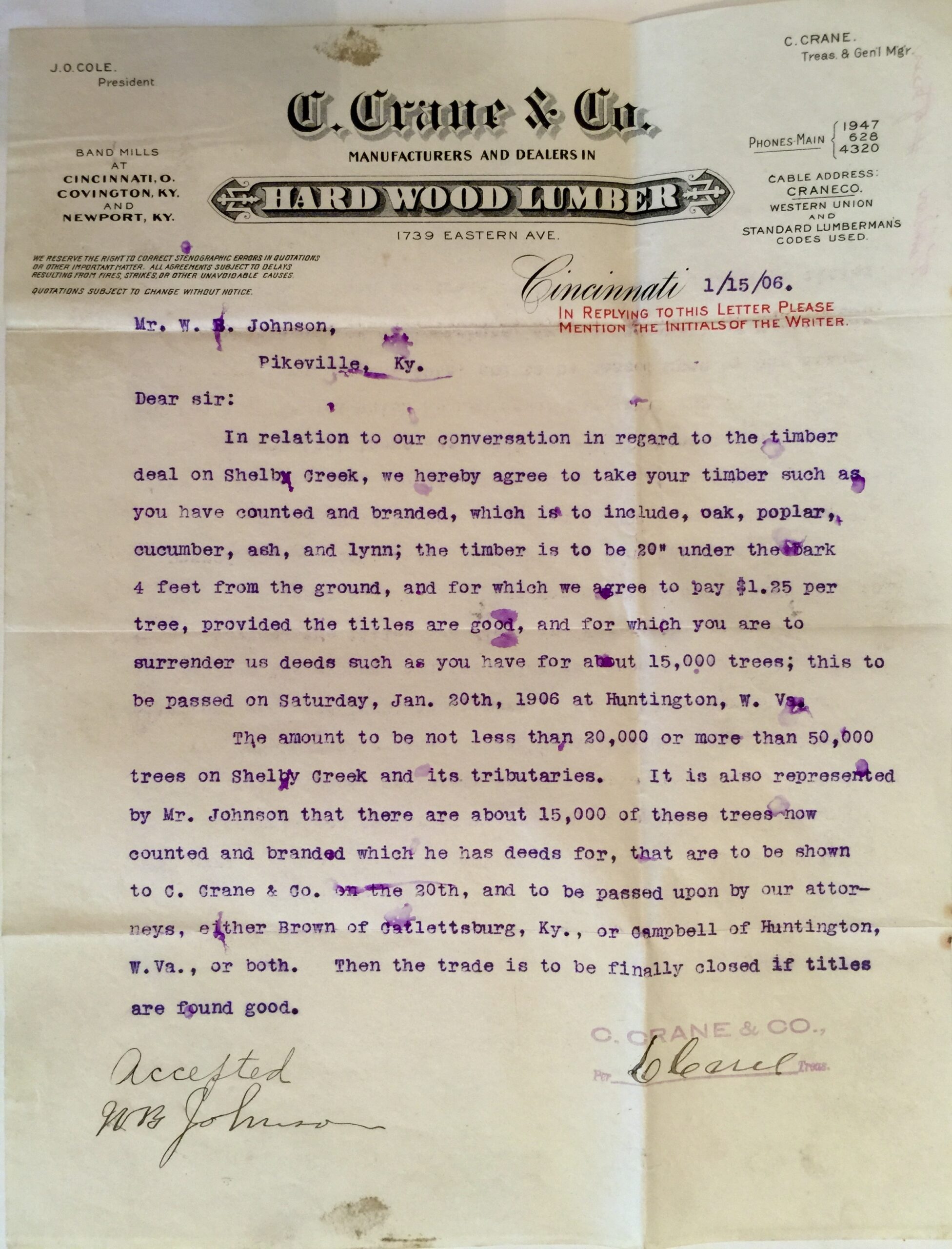
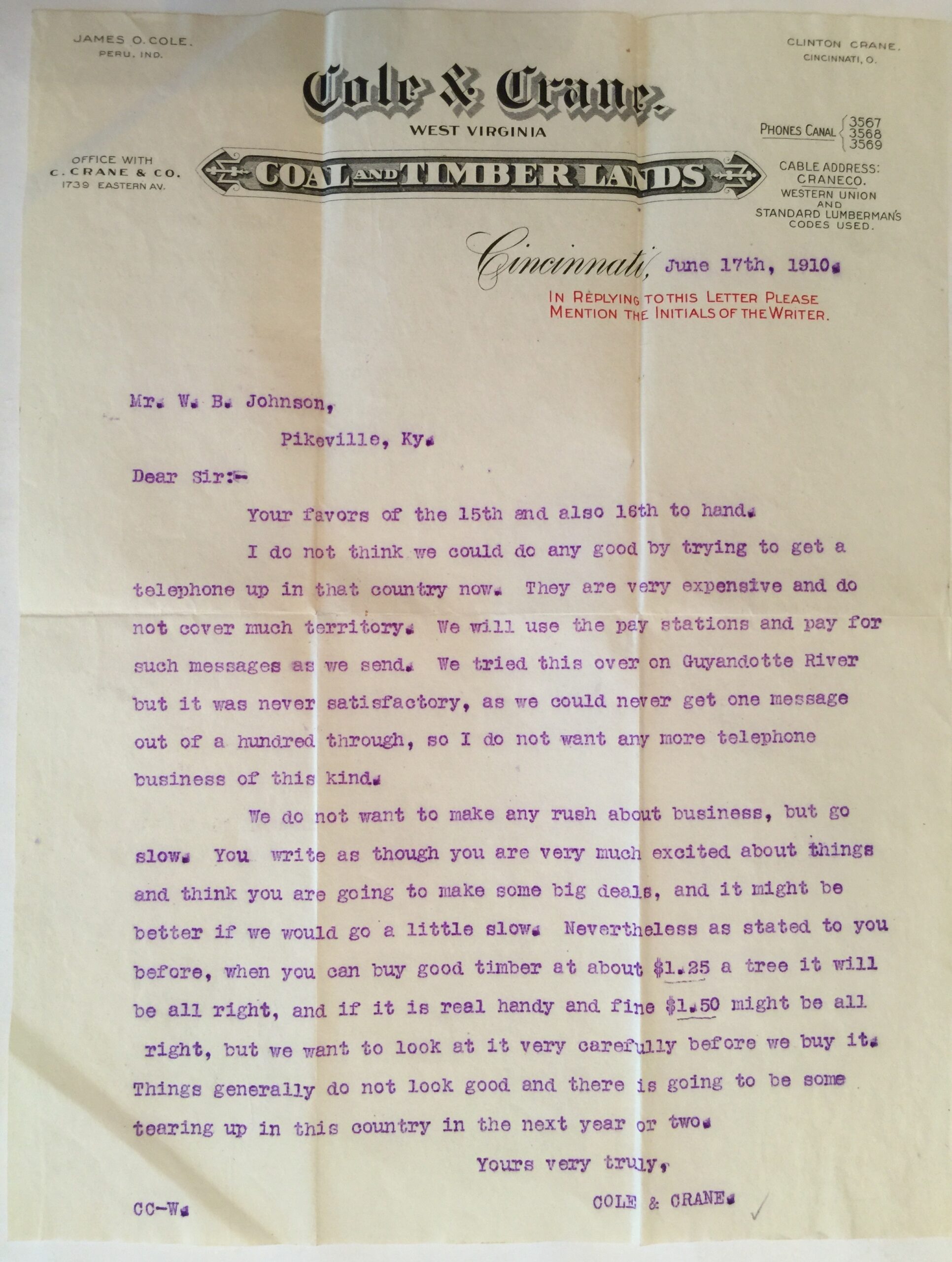
William Burnside Johnson from 1906 until his death in 1914 was the largest timber contractor for Cole & Crane. He had a close relationship and was personal friend of John W Langley.
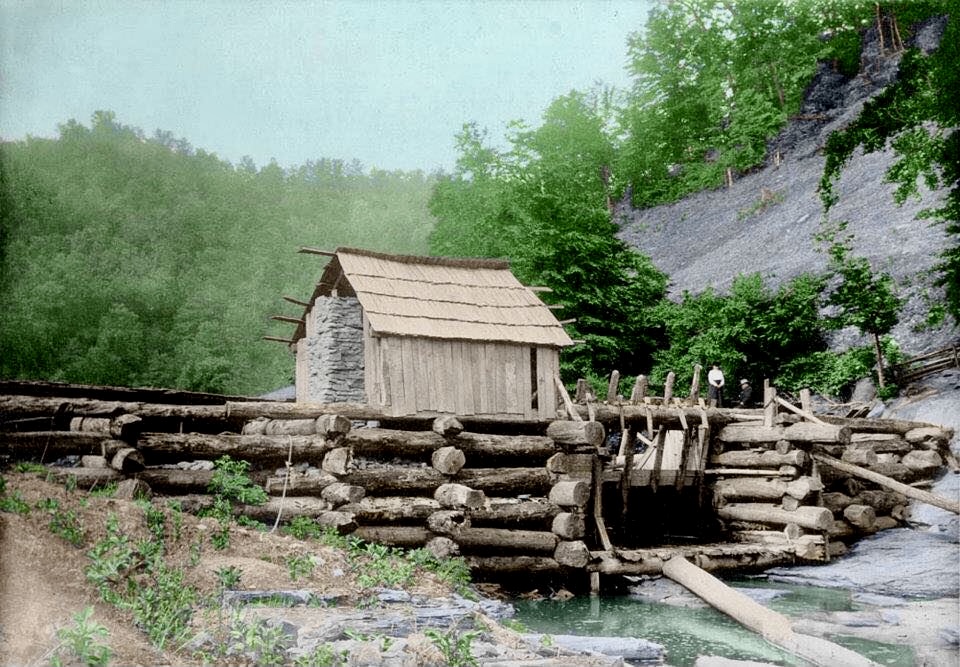
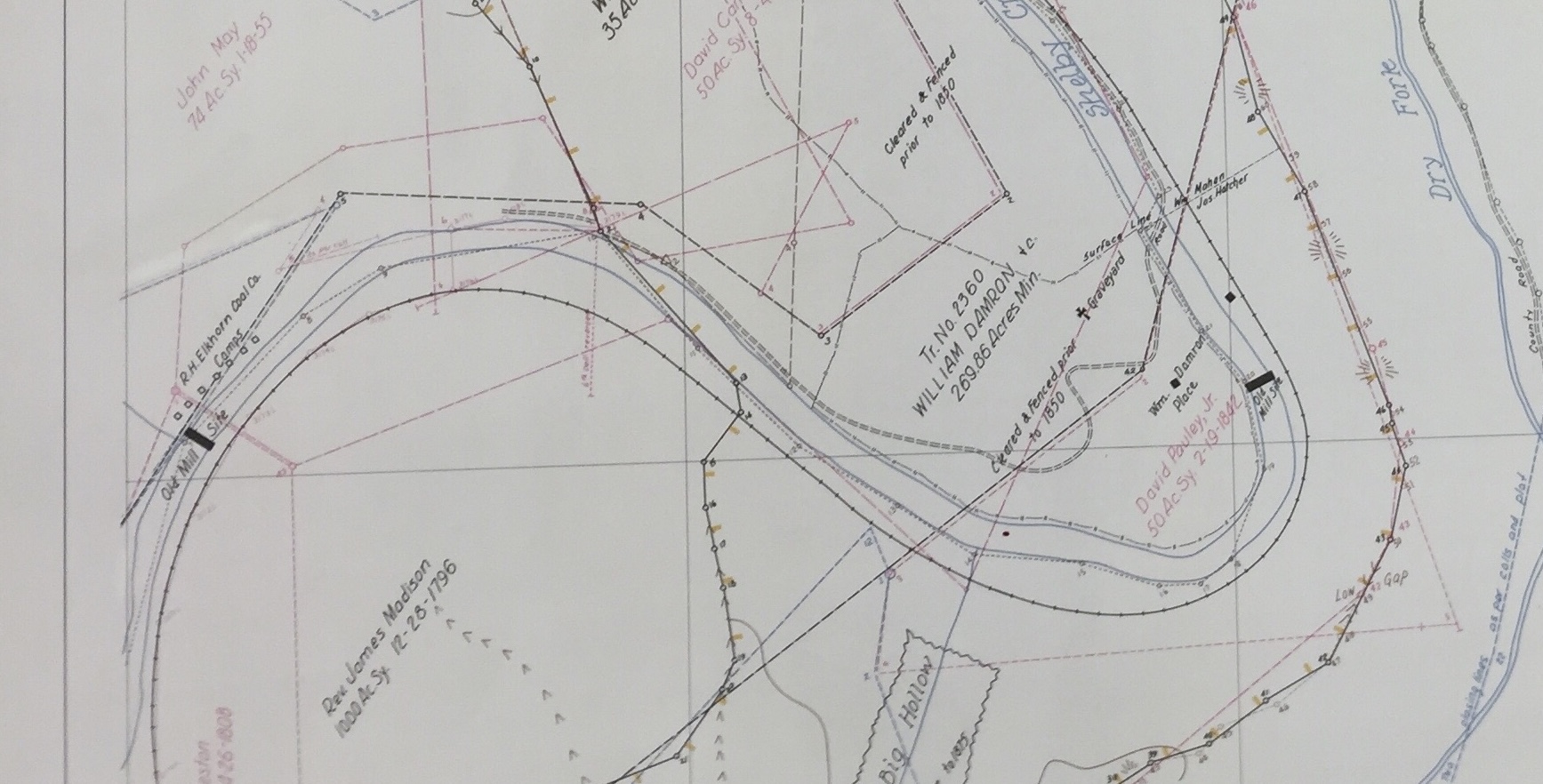
The John May Splash Dam standing ready for nearly a hundred thousand trees floating the Spring and Winter Tides on Shelby Creek. This Splash / Mill Dam was located between present day Willie & Pearl Riddle Farm and Branham Heights above Shelbiana, Kentucky. Just out in front of the Splash Dam you can find evidence of the Ole Mill Dam, gray faded logs bottom left side of Shelby Creek.
Favorite photograph of Theodore Roosevelt, presented to Mrs. Katherine Langley and John Langley by Teddy, March 3, 1909, the day before he retired from the Presidency. His cordial greetings, not shown, were written at the foot of the photo. Color Accents added by the Pike County Historical Society
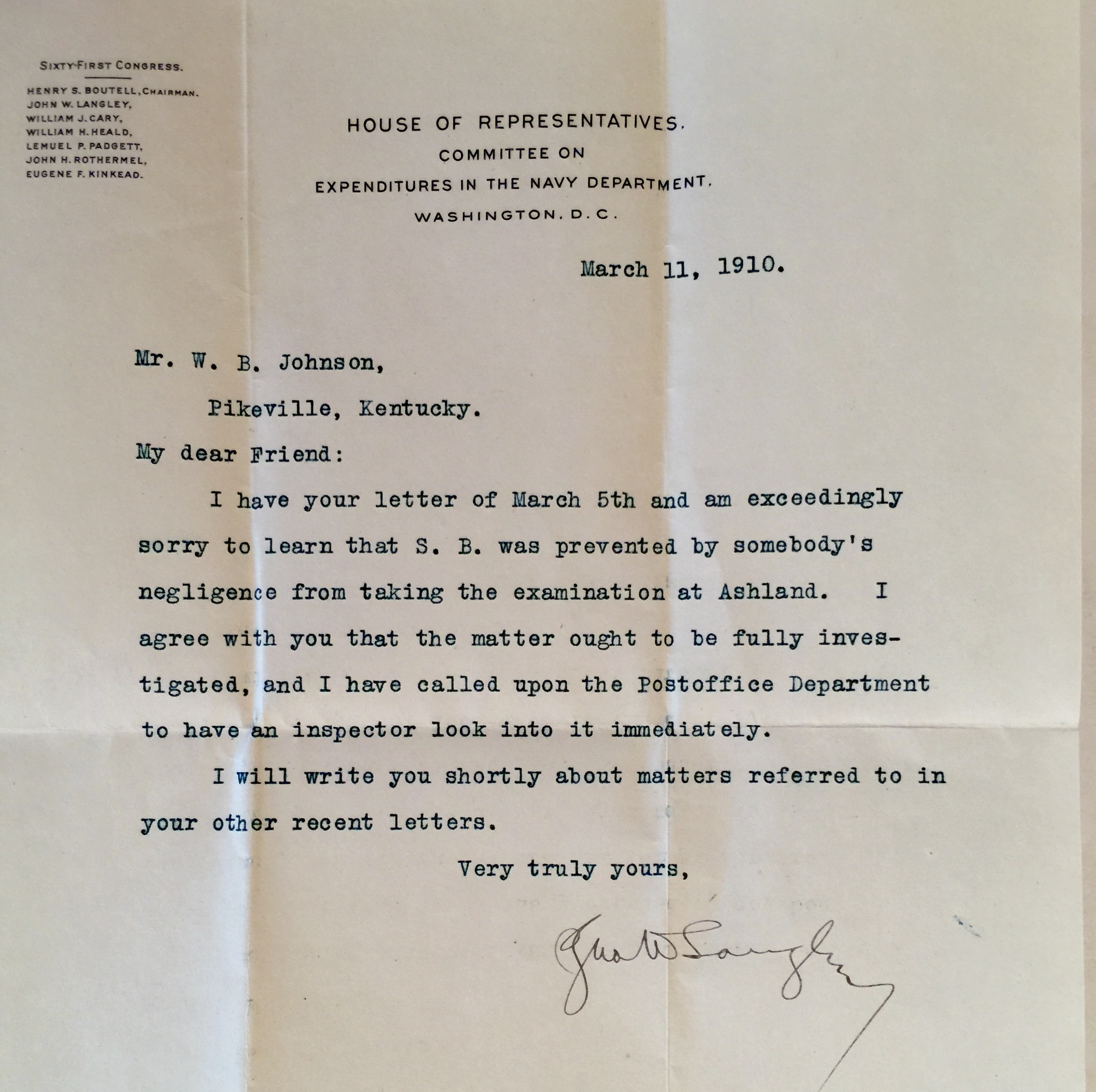
March 1910
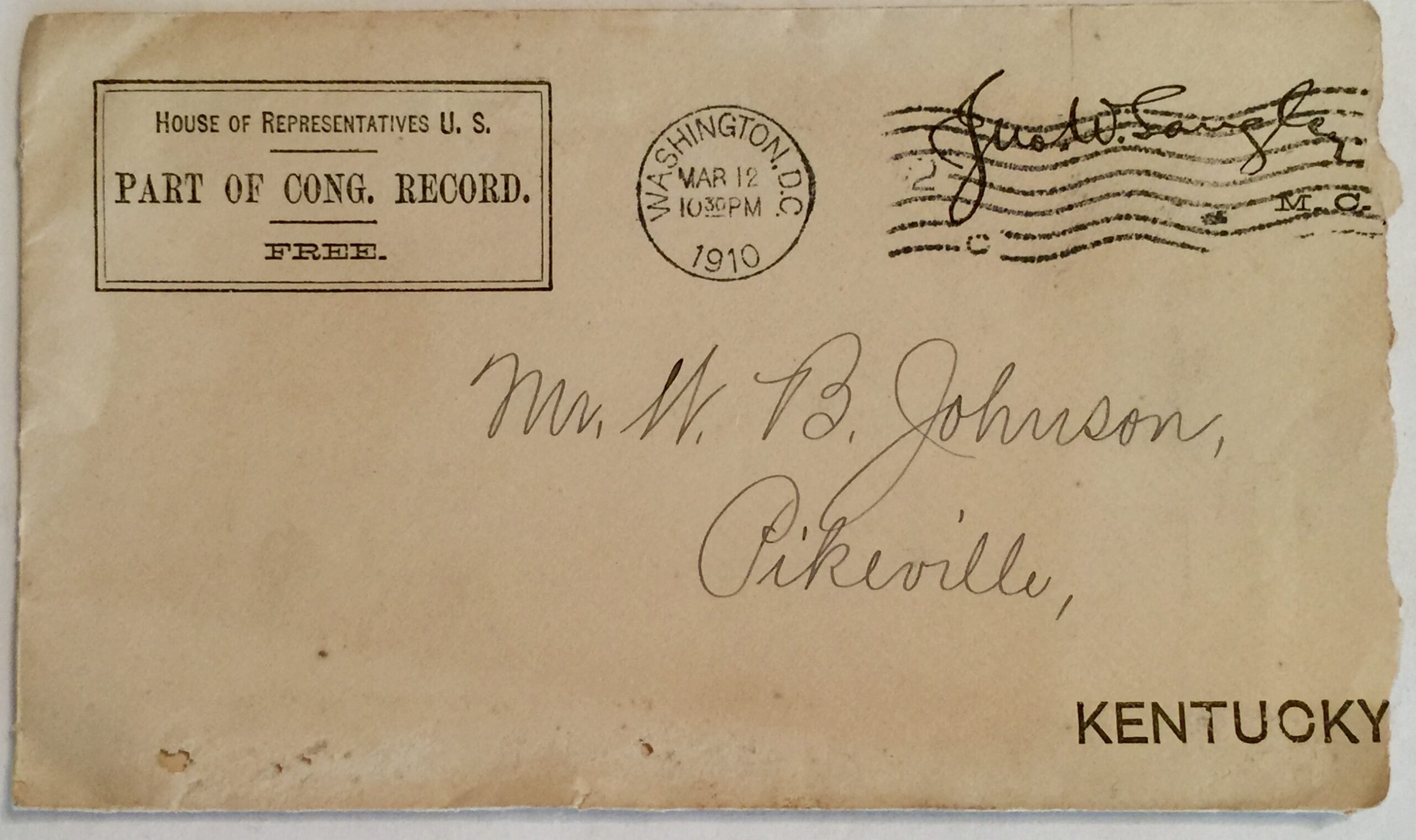
March 1910
CONGRESSMAN AS SEEN BY THE PRESS
A Good Friend From Kentucky of the Veterans
(Washington, D.C., May 26, 1910.) Hon. John W. Langley, of Kentucky, who is now serving his second term in Congress, has a final record of friendliness to the veterans. He was born in Floyd County, Kentucky, received his education there, and then began teaching school. He studied law and received the prize in two universities, and the degrees of Bachelor of Law, Master of Law, Dr. of Civil Law and Master of Diplomacy. He next excepted a position in the Pension Bureau and became a member of the Board of Appeals but left to become Disbursing and Appointment Clerk of Census Office. He also served a term in the Kentucky State Legislature and was twice delegate from Kentucky to the Republican Nashville convention. Therefore, he is an unusual well equipped all around, man, familiar with public business, and a valuable representative both for his abilities in Congress and his capacity to serve his constituents.
Since he has been in Congress, he has been looked up on as a steadfast, reliable friend of the veterans, one to whom they could appeal for employment and appointments. Since he has been in the house, he has introduced a great number of pension bills, and among them the national tribune pension bill; grand pensions to veterans of the Spanish war, and their widows, children, and dependent parents; granting pensions to military men who were disabled in service; granting a pension of $.50 a day to the widows of any officer or man who died or shall die by reasons of wounds or disabilities contracted in the service; granting two dollars a day for each day of confinement to those who were in rebel prison; granted a pension of one dollar day to everyone who has served 90 days in the Civil War, in addition of Shumer and private pension bills. He has made very effective speeches in the present session of Congress and supported these bills. Such is the popularity of Mr. Langley and his district that his majority has increased wonderfully every time he has come up for reelection.
Roosevelt endorsement for John W Langley, Sept 20, 1910
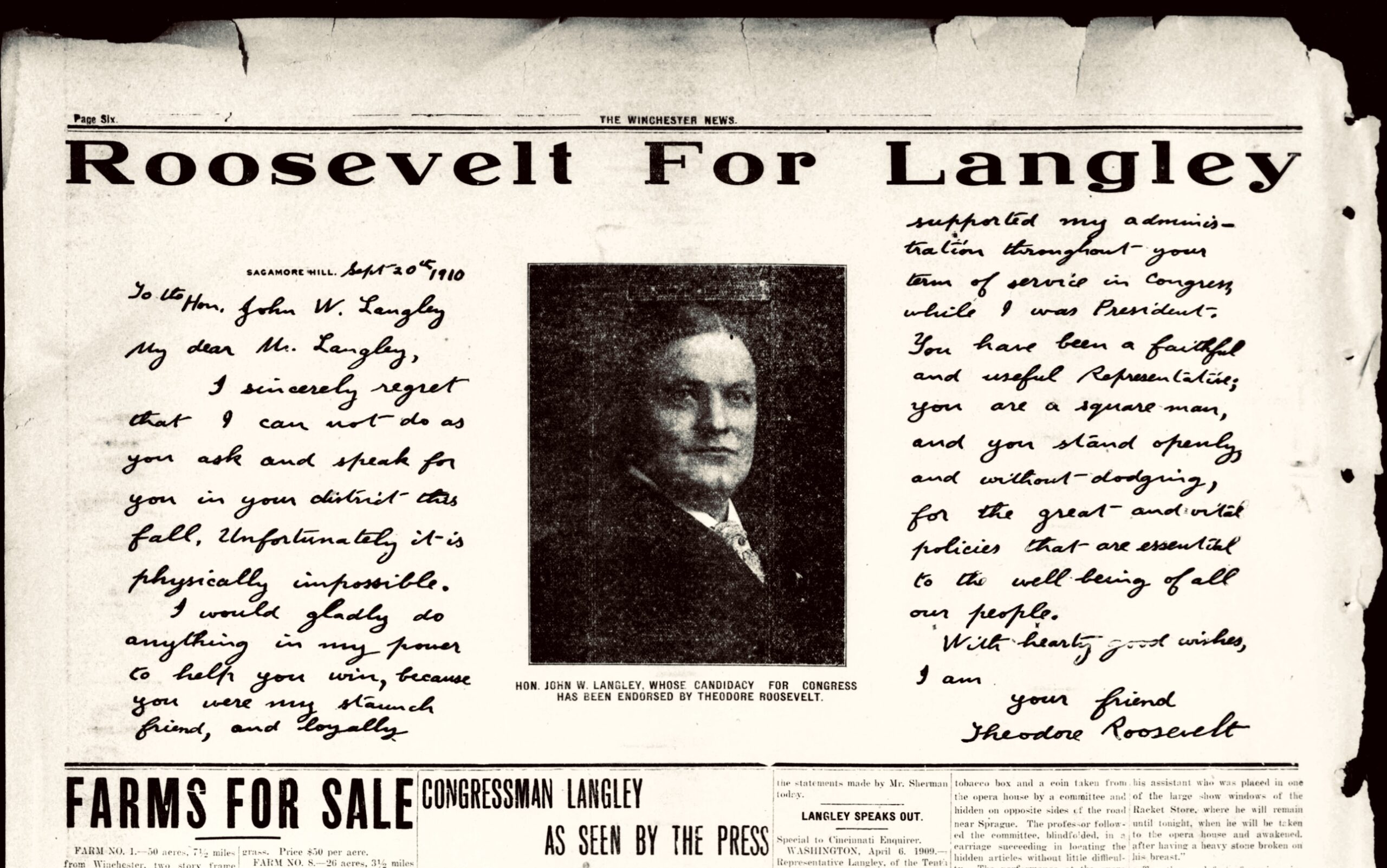
September 20, 1910
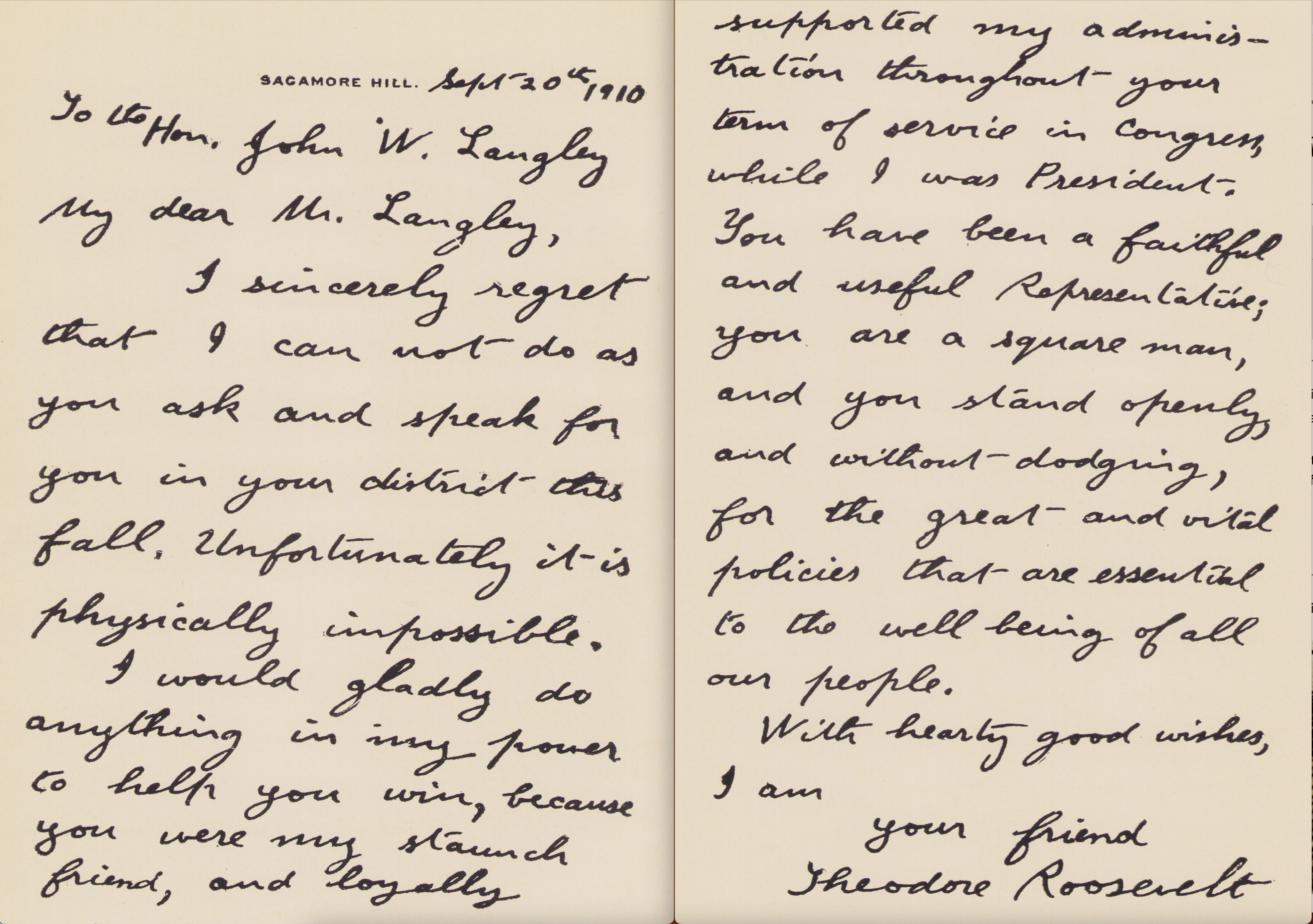
Colonel Roosevelt was to lecture at Cincinnati, in October of 1910. John received the following telegram from that city at his home in Kentucky.
“In the absence of Mr. Longworth I invite you to be a guest at our home on next Thursday afternoon at a reception to be given in honor of my father.”
(Sgd.) ALICE LONGWORTH.
The Williamson Enterprise, March 23, 1911
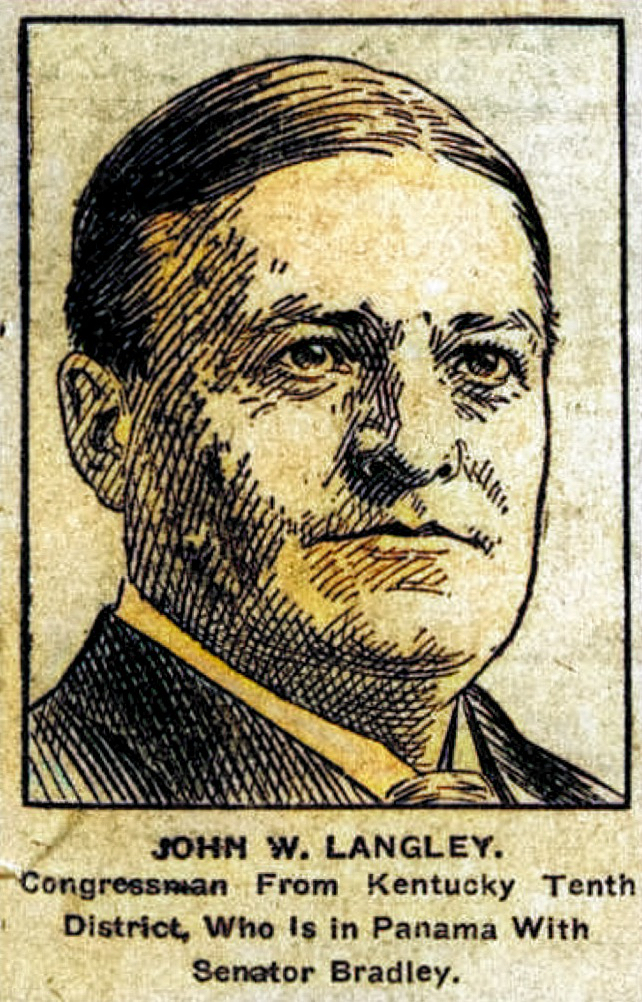
The Daily Telegram, Clarksburg, West Virginia, May 12, 1912
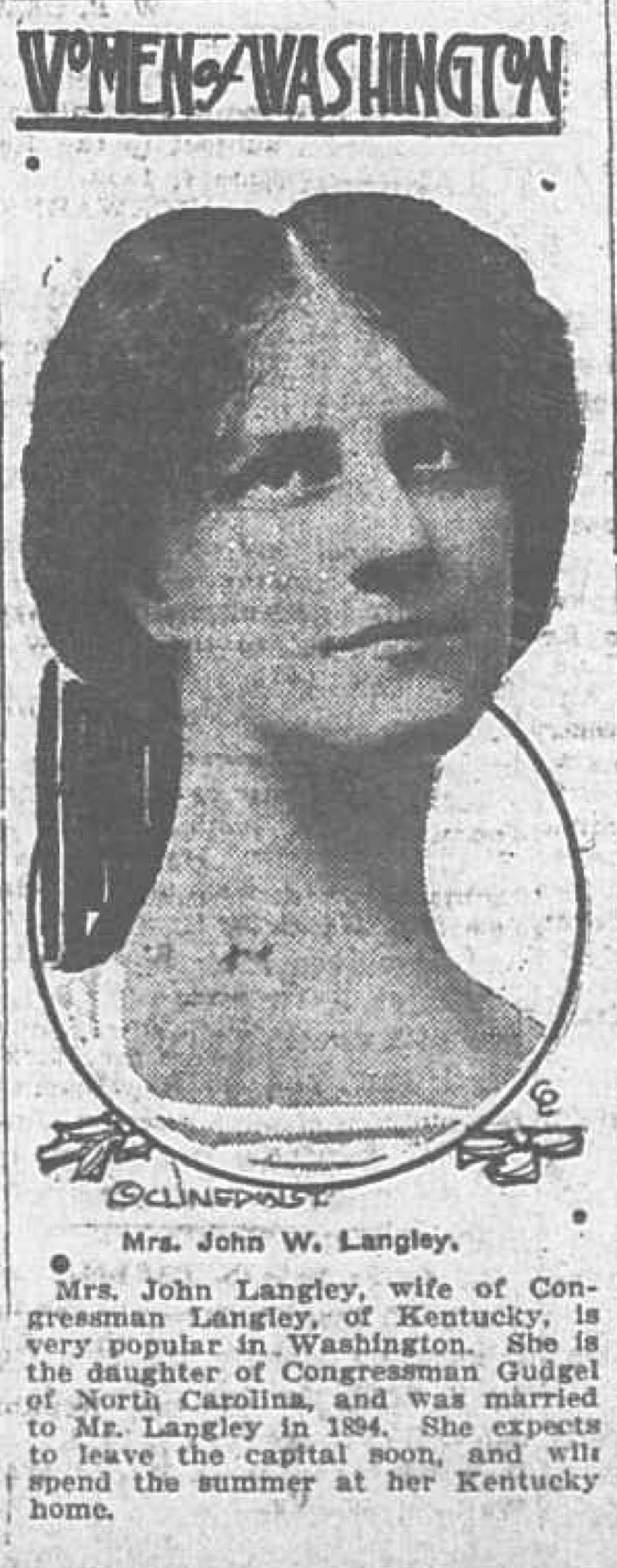
Clinch Valley News November 8, 1912.
Teddy Rosevelt goes down to defeat in the Presidential Election of 1912 to Woodrow Wilson
Oyster Bay, N. Y., Nov. 5: Shortly before midnight Roosevelt issued a statement conceding the election of Wilson. He sent Wilson a message of congratulations. Roosevelt said: “I accept the result with entire good humor and contentment,” adding that the Progressive cause must in the end triumph.

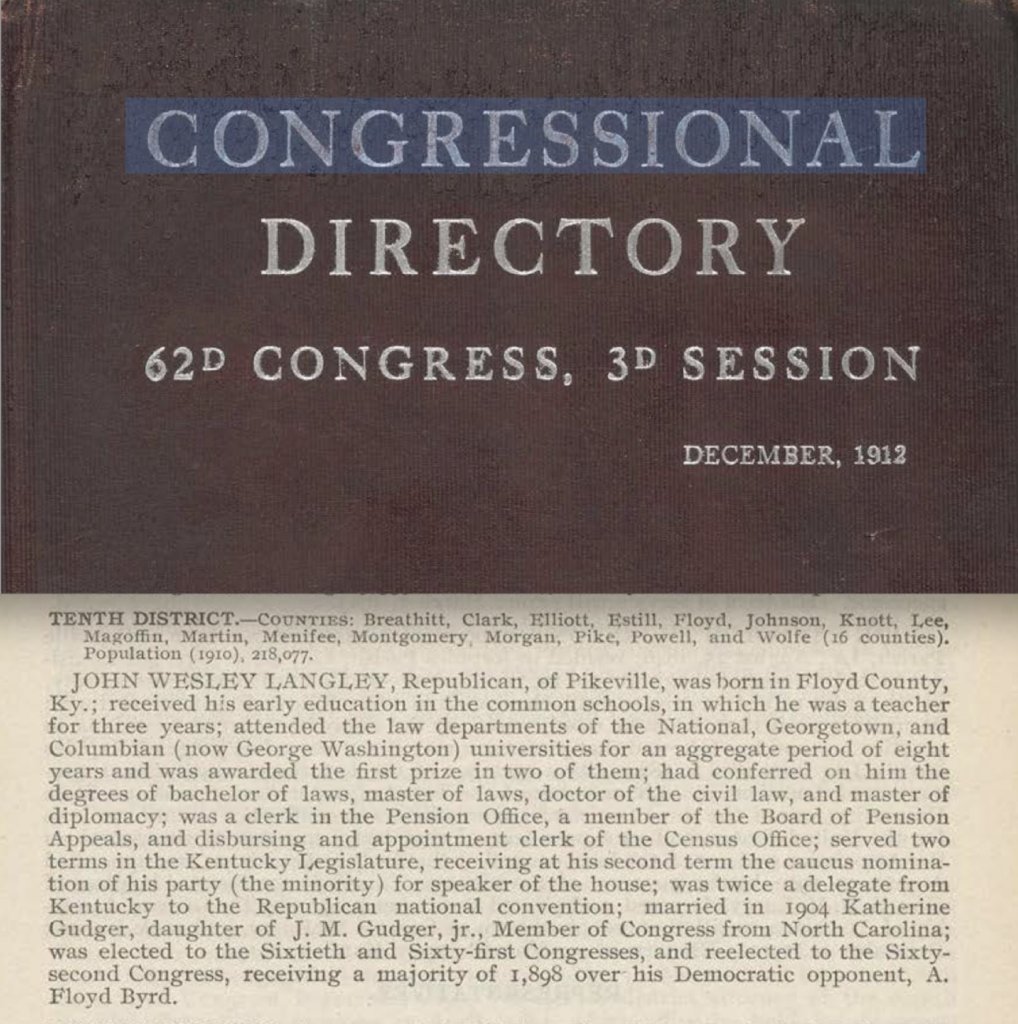
December 1912 Congressional Directory
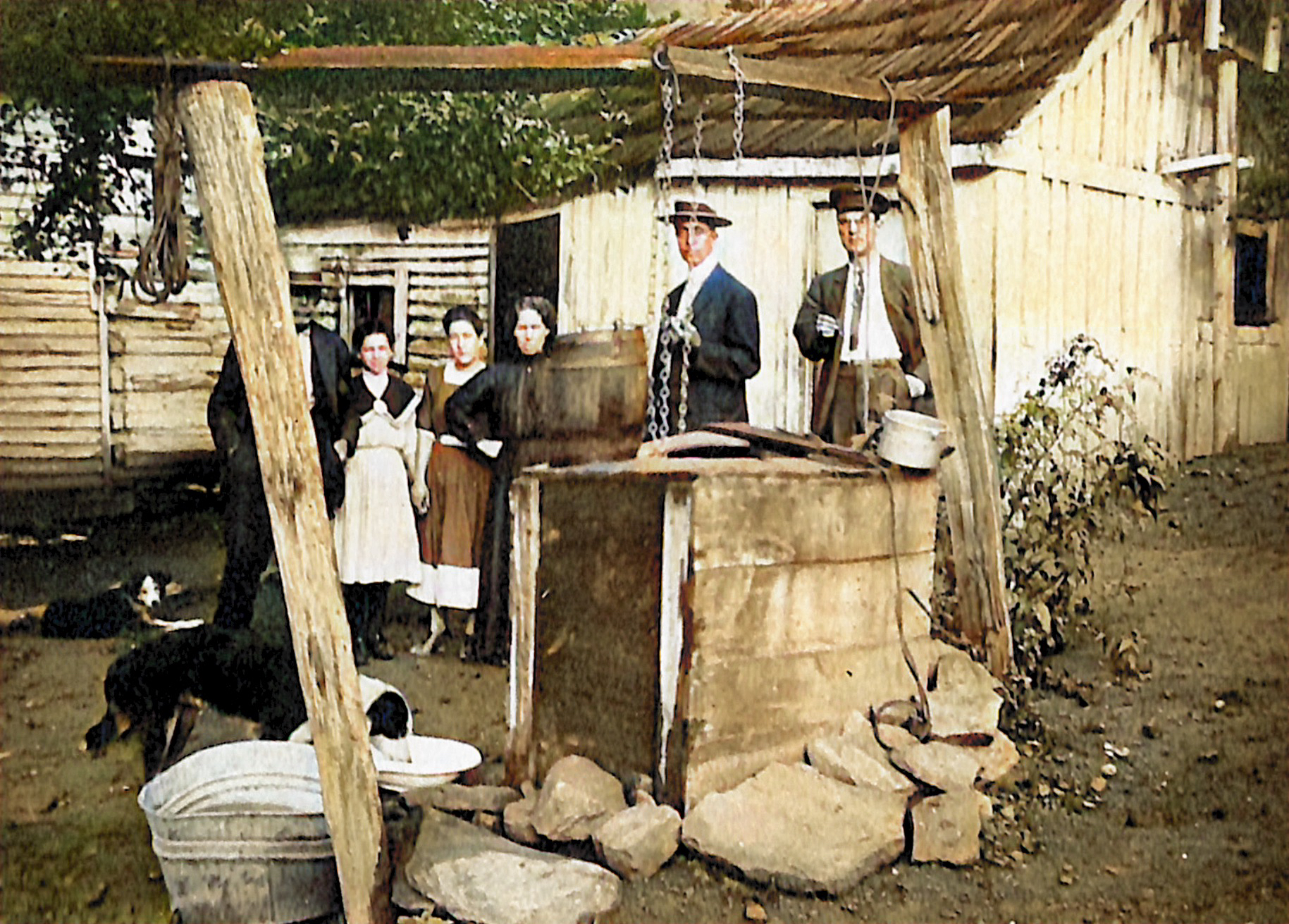
In 1913, 36 States ratified the 16th Amendment to the Constitution, giving the federal government power to directly levy income taxes.
Photo taken September 1913, soon after construction of the unincorporated town of Weeksbury, Kentucky. Campbell Bascom Slemp, second from the right, was touring Left Beaver Creek in Floyd Co., in John W Langley’s 10th US Congressional District. Slemp was elected to his father’s old Virginia 9th District from Big Stone Gap, serving from 1907 until March 3, 1923. CB Slemp was in partnership in several Mineral Holding Companies with John CC Mayo in Letcher, Knott and Perry Counties.
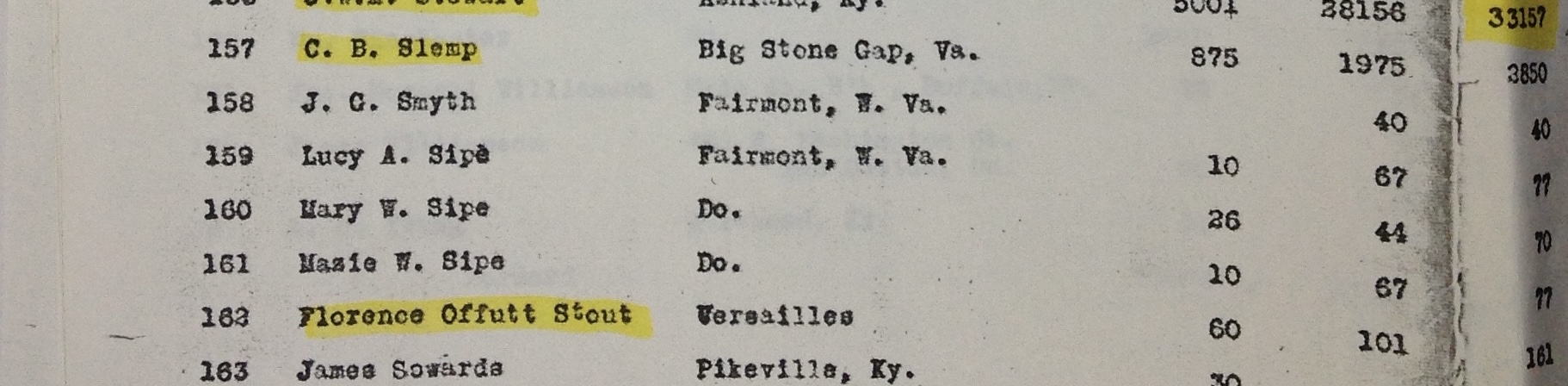
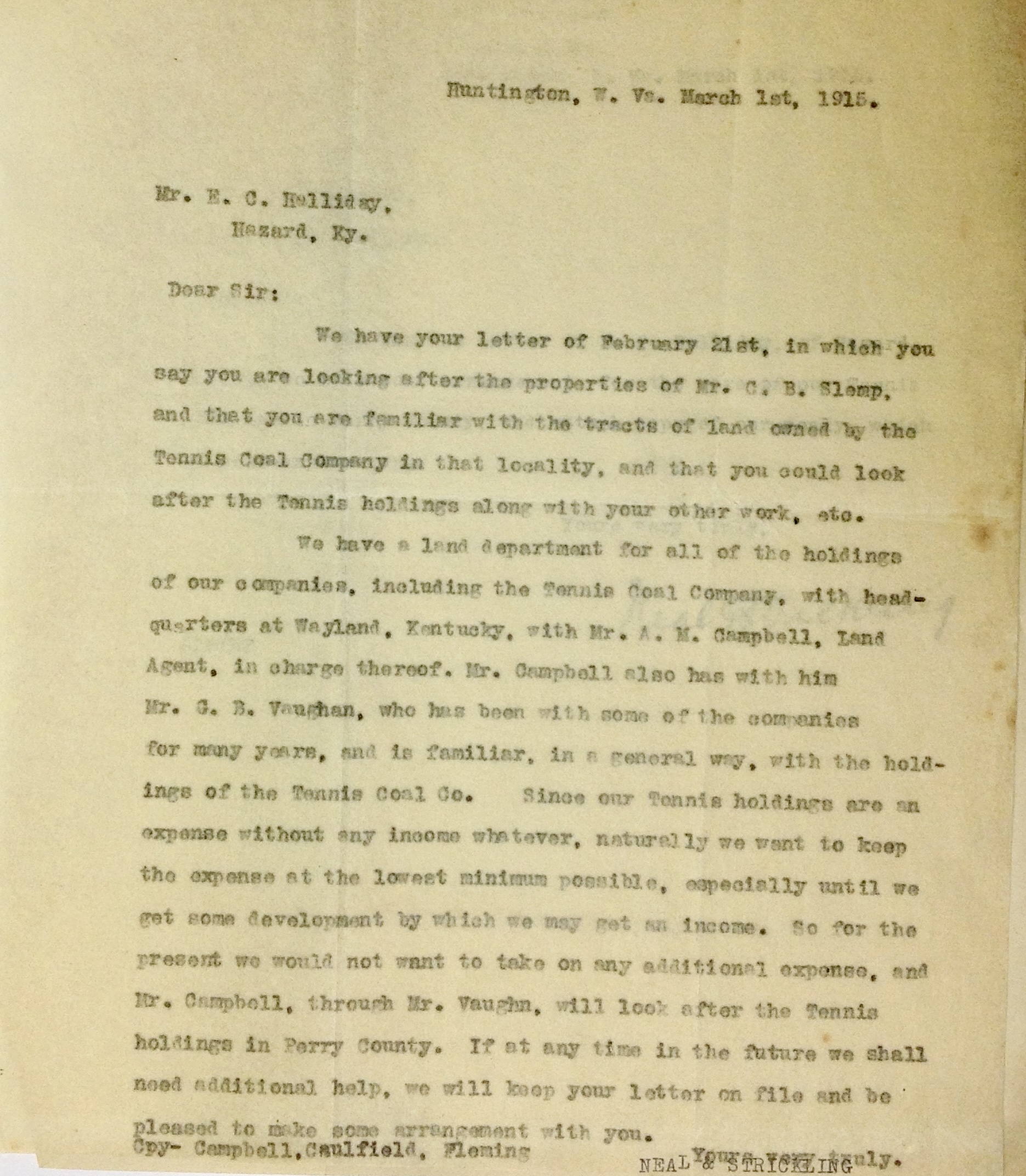
Campbell Bascom Slemp, a major stockholder in Elk Horn Fuel Company August 14, 1914
Preferred Shares…875, Common stock 1975 Shares
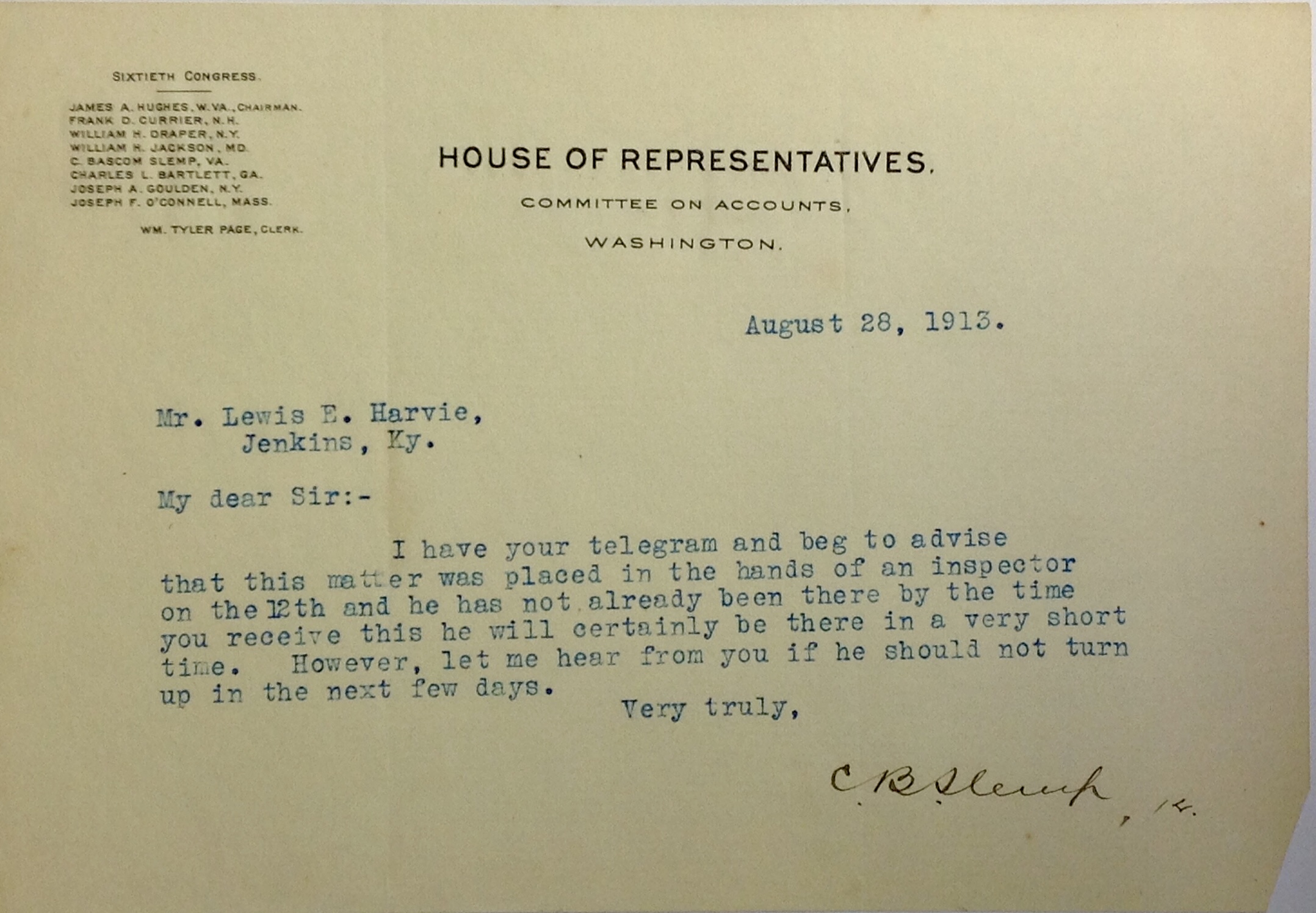
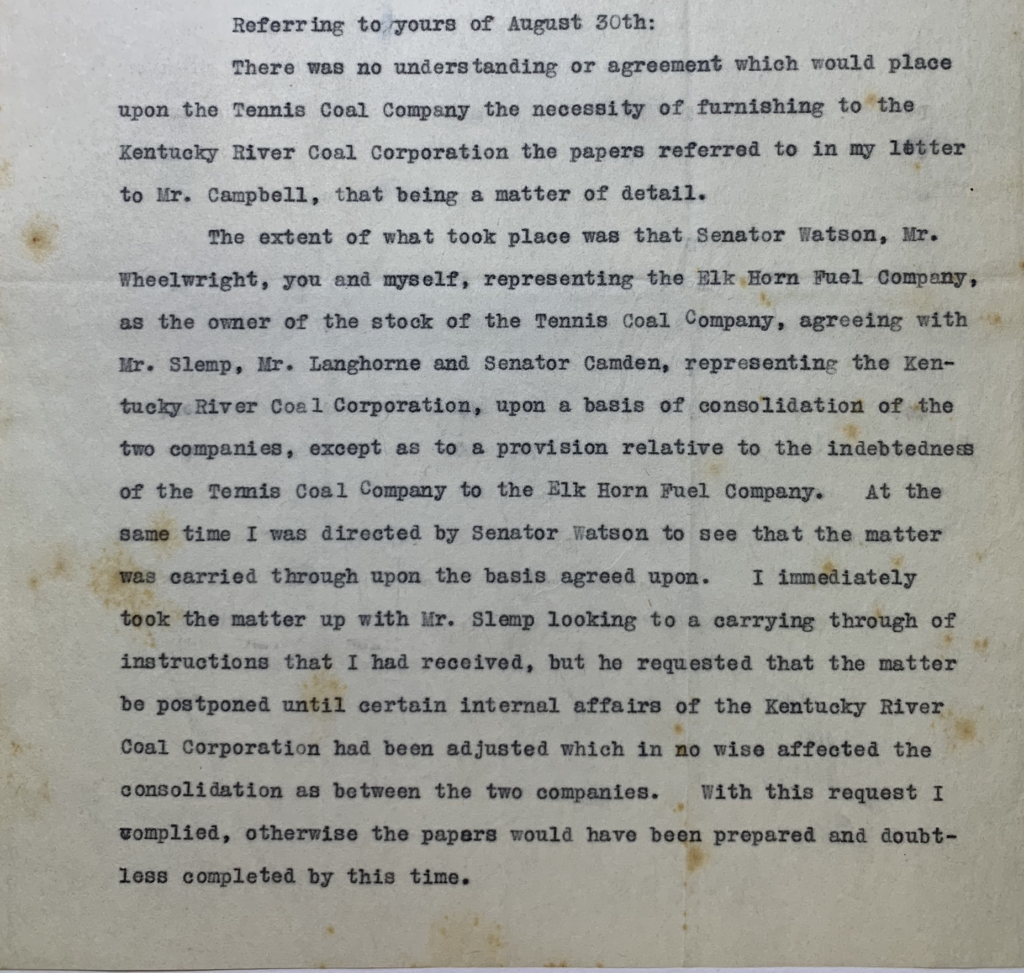
Inner company memo from 1915
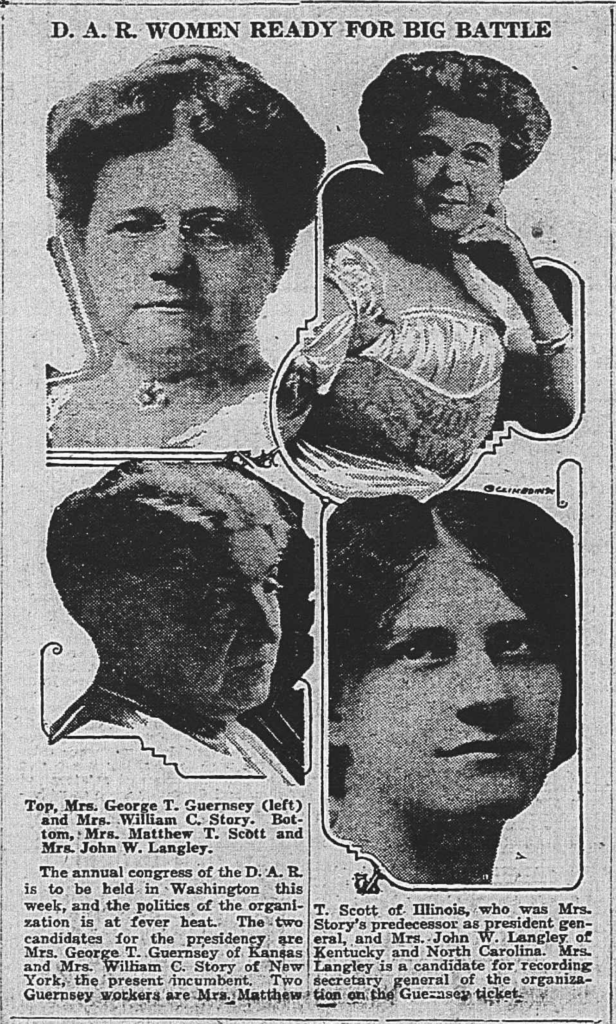
The Sunday Telegram, Clarksburg, West Virginia, April 18, 1915
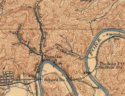
John W. & Katherine Langley’s Home at the Mouth of Ferguson Br. The location for the home was shown on 1916 USGS Top Map
Pike County Mortgage Book
October 15, 1914, indenture between John W Langley & Katherine Langley first part, and Christopher H. Pope and Milton J. Lambert Trustees of Washington D.C. The party of the second part loaned the party of the first part Six Thousand Dollars evidenced by three(3) promissory notes of Two Thousand Dollars, each due and payable at the Muncy Trust Company, Washington D.C., two years from date with interest at six (6) percent.
Pike County Deed Book L, Page 428
The Levisa / Big Sandy Flood of 1918

The National Prohibition Act, 18th Amendment: On January 19, 1919, the 66th United States Congress ratified the 18th Amendment, banning the manufacture, sale and transport of alcoholic beverages. However, there were no provisional funds for anything beyond Token Enforcement.
18th Amendment Splits the Country – Everyone is forced to choose – you are either a “dry” in support of Prohibition, or a “wet.” But one thing’s clear, Prohibition is having little effect on America’s thirst. Underground distilleries and saloons supply bootlegged liquor to an abundant clientele, while organized criminals fight to control illegal alcohol markets. The mayhem prompts the U.S. Department of the Treasury to strengthen its law enforcement capabilities.
On October 28, 1919, Congress passes the Volstead Prohibition Enforcement Act which delegates responsibility for policing the 18th Amendment to the Commissioner of Internal Revenue, Department of the Treasury. Both legislations become effective on January 16, 1920. The Prohibition Unit is created to enforce the National Prohibition Act from 1920 to 1926. Men and women are hired to serve as prohibition agents and are themselves referred to as “Dry Agents,” by the public.
Organized criminal gangs illegally supply America’s demand for liquor, making millions and influencing the country’s largest financial institutions. Vast criminal fortunes corrupt enforcement officers, prosecutors, judges, juries and politicians.
The Bourbon News. November 21, 1919
Prohibition came into force at 12:00:01 am on January 17, 1920
But getting there was a major Challenge
SECO MAKES APPEAL TO U.S. CAPITAL FOR DOCTORS
The Big sandy News February 13, 1920
Washington. – Representative John W. Langley has asked the Public Health Service to send aid to Seco, Letcher county, where most of the physicians are ill with either meningitis or influenza and where both diseases are said to be epidemic.
The Hartford Republican, August 13, 1920
The Adair County News, October 3, 1920
WOMEN IN BOTH PARTIES AGREE
While Opposed In Political Campaign They Are United On Kentucky School Problems
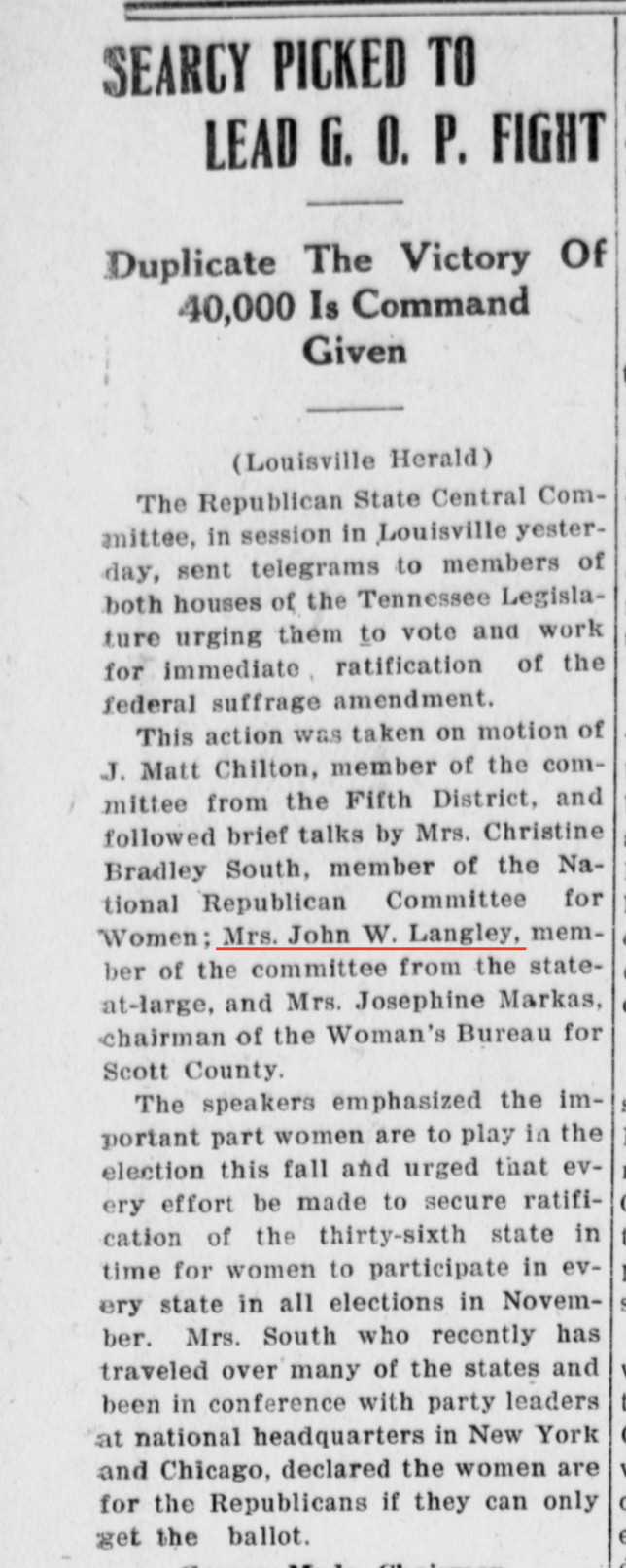
Mrs. John W. Langley, Chairman when serving on Republican Campaign Committee, gave her correspondent the following interview concerning the new school laws and the coming election of the County Board of Education in November:
“To my mind, the greatest forward step that has been taken in the direction of higher standards of education was the ratification of the 19th amendment to the federal Constitution, placing the ballot in the hands of women, and for the reason that her influence is essential and more constantly wielded than that of the men in whole life of the children, which is the formation of their character and the most enduring part of it.
“This is not because women realized anything more fully than men doing the vital importance to the future of this nation. I’ve a good clean SKU system, but because, as the history of the civilization from its beginning to the present shows, the mother’s influence is greater than the father’s over the children of their household. It therefore follows as a matter of course that this added power to aid in consummating her ideals will be exercised to the maximum.
“No one will seriously maintain that better education will affect the political alignment of the people. It will only better equip them for deciding how intelligently they cast their votes on any political question. They will continue in the future, as they have done in the past, to entertain divergent views as to what characters of legislation and administration is best calculated to advance the interest of the state and the nation. The point I wish to make is that the question of education should be exalted above political questions, and entirely divorced from them.
“We must secure a deeper interest on the part of all of our people in this greatest of all movements, for after all has been said and done, we cannot fully prepare the children of today for the duties and responsibilities as citizens unless we succeeded in getting public sentiment crystallized behind all strong school movements,”
Mrs. John W. Langley believes this is now being accomplished by the recent legislation, which has been put into the action and that good results of these laws will continue to grow as time passes.
Mrs. John W Langley sincerely believes that the good women of our state are going to put their whole hearts, their minds, and their strength into this movement and use the ballot accordingly. If they do, success is certain, and we will have a happier, brighter, and better Kentucky.
CONGRESSIONAL VOTE. Kentucky was rather proud of her vote in Congress, but one of the eleven representatives from Kentucky voted against the Federal amendment. Kentucky suffragists can easily remember back to the time when in both houses of Congress Kentucky could muster but one vote for the Federal Suffrage Amendment, that of the Hon. John W. Langley. Of her two Senatorial votes, she had gained one, that of Senator George B. Martin, who succeeded Senator Ollie James. Senator J. C. W. Beckham backed by Big Coal and Railroad Corporations remained firm, however, in the wrong, and continued to the end to cast his vote against the amendment, a fact which Kentucky women are not likely to forget. Shortly after this victory, we were obliged to give most reluctantly an honorable discharge to our Congressional chairman, Mrs. Julia Duke Henning, who had done most excellent work for us.
19th Amendment: Women’s Right to Vote had finally passed through the U.S. Senate on June 4, 1919, Ratified by 36 States February 1920. But Battle for Ratification started in the beginning of 1920 when two states, Rhode Island and Kentucky, crossed the finish line first. The states across the finish line on January 6, 1920, had been wrestling with women’s right to vote for decades. Rhode Island, the first with a statewide suffrage organization, voted nearly unanimously to ratify the 19th Amendment. Later that afternoon, the vote in Kentucky to ratify was much closer but still decisive. Women had been voting in school elections in rural areas of Kentucky since 1838, ten years before the Seneca Falls Convention. Decades attempts to fully enfranchise women in both states has fallen short so far. With these two ratifications, women in Rhode Island and Kentucky, women’s suffrage moves closer to the finish line. The November Election in 1919 gives the Republicans control over State of Kentucky House and Senate, and votes needed for ratification.
John W. Langley and the historic champion of woman suffrage, Susan B Anthony, had previous history long before the ratification of the 19th Amendment. The first meeting started in the spring of 1883 when Langley was a clerk in the Pension Office. One night John Langley was in the room of Congressman John D. White of Kentucky, addressing garden seeds to the home folks. The attendant brought in a card, whereupon White turned to John and said: “Now, John I am going to introduce you to the smartest woman in the United States.” Presently a lady entered, and he said: “Miss Anthony, this is young Mr. Langley of my district.” Raising her glass a little she remarked, “Oh, this is one of your mountain scrubs, is it?” Langley felt deeply insulted and without a word returned to his addressing work. Several years later when John was in the Legislature, Anthony heard that John believed in woman suffrage. John was surprised one morning as he sat at breakfast, to receive a call from Susan B. Anthony, who was accompanied by Mrs. Elizabeth Cady Stanton and Mrs. Lew Wallace, mother of the author of Ben Hur.
They wanted John to get the Kentucky House to pass a resolution authorizing them to use the legislative chamber that night for a women’s rights meeting. During the conversation, John reminded her of the garden seed incident some years before. It took him quite a while to get in a good humor with her, but finally, they were able to have a merry chat about the happening. John was in such a hurry to carry out the resolution matter that he forgot all about his breakfast.
John Langley would always remember with pride that the first woman member of Congress gave him all she had left (at least 15 minutes) when they were discussing the women’s rights bill, although many were clamoring for a part of that time, including Miss Jeanette Rankin of Montana. Incidentally, John stated that he had considerable correspondence with Anthony and had in his possession a number of her autographed letters from years past.
1920
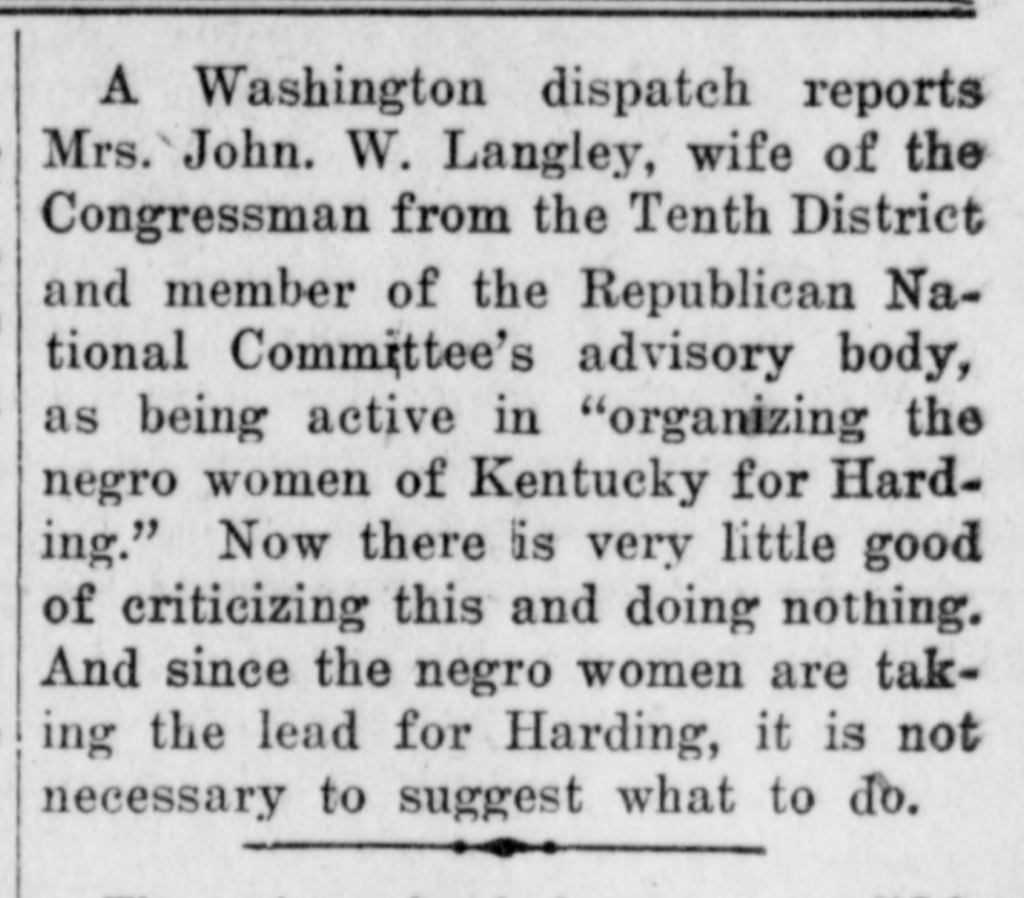
Big sandy News, May 7, 1920. Langley for Senator
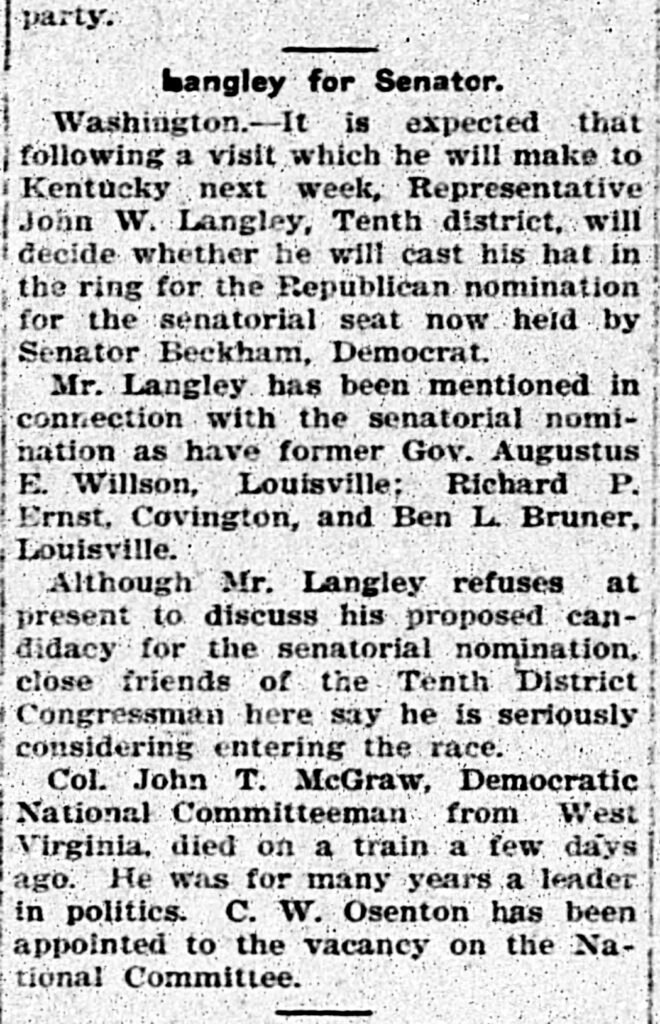
The Bourbon News, May 11, 1920
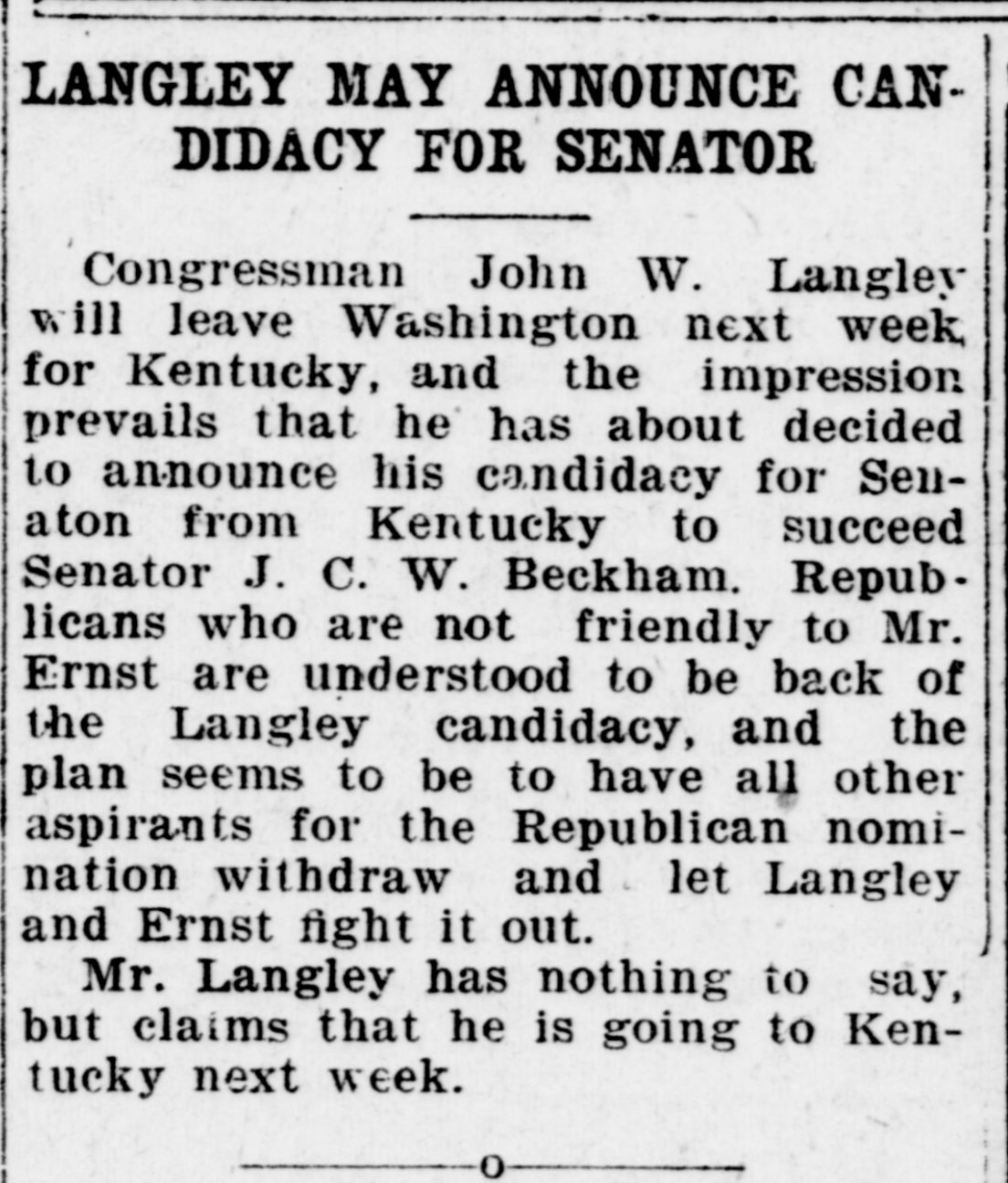
In the same week in the Bourbon News Richard P. Ernst make his bid to run for U.S. Senate in Kentucky. The Citizens from Covington are excited.
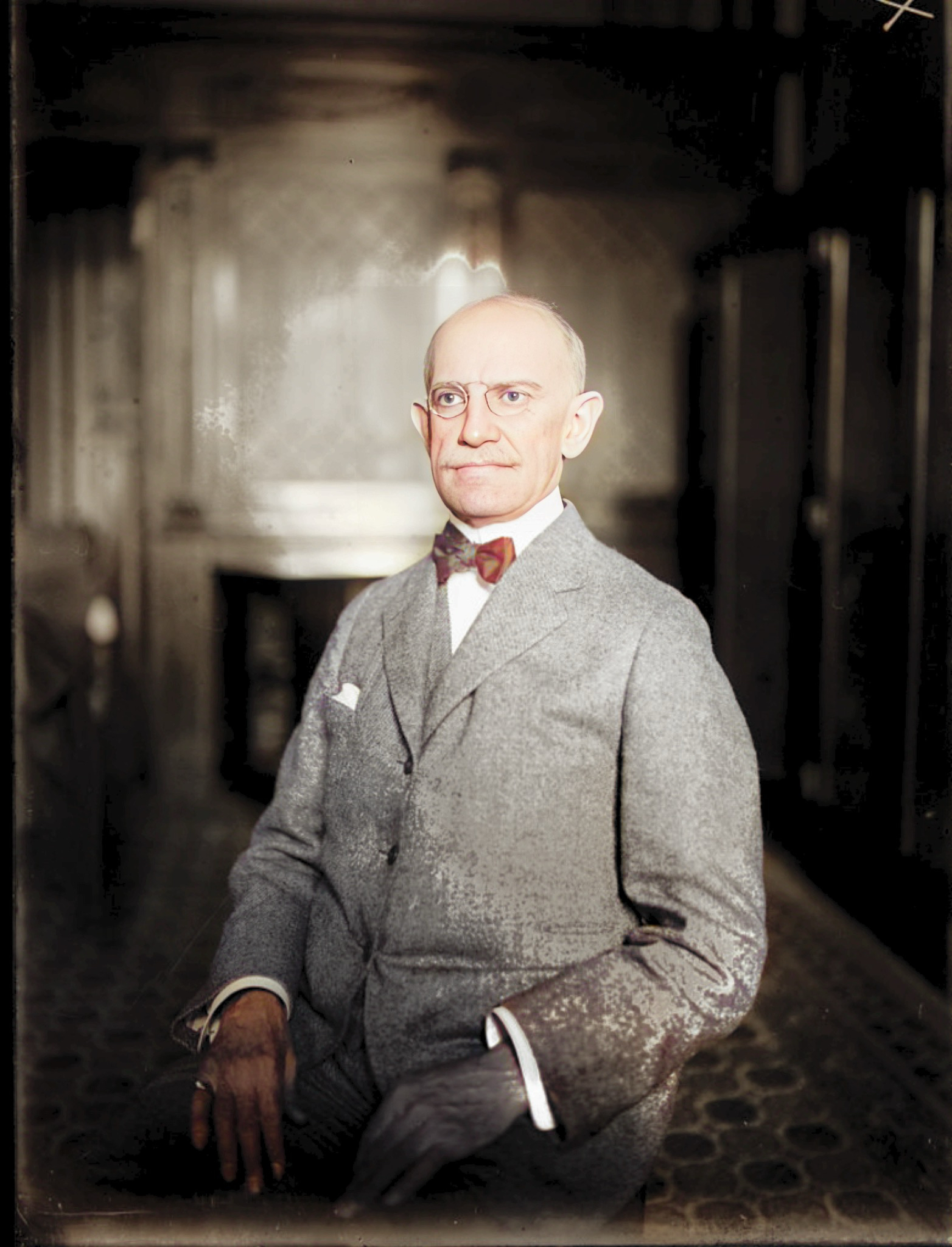
Senator Richard P. Ernst: Library of Congress
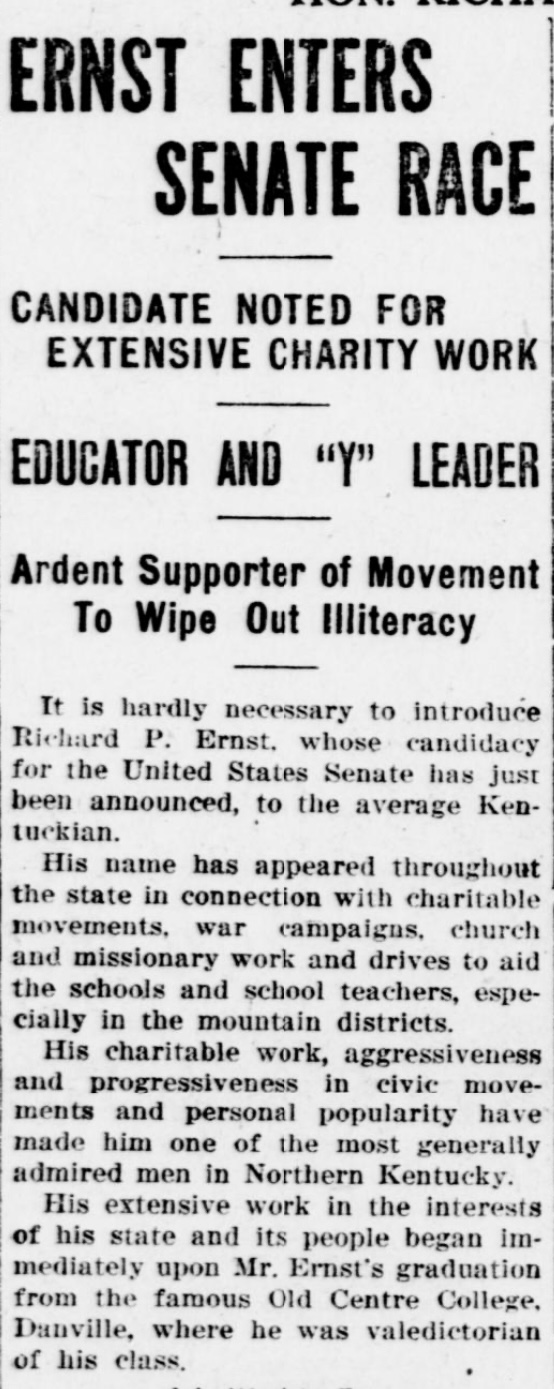
The Big Sandy News, Oct 29, 1920
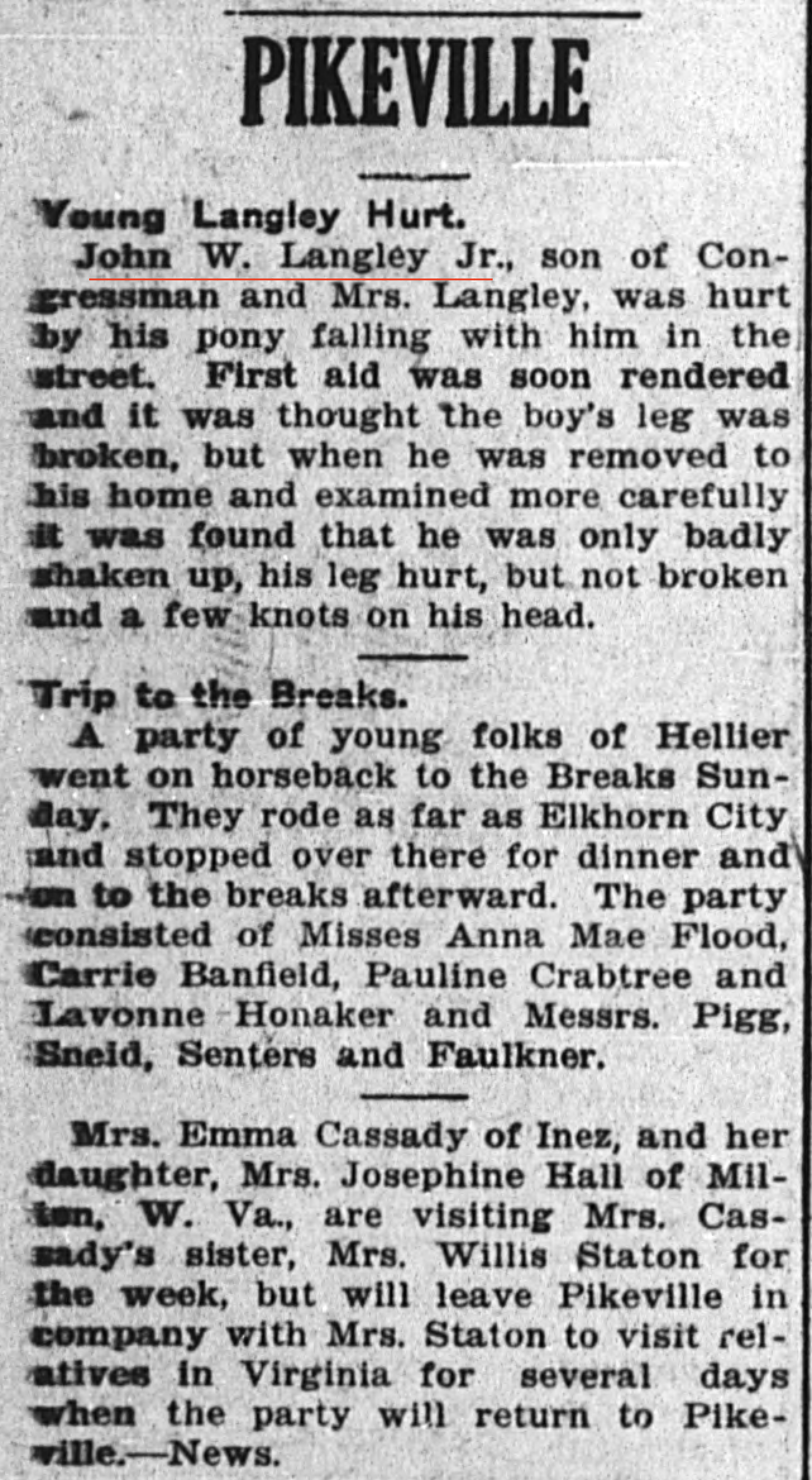
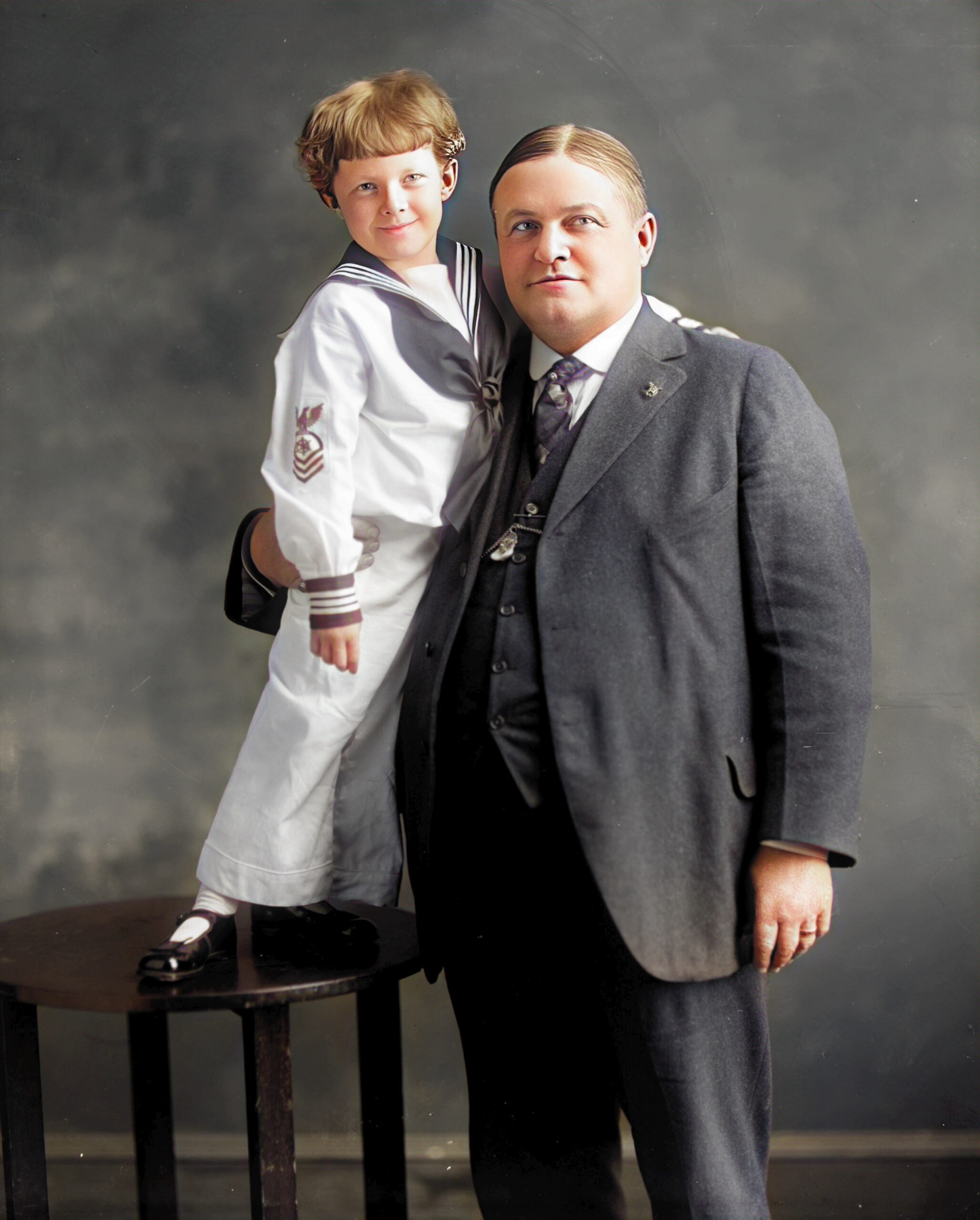
John W Langley Jr. & Dad
Presidential Election of 1920
By 1920, World War I was over. The wartime boom had collapsed. Diplomats and politicians were arguing over peace treaties and the question of America’s entry into the League of Nations. Overseas there were wars and revolutions; at home there were strikes, riots and a growing fear of radicals and terrorists. Disillusionment was in the air.
The giants who had dominated the political scene for a generation were gone — Theodore Roosevelt died in 1919 and Woodrow Wilson was a broken invalid living in seclusion. Even so, the presidential election of 1920 continued the debate between the nationalistic activism of Roosevelt’s presidency and the global idealism of Wilson’s administration.
THE REPUBLICAN NATIONAL CONVENTION 1920
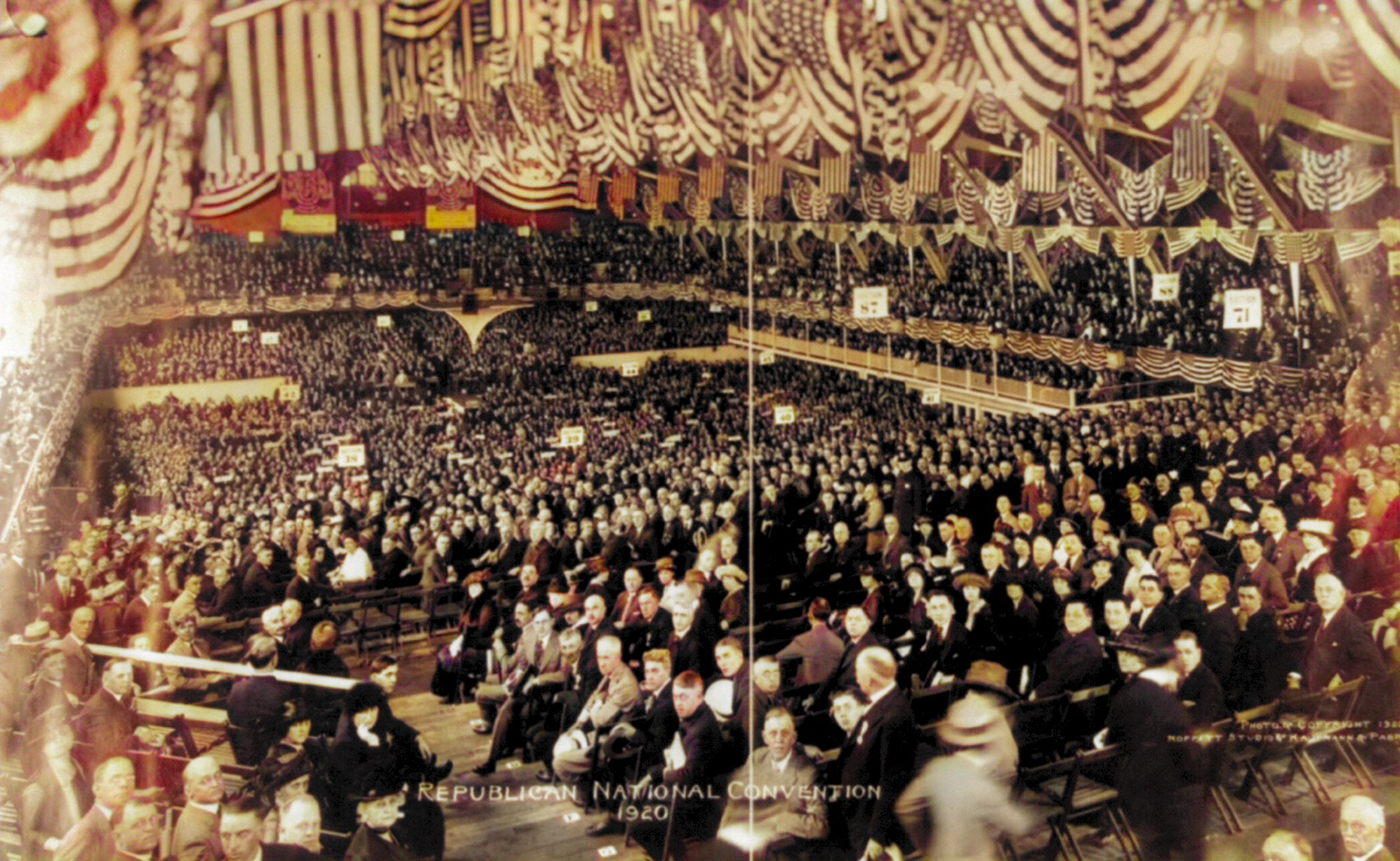
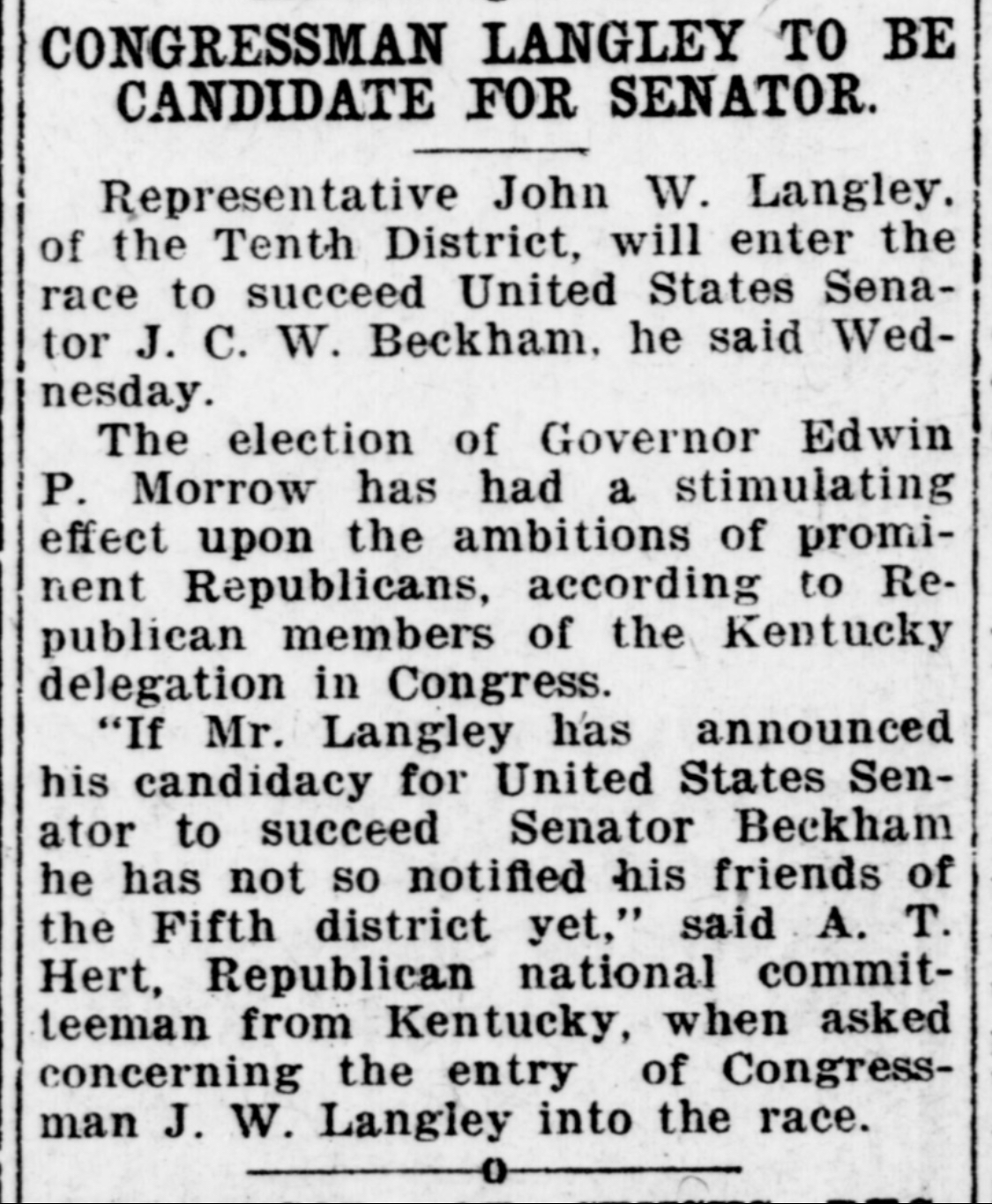
On June 9, 1920, an Ohio political insider named Harry Daughtery begins promoting Warren G. Harding’s nomination for president. Alvin Tobias Hert was pushing Lowden, Lowden started faltering. Harding endorsements started getting traction from A.T. Hert with the Republican National Committeeman and Chairman, the big boss of the Republican Kentucky delegation. Mrs. Katherine Langley was also committee woman with the Republican Kentucky delegation. This left A.T. Hert with more political clout with the future President Elect, and a lot of future Presidential promise from Harding, if elected. There was still a National Election to win and Mrs. Katherine Langley had a large field of black voters in her following.
On June 12, 1920, the Republicans nominated Warren G. Harding, an Ohio newspaper editor and United States Senator, to run for president with Calvin Coolidge, governor of Massachusetts, as his running mate. The Democrats nominated another newspaper editor from Ohio, Governor James M. Cox, as their presidential candidate, and thirty-seven-year-old Franklin Delano Roosevelt for vice president.
The presidential election of 1920 was the last election campaign made accessible to the public solely through the use of record albums. By election night, November 2, 1920, the “election campaign by phonograph” was a thing of the past, superseded by the first commercial radio broadcast coverage of election returns.
As the 29th President of the United States of America
Warren G. Harding took office March 4, 1921
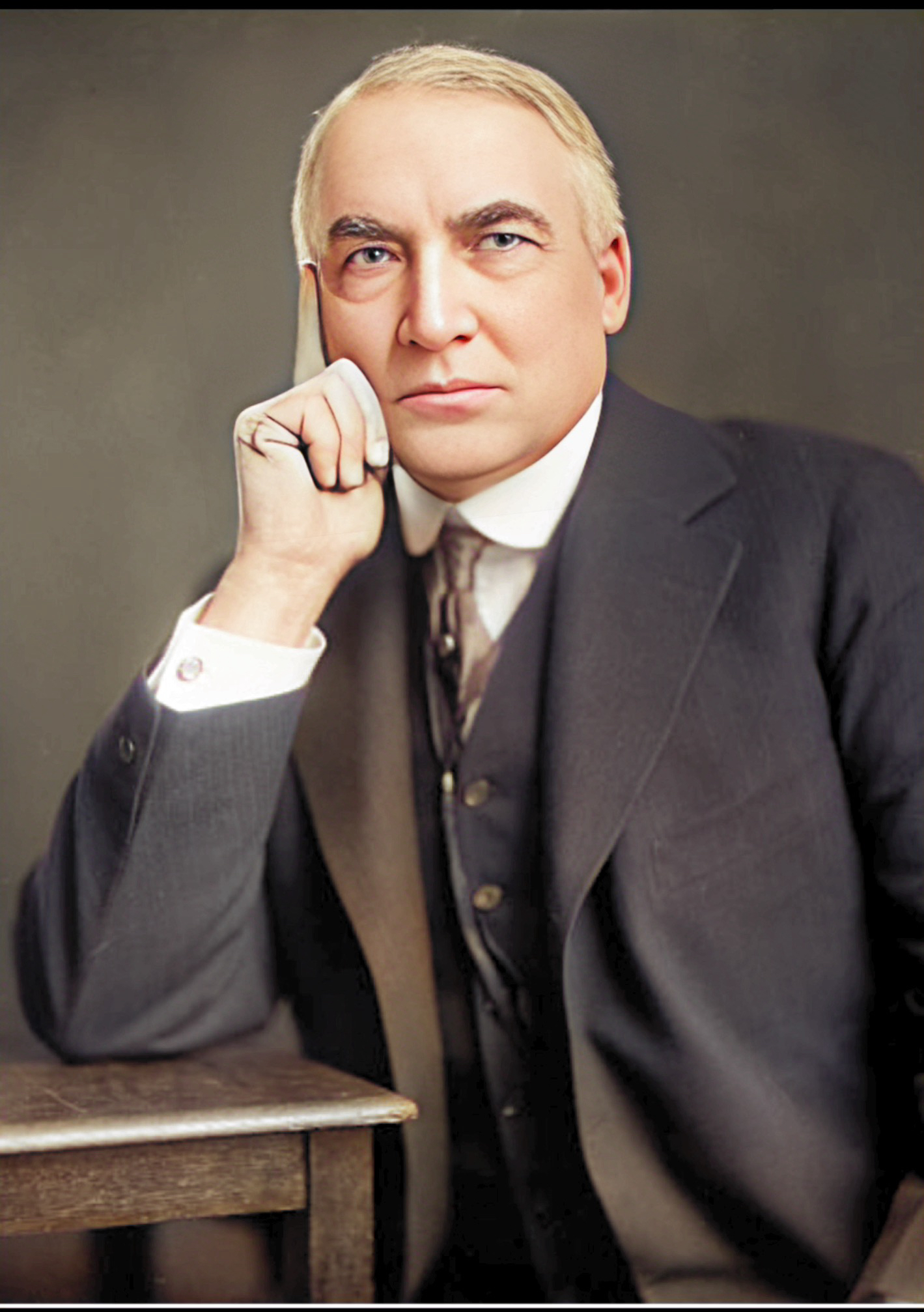
Campbell Bascom Slemp
CB Slemp was a high-ranking Virginia Republican Congressman for the Industrial Southwest portion of the State. CB was one of the owners of a Huge Mineral Interest in Virginia and Kentucky. Slemp even had a town named after him.
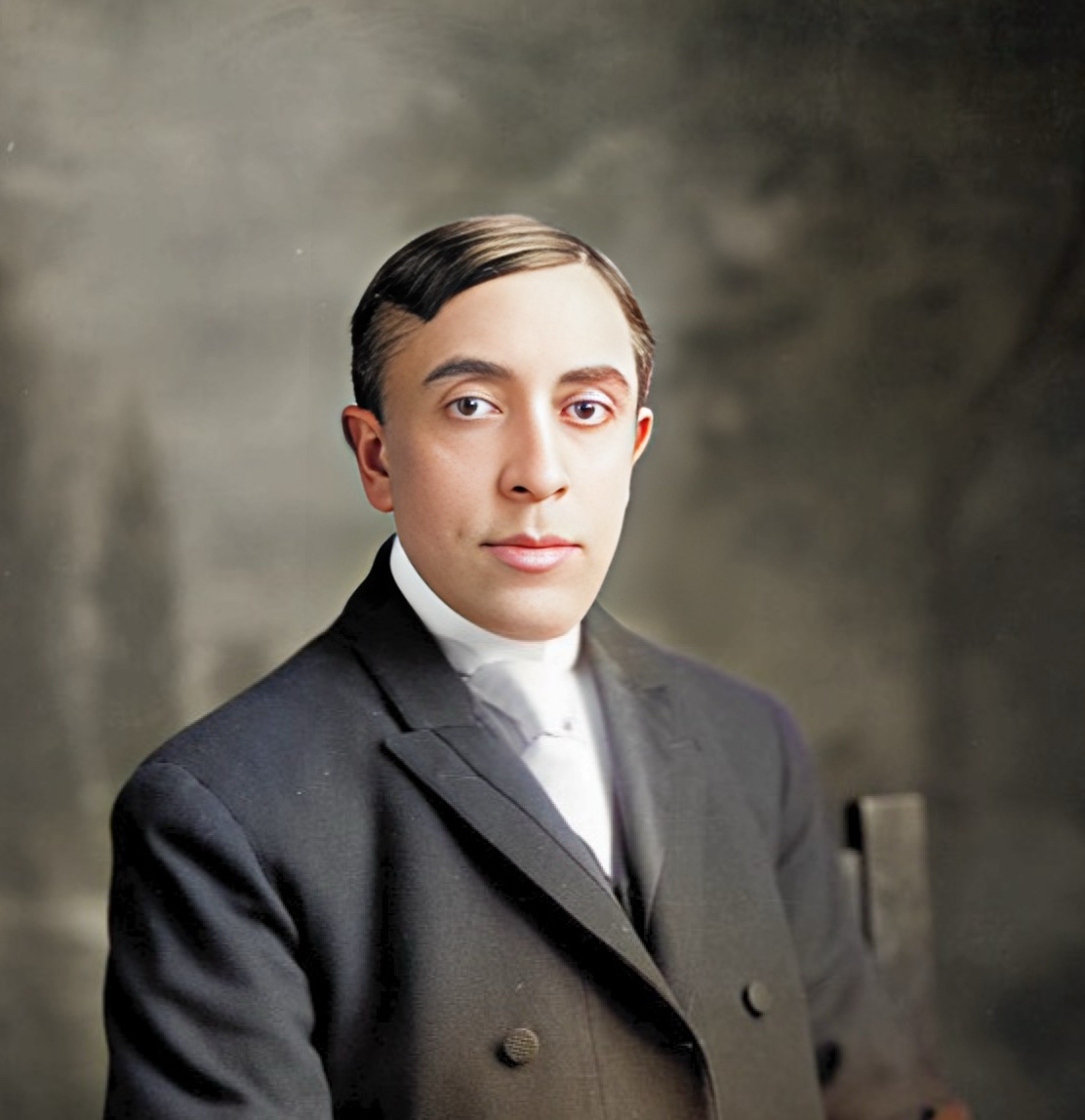
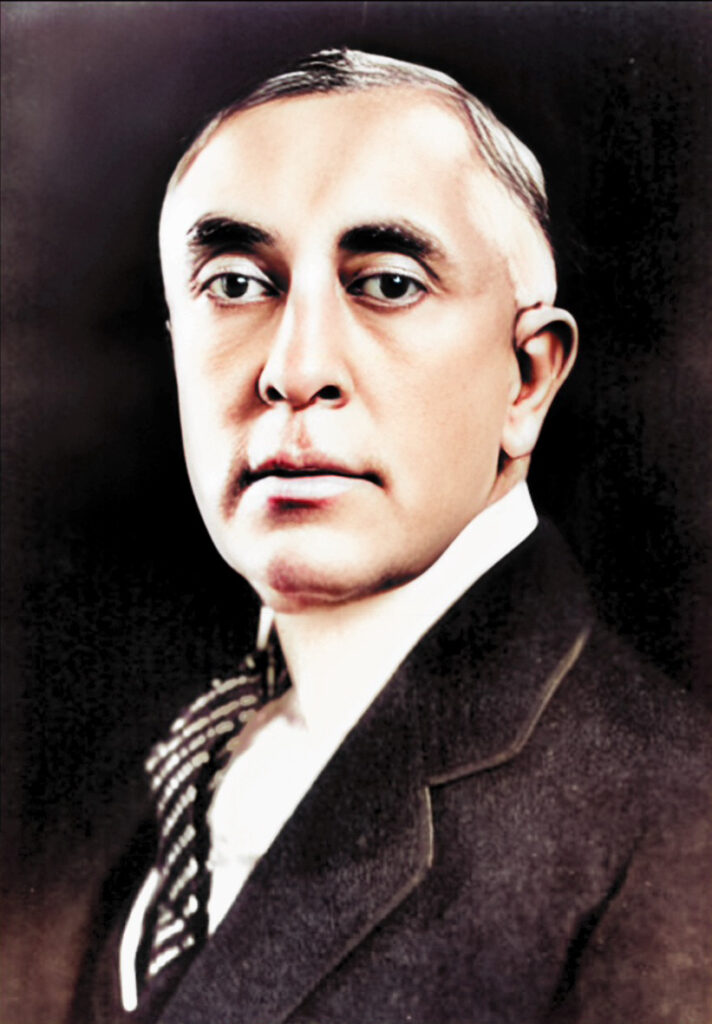
Slemp was a close advisor to President Warren G. Harding, especially on the issue of patronage in the south.
The Citizen Newspaper Article, Recap from January 10, 1918
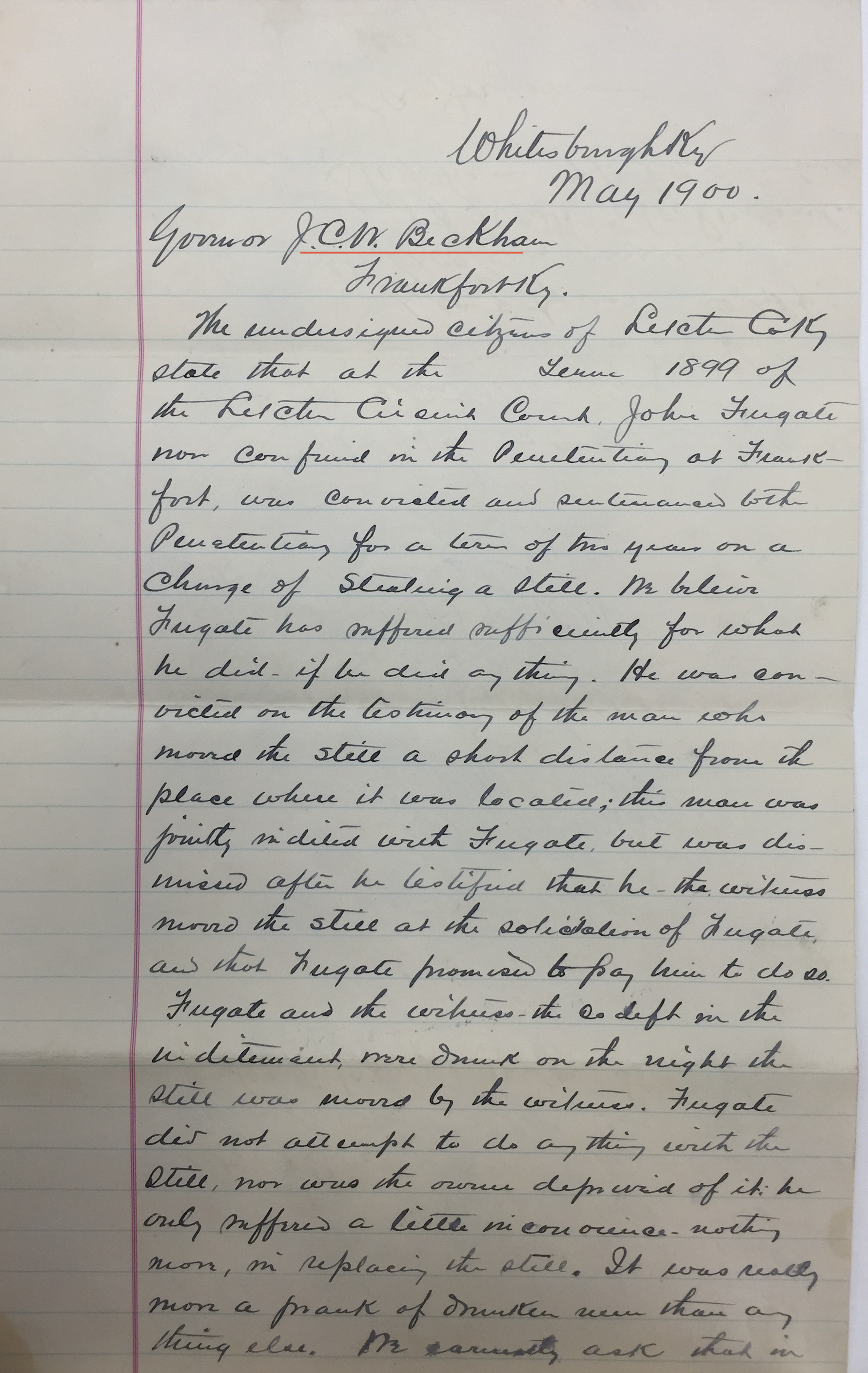
Former Rough Rider Is In Jail
Fess Whitaker, who marched beside Theodore Roosevelt up San Juan Hill, and who has made himself remarkable in other ways, has taken over the office of jailer of Letcher County and become a resident of Whitesburg. Upon his recent election by an unusually large majority, Colonel Roosevelt wired Whitaker his congratulations.
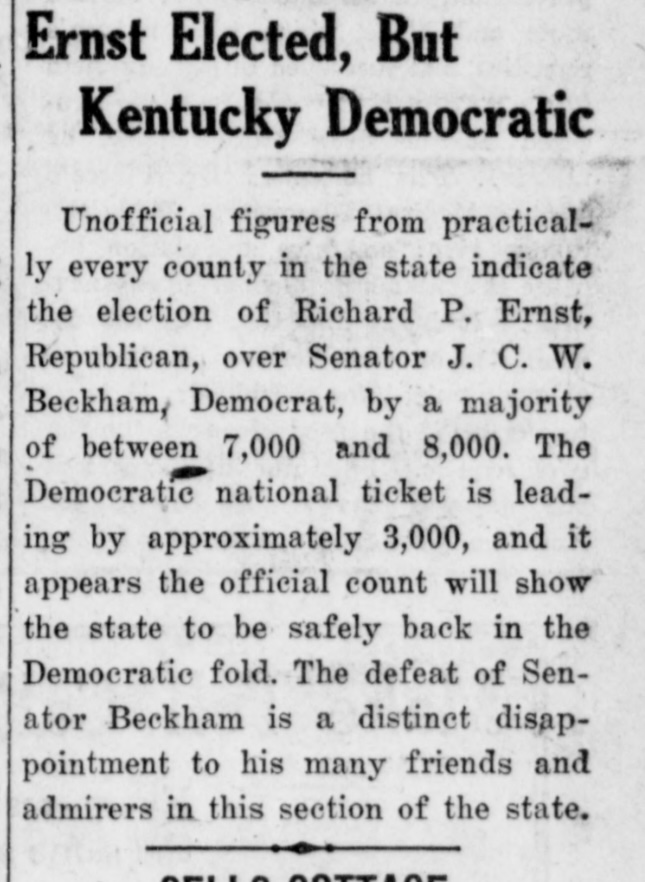
After a hotly-contested election Richard P. Ernst Elected for U.S. Senate
The Mount Sterling Advocate: November 9, 1920
Letcher County Officials Assume Office
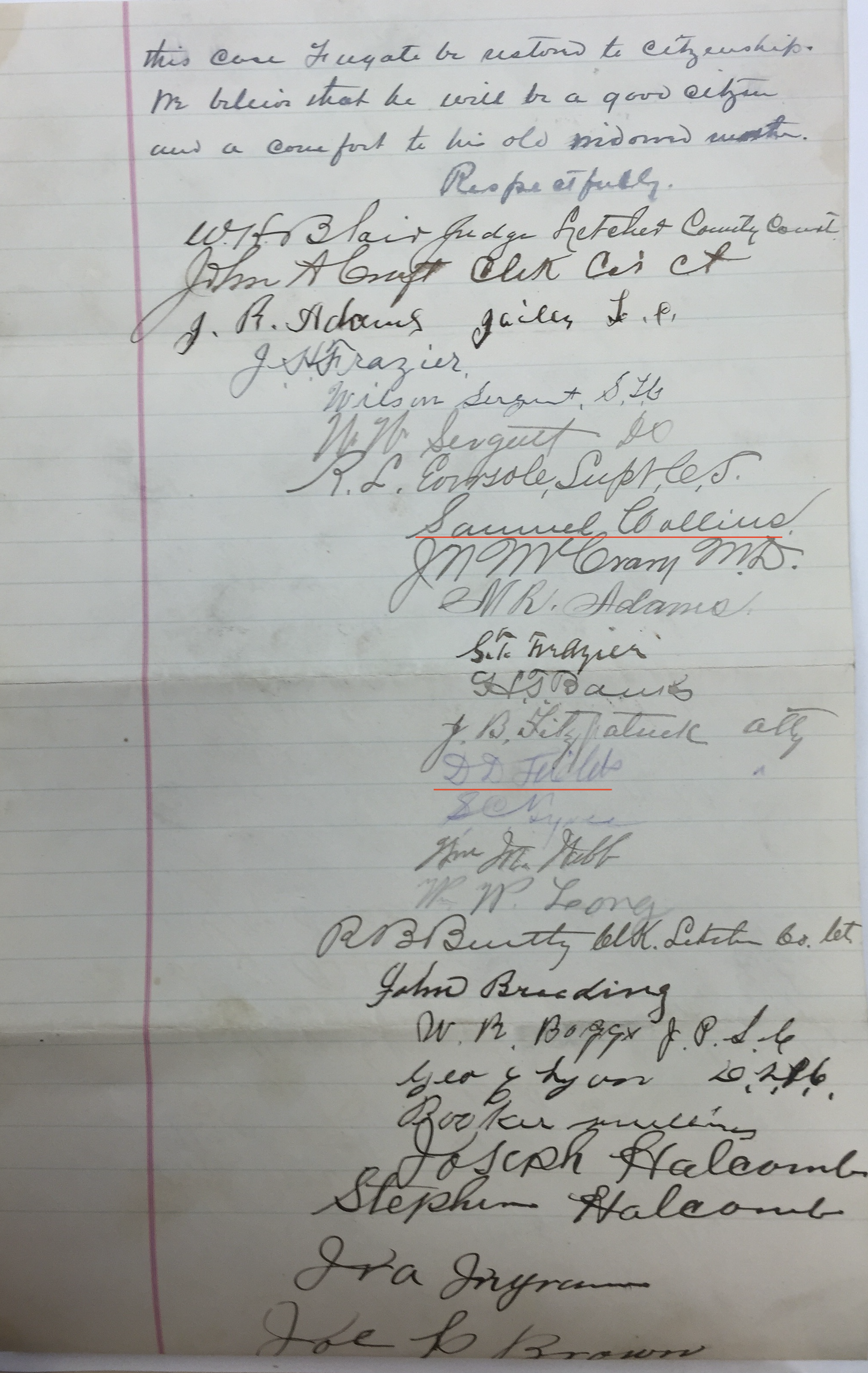
The new County officials enter upon their duties Monday. Those taking office were County Judge Samuel Collins; Sheriff, James Tolliver; Jailer, Fess Whitaker; and E B. Hale, County Superintendent of Schools.
The Big Sandy News, November 19, 1920
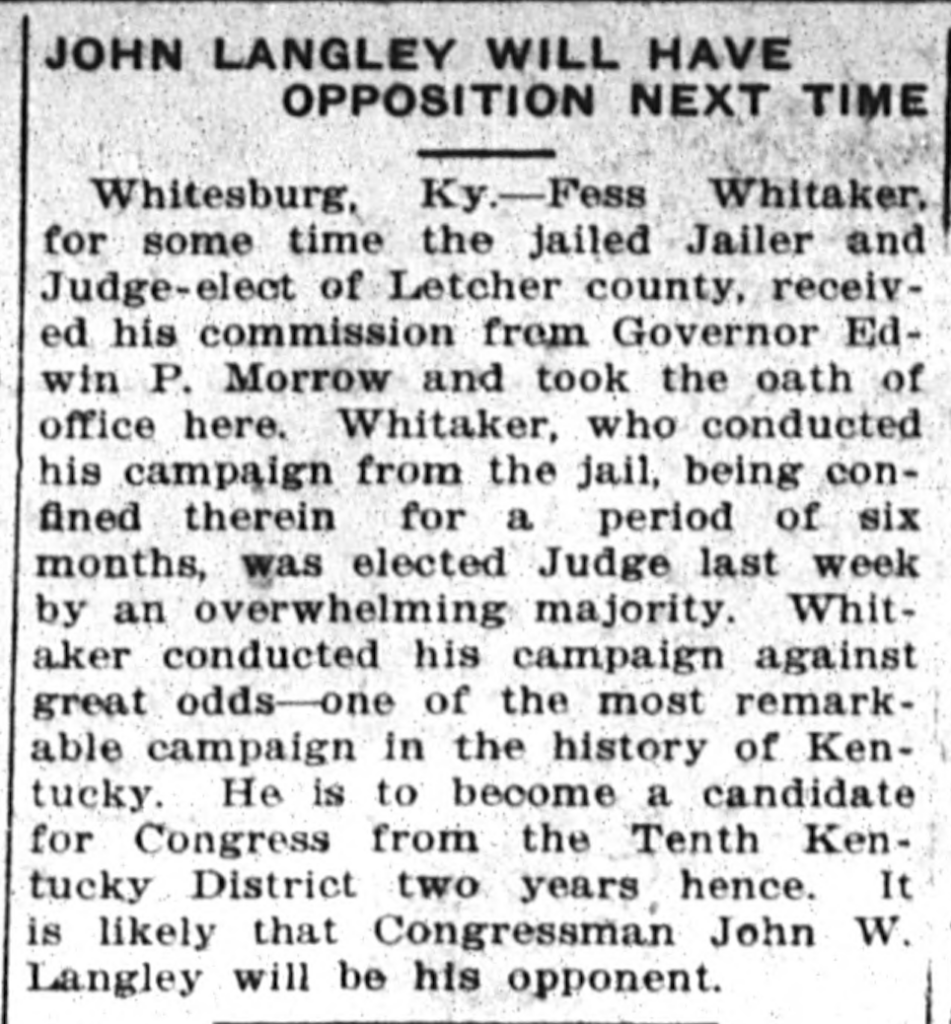
The Big Sandy News: December 28, 1920
John Langley To Have Opposition
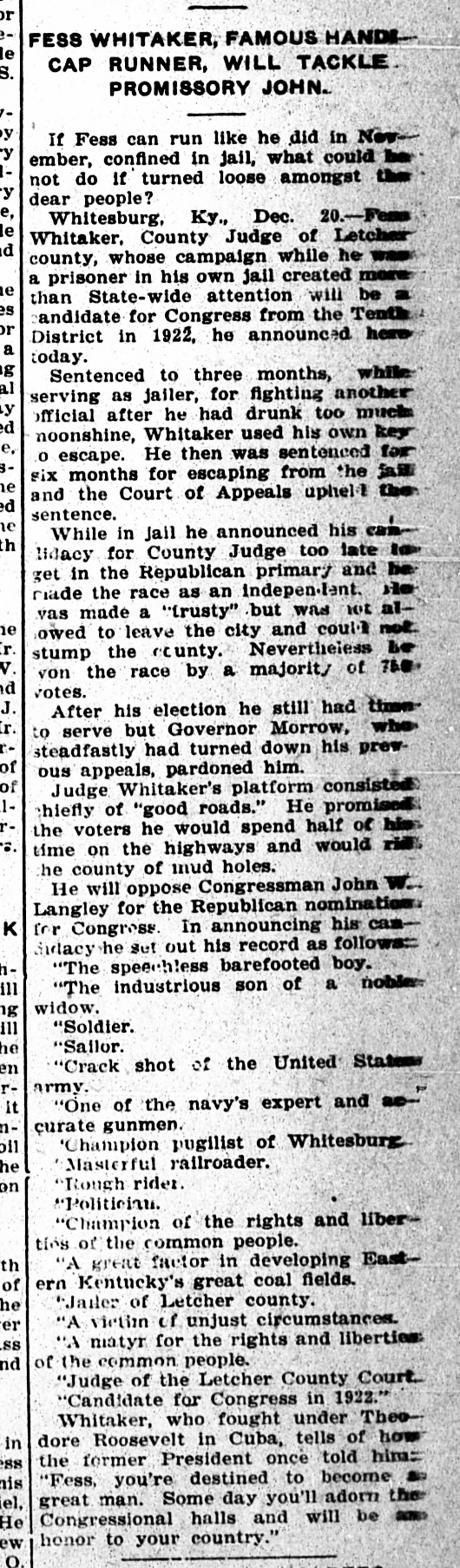
Few people today know the relationship between Fess Whitaker and John W Langley, so now Samuel Collins is going to be properly introduced. In his Bio, Langley officially noted he had known Samuel (Sam) Collins starting in 1916, but the Pike County Historical Society has determined it may be earlier. Fess Whitaker indicates in his Bio that he had a close relationship with Sam Collins, personally and politically. On one occasion Fess tells of coal companies coming up North Fork of the Kentucky river, and talks about two managers of Southeastern Coal Co. (Seco) and Elkhorn Coal Co.,
Mathews and McClure, of Covington, Ky. He says the one called Mack always gets mixed up in politics. Fess speaks of resigning from Kentucky River Coal Corporation and announcing his run for Jailer in Letcher County. At the height of the campaign season, he is moving from Fleming Neon to Haymond, the next holler over, to give a speech to 400 workers, some of whom are black. Everyone is treated to a large supper and a barrel of fine beer.
President Woodrow Wilson
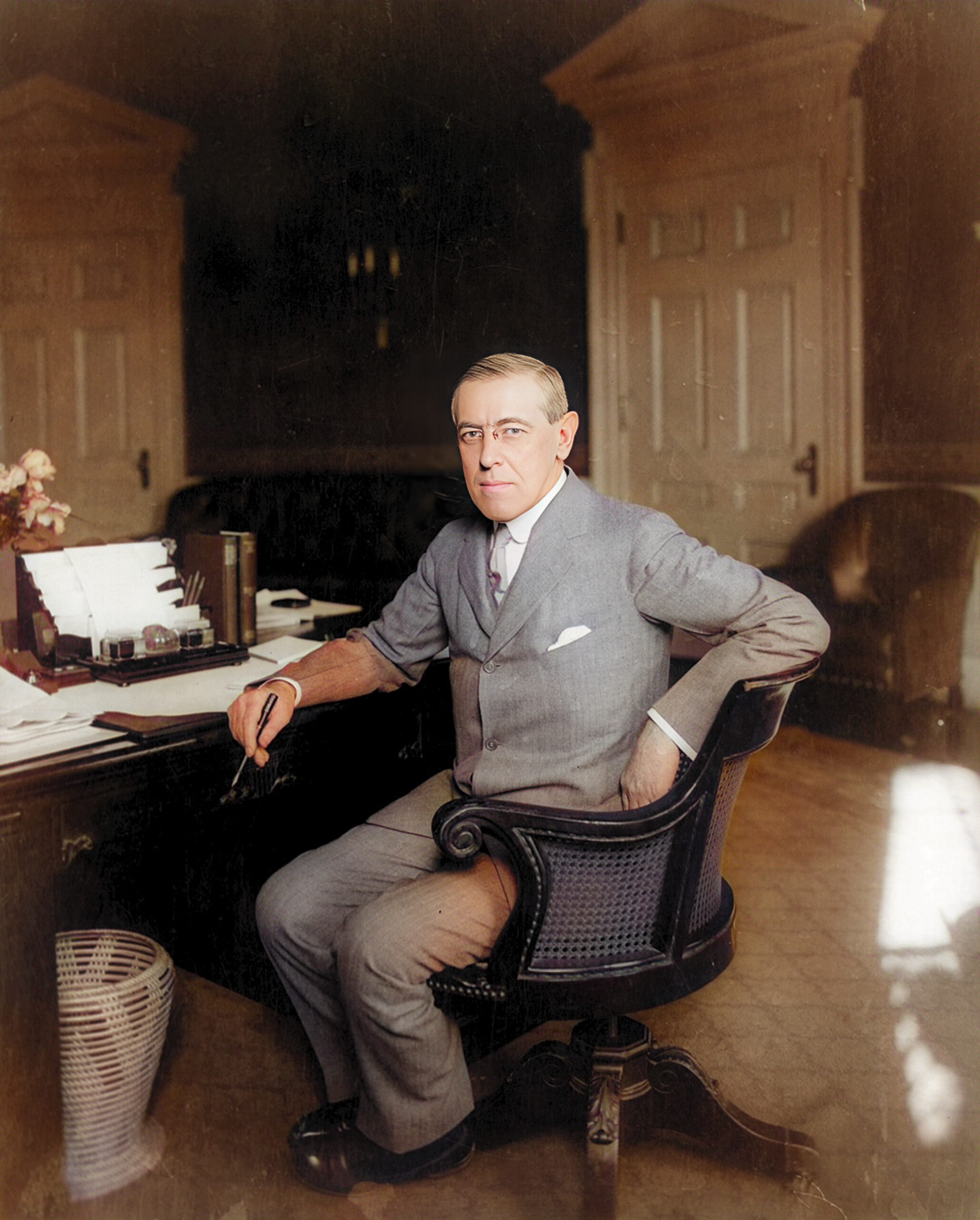
Among the bills Wilson signed on his last day in office was an act for an appropriation of $18.6 million for the construction of federal hospital beds for World War I veterans, a topic that was soon to figure prominently in the life of Charles R. Forbes. However, this 1921 law, the first Langley Act (Public Law 66-284), named after the Congressman John W. Langley whom Forbes had met in Hawaii, was passed long before Forbes became responsible for veterans hospitals.
The Public Ledger: May 12, 1921
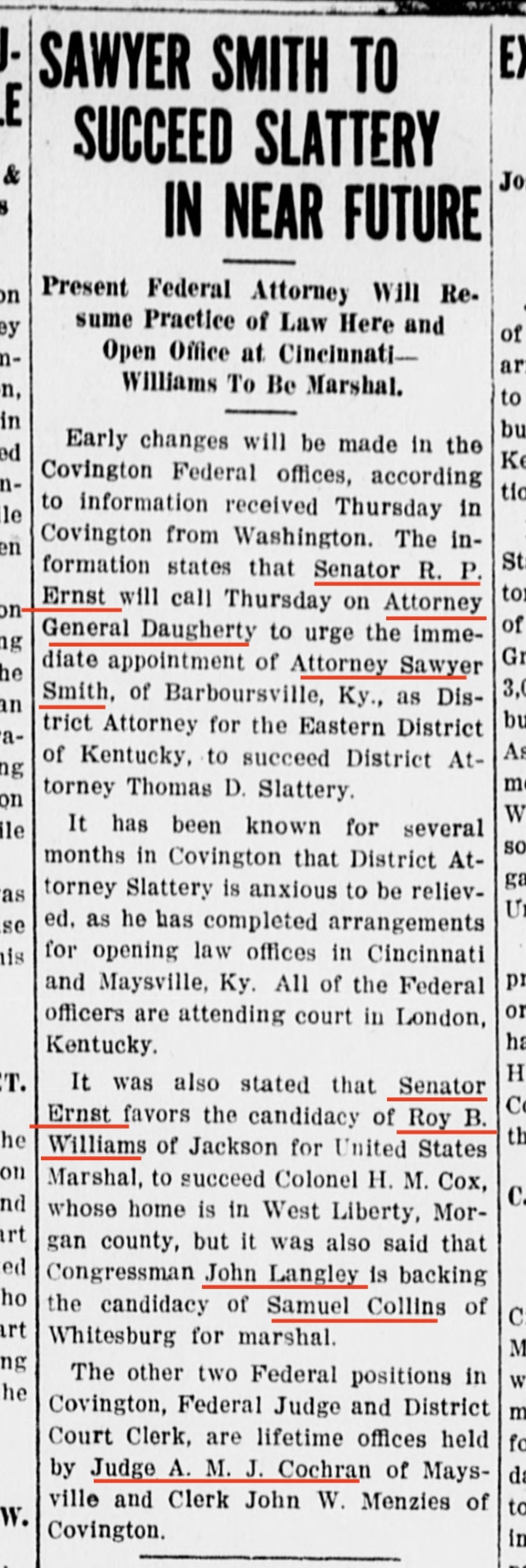
Richmond Daily Register: June 2, 1921
ALVIN TOBIAS HERT DIES IN WASHINGTON D.C.
The Hartford Republican: June 7, 1921
Washington, June 7, 1921: Colonel A.T. Hert, a man loved and honored by thousands is dead. His death comes as a great shock to friends throughout the United States, as well as in his home state of Kentucky. Death came so suddenly that several friends who were with him at the time were still chuckling over one of his good-natured jests. He turned pale, his eyes closed, he breathed deeply, gasped two or three times and was gone. Apoplexy was the cause, the hour, 4:15 o’clock this afternoon. Colonel Hert was reclining on a bed in his suite of rooms at the new Willard hotel, talking of politics and matters relating to tomorrow’s meeting of the republican national committee when he died. A gasp was the first warning to those with him, which included E. T. Franks, former postmaster of Owensboro, Kentucky; Cat Chilton, of Louisville, J.M. Robinson and Kentucky congressman J. W. Langley. In Mr. Chilton’s words,”He gasped and rolled over on the bed. We rushed to his assistance. There was another gasp, and then he was gone.”
Laughing just before the stroke.
“Little did we dream that Mr. Hert was to be taken by death within a few minutes as we sat chatting and joking with him,” said congressman Langley. “His death came with such suddenness that we scarcely realized what had happened.”
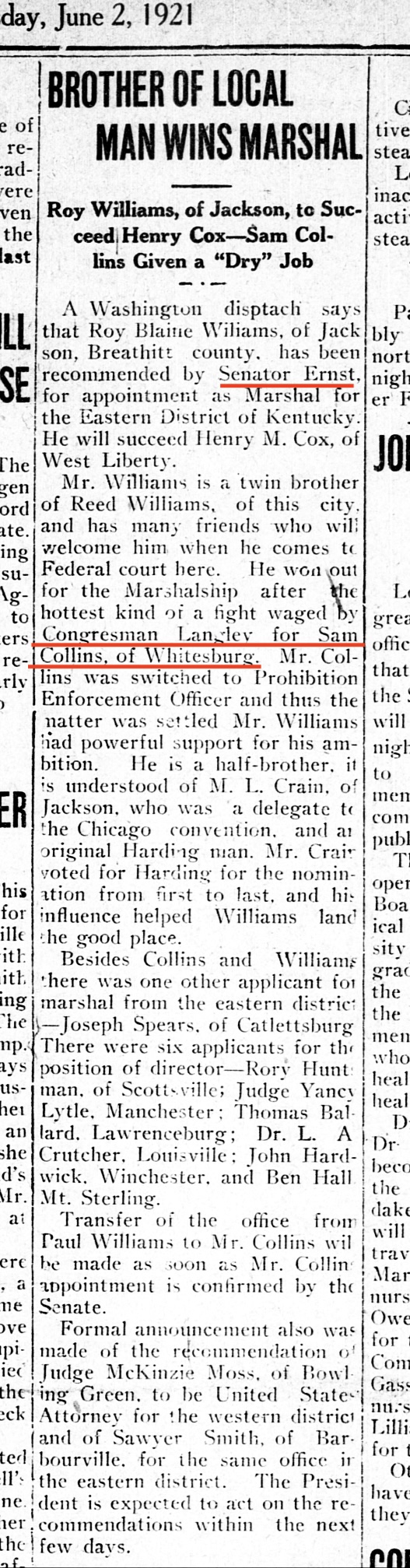
One of Colonel Hert’s last acts was to sign his name to a letter to President Harding for endorsement of Samuel Collins of Whitesburg, for State Probation Officer of Kentucky. Col. Hert had told George Lund that Hert was in good spirits and laughing with his friends about ten minutes before the stroke.
Senators Richard P. Ernst and A.T. Hert had very close ties when it came to political dominance. A.T Hert had everyone’s attention, including President Warren G. Harding. A.T. Hert was a mover and shaker in the business world. His companies provided products that were widely used by railroads and bridge construction companies and provided creosote used to preserve underground timbers in mines across Eastern and Western Ky., as well as Indiana and Illinois. When it came to political appointments on the Federal level, A.T. had President Harding’s ear. Hert was also a referee between John W. Langley and Senator Richard P. Ernst. After the death of Alvin Hert, John Langley’s influence over the course of the next two years with President Harding was starting to diminish, although he was very helpful to Harding getting some major bills passed through Congress after Hert’s death. John Langley was still a future threat to Senator Ernst, especially after butting heads with Ernst on Sam Collins’ appointment. Another threat to Senator Ernst was John Langley’s passion towards the Citizens of the 10th Congressional District. The Kentucky Governor’s election and U.S. Senate race between Ernst and Beckham were happening at the same during Harding’s run for President. The Statewide Kentucky Election of 1919 gave the majority of its votes to Warren G Harding for President, Richard P. Ernst for U.S. Senate and Edwin P. Morrow for Governor. Senator Beckham and candidate for governor, Cox had big vote numbers in John Langley’s 10th District but lost statewide. The 10th District Citizens overwhelmingly loved John Langley, but they loved Katherine Langley even more. Katherine Langley’s power lay with the women, black Vote and her voice with the National Republican Committee. Katherine’s popularity was not just in Eastern Kentucky, but statewide. The Langley team was a major threat to any Republican seeking a higher office in Kentucky. The Langleys were Progressives in a Conservative leaning state.
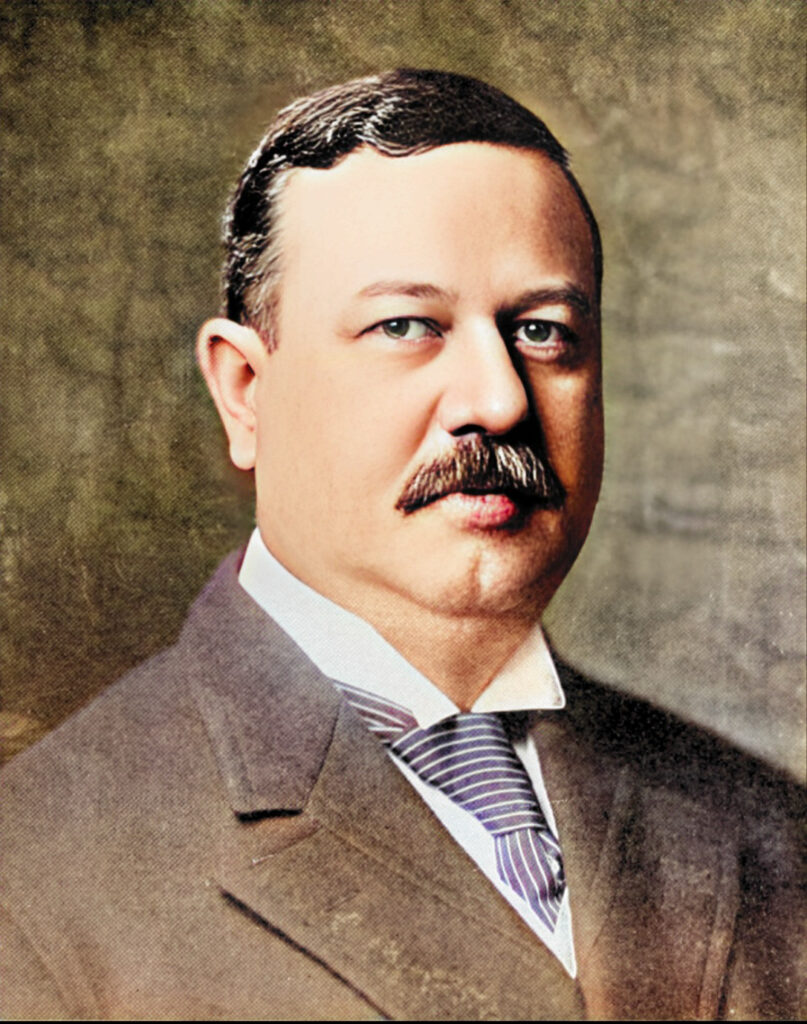
Bio
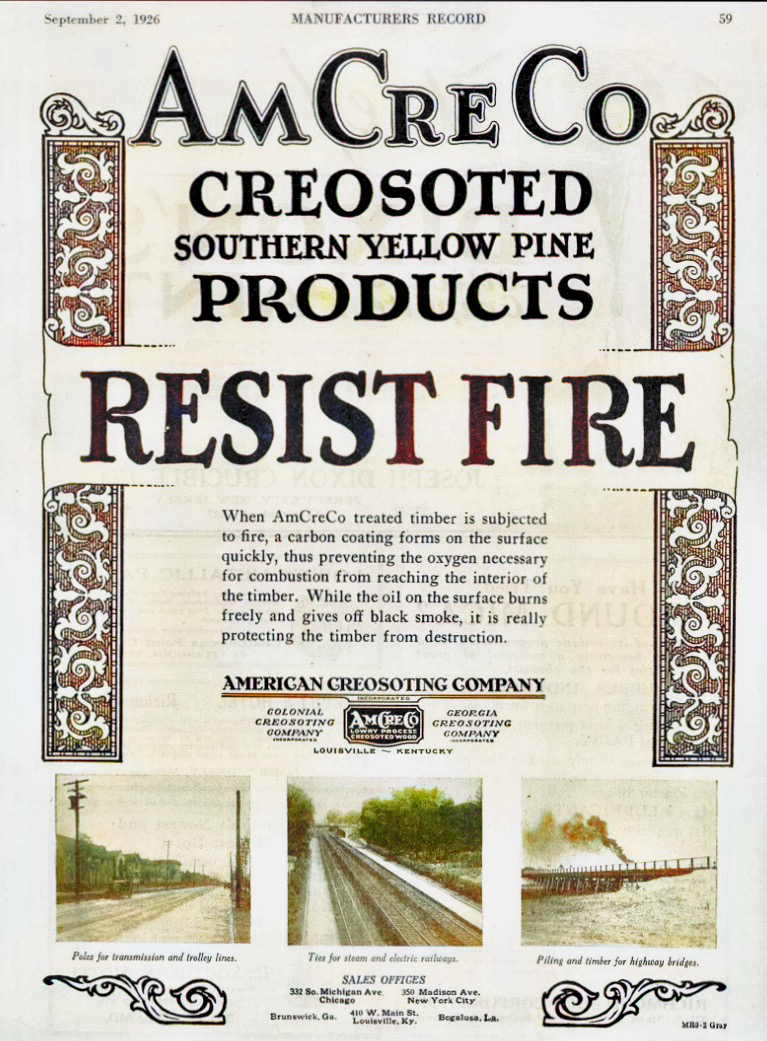
Alvin Tobias Hert (1865-1921) and his wife Sallie Aley Hert (1863-1948) were two of many owners of the property of Hurstbourne Farms, located in Louisville, Kentucky. Indiana-born Alvin was a traveling salesman and served as a warden of the Indiana Reformatory in Jeffersonville, Indiana, which later became the Colgate-Palmolive Plant. Following his resignation from the penitentiary in 1902, Mr. Hert moved to Louisville where he made his fortune with the establishment of the American Creosoting Company in 1904. He represented Kentucky on the Republican National Committee, was a director of the National Bank of Kentucky and a member of “My Old Kentucky Home” Commission. Mr. Hert got started in politics when he was elected as mayor of Brazil, Indiana in 1895. He later helped manage the presidential campaign of Charles Evans Huges, assisted in securing the presidential nomination of Warren G. Harding and was a head adviser to Will H. Hays, Harding’s campaign manager. In 1921, Mr. Hert suddenly died. Mrs. Hert, upon her husband’s death, assumed the role of Chairman of the Board of Directors of American Creosoting. She was a Kentucky member of the Republican National Committee before becoming its vice-chair. In addition to her Hurstbourne residence, she maintained an apartment in Washington, D. C. and homes in Palm Beach, and Mackinac Island, Michigan.
In 1915, Alvin Hert and his wife purchased Hurstbourne Farms and several adjacent farm tracts. Under the Herts’ ownership, Hurstbourne Farms thrived, with land holdings in excess of 1,000 acres. It stretched from Oxmoor on the west, crossing Shelbyville Road, to Funk’s Lane, now known as Hurstbourne, on the east, and to the Hoke farm on the south. The property had 62 separate buildings including its own water tower and a ten-room house for the superintendent.
A.T. Hert was President of American Creosoting Company / 1926 add.
Richmond Daily Register: June 11, 1921
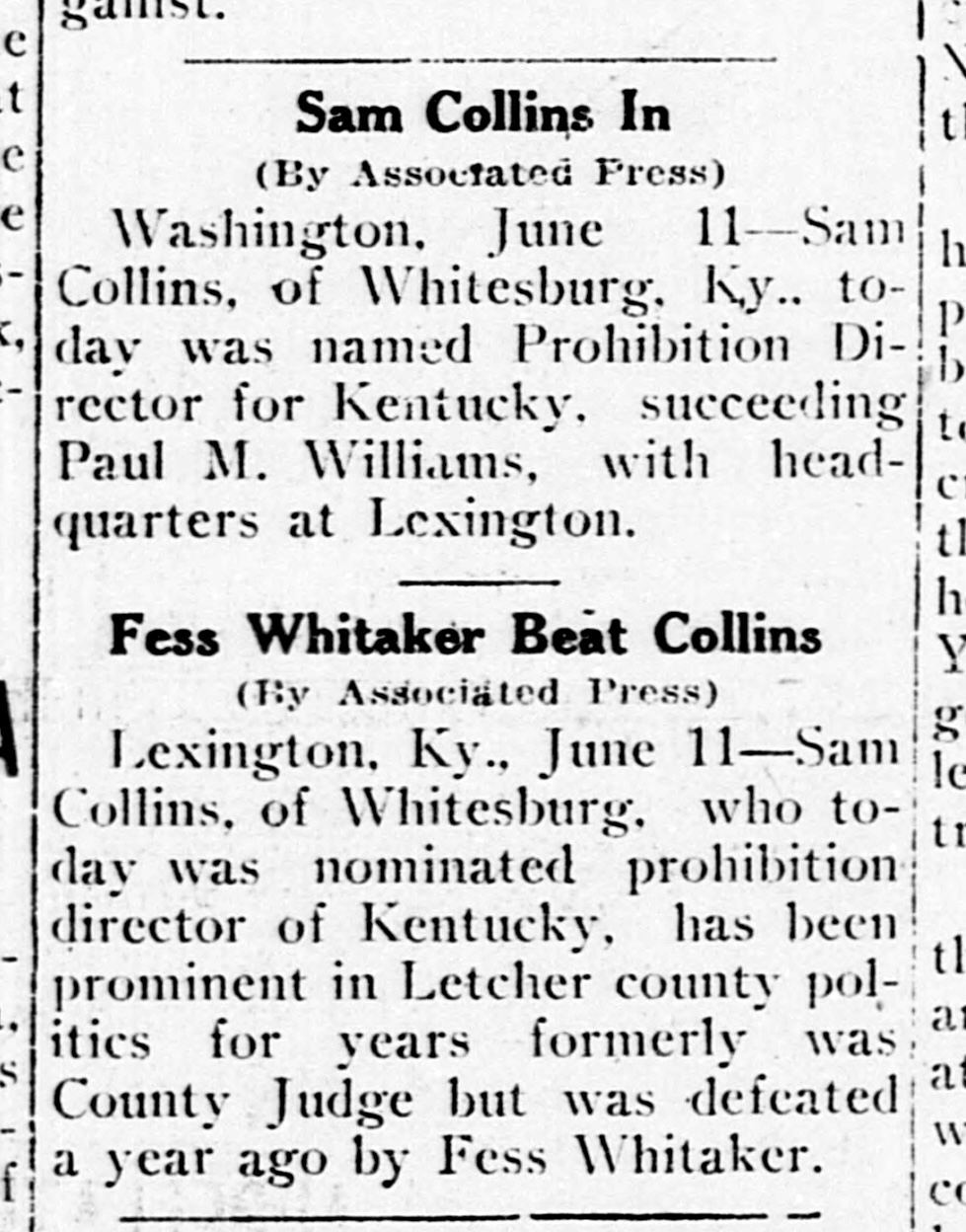
Samuel Collins’ from Whitesburg was officially appointment to fill the position of Prohibition Director for the State of Kentucky, this occurred on June 18, 1921.
Recap of Fess Whitaker
Article written on Appalachian History in 2018. The New York Times reported that sometime around 1921 Fess Whitaker participated in a street fight, a disturbance of the peace that led to his incarceration in the very jail he supervised and earned him the nickname “The Jailed Jailer.” While imprisoned, Whitaker continued his campaign and was eventually elected. In 1922, Whitaker was again jailed, this time for possessing and transporting whisky for illegal sale. the New York Times reporter was just a little off on his timeline, because the above newspaper article was published November 19, 1920.
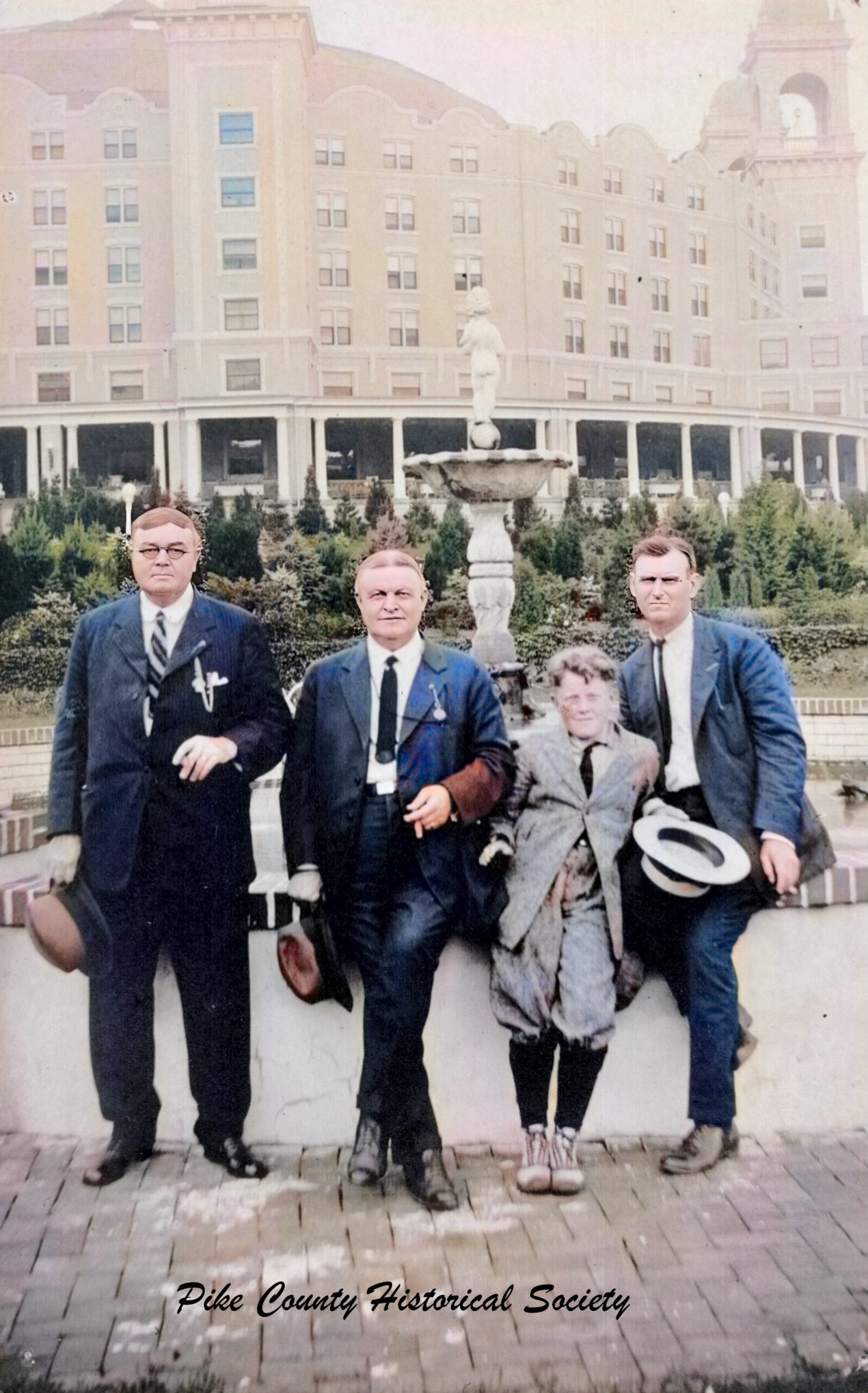
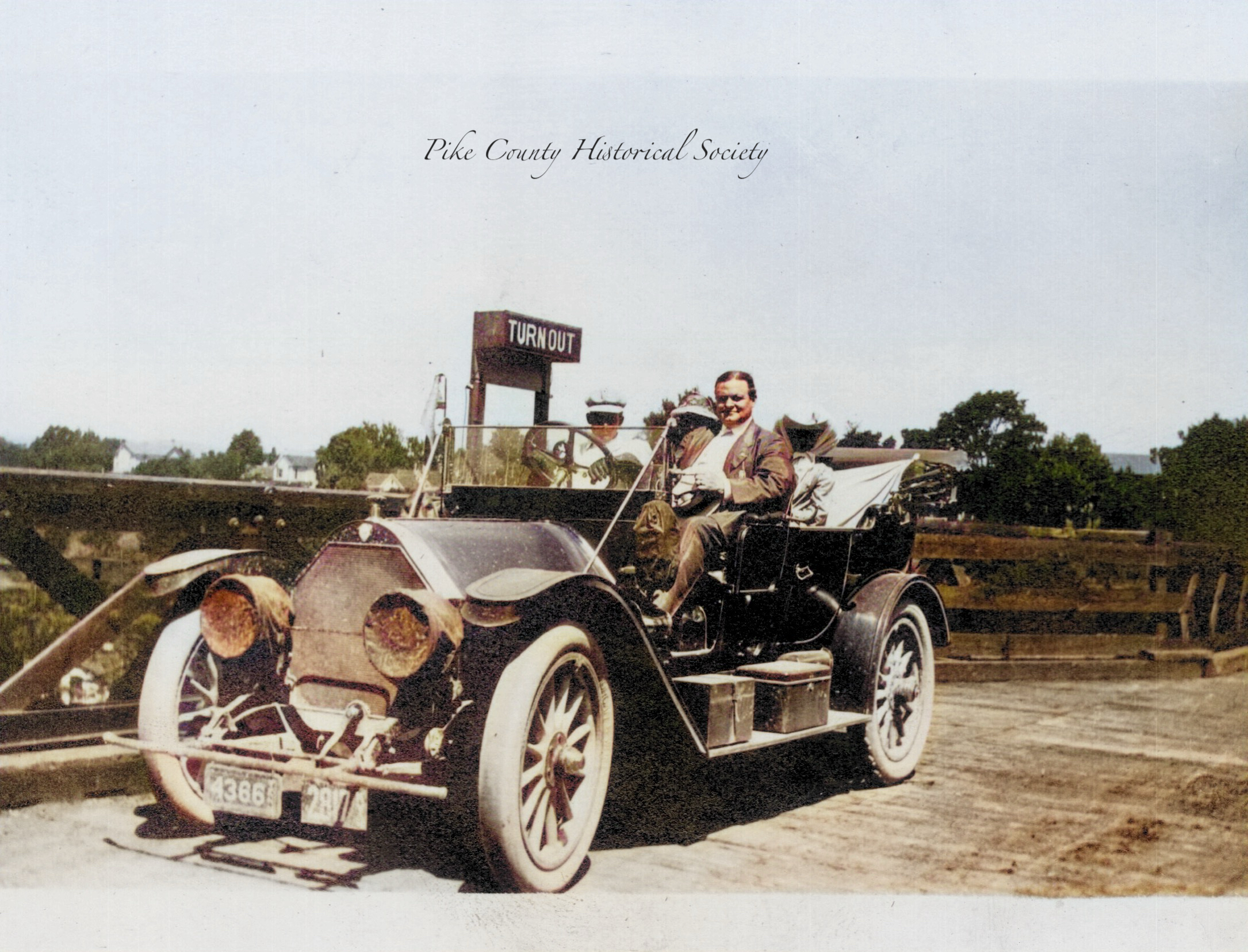
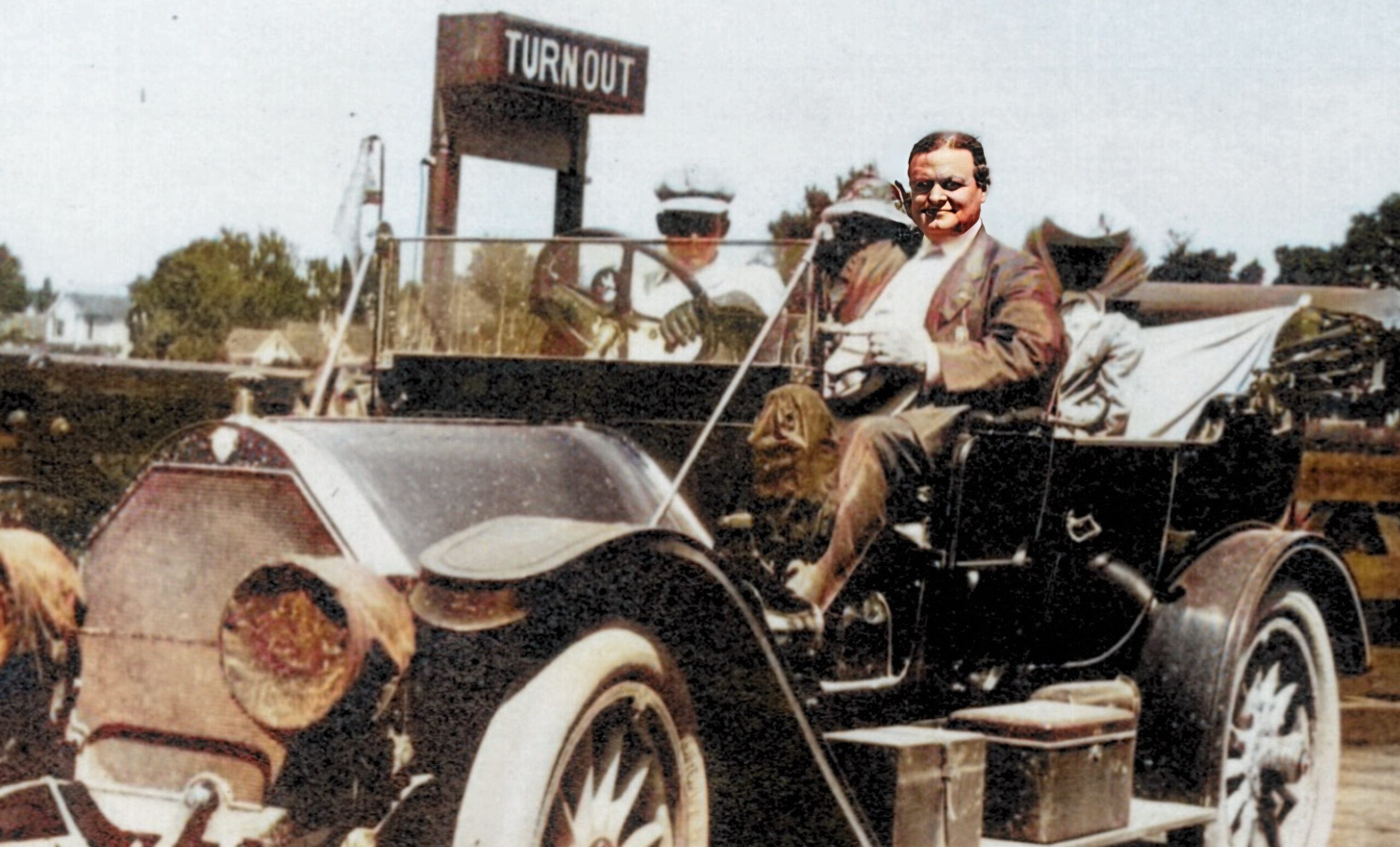
Summer Motor Car Trip, The Summer of 1921
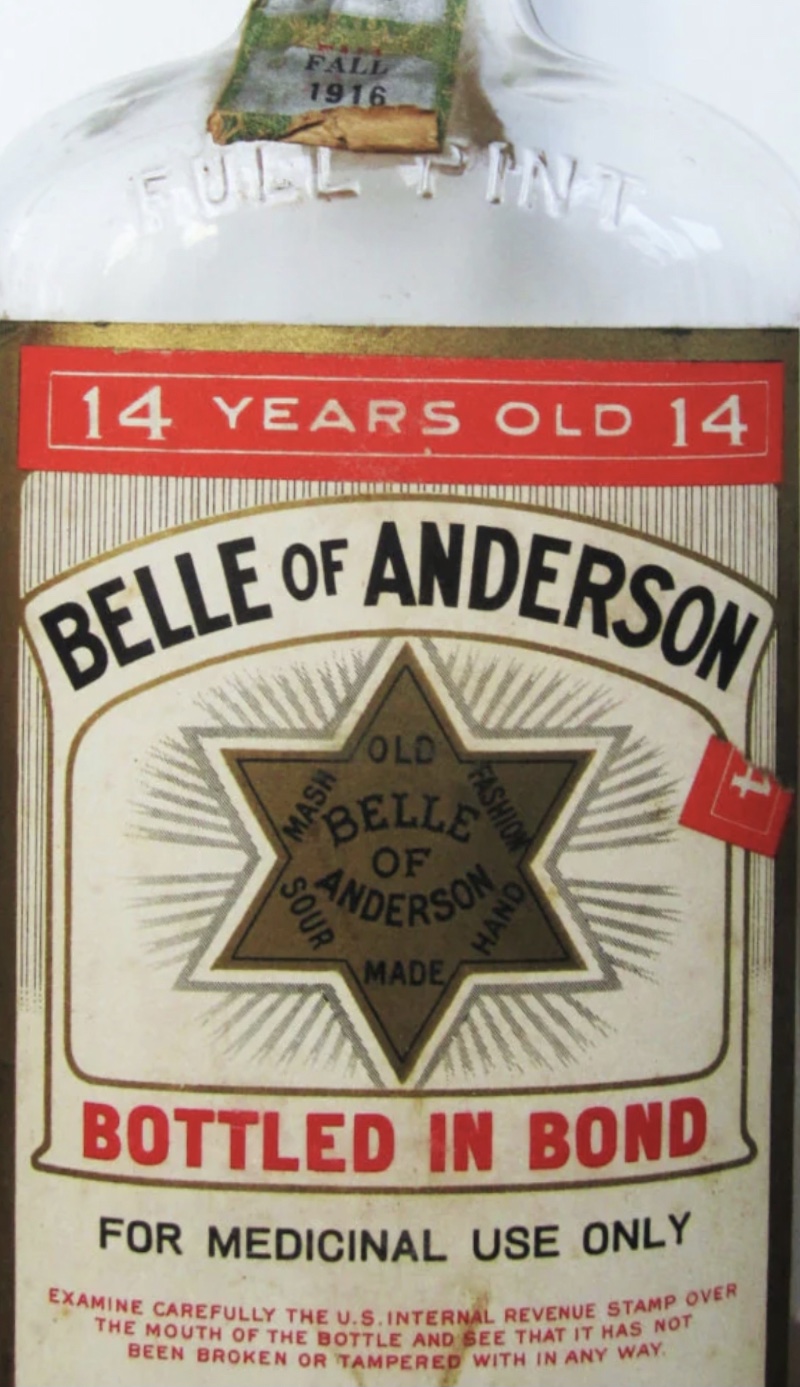
During June of 1921 while serving in Washington D.C., John Langley was attending a funeral of his dear old friend of the Republican National Committeeman, Mr. Hert. During the funeral precession he made the acquaintance of Walter B. Carey, who seemed to be trying to create a special bond with Langley. A partnership had begun earlier that year with M.E. Huth, T.G. Finn and Walter B. Carey, leasing Belle of Anderson Distillery Company from G.B. Harkins. The original distillery company was founded by S.J. Greenbaum producing whiskey under the brand name of Belle of Anderson and Bell of Lexington, both destined to become a big part of Kentucky’s whiskey history. By 1883 S. J. Greenbaum was distilling whiskey at Midway, Kentucky. He died in 1897 leaving the distillery to be operated by his son, 38-year-old Morris. Morris Greenbaum would become one of the largest whiskey distillers in Kentucky, producing 47,000 barrels until August 1908, when the distillery was completely destroyed in the largest massive fire ever seen in Central Kentucky. The U.S. Government estimated the loss at 2 million dollars, when only 1 million was available in insurance. Never again would Morris Greenbaum hit his peak whiskey production, distilling a mere 40 barrels a day. In 1912, Morris changed the name of the firm to Belle of Anderson. In 1920, when the National Prohibition Act rolled into America, Belle of Anderson went into bankruptcy and was acquired by G.B. Hawkins.
Walter B. Carey stayed in close contact with Langley over the next several weeks. Later in 1921 Langley was experiencing some type of illness requiring a good Louisville doctor. He was staying at the Seelbach Hotel when Carey met him by chance and introduced him to Schwartzkoff, Eichenburg and Ellias Mortimer, who represented the banking firm of Kuhn, Loeb & Co., of New York. Because of his illness at the time John was not coherent enough to have a serious conversation with the three men. He listened as Elias Mortimer told Walter Carey that his wife was a niece to President Harding. He also professed to Carey that he was on intimate terms with leading men in Washington D.C. Mortimer also entered into discussion with Carey about having problems with the Volstead Act (The Prohibition Act of 1920), concerning the new lease acquisition of Belle of Anderson Distillery. Belle of Anderson wanted to transport liquor by truck to New York which was in violation of the Act. Mortimer persuaded Carey that Anderson Distillery needed permission from the newly appointed Prohibition Director of Kentucky, Mr. Sam Collins, and other Kentucky Prohibition officials in Washington D.C.
Mortimer had made several attempts previously to entertain Sam Collins, the new Prohibition Director of Kentucky. He had talked with Collins about moving liquor by truck to New York, but with no luck. Finally, Mortimer and Carey decided to swing by Louisville and pick up Langley, while he was visiting French Lick Springs, Kentucky. Ellias Mortimer invited John to accompany them to Lexington, to meet some friends. John could not turn down Mortimer’s invitation to take a trip by Motor car. Langley was one of the first champions of congress to provide Federal Aid in construction of Turnpikes and Roads. The national newspapers nicknamed him “Turnpike John. ” Mortimer and Carey had not mentioned Sam Collins to Langley at this time. While traveling from French Lick Springs the motor car group stopped in Louisville where a telegram was being forwarded to John Langley from French Lick. The telegram concerned the mortgage due on his house and urged John to come to Washington D.C. to raise the necessary funds. Langley told Mortimer and Carey that in view of the telegram he would have to cut his trip short.
When John W. Langley was elected to congress in 1906, $235.00 was all the money he possessed. He was financing his campaign on borrowed money. When Katherine and John went to Washington, he sold his campaign horse to raise enough money to make the trip. They lived in one small room with bath during that winter, and used the same room for his congressional work until the house office building was ready for occupancy. While still owing money from his first campaign, he borrowed money for two succeeding campaigns. He took what money he could by giving advance checks on his salary until the end of his previous term. Needless to say, John was heavily in debt most of his political life. Dozens of his friends, in and out of Congress, endorsed notes for him at different banks. It was John’s custom in the years when he was not a candidate to give financial help to friends in his district who had helped him when he was running. Now, many of them were returning the favor.
John remembered one year, 1912, when he had practically no opposition. His affidavit filed with the Clerk of the House of Representatives showed a campaign expenditure of nearly $3,500.00. In 1920, when he was unanimously renominated and had no opposition from either party, John not only made speeches in different sections of the state but went to practically every county in his own Congressional district to raise funds for the ticket. Frequently heading the subscription list, his contributions totaled nearly $1,000.00.
Before John Langley entered the congressional office, he supported his father, who had been an elder in the Christian Church for about forty years, and a helpless invalid during the last twenty years of his life. In John’s words, “I supported him out of my small salary, until his death in 1910. I did likewise for my invalid mother.”
Mortimer asked Langley how much money he needed to make his mortgage payment, and John told him 2000 dollars. Ellias Mortimer told John he would loan him the money on the note. Mortimer took Walter Carey aside and arranged to borrow the funds temporarily. Carey gave the money to Mortimer after a man named Mr. Afghan cashed a check for him.
With John Langley’s house mortgage temporally satisfied, Carey, Mortimer and Langley drove to Lexington and stopped at the famous Phoenix Hotel in Lexington Kentucky. They made arrangements for supper in their rooms after a long day’s journey. Just when supper was about to be served, Mr. Mortimer suggested to Langley that he call Mr. Sam Collins and have him join the dinner party. After Collins arrived, he called John in another room. Later Mortimer was called, and the question rose about using Mortimer’s withdrawal papers. Langley and Sam Collins had some sharp words in the hallway between the rooms, with Collins saying the whiskey would get in the hands of bootleggers. Collins refused permission to remove the liquor trucks, still claiming it was irregular, and that he was afraid it would be used illegally.
Arthur B. Rouse was the United States Congressman representing District # 6 in Midway, Ky, where Belle of Anderson Distilleries was located in 1921. The Question is why Bell of Anderson group didn’t ask for help from Arthur B. Anderson, its U.S. House Representative.
Later in 1921, after the meeting between Collins and Langley, the partners of Bell of Anderson Distillery, Mr. Huth, Mr. Finn, Mr. Carey, and Albert F. Slater, and Hiram W. Benner were indicted for the illegal transportation of whiskey.
As Noted in John W. Langley‘s book, Mortimer had no knowledge even of the existence of Sam Collins before he was appointed to probation Director of Kentucky.
Big Sandy News December 11, 1921
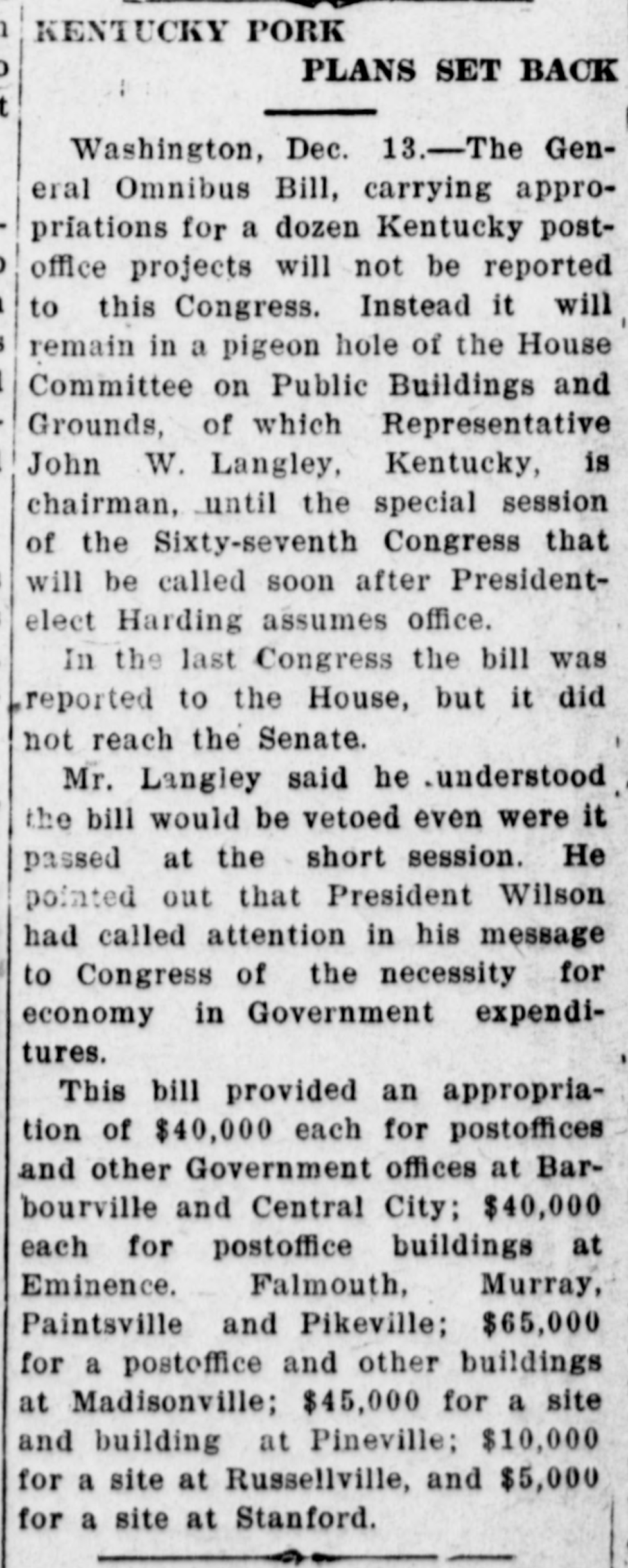
Kentucky Urge Home For World War Veterans
The Big Sandy News: January 13, 1922
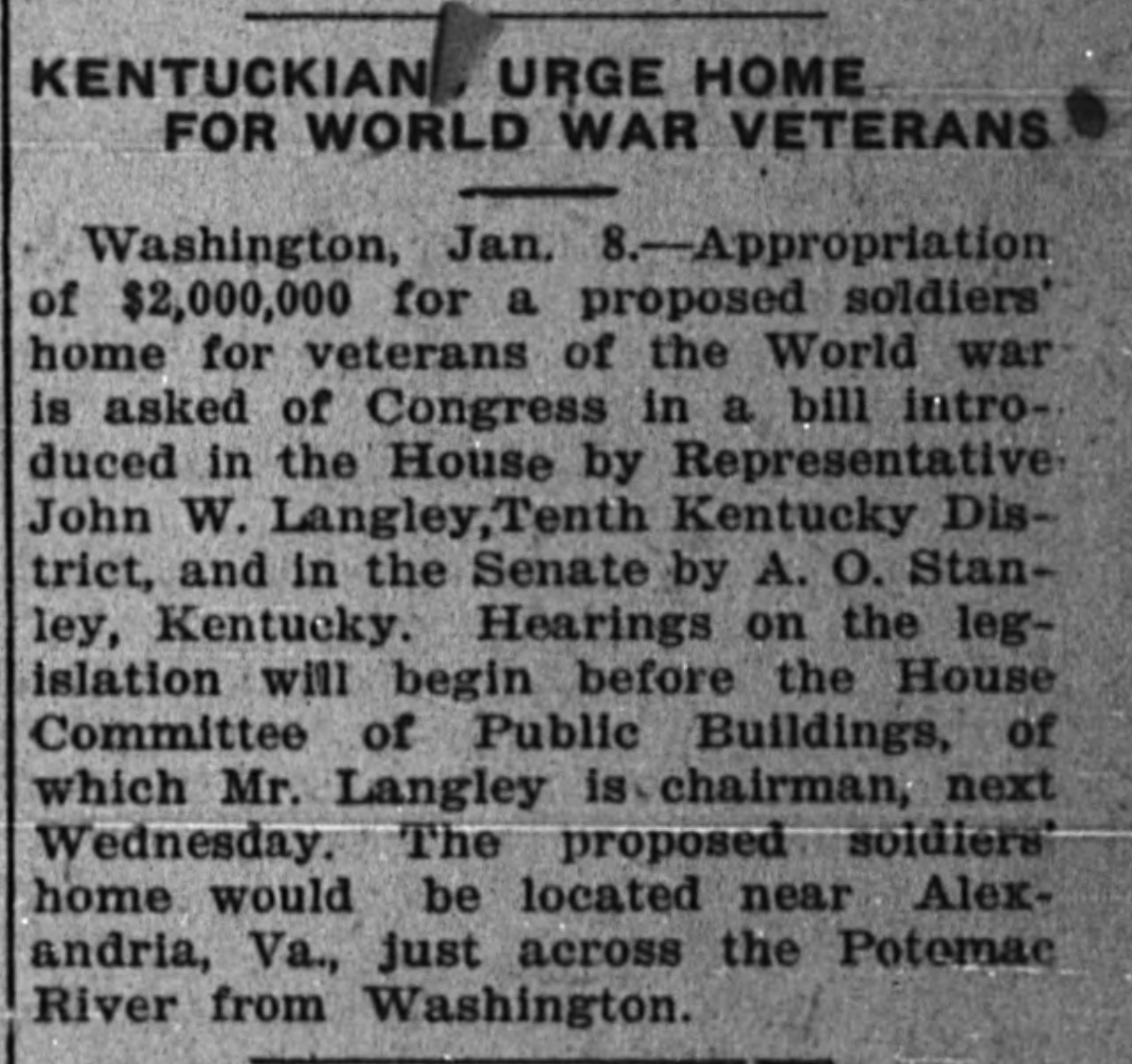
Senator Ernst Voted Against Langley’s Bill
The Public Ledger: February 24, 1922
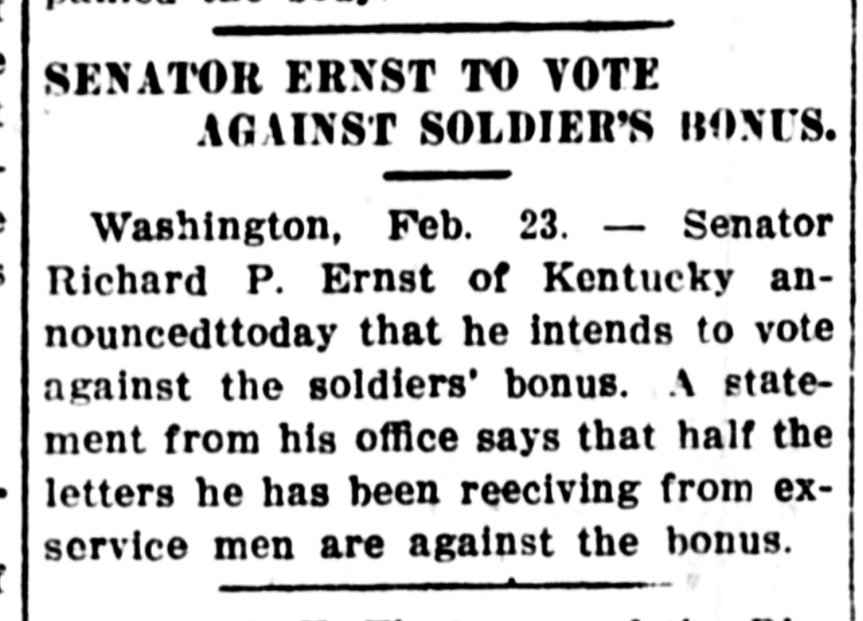
Langley’s Bill Passes Senate
The Big Sandy News: April 21, 1922
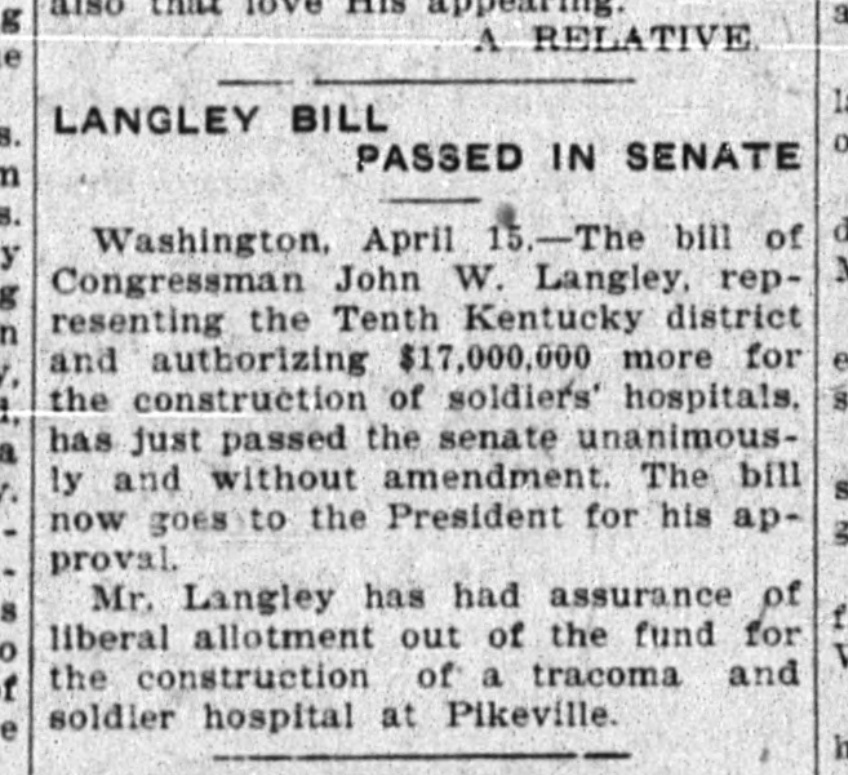
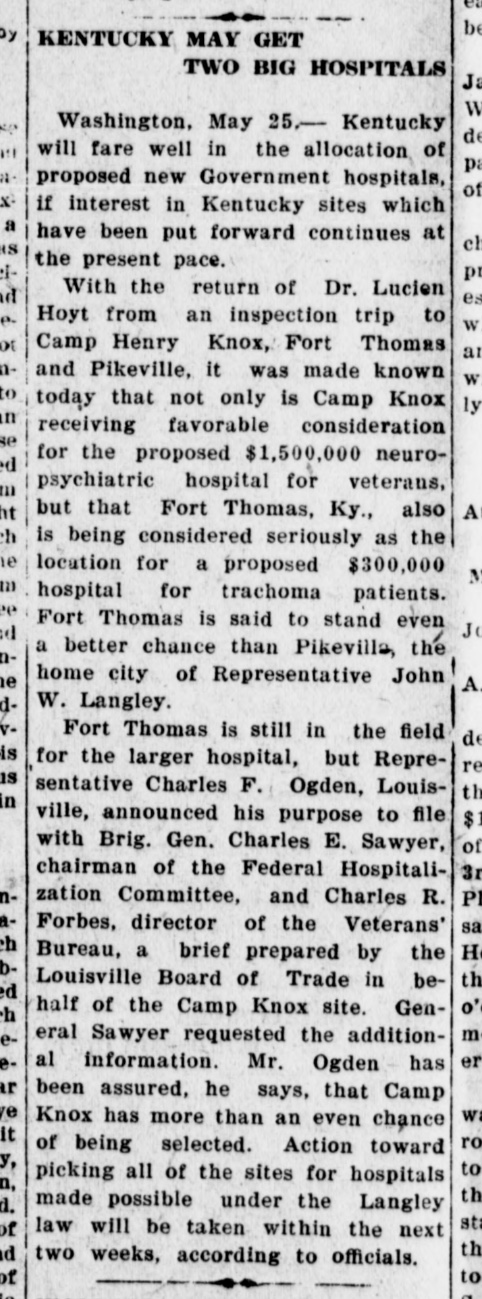
Kentucky May Get Two Hospitals
May 31, 1922: Kentucky May Get Two Hospitals
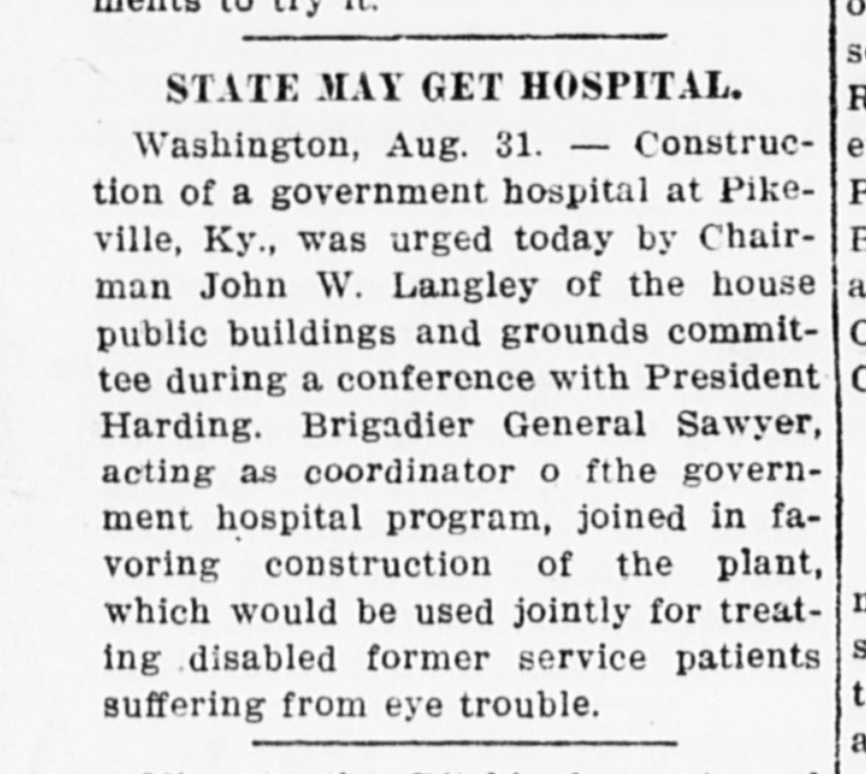
State May Get Hospital
The Public Ledger: September 01, 1922
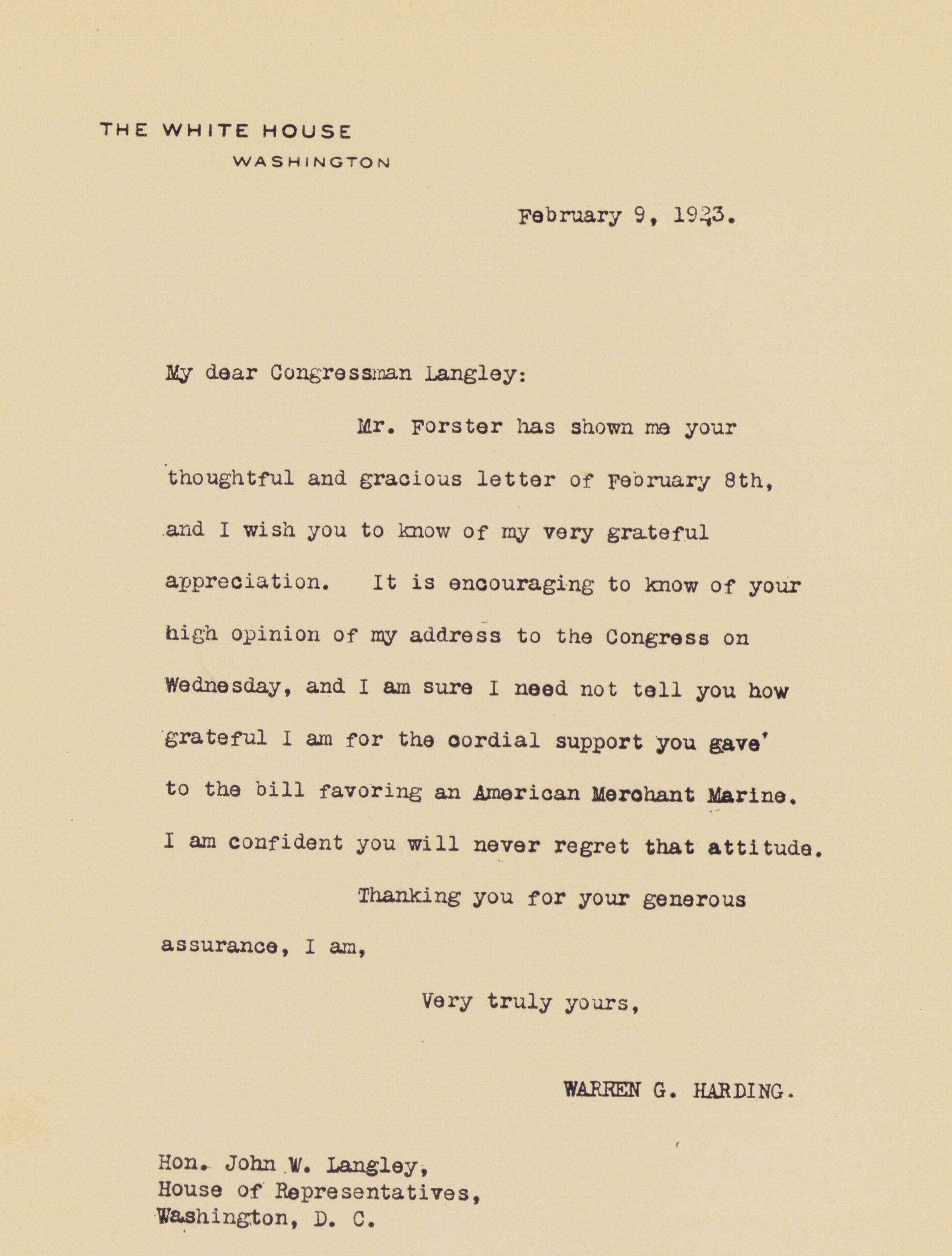
In the Winter of 1922-23 John Langley received a letter from Warren G. Harding while he was in the Presidential Chair. Langley was very popular with the majority of House and Senate, Republicans and Democrats alike. He benefited from being the Chairman of the Committee on Public Buildings and Grounds and stumping for Harding during President Election. Harding sought changes in the Presidential Office enabling him to go direct to the Major and Superintendent of the Police of Washington D.C. to secure changes in White House grounds.
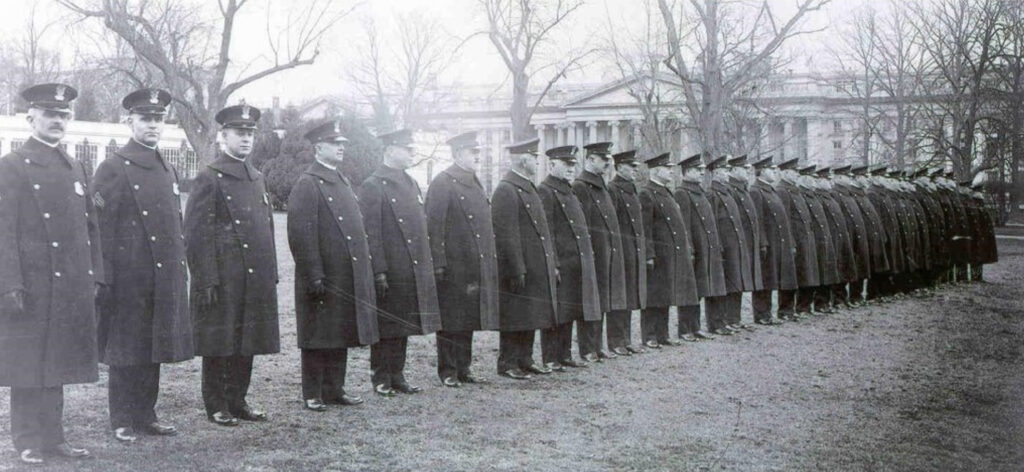
Secret Service is made up of two primary divisions –the Uniformed Division and the Special Agent Division. The primary role of the Uniformed Division is protection of the White House and its immediate surroundings, as well as the residence of the Vice President, and over 170 foreign embassies located in Washington, D.C. Originally named the White House Police, the Uniformed Division was established by an Act of Congress on July 1, 1922, during President Warren G. Harding’s Administration. Thanks go John W. Langley for pushing this Bill through the committee he chaired.
–
The White House police force which donned their new uniforms today, lined up for inspection by their Chief Major 0.M. Ballinger on the South Lawn of the White House, 2/17/23.
After John W. Langley introduced the Uniformed Division bill, it was passed without delay, through both Houses. Langley telephoned the president from the capitol advising him of his success, and that the bill was being enrolled for his signature.
Harding was profuse in his thanks for hurrying it through and once more repeated, “It was really Mrs. Harding’s bill,” and that he would advise her at once of its passage. The next time John saw Mrs. Harding she acknowledged him most graciously. He could never stop wondering, however, what particular thing it was that Mrs. Harding had been worried about. He intended to query the president about this supposed danger but never did. Maybe it was a delicate subject.
I do not think it agrees with these reminiscences to refer more than briefly to the many stories whispered of the continued liaison alleged to exist between President Harding and a schoolteacher from his own state named Nan Britton. However, this secrecy within the Harding Administration would change forever the Capital Police Force and the Secret Service.
The government hospital at Pikeville drawn by the engineer of the Veterans Bureau and approved by General Hines.
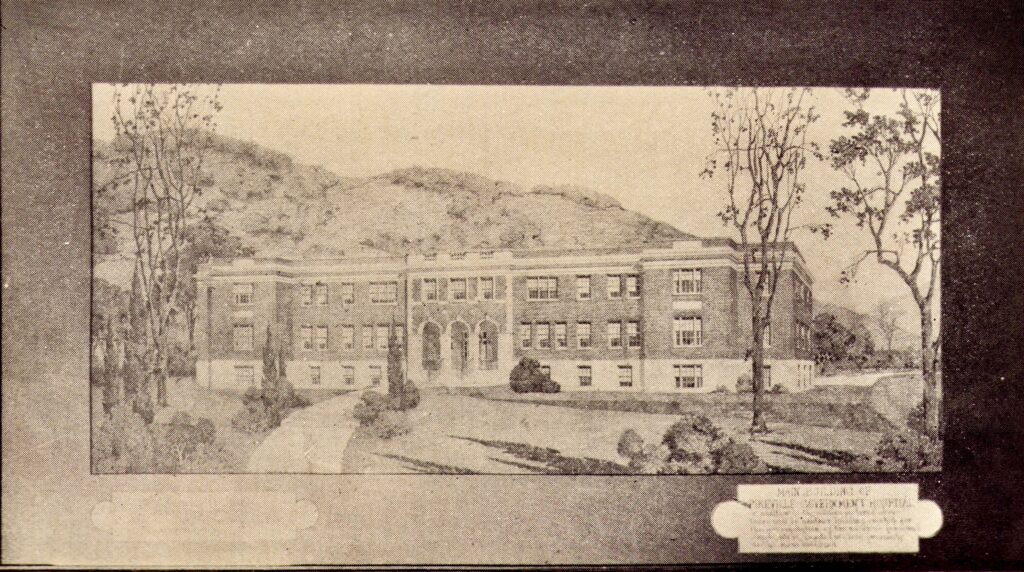
Charles Forbes, head of the newly established Veterans Bureau, was accused of accepting kickbacks from contractors building veterans’ hospitals and illegally selling surplus medical supplies. Forbes resigned in February 1923 after an irate Harding reportedly grabbed him by the throat when he learned about the charges.
Warren G. Harding died in office, August 2, 1923
The promises for a Regional Veterans Hospital in Pikeville, treating disabled and injured soldiers in a Medical Facility in Eastern Kentucky was fading fast. President Harding was Pikeville’s last hope. Veterans Hospital had a major pushback from Senator Ernst.
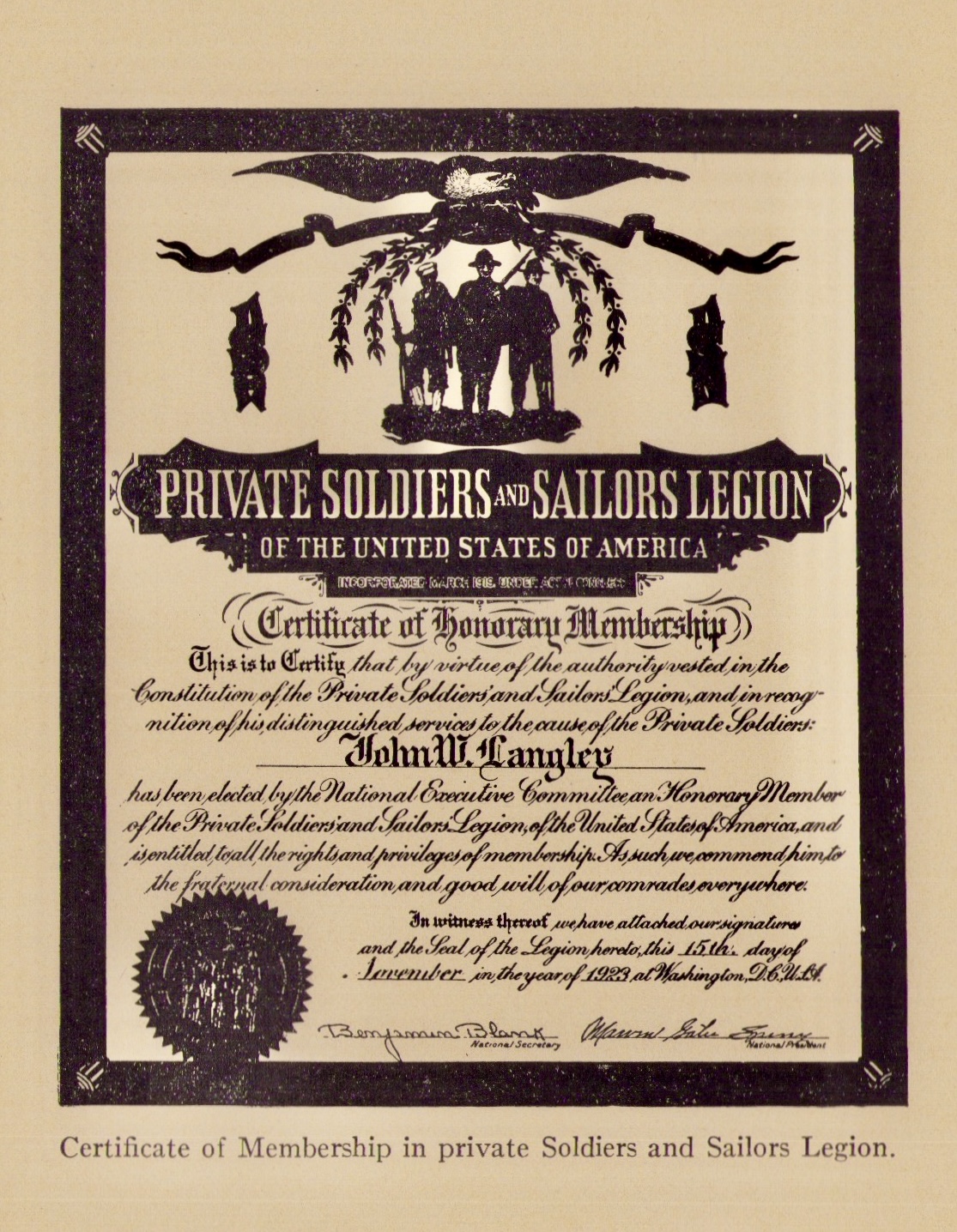
The American Veterans really loved the efforts John W. Langley put out for them.
November 15, 1923
The Indictment of John W Langley
ON the 7th day of April 1924, in the U. S. District Court, at Covington, Ky., over 200 miles from John W. Langley’s home at Pikeville, an indictment was returned and filed against Congressman Langley. It alleged a “conspiracy to violate the Prohibition act,” on three different counts. After a number of adjournments on motions, the case finally came to trial in the U. S. District Court at Covington, before presiding Judge, Hon. A. M. J. Cochran, on the 6th day of May 1924. John Langley’s defense attorneys were Henry E. Davis, John W. Price, W. A. Burkamp and W. T. Fowler.
Named in the indictment with John Langley were M. E. Huth, Walter P. Carey, Albert F. Slater, Hiram W. Benner and another. Named in the alleged violation, but not included in the indictment, were one Gus Schwarzkopf, one Jacob Eichenberg, one Elias H. Mortimer, and one James L. Brady. Benner’s removal from Philadelphia was successfully resisted by him, and only Huth, Carey, Slater, Langley and another were put on trial.
Incidentally, one of the affidavits in John W. Langley’s possession asserts that several of the jurors frequently remarked they’d be glad to acquit Slater if it was needed to convict John! There was a “hung jury” on Slater, and his case was dismissed later on motion of the prosecutor.
In the drab courtroom at Covington stood this prosecuting attorney, Sawyer Smith, and lo and behold! by his side no less a dignitary than Mrs. Mabel Walker Willebrandt, Assistant Attorney General of the United States.
Filled with holy fervor, the great protagonist of the dry forces had journeyed down to Covington to see to it that if John W. Langley stayed out of jail it would be over her dead carcass. On May 10th, after twelve witnesses had been examined, Huth and Carey withdrew their pleas of not guilty and pleaded guilty. Remaining defendants then severally moved that all the testimony heard up to this point was evidence against only the withdrawing defendants. This motion the Court overruled, saying in effect that no defendant could be shown to be a party to the conspiracy charge except by evidence as to what he himself said and did.
John W. Langley should explain that defendants, Huth, Carey and Finn had already been tried and convicted upon the same issues inherent in his case, but his own name was not even mentioned throughout their trial. Their case was reversed on appeal and Smith and Willebrandt gave immunity to Finn so that he could be a witness against John, Huth and Carey, certainly a peculiar artifice. Finn’s evident effort in the witness chair was to favor John, although he had been willing to become our witness, we distrusted his offer and refused it. The indictment is a lengthy document, but a clear conception of its contents will be conveyed by the following summary. Let it be noted that the Court eliminated the first of the three counts:
SUMMARY OF INDICTMENT (Counts 2 & 3)
From September 17 to November 18, 1921.
(1) Langley was a Member of Congress.
(2) Collins was a Federal Prohibition Director for Kentucky.
(3) McConnell was Federal Prohibition Director in Philadelphia, Pennsylvania, and Collins and McConnell were charged with enforcement of the provisions of the National Prohibition Act, designed for prevention of withdrawal, transportation and use of whisky for beverage purposes;
(4) Slater was a United States employee with authority to approve applications for permits to purchase whisky and to sign the name of McConnell as Prohibition Director to permits at the office in Philadelphia;
(5) Benner was a Federal Prohibition agent in said office with the duty of approving such permits for certain parts of Pennsylvania, Slates and Benner having immediate control of blank permits for said purpose;
(6) Brady was storekeeper-gauger at Belle of Anderson Distillery, Kentucky, Charged with the enforcement of the Internal revenue laws, designed for the prevention of withdrawal, transportation and use of whiskey for beverage purposes upon which revenue tax had not been paid.
(7) Mortimer, Schwarzkopf, Eichenberg and another were engaged in the business of procuring liquors, including whisky, for use for SUMMARY OF INDICTMENT (Counts 2 & 3).(8) Huth, Finn and Carey, owners of whisky in the Distillery, were desirous of selling the same for beverage purposes and of having the same transported from the Distillery by motor vehicle and by truck for beverage purposes.
(8) Huth, Finn and Carey, owners of whisky in the Distillery, were desirous of selling the same for beverage purposes and of having the same transported from the Distillery by motor vehicle and by truck for beverage purposes.
To put the charge in brief words, the prosecution rested upon only three points:
(1) That John had borrowed money from Elias H. Mortimer construed as a bribe.
(2) That at different alleged “conferences” in hotels at Louisville and Lexington, Ky., John W Langley had tried to intimidate Sam H. Collins, Prohibition Director, into giving official consent to the removal by truck of 1,400 cases of whisky from the Belle of Anderson Distillery in that state.
(3) That in the money paid to John by Mortimer there was a certain $2,000.00 transfer in a roundabout way for which no note was given. To back up these charges the sole and only evidence at John’s trial was that secured from Mortimer and Sam H. Collins.
The prosecution placed on the stand, about twenty witnesses ranging from Brady, the keeper of the seals of Belle of Anderson Distillery, up through Post Office Inspectors, certified public accountants, bootleggers and Volstead officials-all the way through to the star witness, Elias H. Mortimer, the man whose testimony if believed would John W Langley think have convicted even the Savior of Mankind.
Before going farther with the story let us get a line on Mortimer’s character—let us glance at the documented “record” of this glittering ornament of the witness chair.
In the U. S. District Court, for eastern division of northern district of Illinois, four indictments were returned on February 29, 1924, as follows: Charge of conspiracy to defraud the United States ELIAS H. MORTIMER and three others.
No. 12,228 (Sec. 37, Criminal Code) charges conspiracy of ELIAS H. MORTIMER, with a number of others indicted.
No. 12,229 (Sec. 17, Criminal Code)
An indictment against one Forbes for receiving a bribe from ELIAS H. MORTIMER and others.
No. 12,230 (Sec. 39, Criminal Code) An indictment against one Thompson for giving a bribe, although it is charged that the bribe was given by ELIAS H. MORTIMER and two others.
Indictment in May 1923 in the Southern District of New York, together with two other defendants for conspiracy in violation of the Prohibition act.
(He was at that time using the name “John Mortimer.”) He was released on $5,000.00 bail.
The migratory Mortimer, who seems to be a devoted patron of the Cook tours, evidently must have had his signature on almost every hotel register in the United States. Moreover, John’s counsel find him not only visiting New York and sharing in its pay night life, but also living there at different times. On one of these globe-trotting visits he turned up among the guests of the Empire Hotel, 63rd St. and Broadway, where the obliging manager cashed for him a check for $50.00 which was later revealed as being made of rubber. Mortimer was arrested and held in $500.00 bail.
John W. Langley hastens to add that the above is about all John could definitely find in filed criminal court proceedings against the weasel-like Mortimer. But reports in John’s hands furnish sinister comment on his other trails of divorce, forgery, mendacity and plunder. The trouble in securing information on the devious operations of this gentleman is that his apparent fondness for aliases made him about as elusive as an eel.
However, with the aid of a nationally-known detective bureau, John Langley discovered many curious facts concerning Elias H. Mortimer. Mortimer, we must remember, was the star witness against John. It was his lying testimony that the jury heard and apparently believed; he brazenly admitted to his record on the witness stand; moreover, his whole attitude towards Langley was one of bitter spite and contempt.
So far as that jury was concerned, and as John Langley shall show by irrefutable affidavits and other evidence, their demeanor was such as to create, with all unbiassed spectators, the impression that they were ready to convict him without hearing a syllable of evidence. But they did hear this evidence of Mortimer’s, and they must have fully and unreservedly believed or pretended to believe it; and they did bring in their verdict of guilty upon it, thus saving the face of the prosecution.
John now quotes fully from the reports of the Investigation Agencies covering Mortimer:
April 23rd, 1924.
Hon. John W. Langley, Frankfort, Kentucky.
In re: ELIAS H. MORTIMER.
Dear Mr. Langley:
We acknowledge receipt of your telegram of April the 21st, 1924, as follows: —
Referring to your letter and my wire please get all data available quickly as possible and send
to Hon. Henry E. Davis attorney at law, Fendall Building, also copy to John W. Price, Southern Building, both of Washington, D. C. Am writing you tonight.
In reply will say that all we know of the party in question is in a general way but will endeavor to ascertain something specific. From his activities generally, John W. Langley and counsel are convinced that Wm. J. Burns has had him looked up extensively and his files would at once give you all the information you might require to break down his testimony. If you knew some influential member of the other side of the House who was friendly to Burns, you should be able to secure the desired information, saving considerable time and expense.
There are several suits pending here and John W. Langley and counsel should immediately get behind these transactions and forward the reports as directed.
Mr. J. W. Thompson,
1101-3 Boatmen’s Bank Building,
St. Louis, Mo.
In re: ELIAS H. MORTIMER.
Report covering investigation as to record of Elias H. Mortimer.
In connection with your instructions to go to Minneapolis and get information relative to Elias H. Mortimer, I beg to advise that I proceeded to Minneapolis, Monday, April 14th, arriving at Minneapolis the following morning, Tuesday, April 15th, at 9 A. M.
I immediately got in touch with Mr. Nicholas V. Lux, with whom you had had some correspondence and long-distance communications relative to his being able to supply information regarding this party and was able to make an appointment with Mr. Lux for two P.M. of the same day. In the meantime, however, proceeded upon information which you had previously furnished me, viz: copy of telegram dated Minneapolis, April 1st, signed John C. Benson addressed to S. K. Joice, Cumberland Hotel, New York; telegrams between A. N. Jacobs and Col. C. R. Forbes and James Easby-Smith; memorandum supplying name of Anson B. Jackson, New York Life Building, Minneapolis, reference Peyton Gordon, United States Attorney, Washington, to the effect that Mortimer had been indicted for conspiracy, and had turned state evidence in Minneapolis; and also a Mr. Vandanaker, who addressed a communication to Col. Charles R. Forbes from St. Paul, Minn.
In an interview Mr. Anson B. Jackson, who I found to be an attorney with office in New York Life Building, he informed me that the party whom he thought was Mortimer, was in fact a party by the name of D. R. Morrow, who was indicted together with a party named James J. Wise and another party named Harry J. Tremaine. This indictment was returned at Willmar, Kandiohi County, Minnesota, with the sale of in connection stock in the Sterling Securities Company, and in this case D. R. Morrow turned state evidence, the other two parties being tried in a connection with which trial the jury disagreed and there never was a retrial. These indictments were returned September 8, 1924, and the trial came off October 21st to 30th. On account of the description given, I followed several leads and interviewed several other parties who were acquainted with Morrow and, while in appearance and personal habits there was a great deal of similarity, I found that it could not have been possible for Mortimer to have gone under the alias of D. R. Morrow as they were two different men.
Mr. John C. Benson is also an attorney with offices in the Security Building, but was out of town and would not return for several days, and as his telegram referred to a local investigator, upon referring to the City Directory I found Mr. A. N. Jacobs who is listed as local investigator for the United States Veteran Bureau, and upon interviewing him, found that he was the party referred to by Mr. Benson.
Mr. Jacobs advised me that he had known Mortimer since he was a boy, but that he had had no business relations with him and referred me to a Mr. A. S. Dowdall, Jr., who is also an attorney, with offices in the Plymouth Building, and the matter referred to in Mr. Jacobs’ wires to the effect that Mortimer had perjured himself in a case for the Minneapolis Street Railway Company, involving an automobile accident in which a party was killed. A friend of Mr. Dowdall was attorney for the heirs of the deceased in a claim for damages against the Street Railway Company, known as the Transit Company. I learned that this accident happened in front of Mortimer’s house where a party was in progress at the time and upon hearing a commotion outside, Mortimer and others ran out to see what had happened and there-upon learned that the party who was injured was an acquaintance of Mortimer.
The attorney for the heirs of the deceased in looking about for witnesses to the accident had asked Mortimer if he had seen same and he assured them that he had not and he was therefore not further considered as a witness in the case. Later, however, it appeared that the Street Railway had gotten hold of Mortimer and the supposition was that for a consideration he had agreed to testify in favor of the Street Railway Company to the effect that he had seen the accident when, as a matter of fact, it was well known that he had not, and in refutation of his testimony the attorney for the heirs of the deceased subpoenaed Mortimer’s mother and she testified at the trial that Mortimer was in the house at the time the accident occurred and could not have been a witness thereto. As judgment was rendered in favor of the claimants against the Street Railway Company, no action was taken by the attorneys for the claimants against Mortimer on the perjury incident, but I understand that later an indictment was returned against Mortimer by the Grand Jury, but that he could never be found, and indictment was never pressed. I arranged to have parties in Minneapolis look up the records in connection with this case, also the District Attorney’s office, to verify the fact that an indictment was returned, and this information will be obtained later.
In connection with the letter from Mr. Vandanaker addressed to Col. Charles R.Forbes, John was unable to find this party in St. Paul the day that he was there but have left the matter in other’s hands to interview him and forward any information gathered.
Mr. N. V. Lux is the President and General Manager of the St. Paul Cornice, Roofing and Ornament Company and was formerly local manager for the Berger Company. In his capacity as Manager for the Berger Company, in 1915, he employed Mortimer as a salesman and sent him to the home of the Berger Company at Canton, Ohio, for the purpose of acquainting himself with the line of goods manufactured by them. He reports that Mortimer was so wild while in Canton, getting on sprees, having wild parties and escapades, using funds for his own use that had been supplied to him for necessary expenses while in Canton, that it became necessary for Mr. Lux to recall him to Minneapolis and forthwith discharge him. In connection with this, Mortimer gave a check to one N. P. Wright for $25.00 drawn on the First National Bank of Minneapolis, dated January 16, 1915, which was protested for non-payment by reason of the fact that Mortimer carried no account in the First National Bank of Minneapolis. Mr. N. P. Wright was a friend of Mr. Lux and as Mortimer had been sent to Canton by Mr. Lux, he felt obligated to reimburse Mr. Wright for the amount, which he did, and now holds the check and protest papers in connection with this transaction a photographic copy of which I have secured.
John W. Langley also learned from Mr. Lux that a contractor in Minneapolis by the name of Schumacher loaned Mortimer $100.00 for which he was given Mortimer’s note and that sometime later when Mortimer seemed to be in fairly good circumstances he called upon Mr. Mortimer for payment. Mortimer agreed to pay him $50.00 on account and gave him a check on one of the banks of Minneapolis, receiving credit for same on the note, but that subsequently the check was returned to Mr. Schumacher unpaid with the notation that the account had been closed. Mr. Schumacher holds this note and check, and Mr. Lux has promised to secure a photograph of these papers as soon as possible and forward to me for our record.
John Langley also learned from his interview with different parties in Minneapolis that Mortimer had gone through bankruptcy in the United States Court and Langley had secured a certified copy of his petition and discharge, showing schedules of his assets and liabilities. The petition was filed the 17th day of October 1916, and the discharge was dated November 3rd, 1917. Mr. A. S. Dowdall, Jr., with whom he had already advised Langley that this petition in bankruptcy was to prevent Mr. Dowdall from collecting a fee for legal services, he having represented Mortimer in a claim against the National Material & Supply Company, of which Mr. A. Huhn was the proprietor. This claim grew out of a transaction involving commissions which Mortimer claimed against the National Material & Supply Company on business procured for them and upon which a settlement was agreed for $1,000.00. This $1,000.00 was payable through their attorney, Mr. F. H. Stinchfield, by two checks for $500.00 each, one payable as of date issued and the other payable in six months, or dated six months ahead, which date carried October 28, 1916. It seems that the agreement between Mortimer and Mr. Dowdall was to the effect that Mortimer was to receive the check for $500.00 payable at once and he, Mr. Dowdall, was to accept the postdated check for his services in connection with the settlement, but that Mortimer secured possession of both of these checks and refused to turn same over to Mr. Dowdall, and as same was postdated and could not be payable until October 28, 1916. Mr. Dowdall filed a garnishment on the Northwest National Bank of Minneapolis and thereupon held up payment. This postdated check is the only asset scheduled with the bankruptcy, and to recover Mr. Dowall filed a claim and was finally allowed the amount. This proceeding is all a matter of record in the bankruptcy case, which is No. 2979 of the United States District Court, District of Minneapolis, Fourth Division. The total liabilities listed amount to $3,705.03, upon which no payment was made, with the exception of the Dowdall claim, which was proved to be preferred claim by reason of the check for $500.00 being in evidence, which Mortimer got hold of by misrepresentation.
Among the claimants in the bankruptcy proceedings is one W. O. Hartig of the W. O. Hartig Electric Company, address 312 Marquette Avenue, Minneapolis, which is represented by a judgment for $603.50.
Mr. Hartig claimed that this was money Mortimer borrowed from him in advance of commission which would be allowed him for securing work for the W. O. Hartig Electric Company, but which was never secured, or ever produced, therefore no commissions were ever earned by Mortimer.
In addition to the above, John Langley employed the services of the Trotter Detective Bureau, of which Mr. Charles F. Trotter is President, Mr. Trotter has agreed to get Mortimer’s record complete and will furnish it with detailed information from time to time as the same is gotten, and particularly in connection with Mortimer’s employment by the Minneapolis Steel & Machinery Company, whom Mortimer represented for a number of years prior to his leaving Minneapolis. John Langley’s information has finally reached the point where the Minneapolis Steel & Machinery Company had to discharge Mortimer, as he was continually in trouble by giving bad checks which the Company had to make good, and even went so far as to collect customer’s accounts, hypothecating such funds for his own use; and in some instances customers were required to pay their accounts twice, and other delinquencies which made it embarrassing to the company.
Mr. Lux and the Trotter Detective Bureau will cooperate in securing and compiling definite information on these transactions and will secure the names of parties who are willing to testify as to their transactions with Mortimer.
I have already supplied you with a copy of the Twin City Reporter dated February 22, 1924, which carried an article in connection with one of Mortimer’s escapades at the Radisson Hotel. The Trotter Agency will interview all creditors listed in bankruptcy schedule for further information, and any others whom he may get a line on and whom he knows. Mr. A. N. Jacobs, Mr. A. S. McDowdall, Jr., Mr. W. O. Hartig, Mr. Nicholas V. Lux, whose addresses are known, have already specified their willingness to testify as to Mortimer’s reputation for truth and veracity and fair dealing, which they have admitted is very bad, and will also testify to the transactions which each have had with Mr. Mortimer, either by deposition or as a witness in Chicago.
Edward C. O’Rear was John W. Langley’s Chief Counsel during trial.
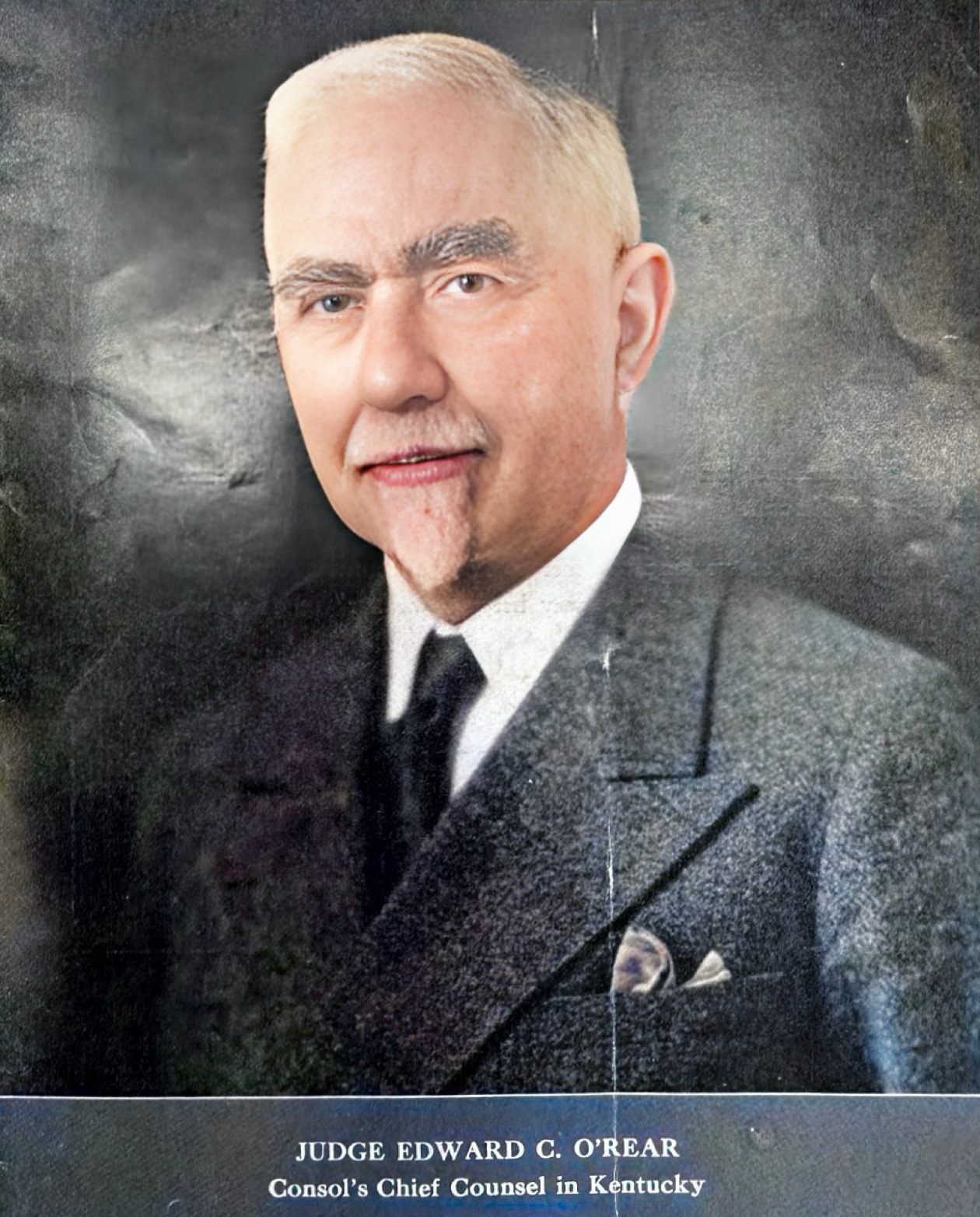
April 24, 1924.
In re: ELIAS H. MORTIMER.
Report of
Principal (S)
In making an investigation in reference to the above party we learn that he was very active in and around Philadelphia during the Summer and Fall of 1923, stopping principally at the Rittenhouse Hotel, Chestnut Street, and is accredited by those with whom he came in contact with as being a bootlegger. He is married, having married Miss Katherine Bulkley Tullidge, but his wife was not with him in Philadelphia at the Hotel, tho she may have been living at the home of her parents Dr. and Mrs. George B. Tullidge, 2226 Delancey Street, Philadelphia.
While at the Rittenhouse Hotel he passed numerous checks principally on the Mt. Vernon Bank in Washington, D. C. a number of which were returned without sufficient funds but were subsequently made good. Upon one occasion, when offering a check, he was asked by the Auditor of the Hotel, Mr. Colgan, to fill out an identification card, but in lieu thereof he handed Colgan a business card representing himself to be Vice-President of the Campbell Corporation, an anthracite coal company doing business at 1027 Real Estate Trust Building. John’s counsel called upon the Campbell Corporation for information but ascertained that Col. Campbell who was most familiar with his transactions was out of the city and a conference was arranged for at 5 P.M. Friday April the 25th. From a subordinate legal team we learned that Mortimer had really never been connected with the Corporation and was now being sued by them in the Municipal Court for a check for $500.00. Thinking that Mortimer had misrepresented his connection by having the cards printed as referred to, we asked how it was, and the information obtained was to the effect that he was allowed to use the cards to give him standing. From another source of information, our legal team has learned that Mortimer was introduced by a friend to Congressman Edmonds of Pennsylvania and by him to someone else and then to a liquor dealer in this city. In a strictly legal proposition about liquor permits, in which it was desirable to expedite matters, the liquor dealers gave Mortimer $2,500.00 for the purpose of using same in Washington. The matter fell through, and Mortimer kept the money. The liquor dealer swore out a warrant for his arrest and Congressman Edmonds saw Mortimer in Washington and forced him to make restitution.
Further investigation revealed the fact that Mortimer was arrested in this City July 30th, 1923, on the charge of surreptitiously removing an automobile from a garage while owing some $300.00. He was locked up in the 5th Police District for several days, finally furnishing bond in the sum of $400.00. He was granted a hearing before Magistrate Chas. P. Rooney, 11th & Sansom Streets, on August the 7th, continued until September the 11th, at which time all damages having been paid the charges were withdrawn. Mortimer is now in Philadelphia under the escort of the Department of Justice men and will have to appear on Friday, April the 25th, before Judge Thompson in the United States Court. The action is for the removal under indictment of two men, one Benner and the other unnamed who are indicted with clients in the Kentucky matter. Benner is represented by McAvoy and Brande, North American Building, and the other by Wm. A. Gray, Heymann Building.
In an interview with Mr. Brand in reference to the matter of the further hearing tomorrow, he stated that both these men deny they are the men mentioned in the indictment and Mortimer is brought here for the purpose of identifying them. It is the expressed purpose of counsel to force testimony in the opening, the same as that presented before the Grand Jury in Kentucky. Knowing that Brenner is in no way connected with the matter, it is confidently expected Mortimer may perjure himself. Counsel considers this hearing of such importance that we shall have a representative present to furnish us with a synopsis of the proceedings which will be promptly forwarded.
Mrs. Mortimer is now suing for divorce, and it is our purpose to interview her as she is reported as being very bitter against her husband owing to his testimony before the investigating committee of the Veterans Bureau, when Mortimer linked her name with that of Forbes. We have also learned that Mortimer gave a check for $75.00 to a woman whom we can locate. This check was dishonored and to sum up our investigation so far, we find: —
- Several suits pending civilly against Mortimer.
- He has a police record as given above.
- He has frequently passed checks.
- He is under several Federal indictments.
- He can be prosecuted in Pennsylvania for passing at least three, possibly four bad checks, a separate charge to be made in each case.
The matter of his arrest here, however, is a matter of judgment for counsel.
The prosecutors live here and to avoid any danger of the complaints being satisfied, we would have to intimate to the complainants that while no settlements would be allowed they would in the end lose nothing. We would have to be assured of this. We could in following this action have bail fixed according to our judgment and conviction would follow. This would certainly discredit his testimony. After Friday Mortimer will probably leave our jurisdiction in which case should we proceed upon these lines we would have to immediately move for indictments so that extradition would be expedited in case of arrest. In the absence of our client we talked briefly with his secretary, briefly outlining the above and informed him that a copy of this report would be forwarded to Mr.
Price where he could obtain same to forward to Mr. Langley. We also talked to Mr. Henry E. Davis who informed us that he was leaving for New York City at midnight and would not be in his office on Friday. He was informed that this report as well as other information obtained would be forwarded to his office and that we would await further instructions.
April 25, 1924.
In re: ELIAS H. MORTIMER.
Report of Principal (S)
Further investigation regarding the above party, developed the fact that at one time he made his hangout in the offices of E. J. Gardner in the West End Trust Building and interviewing Mr. Gardner we have been informed that Mortimer is a man devoid of all principle, is considered a rat and under no circumstances would he believe Mortimer under oath. When asked whether or not he would take the stand and testify to the fact he claimed he was perfectly willing to furnish any information possible and would bring his influence to bear upon others to do as we would wish, but he personally would have to remain in the background.
From several other sources of information legal counsel have been told by those in a position to know that the proper query would be as to where Mortimer is getting his money as he is known to owe everybody he can and was broke, but still seems to be able to travel in a rapid manner. It is further said that he was some relative of President Harding and were it not for the President’s demise he probably would still be riding high.
We have been trying to get in touch with Col. Campbell for firsthand information and also with H. Horace Dawson, an attorney 1535 Chestnut Street, who we are informed went on the bail of Mortimer when he was arrested on the automobile case. We shall also endeavor to ascertain the names of some reputable people who will be willing to qualify and testify to the effect that they would not believe Mortimer under oath. This report will be followed by further information.
April 26, 1924.
In re: ELIAS H. MORTIMER.
Report of Principal (S)
Continuing the investigation we have had a long conference with Col. Campbell of the Campbell Corporation and while he is very much down on Mortimer for reasons best known to himself, he would hesitate to appear against him in court. As previously reported Mortimer represented himself as being Vice-President of the Campbell Corporation and while he was in New York his wife called upon Col. Campbell to ascertain her husband’s interest. She was informed that he had no interest and no connection with the Corporation outside of receiving a commission on any sales that he made. Other personal information was furnished and as a result she wrote to Mortimer in New York. This incensed him and he wrote to Col. Campbell accusing him of trying to date his wife and threatening to get him for it. John’s counsel understands these threats to have been made to offset any action by Col. Campbell to recover monies learned. There is no truth in this accusation but there is a feeling of hesitancy upon the part of Campbell to come to the front. He further informed us that upon one occasion Mortimer was cursing and damning about some notes that our client had given him, payable $650.00 a month and had stated that he did not see how he was going to get the money as that sum equaled his salary in Washington.
Upon another occasion a Department of Justice Agent came into the office and demanded Mortimer’s personal file. Unknown to the corporation he did have some of his correspondence in a separate file which consisted of correspondence with the Senate Committee in reference to the Veterans’ Bureau. This leads us to believe that the Department of Justice Agent was seen recently with him in New York City, ostensibly acting as guard. Campbell is willing to help but is unable to furnish us with anything concrete.
John’s legal counsel also has interviewed J. Joseph Frank, druggist at 13th and Girard Avenue, and while Mortimer gave him a bad check for $27.00 and while he has sued civilly, he feels even that action was a mistake, because he knows that Mortimer is a frame and might cause him trouble that would cost more than taking this loss. He however furnished us with information that a young woman had said to him she would like to see Mortimer for she had a pocket full of his bad checks. He could not recall the lady’s name but said she was a friend of a Mr. Dickson, with an insurance business on Walnut Street, and through him we may be able to trace her.
We have also received information that Mortimer was intimate with a woman separated from her husband Bill Homer, the woman now going under the name of Mrs. Forks, now occupying an apartment at 1813 Spruce Street. We shall endeavor to interview her, as she is reported as holding a bad check for $75.00.
We are enclosing a clipping from the Public Evening Ledger under date of April the 25th.
This account is fairly accurate as reported by Principal (R) and the only reference to our client was as stated in the article. We are making an effort to secure a transcript of the evidence for your further information.
At the continued hearing Saturday A. M. L — was held under $5,000.00 bail for appearance in Kentucky and Benner and Slater were held for a further hearing. Further information will follow. The reference in the newspaper article to our client was to the effect that Thomas J. Finn, Columbus, Ohio, admitted giving A. M. L- $30,000.00. He said on the stand he paid the money after a conference in a Louisville Hotel at which John W. Langley, a Kentucky Congressman was present. Langley was indicted in the case.
April 28th, 1924.
In re: ELIAS H. MORTIMER.
Report of Principal (S)
Nothing further can be added to previous reports other than we have been assured by one of our client’s acquaintances in this city that he thought he could produce a man on Thursday who would swear out warrants for Mortimer’s arrest on a charge of passing worthless checks and possibly for forgery, but he was not quite sure as to the latter charge. We will get this warrant if possible and hold same waiting further instructions. Enclosed please find clippings appearing in the Sunday “Philadelphia Inquirer” regarding the court proceedings here. It is a comprehensive statement. Our client in his telegram stated that he had written to us to kindly inform his secretary that we have received no letter and to acquaint his principal of the situation here. John W. Langley has mentioned the fact at this point, that “Elias H. Mortimer” that even in this name carried an alias, one he seemed to have used on the majority of occasions. His real “handle” is said to be Muscovitz.
Katherine Tullidge Mortimer
During the trial period he was separated, but not divorced, from his wife, and this deprived me under the Kentucky statute of the great advantage of making Mrs. Mortimer my witness, which she was most anxious to be. She undoubtedly would have unfolded a tale of the most damaging character. About a year after the trial, I was told she obtained her divorce in either Philadelphia or Pittsburgh. John W. Langley might further explain that trial venue doubtless was hastily switched from Washington to Kentucky, so that Mrs. Mortimer, who would have testified most damagingly against her husband, and Mrs. Langley, whose testimony would have been incalculably valuable to me from her conversance with all the facts, would both be restrained by the Kentucky state law forbidding a married woman to take the witness chair either for or against her husband while they could both so testify in Washington.
All doubts concerning Mrs. Mortimer’s attitude are quickly removed by the exhibits following. On the occasion of my parole from Atlanta in 1926, she addressed to Mrs. Langley the following telegram:
MILFORD, CT.
DEC. 19, 1926.
GOD BLESS YOU ALL.’ MY HEART IS TOO FULL TO EXPRESS WORDS. LOVE.
KATHERINE MORTIMER
On another occasion she wrote Mrs. Langley:
52 Broad Street, Milford, Conn.
Dear Mrs. Langley:
It is with the greatest pleasure that John Langley learns of your successful fight to fill the seat left vacant by the terrible and unwarranted persecution of him. The joy of knowing that his constituents still believe and trust in him is shared by us all.
Since our meeting at Covington and the terrible consequences resulting, it has been my daily prayer to see such a man of honor and integrity as Mr. Langley vindicated in the eyes of the world, as your election has done.
My dear child, please know that my heart beats with yours in the hope that he will soon be restored to his loved ones and friends.
Cordially yours,
KATHERINE TULLIDGE MORTIMER
(Originals of both letter and telegram were in John W. Langley’s possession.)
Katherine Tullidge, the daughter of George Bowler Tullidge was highly regarded, well connect Philadelphia physician. George Tullidge
had Warren G Harding’s attention.
Philadelphia Bulletin, March 9, 1925
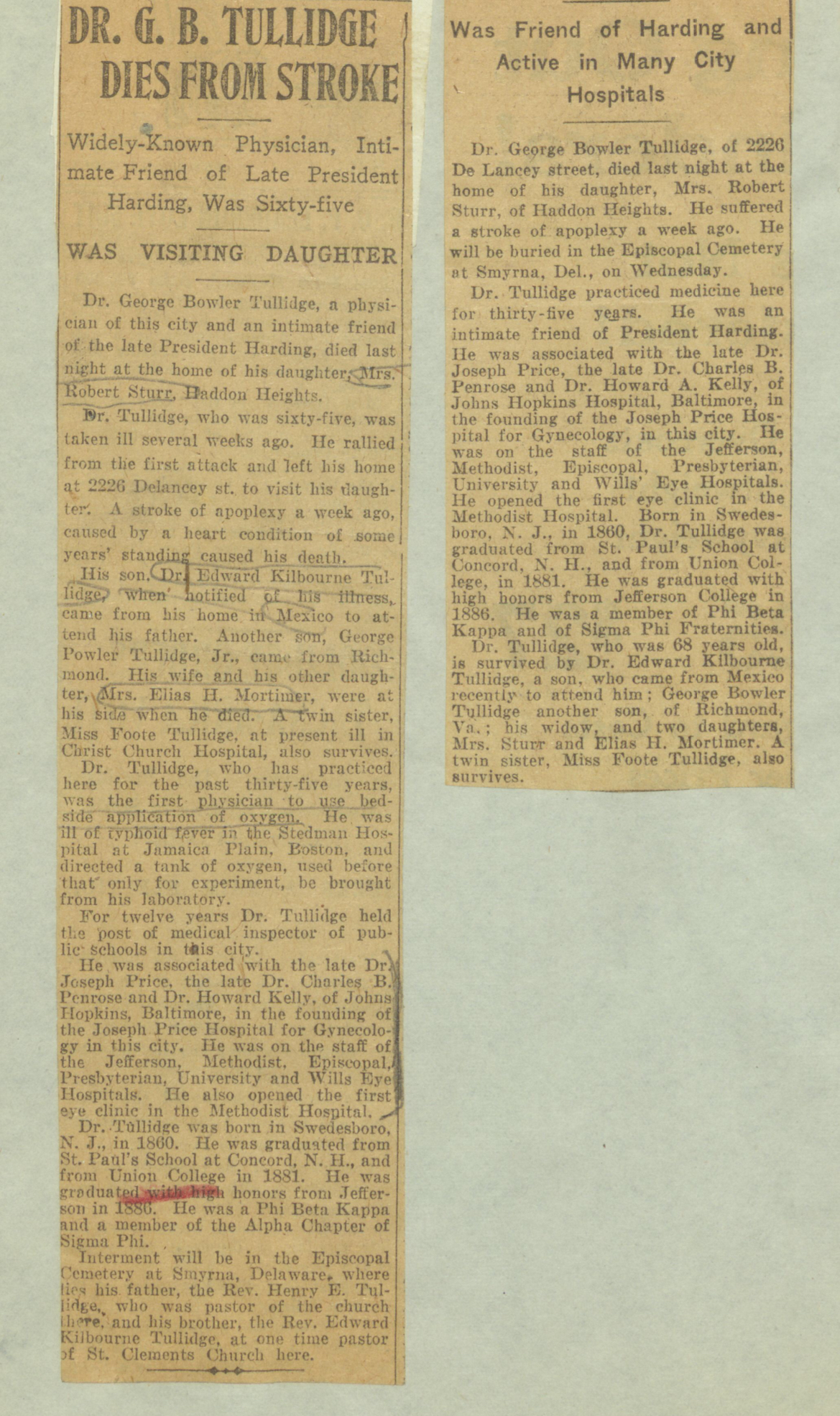
Returning to Mortimer, it would appear from the records, that he had been an occupant of several witness chairs for nearly all the spare time of his adult career. Independent of his rather ludicrous appearance in John’s own case, Elias Mortimer testified at one time before the Senate Committee investigation of Charles R. Forbes, head of the Veteran’s Bureau. John W Langley had met Charles R. Forbes in Hawaii long before Woodrow Wilson signed the Langley Act.
Charles R. Forbes
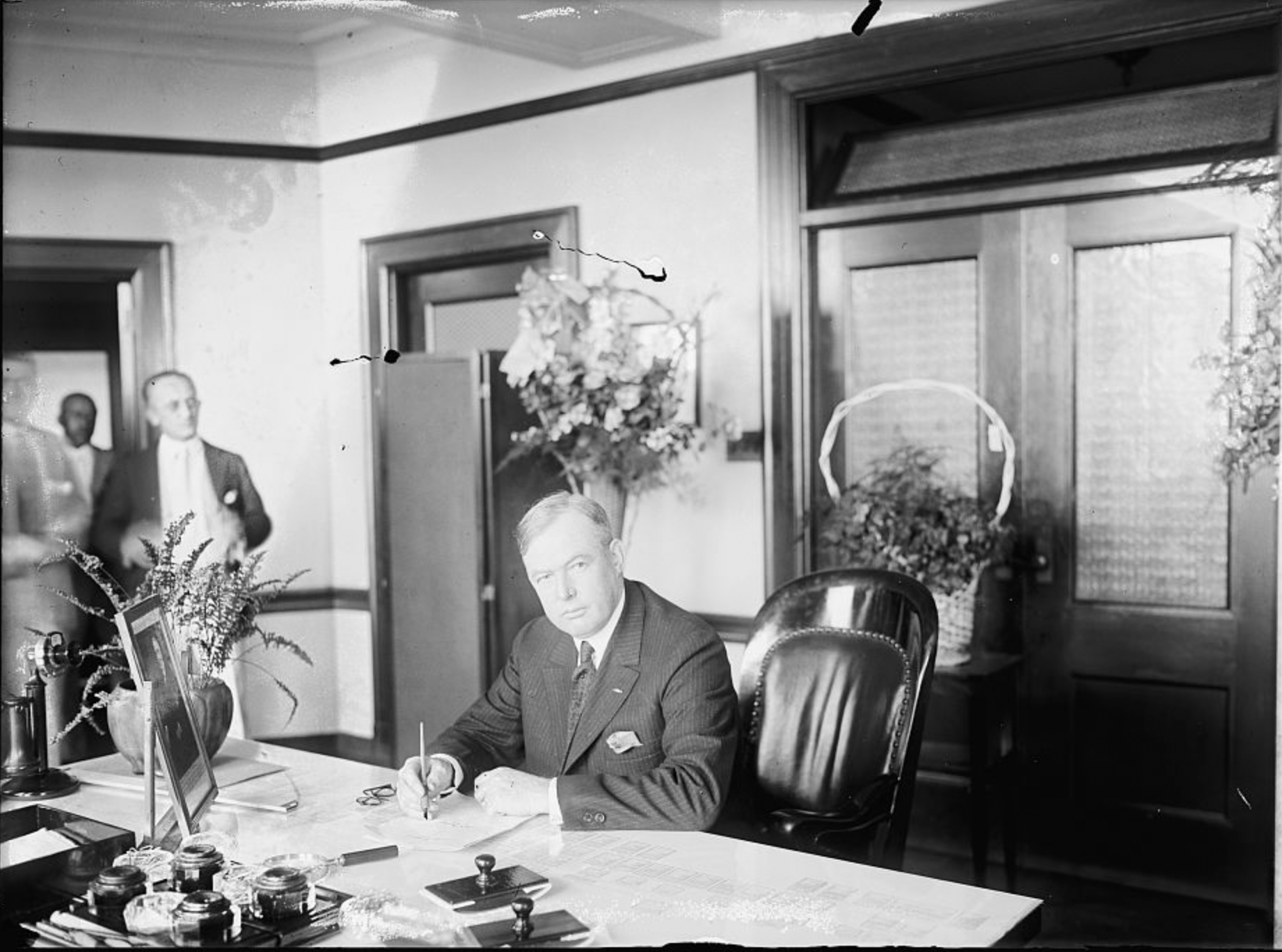
–
A Senate investigation in 1924 found that Forbes and his associates stole more than $200 million (nearly $2.8 billion in current dollars) from the bureau. The following year, Forbes was sentenced to two years in prison for fraud, conspiracy and bribery.
Charles Robert “Bob” Forbes, b. 1877, an immigrant seeking his place in the world.
Sarah “Sadie” Mabel Markham, his first wife, m. 1898, later worked as a “forelady” (foreman) in a shoe manufactory.
Two children, Mildred and Russell.
Kate Marcia McGogy Goodwin, his second wife, m. 1909, writer. Daughter Marcia “Awa.”
Katherine Bulkeley Tullidge Mortimer, his third wife, married 1925, former lab technician; later a federal civil servant.
Later Mortimer testified before the Congressional Committee investigating one, Thompson, and another for violation of the Prohibition act. Still later, with his witness chair halo still fresh, he appeared before another Congressional Committee investigating charges of violation of the Prohibition act by Representative Zihlman of Maryland. In this particular case, the amazing Mortimer seems to have utilized the witness chair partly as a confessional, for with the most brazen candor he admitted repeated violations of the Volstead law in several states. However, in the Zihlman case, his traitorous aspirations were foiled, for Zihlman was completely exonerated.
Perhaps one of the most humorous incidents of Mortimer’s checkered career occurred in the Empire Hotel bad check case. When he was arrested in his New York office on this charge he loudly protested: “This will disgrace me, and ruin me in my business.”!! He also told the police that his wife was a niece of President Harding, a story which he had repeated throughout the country. He had continually boasted that he bore a charmed life, and that “my testimony always goes where the most dough is.”
Mortimer’s destructionist complex extended even to mothers-in-law. During a session of one of the Congressional Committees in Washington, the newspapers reported his arrest on a charge of hitting his mother-in-law over the head with a shovel! This complex extended to his favorite recreation of also beating up his wife, to which painful fact that estimable but unfortunate lady will bear witness.
Nothing could seem more significant than the setting of my trial at Covington, 200 miles distant from my home, and in a politically hostile district, despite the motions and protests of my attorneys that I could not get justice there. It was also the amazed belief of all my friends, my attorneys and also many others that I was tried and convicted before a “packed” jury at Covington. It is far from my desire to appear in print with an accusation that those “twelve good men and true” were either “packed” or half-packed. It is indeed quite possible that if I were kicked by a mule, I might possibly think it was a tomcat. But I can truthfully say that the impression made upon the defense and its friends by the jury was one of extreme bias. However, all I want to do is to present five affidavits and these must speak for themselves. And the reader must draw his own conclusions.
Johnny Marcum, a reputable citizen of Louisville, Ky., was, prior to my trial, evidently considered good enough for the job, laboring manfully on the staff of Sawyer Smith, prosecuting attorney in my case.
I never had met Marcum, never heard of him before, did not know him at the trial. The first I had ever heard of him was in 1925, after the trial, and I was at home ill. I got by registered mail from the Notary concerned, his affidavit reproduced herewith. But as it turned out, the name, Johnny Marcum, represented a young Kentuckian with a pretty decent conscience.
Langley did later recall, that during the selection of the jury a young man, (who it later developed was Marcum) was sitting beside Mabel Willebrandt and District Attorney Smith, with a sheet of foolscap before them, which they were continually checking. Of course, at that time Langley had not the faintest idea as to what they were doing, except he was curious as to the incident. But, presto! John Langley was destined to discover less than a year later, the thrilling operation upon which they were engaged, and so that the matter may be perfectly clear, he has photo-engraved the sheet containing a typewritten list of the names of the talesmen, upon which their busy pencils were at work, and it is inserted opposite this page.
It was this same sheet of foolscap with all the check-marks intact, that fortuitously came into John’s for all who care to examine it, along with all the original affidavits he reproduces herein.
MARCUM AFFIDAVIT
State of Kentucky, Fayette County
The affiant, Johnny Marcum, says that he is 27 years of age, a resident of Louisville, Kentucky, and that for more than sixty days prior to April 15th, 1924, he was on the Prohibition Force working under P. Green Miller, Division Chief of Kentucky and Tennessee: that on or about the 21st day or April 1924 while in the service of the U.S. Government aforesaid he was detailed and directed by P. Green Miller, Division Chief to report to Hon. Sawyer Smith, United States Attorney for the Eastern Federal District of Kentucky, at Covington, Ky. and subject to the orders of the said District Attorney’s Office.
That pursuant to said assignment he did on or about the 21st day of April 1924 report to said District Attorney in his office at Covington, Ky. and there met one Mr. Kennard another enforcement officer under said Miller, Div. Chief, and that said Sawyer Smith, then and there delivered to the said Kennard and affiant a list of names and addresses which he stated a jury would be drawn to try the case of the United States against John W. Langley, et al, and directed the said Kennard and this affiant to take the said list and investigate the men whose names appeared thereon and procure information regarding each man from bankers, ministers, neighbors, members of churches and all and every possible source and report back their findings to the said Smith as to whose who might be lenient or easy jurors or favorable to defendant, Langley, and especially report the names of the men whom they might find by these investigations and inquiries that would convict defendant, John W. Langley—
Affiant further says, that the other defendants who were indicted jointly with the said Langley were not
mentioned, and that those jurors who were Democrats, and what kind of Democrats, active or passive, and if Republicans what kind of Republicans, were to be ascertained and reported and, also if they were hard-jurors and against violation of the Prohibition Laws; that from these instructions and the directions and conversations with him with reference to his said findings he understood that any man or men whose name or names appeared on said list, ft any, whom he could ascertain that would convict the said John W. Langley under said indictment were to be reported and specially designated.
The affiant further states, that on or about May 1st, 1924, he with the said Kennard, was given another list of names by the said District Attorney’s Office, and that the same kind of investigation with reference to the men whose names appeared thereon was to be made respecting the conviction, as he understood it, of the said John as to the violation of the Prohibition Laws Generally.
The affiant further states that he worked with the said Kennard in said investigation, except a few men in Trimble County, and that he made an investigation of these men by himself. That he talked personally with some three of the men whose names appeared on the said lists relative to Prohibition violations.
That after they had made this investigation and reported the politics, kind of jurors and other findings from these investigations, which original list and findings, is here fled and made part hereof, he was present at the selection the jury trial of said Langley, and aided and help said Smith select the same, that his duties in so doing was to see that no man got on the jury whom he had reason to believe would not convict the said John W. Langley under said charge. The affiant further says, that at the time of the selection of said jury to try the said Langley, et al, he noted on the back of said list, which was used by him, the names of the jurors so selected, their politics by letters, D-for Democrat, R-for Republican, and the word “active” where such juror was an active politician to which he refers and makes part of this affidavit.
The affiant further states that he makes this affidavit voluntarily, of his own free will and accord, and that justice may be done the said John W. Langley. That he was directed to keep the said findings secret during the said trial, and did not reveal or inform the said Defendant, Langley, or anyone else of his investigations, until a few days ago-since January 1st, 1925.
Johnny Marcum.
Subscribed and sworn to before me by Johnny Marcum, this January 13, 1925.
My commission expires 8th day of March, 1926.
N. P. HOWARD
Notary Public, Fayette Co., Ky.
As a matter of fact, all the overt acts charged against John W. Langley as set forth in the indictment revolved almost entirely about certain meetings which took place in the Seelbach Hotel at Louisville, Ky., on the 17th, 21st, and 27th, of September, 1921, and at the Phoenix Hotel, Lexington, Ky., September 21st, on which day we had gone over there from the Seelbach for dinner.
As Langley had already intimated, the prosecution alleged in effect that these meetings represented the maturity of the bribe alleged to be inherent in Mortimer’s loans to him and that at such of these meetings at which Sam Collins was present he tried, in vulgar parlance, to “put the screws on him,” to release 1,400 cases of whisky from Bell of Anderson Distillery, by truck, which was to be accomplished by his supplementary order on a permit which had been secured by bootleg interests. Of this original permit it was not contended by even a scintilla of testimony that John Langley knew anything, or that he had the faintest participation in securing it. All that was charged, and what seems to be John’s entire alleged culpability, is that John Langley was to use pressure on Collins to secure his approval of the removal of the liquor by truck.
The testimony of Collins from first to last, as to John’s complicity, is of the vaguest character, although he was eager to set forth that he refused his alleged “pleadings.” Collins never accused John, either by insinuation or innuendo, of the smallest effort to coerce him into a violation of law! In order to completely cover his entire official contacts with Collins, John will tell the detailed story of same from 1916 to 1922 inclusive. In the year first-named, Collins approached Langley seeking the appointment of United States marshal for the Eastern District of Kentucky, contingent upon the election of the presidential nominee. He replied that he was willing to do so and so advised him afterwards in writing. However, the nominee Governor Charles E. Hughes was defeated which temporarily prevented any further action. Some two years later, Collins again appealed to John asking if his original promise was good in the event that we elected a Republican president in 1920. Langley’s answer was that he never allowed the statute of limitations to run on his personal promises, and that he would once more back him for the job. The carbon copy of the letter containing that assurance was, to Langley’s regret, stolen from his files.
Let us return to the subject of the marshalship by recounting John’s close acquaintance with Senator Harding as well as Harry Daugherty, his campaign manager, so that John may explain why the marshalship did not pass to Collins. As a matter of fact, the half-brother of the man who finally got the job was a life-long friend of John, and knowing his personal relations with Harding and Dougherty had asked him in Chicago to give him a personal note of introduction to both of these gentlemen. This John did, and in perfect good faith, saw them both, unaware that he had already promised the place to Collins, but got a promise for his half-brother Roy Williams. John W Langley should add that this individual who secured the promise was a district delegate to the convention and turned out to be the “original Harding man” of the Kentucky delegation, and this promise compelled John to accept for Collins the post of Prohibition Director for Kentucky.
US Attorney General, appointed under Harding Administration, March 4, 1921 to April 6, 1924.
HARRY DAUGHTERY
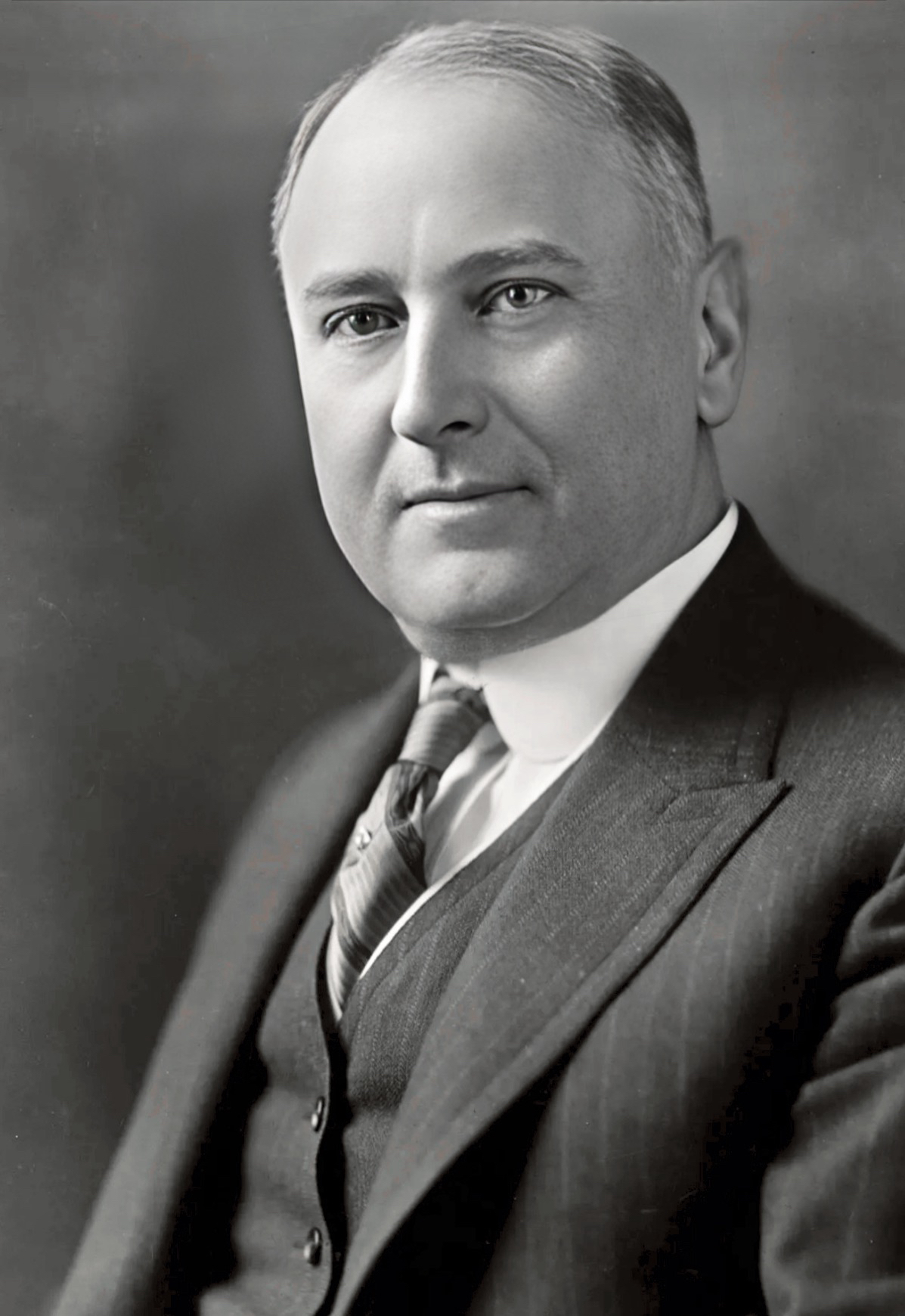
–
Harry Daugherty, a political operative who was appointed attorney general after engineering Harding’s presidential nomination, stood trial twice for conspiracy of selling illegal permits and pardons but was never convicted. Daugherty’s private secretary, Jess Smith, committed suicide in May 1923, a day after Harding informed him of his pending arrest for corruption in a White House meeting.
Here John Langley was a little ahead of his story. On a visit made to President Harding on May 28, 1921, Langley urged Collins’ appointment as marshal. The President’s reply was that there existed a tentative arrangement to give the Marshalship to another, adding, that the only man who might be able to change the post to Collins was Col. Hert, and he suggested that John go and see him. This he did, repeating the President’s words. It was then that Col. Hert suggested that it might be arranged to confer upon Collins the post of Prohibition Director in lieu of the Marshalship. John replied that he would have to wire Collins to see if that would be satisfactory to him, which John immediately did. Collins notified him that this job would be entirely satisfactory to him but added that he did not want John embarrassed in any way, since he had been the best friend he ever had in the whole Kentucky crowd.
Sam Collins was appointed to the position on June 18, 1921.
These facts confirm John’s testimony that no one whatsoever had suggested to John or influenced this appointment in any way. And in view of the above facts the most ludicrous part of the lying testimony of Mortimer, was that in which he said, that he was generally familiar with the incidents antedating Collins’ appointment, and it was made with his cooperation and in collusion with him for ulterior purposes.
John never even saw Mortimer after Hert made the suggestion of the Prohibition Director switch, until Collins was actually appointed, assumed office and came to Washington for instructions.
It is well worthy of mention here that in the last personal conversation, John Langley had with Collins after the alleged quarrel with him at Lexington, John told him that as soon as he reached Washington he would see Col. Haynes and see if he could get him to agree to Collins’ request that he combine the office of legal adviser with the assistant Prohibition Directorship and make the salary $4,000.00 which would justify Judge B. J. Bethurum, Tax Commissioner of Kentucky, in resigning the position of Circuit Judge and taking this place. It will be noted in Judge Bethurum’s letter, reproduced elsewhere, that he says he met Collins on Sunday morning in Lexington and Collins said, “Judge, where have you been? John W Langley looked all over Lexington last night to show you a telegram from him to the effect that it had been arranged for you to be assistant Prohibition Director at a salary of $4,000.00.” Judge Bethurum replied, that he had a similar telegram from me which he had just received,” Bethurum then expressed his wonder that John Langley would be doing so much for him outside the district. Collins replied that Langley was doing it in part for him, but that they had a suspicion that John was going to run for the Senate next time.
Collins testified that he did not remember a single thing as to any exchange of wires with John about his appointment. Let us examine the facts. When Collins reached Washington, Col. Haynes had left his office for the day, but early next morning he went up and discussed the matter with him, and he expressed himself favorably towards Collins’ proposition. Then he said for me to get a wire from Collins indicating his approval of the proposition. I said, “Shall he send this wire to you or to me? and he said, “let him send it to you and you bring it up here to me.” Langley immediately sent Collins an elaborate wire telling him of the arrangement and of Col. Haynes suggestion that he, (Collins) send the wire direct to John Langley and John would bring it up to him. John W Langley got the wire from Collins next morning, embodying what Col. Haynes had suggested that he say to me. He took Collins’ wire to Col. Haynes, who called in his assistant, Mr. Jones, and told him to make out the order for the appointment of Bethurum. Could anyone believe that after all these circumstances, Collins could not remember anything whatsoever concerning them?
Recently John got a certified copy of this telegram from Collins, but it disappeared from his files, and he was convinced that along with many other missing papers it was stolen. After some correspondence with the new Prohibition Commissioner, John finally succeeded in getting a new certified copy of the Collins telegram, and here it is:
HOUSE CORRIDOR CAPITOL BDG.
PHONE M-3120 BRANCH 251
RECEIVED AT
49 W MY 33 1 EX GOVT
LEXINGTON KY 1024A OCT 3 1921
CONFIDENTIAL
JOHN W. LANGLEY
M C WASHINGTON, D. C.
RE TELEGRAM OCTOBER FIRST AGREEABLE WITH ME TO ABOLISH LEGAL ADVISOR AND APPOINT JUDGE BETHURUM AS ASSISTANT DIRECTOR WITH ADDED DUTIES AS SUGGESTED AT A SALARY OF FOUR THOUSAND EFFECTIVE OCTOBER FOURTH.
SAM COLLINS / DIRECTOR
1207 Р
Any reader of this book must realize that when Collins showed such a woeful and mysterious failure of memory on the witness stand concerning the wires exchanged, he was, in view of the proofs here presented, either seeking to evade the facts or swearing to a deliberate falsehood. Indeed, Langley never ceased suspecting during the trial, that there was a “nigger in the wood pile” somewhere.
As a matter of fact, John Langley’s private files extending from 1920 to the end of 1922 are filled with telegrams and letters exchanged with Collins exhibiting the greatest friendliness and cooperation on his part despite the fact that Collins was supposed, according to Sawyer Smiths’ declaration, to have had his sense of rectitude mortally shattered at the “conference” at the Phoenix Hotel in September 27, 1921, by John’s alleged threats and coercions. But, contradicting this gratuitous assertion there does not appear in either Collin’s wires or letters before or after this date, a single shadow of spite or resentment. A little way back I have quoted the October 3d 1921 telegram from him, together with extracts from several of his letters of late autumn 1921 and spring of 1922, displaying the most amicable attitude.
In addition to the telegram already quoted, Collins, on November 3, 1921, only a little over a month after the alleged quarrel at which Sawyer Smith stated, that “Sam cried like a baby,” he addressed a very cordial letter to Mrs. Langley at Republican Headquarters in Louisville, dealing with certain official matters. Again, on March 20, 1922, writing on Treasury Department stationery from Lexington, Ky., he wrote John a letter which opened with the familiar greeting; “Dear Mr. Langley.” Once more on April 9, 1922, from Lexington he sent another cordial letter beginning with the salutation, “Dear Langley” begging him to keep his communication “absolutely confidential. This correspondence certainly does not look like that of a man harboring either a grudge or a resentment. Only a short time after this last letter, on learning that a movement was afoot to nominate another man in his place, Collins voluntarily undertook to scrutinize and combat this propaganda, keeping John advised of his operations. He eventually notified Langley that the insurrection had come to naught.
As John Langley has already said, perhaps the bitterest of all the bitter blows he received at his trial was the appearance against him as a government witness, of this same man Collins, the man he had known for half a lifetime as a supposed friend. Collins was assuredly the last man with whom John would have connected the act of a Judas. Sam Collins knew then and knows now, that John Langley was entirely innocent of any conspiracy, or of any attempts to coerce him. Yet, tied to John by an ancient friendship, and what should have been an eternal gratitude for many benefactions, and knowing well the nature of the words he spoke in the witness chair he was pretending to forget facts that must have been indelibly imprinted upon his memory. His offense against John was the ancient one of suppressio veri. John leaves it all to Collins’ conscience, that can never give him any peace so long as he lives.
It is only proper to add, however, that Sam Collins was not always unwilling to extend gratuitous favors. In a letter to John, about 1921, Sam offered to bring to John at Whitesburg a quart of fine old whisky, and he made the proviso in his letter that, should John not be there, he would leave the booze in care of Judge Moore, then police magistrate of Jenkins in the same county.
Apparently resolved to permit no limits on his generosity, and still prior to his appointment as Prohibition Director, he wrote John again expressing keen regret that John had not taken up the whisky. And assuming John would attend the meeting of the Republican State Central Committee at Louisville, he would be sure to have what he always called in his correspondence, “IT” for John W. Langley!
This writer has often wondered whether the wisecrackers of 1928 didn’t steal from good old whisky-gifting Sam, the famous term, “IT,” concerning the quality which the famous movie actress Clara Bow is supposed to possess!
So that the reader may be certain about old Sam’s generosity, John shall first reproduce part of one of his “whisky” letters and another in its entirety. (Originals in John W Langley’s possession) :
REPUBLICAN STATE CENTRAL COMMITTEE
LOUISVILLE, KY.
February 23, 1921
Dear Friend Langley:
I (Sam) was very sorry that you and Mrs. Langley could not attend the Lincoln Banquet, but of course I (Sam) know that it was impossible for you (John) to be there. You (John) had the “message” to deliver, but since you were not there you (John) were holding same, as I feel sure that it will keep, however it may not age very much in glass).
SAM COLLINS.
HOTEL DANIEL BOONE
Whitesburg, Kentucky.
Jan. 24th, 1921.
Dear Friend Langley:
Your letter which was addressed to me (Sam) at Frankfort stayed there several days and has just reached me. I (Sam) was indeed glad to get the copies of all the letters, but I (Sam) am sorry you are having so much to contend with. I (Sam) know it is enough to run a man almost crazy, but I (Sam) hope everything will work out O. K. and that in the future I (Sam) will be able to repay you for all this untiring effort on your part to try to help me land this job.
Before I (Sam) received your last letter, I (Sam) had made arrangements with Charlie Harris who lives in the head of Ky. River about two miles from Jenkin’s to get a G- of good and keep it at his house until you call for it. He is willing for you to send Oscar Blunis of Jenkins for it. Oscar knows this man and will go any time you to send note or call on him. I was only telling John Langley this in case you should ever run up home and not be able to get in touch with me. Of course, when I (Sam) got Consolidated Coal at Jenkins, I thought John would be glad to have some way out in case you could not find me. If John should come to the Lincoln-Banquet at Louisville, I could bring you some there. Let me know just when you think you can be in Ky. and I will arrange to get it to you some place. Nothing interesting in Political lines at the present. Best wishes to you and Mrs. Langley, I beg to remain, your friend,
SAM COLLINS.
As the Volstead act was then in force Collins could no longer have been under the tutelage of his Honor John Langley. In fact, John neither wanted nor did he accept Sam’s liquor despite of all his pleadings and would have refused it had he brought it personally to him. It appears from certain data in John’s possession that Sam Collins was full of concealed animosity toward him.
John’s explanation that the job Collins refers to at the end of first paragraph was that of Marshal, a position which John tried hard to secure for him, but which went to another.
The late Felix G. Fields, of Whitesburg, Ky., wrote John a long letter, supplementary to many personal reports. Langley quotes from his dead friend’s communication: “I saw both Kinnaird and Marcum about the investigations of the jurymen, which Kinnaird admitted making, but would not disclose methods. He went direct to Sawyer Smith and told him that I had asked him about it and also told Marcum about my asking him. Smith told him not to talk about the subject and to caution Marcum. I was told the investigators had inquired from neighbors and acquaintances of the jurors and were finding out the leanings of the jurors and whether or not they were ‘wet’ or ‘dry’ and what they thought of the Prohibition act and enforcement!
“Fields was with Collins and Langley part of the time on September 27, 1921, a day on which Collins swore he never saw John, and during their talk John said to Collins: “Sam, I do not want you to do anything contrary to law, or your instructions or your own judgment!” After I left Collins and Fields together on this occasion Collins’ remarks to Fields confirmed all John stated elsewhere relating to his request to me to get the posts of Assistant Prohibition Director and Legal Adviser combined so he could give Judge Bethurum more salary, and that Bethurum had decided not to resign as Circuit Judge, unless he could get more than $3,000.00, also that Collins told Fields he had a wire from me at Washington, stating the arrangement. This was October 4, 1921, seven days after the alleged quarrel between Collins and me!”
Fields told John that Mortimer had promised him help in Letcher Co. for both himself and Collins, and that Collins knew it and was anxious about such assistance. Collins repeated to Fields that he “knew nothing against me”— making this assertion not only to Fields but to Mrs. Langley, Judge Price and others.
Fields said to John again and again, that while he was in the Assistant Prohibition Directorship under Collins, Sam “treated me like a dog.” Meeting Fields one day on the way to my train, he volunteered to give me upon my return a written statement covering all I have quoted above, and much more. But, unfortunately, before my return he had suddenly died.
Referring to Mortimer’s offer of assistance to Fields, it was the prosecution’s emphatic contention that it would be perfectly absurd to suppose that Mortimer could have any earthly interest in Kentucky local politics. Yet on page 219 of the Transcript of Record, we find Collins testifying, under direct examination by Sawyer Smith as follows: Q. Tell what occurred there between you and when Mortimer came alone to Collin’s office? A: He Said that he was going to, or willing, to contribute to the campaign fund.
John also quoted from Felix G. Fields’ testimony from pages 376-377 Transcript of Records : A I reminded Mr. Langley that Mortimer had talked to me extensively about the political situation in Kentucky. He said he was a representative of some big interest in the south, had plenty of money to help me in a financial way in any campaign going on in my neighborhood.
Elias H. Mortimer
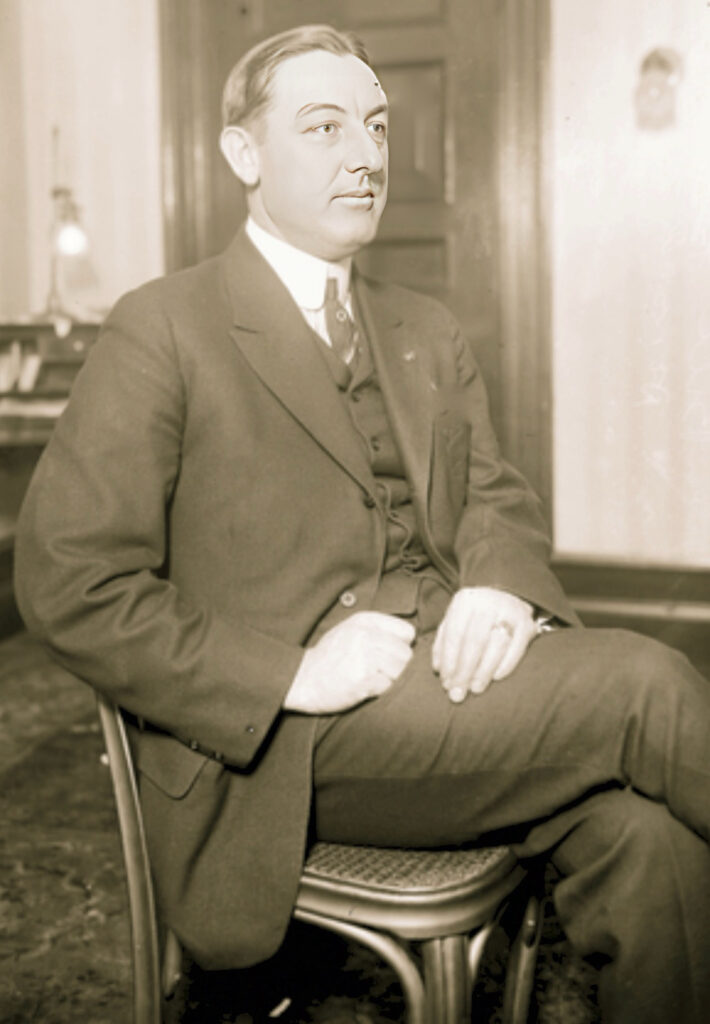
It is proper that John should clarify matters at this stage by explaining that during his entire period as Congressman, he was in desperate financial straits, due to pressing past obligations, the heavy expense of his election campaigns, and the frightful burden of maintaining a proper social status at Washington. John owed large sums of money and was frank in stating that he did not know what he could have done had Mortimer not offered him the loans at the time described. After all, it was not so strange that despite all his efforts to take up the notes, a repayment of $2,800.00 on same was all John was ever able to accomplish, except the money amounting to about $3,000.00 which he gave John for campaign purposes, not for John but to help friends of his to whom he had made promises.
This John did with the understanding that they were to settle up when they got back to Washington, and that John was to pay Mortimer in cash whatever balance was due him. John refers to the notes of hand a little farther on.
It is indeed significant that there is not one word of direct testimony from which the most attentive reader could infer that John, at any time in any place, or by any expression, gave any hint that John was endeavoring to full fill the alleged purpose of the alleged bribe paid John by Mortimer in the form and substance by these of hand.
Despite the tragic environment, John could not repress a feeling of amusement as he heard the prosecution charge that he had banked “in time” $115,000.00 in Washington. John might mention that the prosecution had present in the courtroom the representative of seven or eight different banks to every one of which he was indebted, in Pikeville as well as in Washington!
By Sawyer Smith, prosecuting attorney:
“We will show you that Langley had plenty of money; that he got $7,500.00 as a congressman. We will show you that in time he put in the bank on that salary of $7,500.00, $115,000.00. We will show you that by the bank records, either in his name or his wife’s name. Then we will tell you how he told those fellows down at the Seelbach he needed some money.”
The Court excluded this statement from the record, and well might the court do so, since its implications were so preposterously false. It was lucky for the “accountants,” whom Sawyer Smith professed to have, that they were not permitted to testify to the despicable, innuendo contained in the charge which no doubt had its intended effect on the jury.
Why might John have had $5,000,000.00 as credibly “in the bank” during the “time” referred to? What the prosecution failed to mention, and what happens to numberless men overwhelmed with pressing debts as John was, is this: They deposit money in a bank for safekeeping and to be able to pay it by check, the money may not remain in a bank over 24 hours! Thus, it was in John’s case. Bank records will show that John was forced to check out my deposits for obligations almost as soon as they were made. During all his years of service at Washington, I do not now recall that I was able to maintain, longer than a single week, a balance in any bank exceeding $500.00. So that was the horrifying “mare’s nest” the “able”
Sawyer Smith discovered!
John had many more things to charge against Sawyer Smith than mare’s nests. He charged him with being a party to “packing” the jury at Covington against him. He charged Smith, among many other false statements, that Sam Collins would testify that he and John had had such a violent quarrel at Lexington that Sam broke into tears and left the room. The testimony will show that Sam Collins did not so swear even by insinuation. John ridiculed his statement to the jury that he would prove that Collins, his wife, his brother Ernest and his wife were Mortimer’s guests at the prize fight in Jersey City, in 1921. John pointed out to the jury that he would bring out certain evidence, never thereafter presented. John called “reckless” Smith’s statement to the jury that he would prove that he had no business in Kentucky at the time of the conferences except “helping these fellows.” This was the beginning of a new administration, and John was there frequently on urgent official business and the hotel meetings forced upon him, were simply an incident of his trips.
John also knew it was common talk that he and Ernst, aided by Mrs. Mable Willebrandt, deliberately shifted his trial venue to Covington to perfect the certainty of his conviction. John had offered to be tried at any one of five courts near his home, but Justice Department refused this request, making the following statement: “You may as well try John W Langley at Pikeville as one of these places, and of course you could not convict me.” He knew how well known and respected he was at those places.
MABEL WALKER WILLEBRANT
Willebrant was appointed as Assistant United States Attorney General fro the Justice Department by Harry Daughtery. John W Langley dreaded looking into the eyes of Mabel.

John had often wondered whether Sawyer Smith’s virulent attitude was not caused by the fact that in 1921 he had besought to aid him in securing the position of U.S. Attorney in the Eastern District of Kentucky. John might explain that it was impossible for him to do this, as he could distribute only one leading appointment in his district, and he had continually promised the marshalship to Sam Collins from the year 1916 until June 1921 when he was finally given the Prohibition Director’s Post.
Sawyer Smith’s hatred towards John is well illustrated by the following authentic report. A few days after my trial Smith was up at Lexington, Ky., strutting around with an exultant air over having secured my conviction. He remarked to a group about him that this victory would elect him Governor of Kentucky. Someone interjected: “John wonders how and where you expect to get your votes? You can’t get them from the mountains where John Langley was born and reared and where everyone has known him from his cradle up as an honorable upright citizen! ” All those present gave unmistakable evidence of their approval of this statement.
THOSE “CONFERENCES”
There was a mass of confused and contradictory testimony by Mortimer as to the famous hotel “conferences” at Louisville and Lexington. In one instance where the conversation related to the trucking permit between Mortimer and Collins, Mortimer swore that John was present, but Collins gives him the lie by swearing that John was not. Mortimer swore that a few days later he asked me to go to Lexington to see Collins again about the trucking permit, and that we went and discussed it with Collins.
To give a specific idea of the character of this descendant of Ananias, occupying the witness chair, please note the following extract from the Transcript of Record:
Q. (By defense attorney) John will ask you if you stated before that time, under oath, that “we had Collins in Kentucky, had McKean in Pennsylvania, had Budnitz in Maryland, those are the three key states.” Did you make this statement?
A. I think so.
Mortimer’s testimony is so studded with contradictions, evasions and reckless or deliberate lies throughout, that it would take twenty pages of this book to quote and expose them. However, I shall find room for a few samples. My eye first catches pages 295-296 of the Transcript of Record. The arch-fabricator is under cross-examination by one of the attorneys:
Q. I ask you, Mr. Mortimer, if you had any unlawful transactions with the withdrawal of whisky from the Edward Robinson Drug Co. of Baltimore and if you ever received any money from Mr. Robinson in connection with that illegal liquor transaction?
A. Yes, I got $7,000.00.
Q. How was the thing done?
A. I was just to collect the money.
Q. What did you give the money for-for the purpose of bribery?
A. Absolutely.
Q. You mean that?
A. Yes, absolutely.
A little farther down on page 296:
Q. Mr. Mortimer, is there any indictment pending against you now in any part of the United States?
A. Yes, sir, Southern District of New York.
Q. Are there any other indictments pending against you in any other part of the United States?
A. There are none.
As a comment on this astounding statement, the reader is referred to the compendium of indictments against Mortimer and to the Detective Agency’s reports on preceding pages.
Let one significant truth be credited to this paragon of mendacity. John set forth clearly herein, that Mortimer had no knowledge even of the existence of Sam Collins before he was appointed Prohibition Director of Kentucky, and his contention is supported by Collins himself, who testified in the following words: “John didn’t recall having seen Mr. Mortimer before he was appointed.” Nevertheless, the record tells a different story.
Q. Mr. Mortimer, can you fix the time when you made some arrangement with Mr. Langley concerning the appointment of Mr. Collins?
A. I was down in Mr. Langley’s office very nearly every day.
Q. Please try to fix the time.
A. I cannot give a definite date. I was down there nearly every day, and we talked the matter over.
THE COURT: Had Collins ever agreed with you that he would do anything?
A. Absolutely not, no.
Here John recalls that, sometime during the winter of 1921-2, (the exact date he could not recall) a distinguished Kentuckian came to Washington and told him that Mortimer had been instrumental in securing whisky from the Belle of Anderson Distillery through forged or expired permits. John told Mortimer on his return to Washington, that the report had distressed him because he had introduced him down there as a gentleman and was very sorry to hear this. He said that a lot of d–d Jews had pulled off something crooked down there in Kentucky, and that only a few days ago he met one of them on the streets in Philadelphia and, was told about it. He added that Mortimer’s share of the profits was in some bank, the name of which John cannot recall, and Mortimer could go and get it if he wanted it. Mortimer told John that he said in reply to this offer that he did not want the money, he did not propose to be mixed up in any such affairs as that! One of John’s attorneys, Judge Davis, told John some months afterwards that he made a great mistake in not telling him and his associates about it, so that at the trial, he could have interrogated one of them concerning it. John replied to Judge Davis that he had been so distressed over the perjury at the trial that he forgot all about the other incident.
With regard to loans from Mortimer, John wished once and for all to make the following statement of fact:
One of the notes, for $1,200.00, John paid in full, together with protest fees, to a Mr. McDonald, then in Washington, but said to be a native of the coast, who advised that he had bought that note and another for $2,500.00 from Mortimer. John told him that his understanding had been that the $2,500.00 note was to be renewed, but as he was a disinterested party on that point, he said, and needed the money, he would have to insist on payment. John asked him to wait a day or two and he would see what he could do. In two- or three-days John was able to borrow some money by hypothecating one of his life insurance policies with a Washington bank and he thereupon paid McDonald $1,000.00 on the second note, telling him he would pay the balance as soon as he could raise it. He later put an additional mortgage on his home and paid $600.00 more on the note.
That was the last John Langley heard of McDonald, except learning in a roundabout way that McDonald was a fellow of the same stripe as Mortimer but could not prove it.
Mortimer wrote John he had sold these notes and could not renew them. Having sworn he had sold them, he, on cross-examination admitted he had not sold them but was simply employing McDonald to collect them.
Should not this heroic effort, in John’s almost impoverished condition to clear off the notes due Mortimer, be a sufficient and crushing proof in the eyes of any fair-minded man, that his dealings with Mortimer were legal and righteous?
Let John emphasize-for it is the very core of his vindication-that all the much-stressed hotel “conferences” were wholly and solely to discover from Collins if removal by TRUCK of any lots of whisky was permissible at that time under the rules and regulations of the Volstead act. Moreover, as appears in the testimony, it was several months before John saw Sam Collins again, following the final “conference” at Phoenix Hotel, Lexington, on September 28, 1921.
It was after this final meeting in the Phoenix, however, that Mortimer sought out Collins and, as revealed in the testimony, personally tried to bribe him to release the whisky by TRUCK. That attempt is understood to have failed. In this connection, let John quote from the Brief for Plaintiff in Error, prepared by his distinguished counsel, Hon. Henry E. Davis:
It results, beyond the possibility of a doubt, that Langley never had any relation whatever to the conspiracy charged by the indictment, and that that conspiracy was new and original with the abandonment of effort to influence Collins. What a flood of light might have been thrown upon this by Eichenberg who, although omitted from the indictment, was not put upon the witness stand! It is not clear as fact can make it that John, indeed, had “no relations whatever to the conspiracy charge” and whatever relations existed between Collins and Mortimer or between either and anyone else named in the indictment PRECEDED THE CONSPIRACY THEREBY CHARGED! My own efforts were confined entirely to the endeavor to ascertain the general attitude of Collins towards TRUCK shipments, even though this endeavor arose at the more or less and totally unsuspected instance of Mortimer, with his possible or probable personal interest in the matter. And whatever exertions John made in his behalf were frustrated at the outset by the positive stand of Collins, which abruptly and finally eliminated him from further consideration!
John was very anxious to reproduce here part of a letter, original in his possession, signed by one of the most eminent citizens of Kentucky. It is at his request that he omit his signature. Let John add that the writer told him he is willing to furnish many other damning details, if the occasion should ever arise for them:
••• Immediately after that Grand Jury investigation in Washington City, in which some reflection was attempted to be made upon you, Senator Ernst hurriedly left Washington and came to Covington for conference with Sawyer Smith and returned to Washington taking said Smith with him, and while there, Smith laid the groundwork for your prosecution at Covington. Now, you can with safety, charge Ernst with being at the bottom of the whole diabolical scheme to overthrow your power at Washington by using discredited and disreputable crooks as witnesses.
One of the reasons why John quotes from this letter is that he wants to describe the part which ex-Senator Richard P. Ernst of Covington has played in his case. Ernst and John have never been special friends. Ernst was a candidate for the Republican National Committeeman in 1908; three Kentucky Republicans, one of whom is dead and the other two who are still living, were so bitter against him that they told John that if he did not use the power he had to help defeat him for that place, they would oppose me him reelection to Congress, even though John was the Republican nominee. This meant much to him in view of the fact that John’s district was so heavily Democratic, that John could hardly hope to win with these three powerful Republicans against him. John did defeat him, using all honorable means to do it. That is the only wrong John ever did Senator Ernst. Ernst did not speak to John for six years after that. In 1914 when John was in Ashland, Kentucky, and Ernst was a candidate opposing ex-Governor Willson for the Republican nomination for U. S. Senator, he came up to John and shook hands at a Republican conference there. John then said to him, if he would forget about what he did six years before, and call it all square, he would support him for the nomination. He laughingly and heartily assented. John did support him, but he was defeated. Although Ernst was then and still is a multi-millionaire, he contributed to the campaign fund the sum of only $50.00. He took hay fever and went west where he remained until after the election. He has never been John’s friend since. When he realized that Mrs. Langley could testify in Washington, but not in Kentucky, he used every desperate means to shift the venue to the latter place. That was why he came to Covington and conveyed Sawyer Smith back to Washington, and following that, hastily drew a new indictment in Covington where they felt they could erect a nice comfortable gibbet for John and remove him forever from their path.
After using all his machinations against John, Ernst did some things which John or any other honorable man would have scorned. In 1920 he was nominated by the Republicans and elected U. S. Senator. Mrs. Langley and John both did everything in their power for him in that campaign. In 1926 he was renominated for the Senate. There were hundreds of men in the district who were declaring that they would not support him because of his treatment of John.
Langley sat in prison at nights working sometimes into the morning hours, writing letters to these anti-Ernst republicans, they having sent a list to him from the 10th District, and outside counties. Many of them replied that, although they detested Ernst, they would support him on his account, while others said they would do any other favor for John in the world, except vote for Ernst. John asked them to support him because we needed two republicans from Kentucky, in the senate.
John was due to be paroled in September. John had since learned from Mrs. Langley herself, that Ernst came to her and finally persuaded her to agree to let him remain in prison until after the election, for fear his release before then might defeat him for the Senate. As a matter of fact, John’s release, with Ernst taking the credit for it, might have assured his election. Be that as it may, he utterly failed and refused to take any steps in John’s behalf. When Ernst was telephoned in Washington by a certain congressman that a delegation was to see the Attorney General about John’s parole, and asked him to go along, he exclaimed: “I’ll be damned if I do!” I firmly believe that Ernst’s refusal led to an additional three or four months of incarceration at Atlanta for John Langley.
Perhaps the good old senator’s unfriendly acts might be partly explained by the fact that John went to the president in 1923, over Ernst’s head, and got the approval of an order for the Government Hospital at Pikeville, because John remembers that only a few days thereafter Ernst said to him: “There is one thing about it, I am in the senate for two years yet, and I am reminded, that John now has been out over two years and the name of Langley is still on the Congressional roll.
John had already revealed the character of Mortimer (originally Muscovitz) forger, passer of worthless checks, trickster, wife beater, professional informer, chronic “immunity” witness and inveterate criminal.
It is, whether right or wrong, a rule of Federal procedure that no matter whether a witness be “saint or sinner” he may still be heard, and his credibility left to the determination of a jury. So, Elias H. Mortimer sat in the witness chair and full rein was given to his lying proclivities.
In John’s trial, either one of two things happened. The jury was an impartial one and believed him, or the jury was prejudiced, “packed” panel as the foregoing affidavits would tend to show, didn’t believe him, and would have convicted him anyway.
There is no escape from the horns of this dilemma. Under either set of circumstances the spectacle was a sad one. For John, it was a situation full of inexpressible helplessness and tragedy.
John now presents his own and P. W. Day’s affidavits, which speak for themselves:
State of Kentucky
County of Pike
John W. Langley of Pikeville, Pike County, Ay., being duly sworn deposes and says that some time ago he was told by a prominent lawyer and citizen of Eastern Kentucky, whose name he is not for the moment at liberty to give, that Sawyer A. Smith, United States Attorney for the Eastern District of Kentucky, approached him and said, calling his first name:
“I did not think you ought to be saying the mean things I have heard of you saying about me. We ought to be friends.”
To this the man replied: “I am your friend.” Smith replied: “I know what is the trouble with you. You do not like the way I prosecuted John Langley.” To this the man replied: “No, I do not think you did right in sending out men to find out how the men whose names were on the jury list to see whether these men were for or against Langley.” To this Smith replied: “I have a right when I am prosecuting a man to find out that the men who are against him before I allow them to go on the jury.” To this the man replied: “A man who would thus try to set up a jury who is to try a man charged with a felony is nothing but a common criminal and if you did that you ought to be sent to the Federal penitentiary yourself for the balance of your life.” I met this same man at the Kentucky Capitol building on June 25, 1929, and we both witnessed together the taking of the oath of Jas. A. Scott as State Highway Commissioner. Mr. P. W. Day of Pikeville, Ky., came up at the moment and John said, “Pete, I wish you would listen to what this man is going to tell me.” The man repeated almost word for word the conversation above set out. He then said: “I have reasons for preferring that my name be not used just now in this matter, but I authorize John to state it in his book and dare Smith to deny it. If he does you may say that I will come out in an affidavit and tell the facts as I have stated them to you here.”
JNO. W. LANGLEY
Subscribed and sworn to before me by John. W. Langley, this the 2nd day of July 1929.
Earl Scott, Clerk
Pike Circuit Court
By E. B. Blackburn, D. C.
Samuel Collins born in Letcher County, Kentucky, on October 9, 1880. He died August 28, 1962, of Prostate Cancer. Sam Collins was married to Jessie Stamper Collins born in Howard County, Texas, December 15, 1897, and died Oct 25, 1985, in Whitesburg. In 1910 Samuel Collins was shown live with IB Fields as boarder, working as Deputy Collector under Commissioner S.E. Baker. He was appointed Postmaster in Whitesburg May 25, 1903.

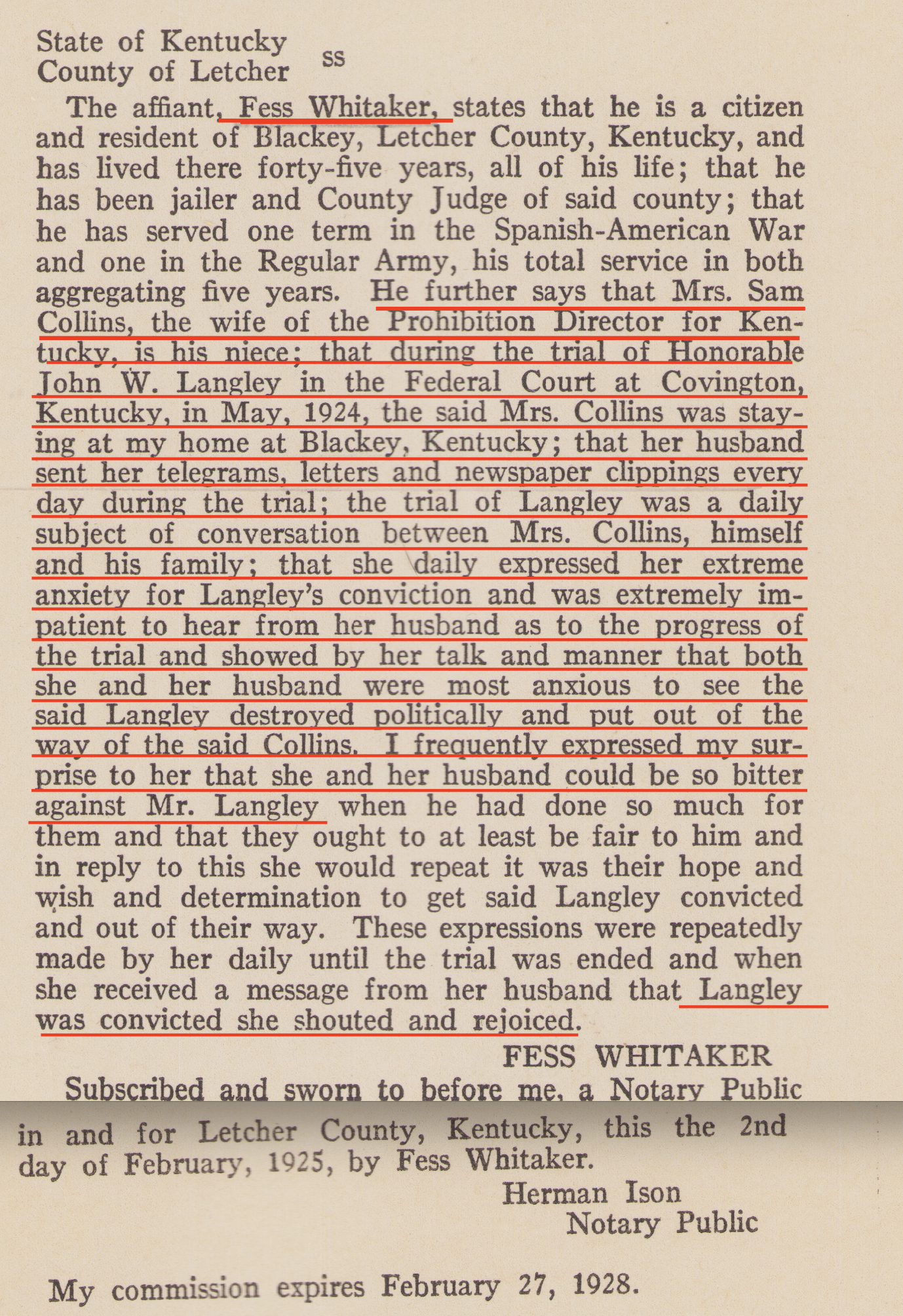
Sam Collins Obituary
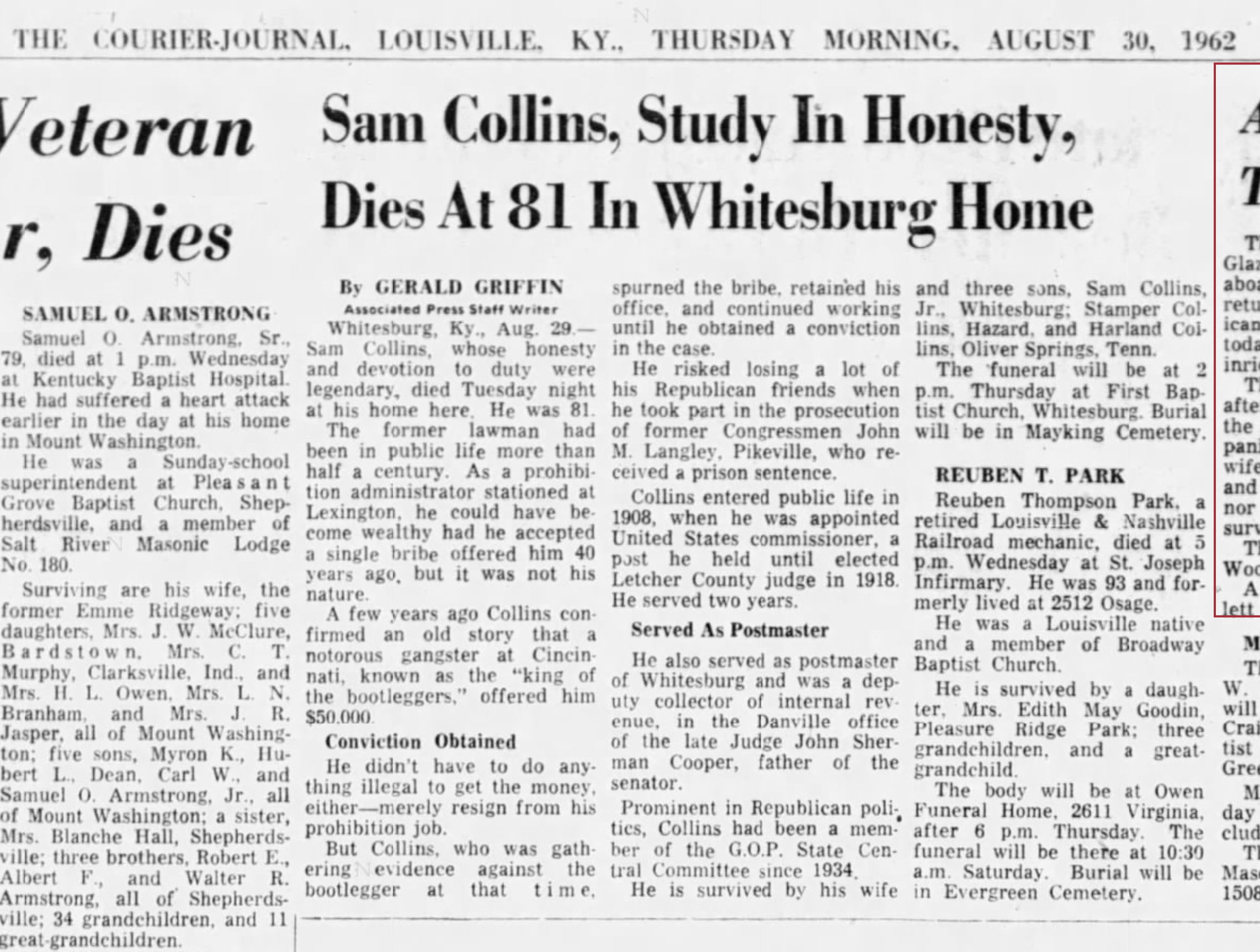
May 12, 1924: Rep. John W. Langley (R-Ky.) is found guilty of liquor trafficking conspiracy by a federal jury. The next day he’s sentenced to two years in prison for the scheme linked to a corrupt Harding appointee. He refuses to resign and will run for re-election as he appeals.
Letter from Thomas S. Haymond
ELK HORN COAL CORPORATION
Incorporated
Elk Horn Coking, By-Product, Gas, Steam & Domestic
Thomas S. Haymond, General Manager
Fleming, Ky.
August 31st, 1924.
Hon. C. Bascom Slemp, Secretary to the President, White House, Washington, D.C.
My dear Mr. Slemp:
I desire to take this occasion to advise you of the general conditions, the temper of the people and the stand they have taken on the question of Honorable John W. Langley.
Irrespective of party affiliations practically every man stands back of Mr. Langley. The Primary Election wherein he beat Mr. Duff for the nomination on the basis of more than twelve to one is enough to show what they think of Mr. Langley, his past, and they are satisfied to let him continue in Congress as their representative.
This is not only so of the Republican Party but extends into the rank and file of the Democratic Party. These people in the Tenth District watched the trial of Mr. Langley; read the evidence in the paper, talked to people who were there and they will not be convinced that the evidence of Mortimer given under the circumstances, really in self-defense, is to be compared with the evidence or word of John W. Langley. In other words our people do not believe that John Langley is guilty of the crime he was convicted of; that it is a frame up and that Mortimer, to save himself from prison, was trying to sacrifice the honor of Mr. Langley.
Personally, from here say and general information gathered before this matter connecting Mr. Langley to it came up, I learned from men high in the council of the Republican Party that they were not satisfied with Sam Collins as Enforcement Officer; why they were not I do not know nor can I imagine, because Collins, in his official capacity in office or out, has always been an honorable straight-forward gentleman and is held in the highest esteem by his friends. In summing up, the evidence has not been considered in any way, shape or form; therefore, as stated above, you will find the people of the Tenth District have come to the conclusion that Mr. Langley’s evidence in his behalf was not considered and the only evidence considered was that of Mortimer, and that he was convicted upon his evidence, which is wrong, and they do not believe that he is guilty. Langley is progressive, has worked hard for the Tenth District and Kentucky; he is satisfactory to the business interests of the district and particularly so to the coal industry, which is by far the largest industry in the district.
I therefore give you this information, hoping that you may act upon same in such a way that it will be a help to Mr. Langley and that he be relieved of this strain put upon him by some faction for some reason to his detriment as well as to the citizenship of the Tenth Congressional District of Kentucky, and that you may, and will, use every honorable means to assist Mr. Langley in clearing his good name as we really believe he has and will be.
With kindest personal regards, I am,
Yours very truly,
THOS. S. HAYMOND,
H/b General Manager.
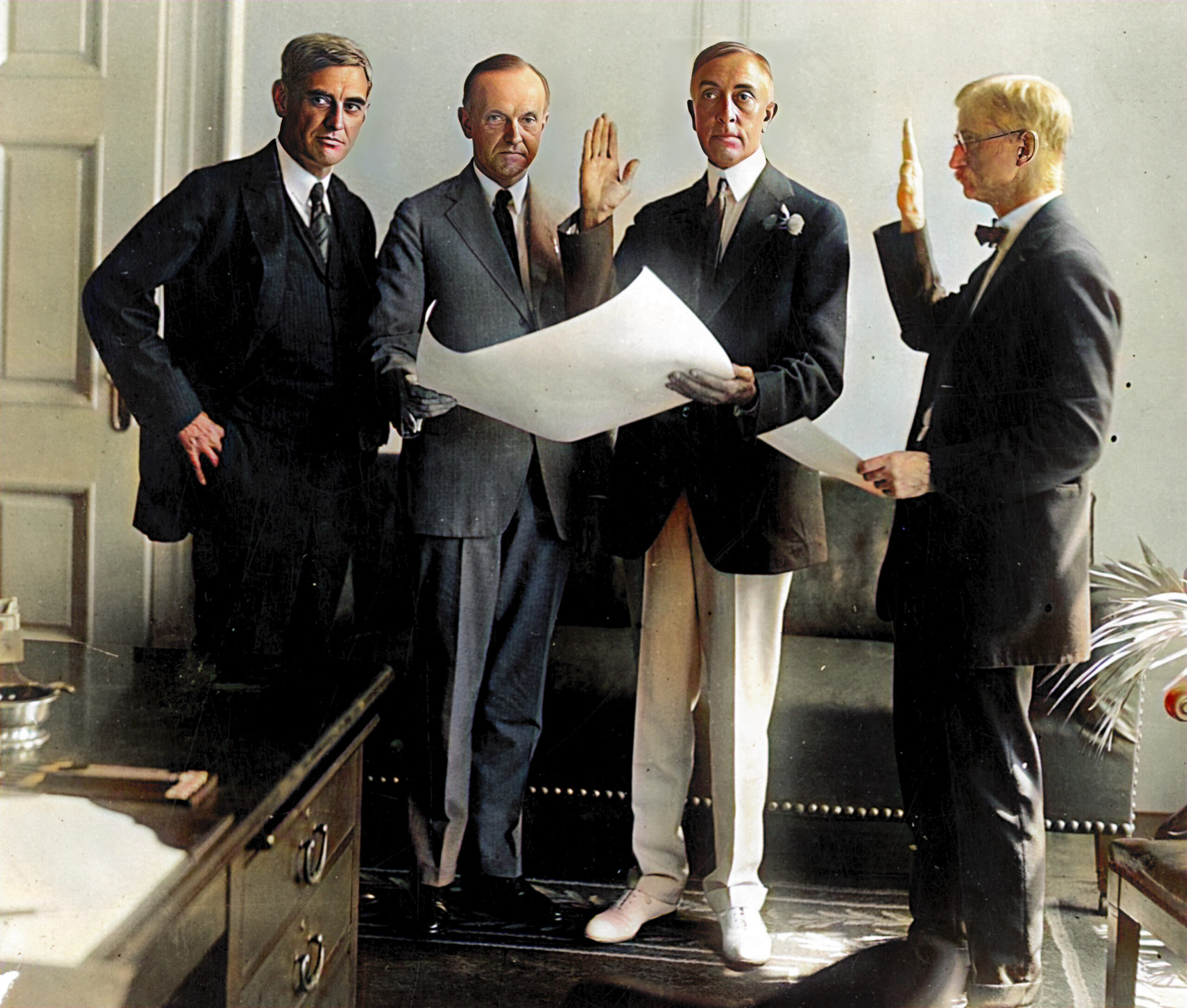
Pictured above is Campbell Bascom Slemp being sworn in as Secretary to the president Calvin Coolidge. President Calvin Coolidge appointed Slemp as his secretary on August 14, 1923. Slemp served as Secretary under Calvin Coolidge September 4, 1923, until March 4, 1925
C.B. Slemp knew the negative impacts that John W. Langley could deliver with his Progressive Republican ideals, his impact would not set very well the Conservative Democrats running the large a corporation and being a Conservative Republican from Virginia’s 9th District and Kentucky Corporate investments, and then a sitting U.S. Congressman. John Langley had a strong bond with the common man that fueled the labor force in Eastern Kentucky. The bottom-line was that John W Langley would cut into corporate profits with his Progressive thoughts.
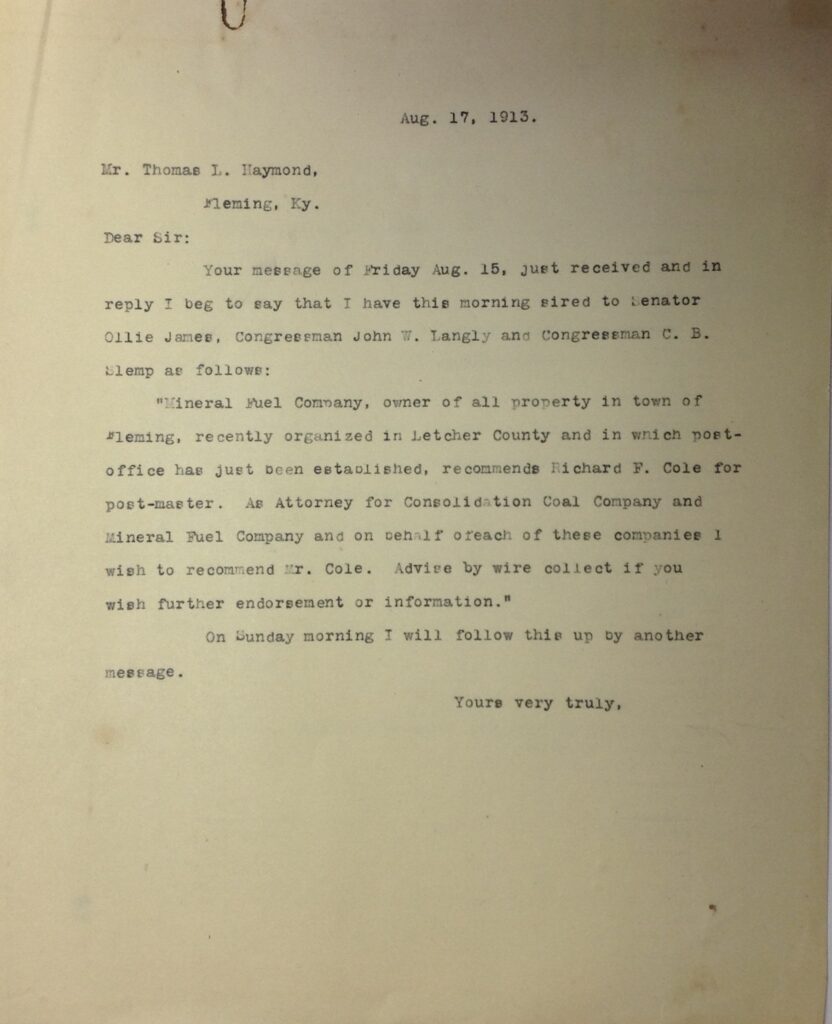
Just a short time before John Langley was found guilty, he had his photo taken in front of the Historical Garfield House in today’s City Park. The famous Garfield House was to be destroyed by city ordinance in 1926 while John Langley was serving a prison sentence. Pike County News ran an article April 30, 1926.
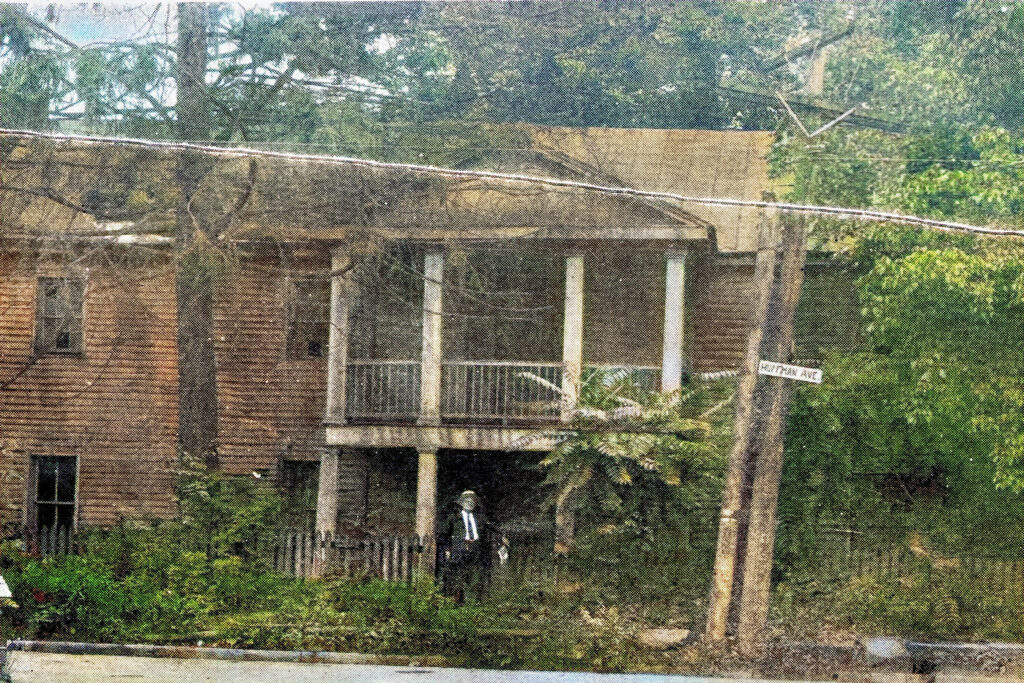
During John W. Langley’s Court of Appeals Hearings Process, the Honorable Edward O’Rear never took the chair representing John during the Appeal Hearing because of sever illness had overcome him, other junior partners in Edward O’Rears firm represented him. In November, 1925, the Court of Appeals at Cincinnati, affirmed John’s conviction in trial. again John’s attorney’s made a motion for rehearing by that Court Body, but denied on January 11, 1925.
News Press release January 11, 1926
John W. Langley resigned on January 11, 1926, after being convicted of illegally selling alcohol. Langley had deposited $115,000 in his bank account over a three-year period despite earning only $7,500 a year as a congressman. He had arranged for “medicinal” alcohol to be released to New York-based bootleggers during prohibition. He also tried to bribe a prohibition officer.
His wife Katherine, then ran for his seat and won in the next election, declaring that her husband had been the victim of a conspiracy and resolved to clear his name. She also won the next election. Langley was paroled from the Atlanta Penitentiary in 1929, and with Katherine’s intervention, President Calvin Coolidge granted John Langley a pardon on December 20, 1928. He sent out a Christmas message to his wife’s constituents and a week later declared his intention to run for office (even though the President had stipulated his clemency was predicated on never running for office again).
He self-published a book They Tried to Crucify Me (1929) hoping to gain back his political clout. He resumed the practice of law in Pikeville, Kentucky, where he remained in good favor with his former constituents. Polly V. Hall, a Republican who was 98 years old in 1987 when she was interviewed, could remember his name (though not his wife’s), and she stated emphatically that “… he was a good man … never heard nothing bad said about him.” John Langley died on January 17, 1932, from pneumonia. He was interred in Floyd County, Kentucky.
Andrew Jackson Kirk, succeeded John W. Langley by special election on February 13, 1926, to finish out his term in the Sixty-Ninth Congress, after John W Langley resignation in 1926. Kirk served in Congress from February 13, 1926, to March 3, 1927.
Andrew Jackson Kirk
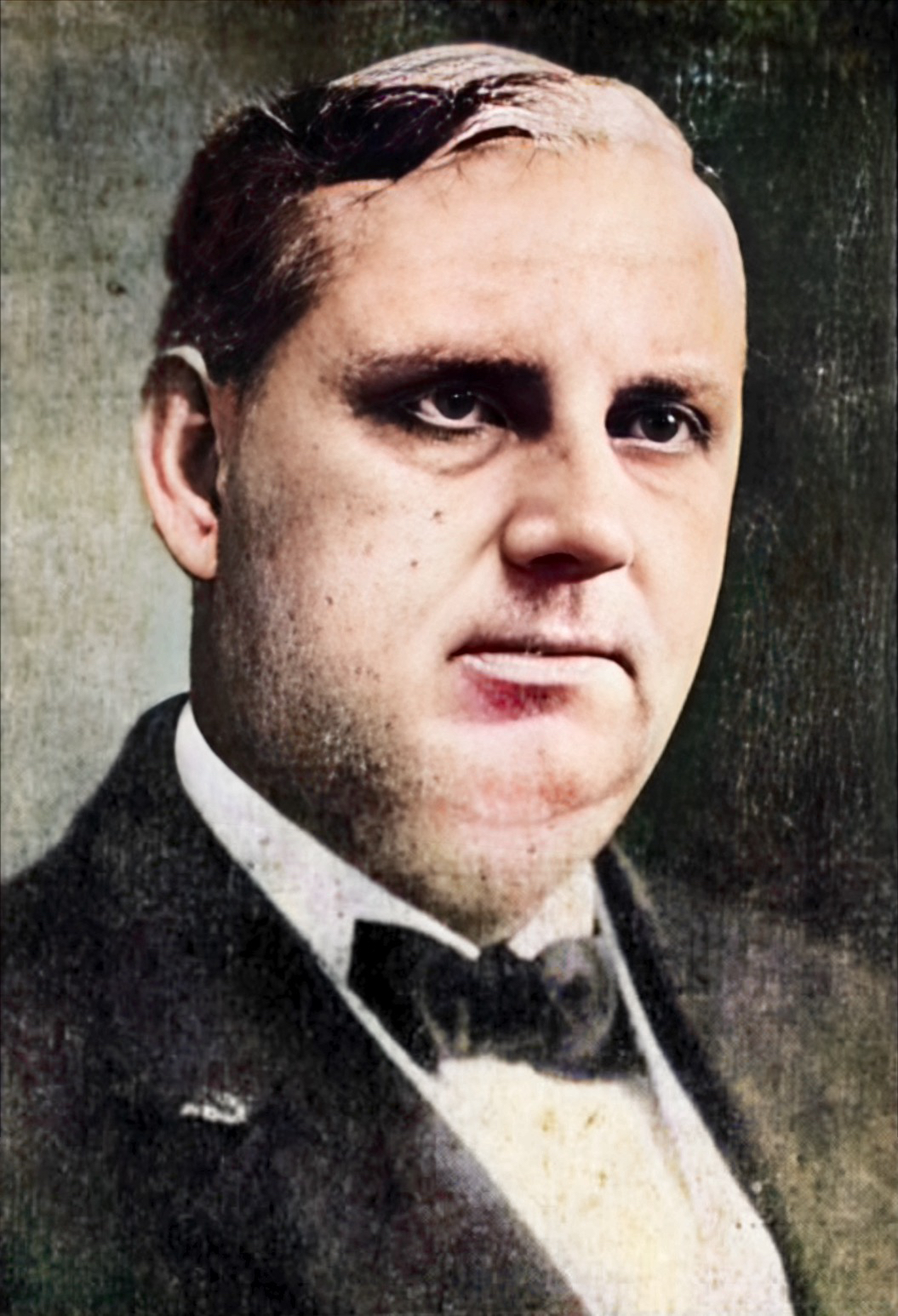
A.J. Kirk is Special Counsel for Consolidation Coal Company
Big Sandy News, April 15, 1921
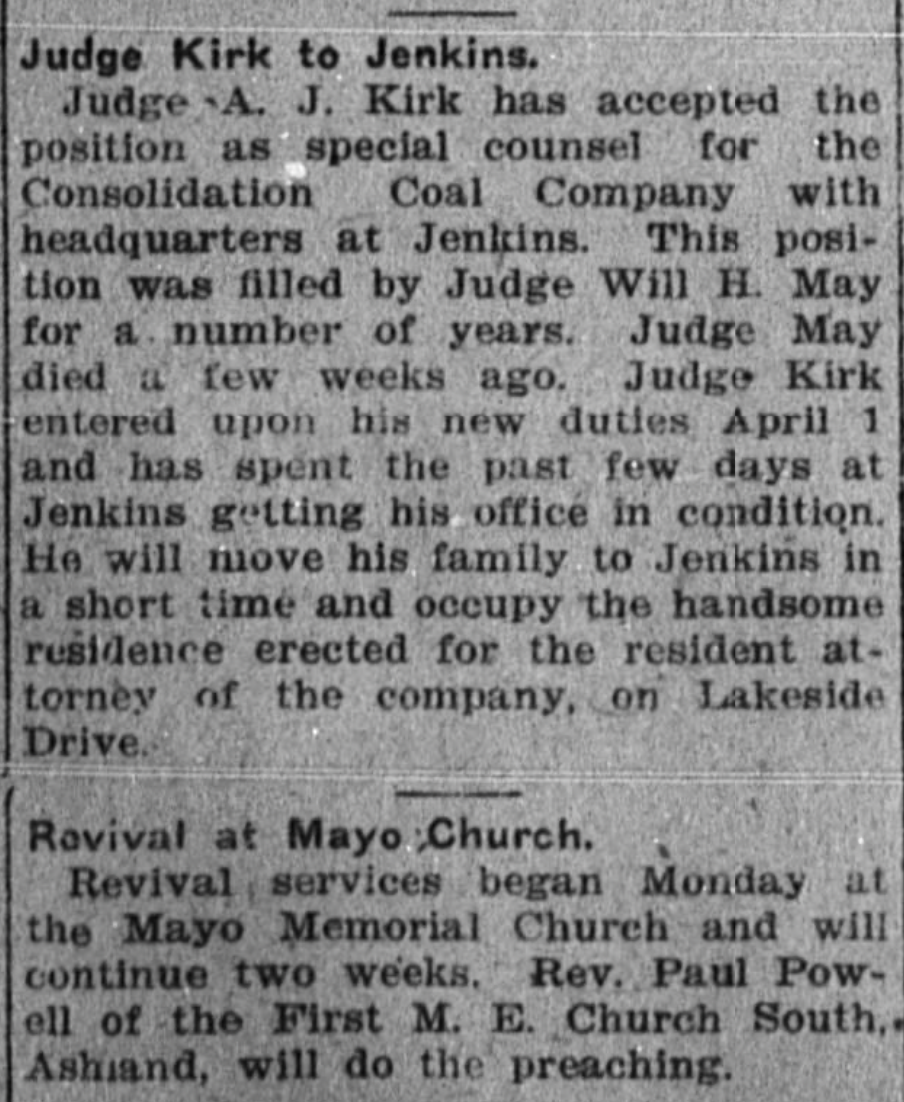
The Republican Primary for U.S. Congress, Kentucky 10th of 1926
Kirk and the Corporations
The enemies of Congressman Kirk are saying that just because he is a splendid lawyer with a large number of clients among corporations, he should be nominated. This is only more proof that he is a good, honest lawyer because no corporation will employ as counsel a man who is not honest and who has not the ability to take care of their business. There is not a high-class lawyer in Pike County who does not represent some corporations. Lawyers count it an honor and regard it as a recognition of their ability to be able to take care of the business of a corporation, which leads us to the question as to what a corporation is. It is a number of individuals who each put in a certain amount of money for the purpose of carrying on some line of business. It is not likely one man would have enough money to build a railroad or operate a coal mine, but a number of men, each with enough money, can pool their resources and form a corporation. And did you ever stop to think that there would never be a coal operation or a railroad if it were not for the corporations. Without corporations working men would be without jobs. When a lawsuit is brought against individuals who have put their money together for a legitimate purpose, it is not a crime to represent them in court.
Does labor fall out with Congressman Kirk for taking a fee from or representing the corporations who have been sued? We should say not. Listen to what the President of the American Federation of Labor has to say about Congressman Kirk as a friend to the laboring man.
The News July, 1926 Pikeville, Kentucky
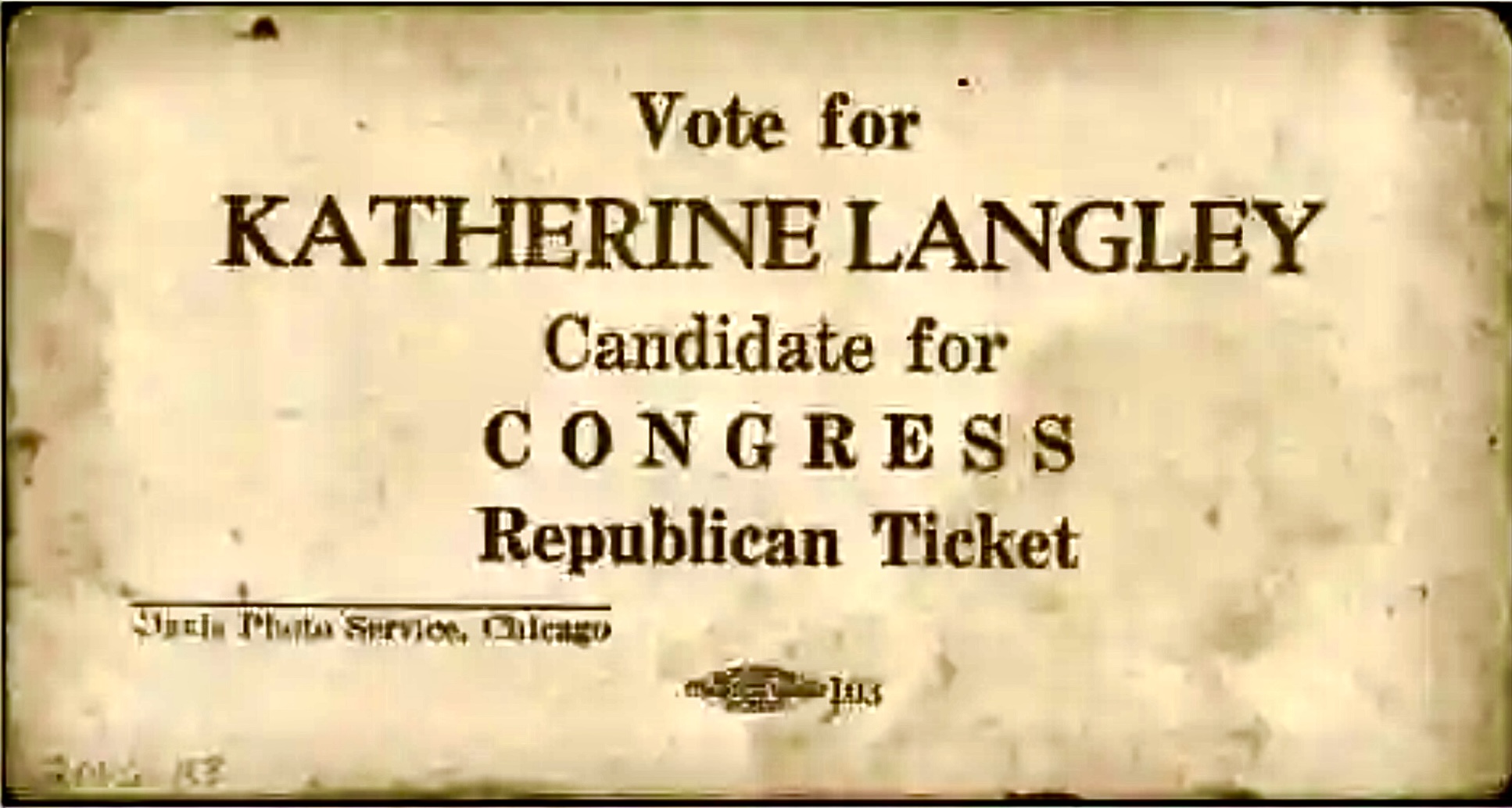
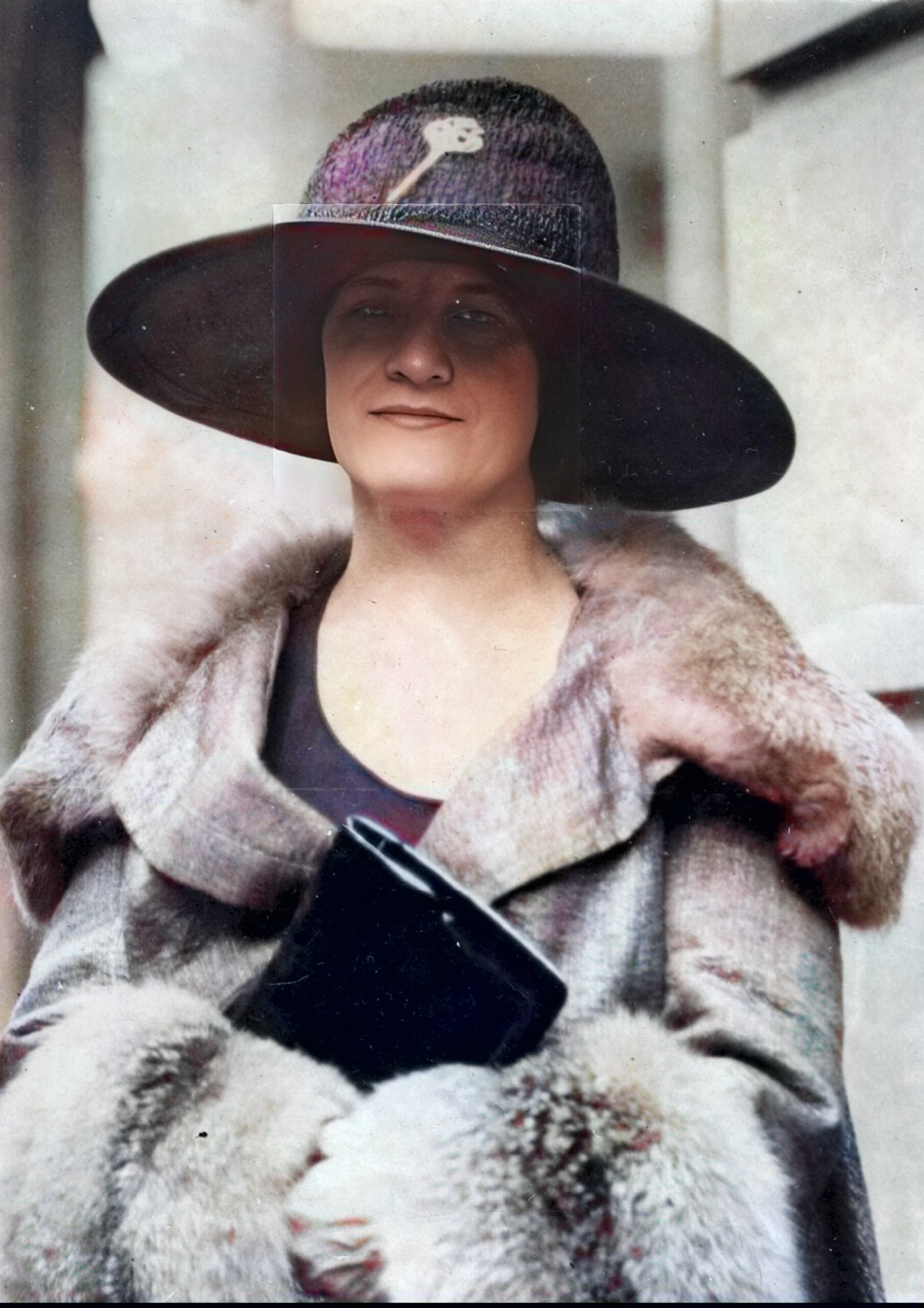
Mrs. John W. Langley Wins By 5,885 Votes
Katherine Langley defeated her husband’s successor and won election to the House in a “vindication campaign” designed to exonerate her disgraced spouse.
Following John W. Langley’s departure from Congress his dear wife, Katherine Langley, as is well known, was elected in John’s stead in the 10th District, and has carried the ticket to victory once again since then. She has followed faithfully John’s traditions and policies of understanding, loyalty to trust, conscientious honor and devotion to the interests of their beloved state. John Langley boasts with a clear heart and soul that his private and public life, throughout all his thirty-seven consecutive years of service at Washington, was always an open book, that friends and enemies alike can read. Indeed, John Langley felt that little more was needed here in that regard, than the bare chronology of his legislative acts.
The News, November, 1926
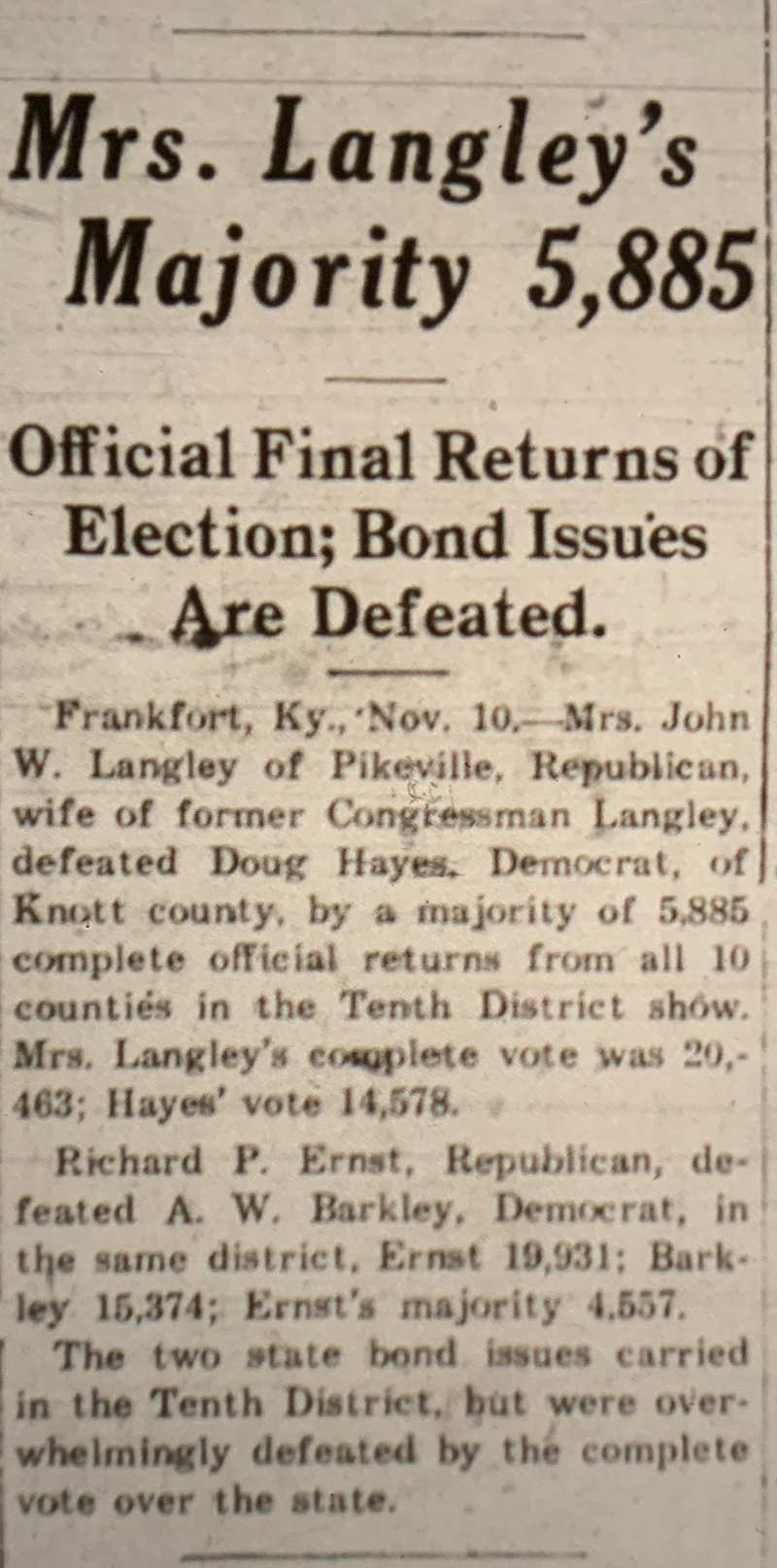
The News, November, 1926
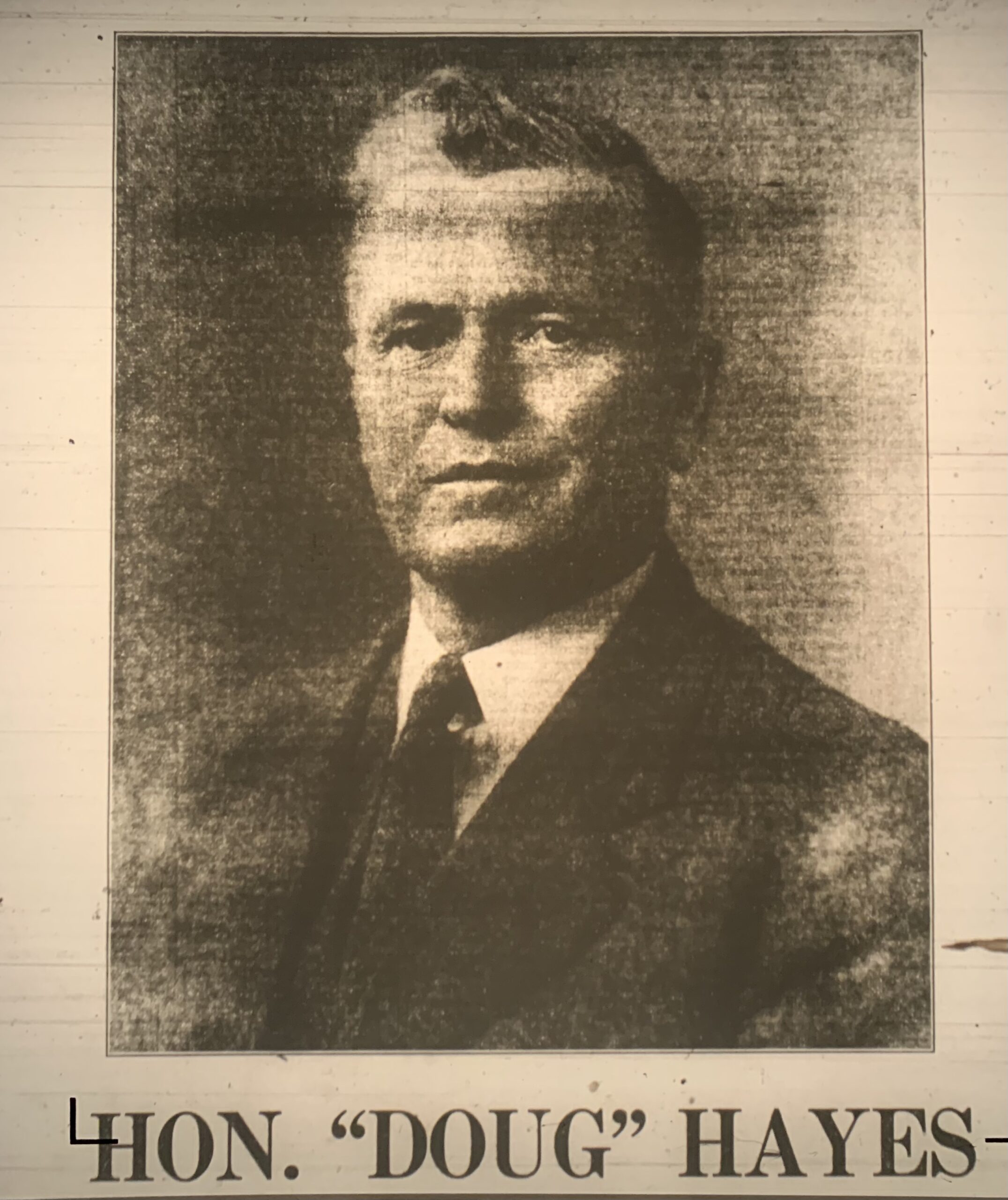
The News, December, 1926
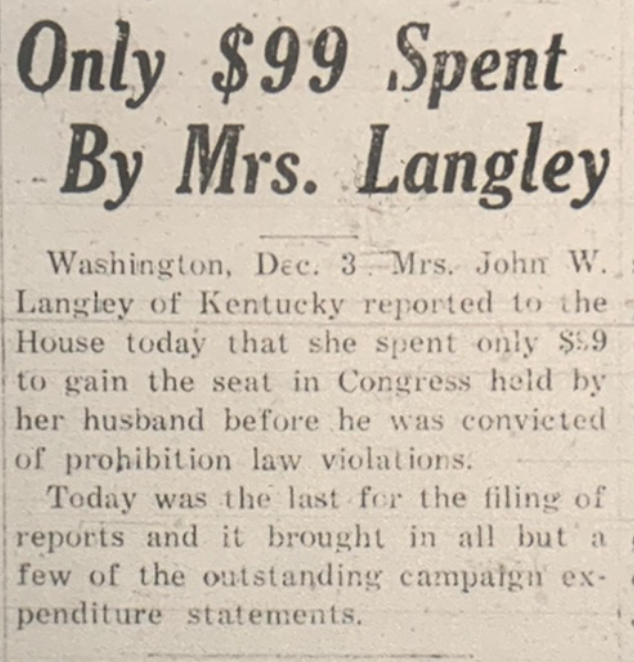
Photo Credit from the John Doug Hayes Collection 1949/1950

The career of Congresswoman Katherine Gudger Langley illustrates a highly unusual route to Congress.
Mrs. John W. (Katherine) Langley is shown from a press photo dated Nov. 16, 1927. Wife of John Wesley Langley and daughter of James Madison Gudger, Jr., she was a Representative from Kentucky; born near Marshall in Madison County, N.C., February 14, 1888; attended the common schools; was graduated from the Woman’s College, Richmond, Va.; attended Emerson College of Oratory, Boston, Mass.; taught expression at the Virginia Institute at Bristol, Tenn.; moved to Pikeville, Ky., in 1905; vice chairman of the Republican State Central Committee of Kentucky 1920-1922; served as the first chairman of the Kentucky Woman’s Republican State Committee in 1920; alternate delegate to the Republican National Convention in 1920 and delegate in 1924; chairman of the Pike County Red Cross Society during the First World War; elected as a Republican to the Seventieth and Seventy-first Congresses (March 4, 1927-March 3, 1931); unsuccessful candidate for reelection in 1930 to the Seventy-second Congress; railroad commissioner, third Kentucky district, 1939-1942; died in Pikeville, Ky., on August 15, 1948; interment in Johnson Memorial Cemetery.
Mrs John W. ( Katherine) Langley from a press photo dated Nov. 16, 1927.

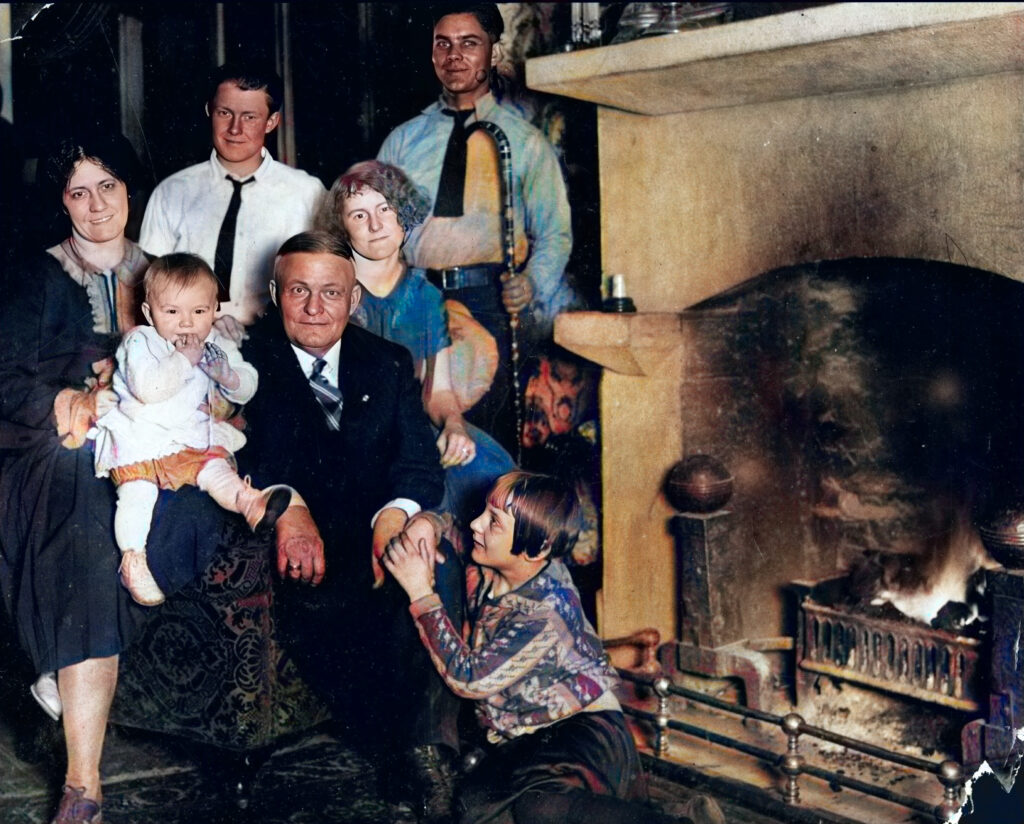
December 1927
Senator Ernst, Katherine Langley & Senator Sackett, January 8, 1927
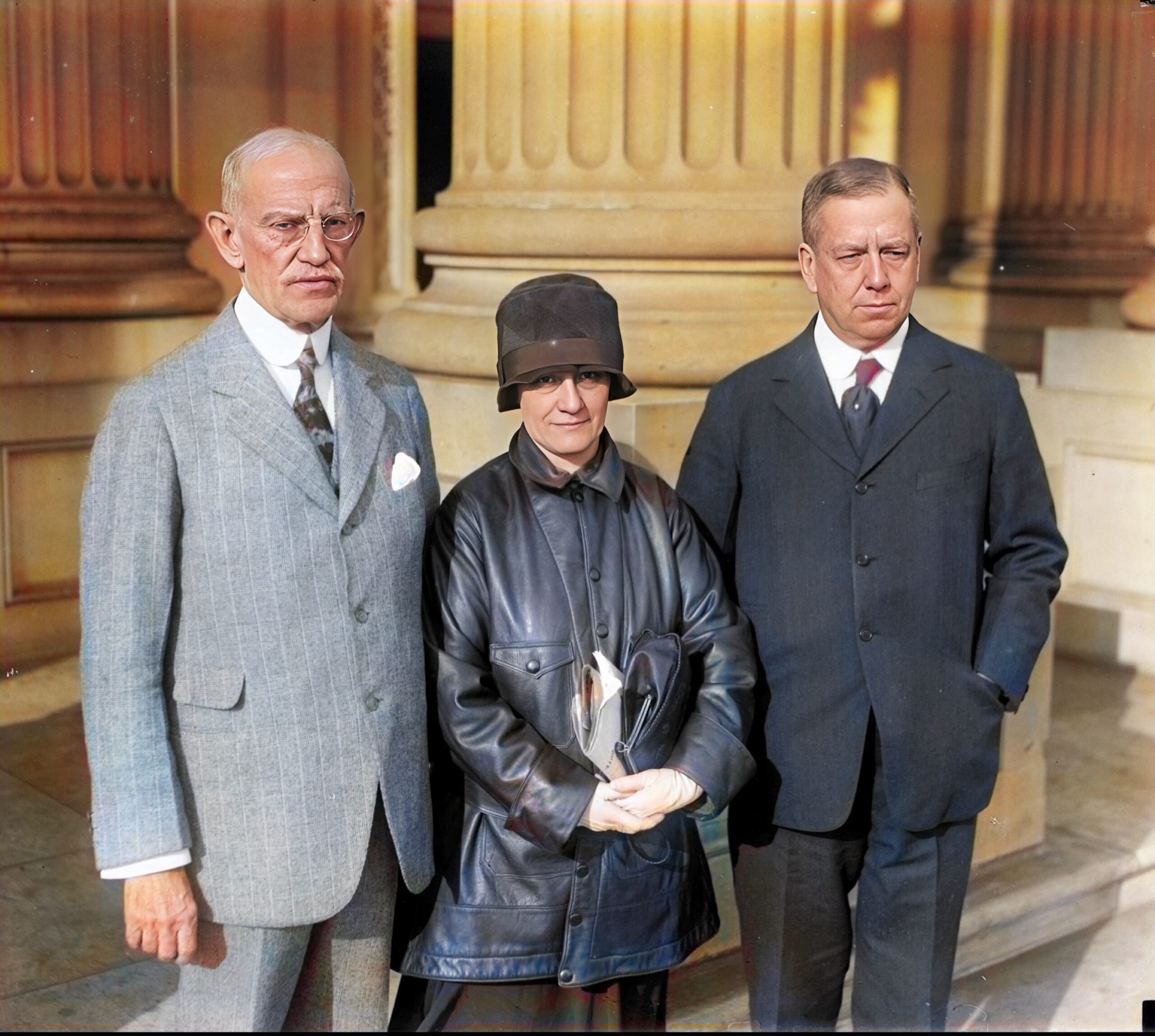
John W Langley, Pardon : December 22, 1928
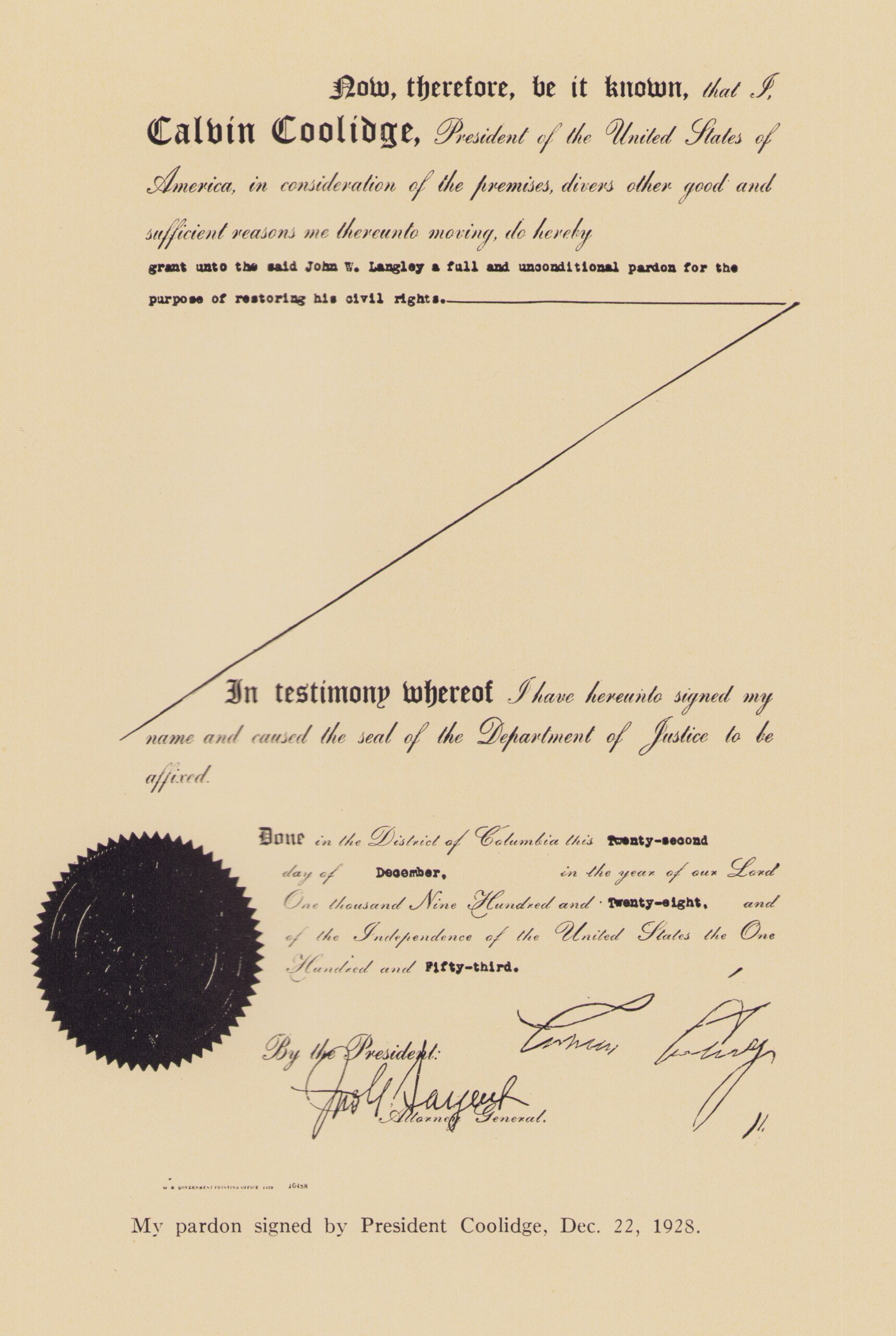
The Langley Home during the Flood of March, 1929. Katherine Marooned for Two Days and Two Nights.
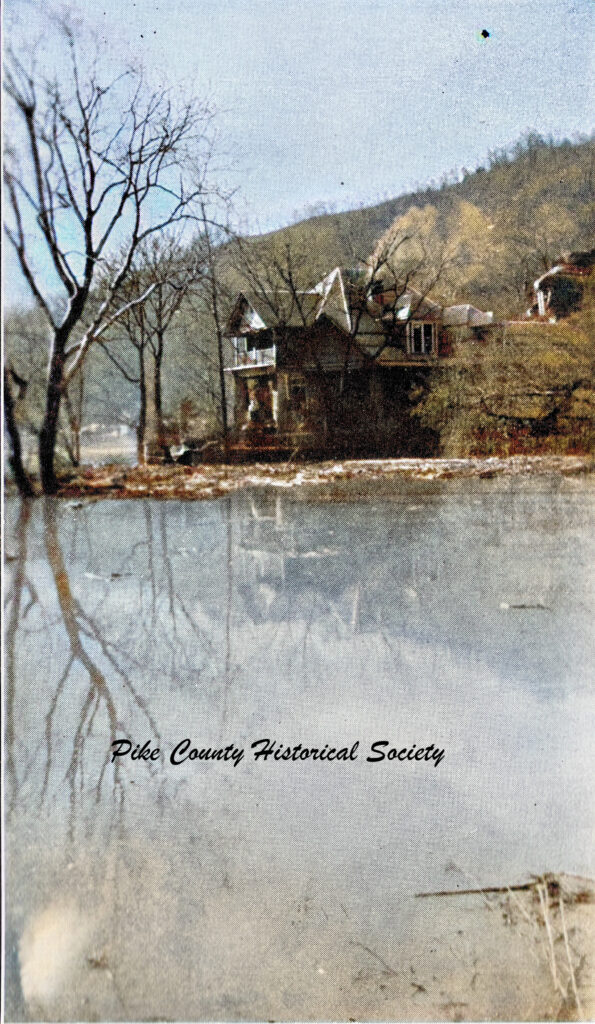
Associated Press photo dated 11/29/29 from my personal collection entitled: “BOTH ONCE CONGRESSIONAL MEMBERS ” THEY CELEBRATE SILVER ANNIVERSARY”
Mr. and Mrs. John W. Langley as they appeared on the celebration of their silver wedding anniversary at their home in Pikeville, Ky. Mrs. Langley is a Congresswoman from the 10th Kentucky Congressional District, having succeeded her husband after he was charged with violation of the prohibition laws. At left are their two daughters, left to right: Miss Susannah Langley and Mrs. Katherine Bentley.
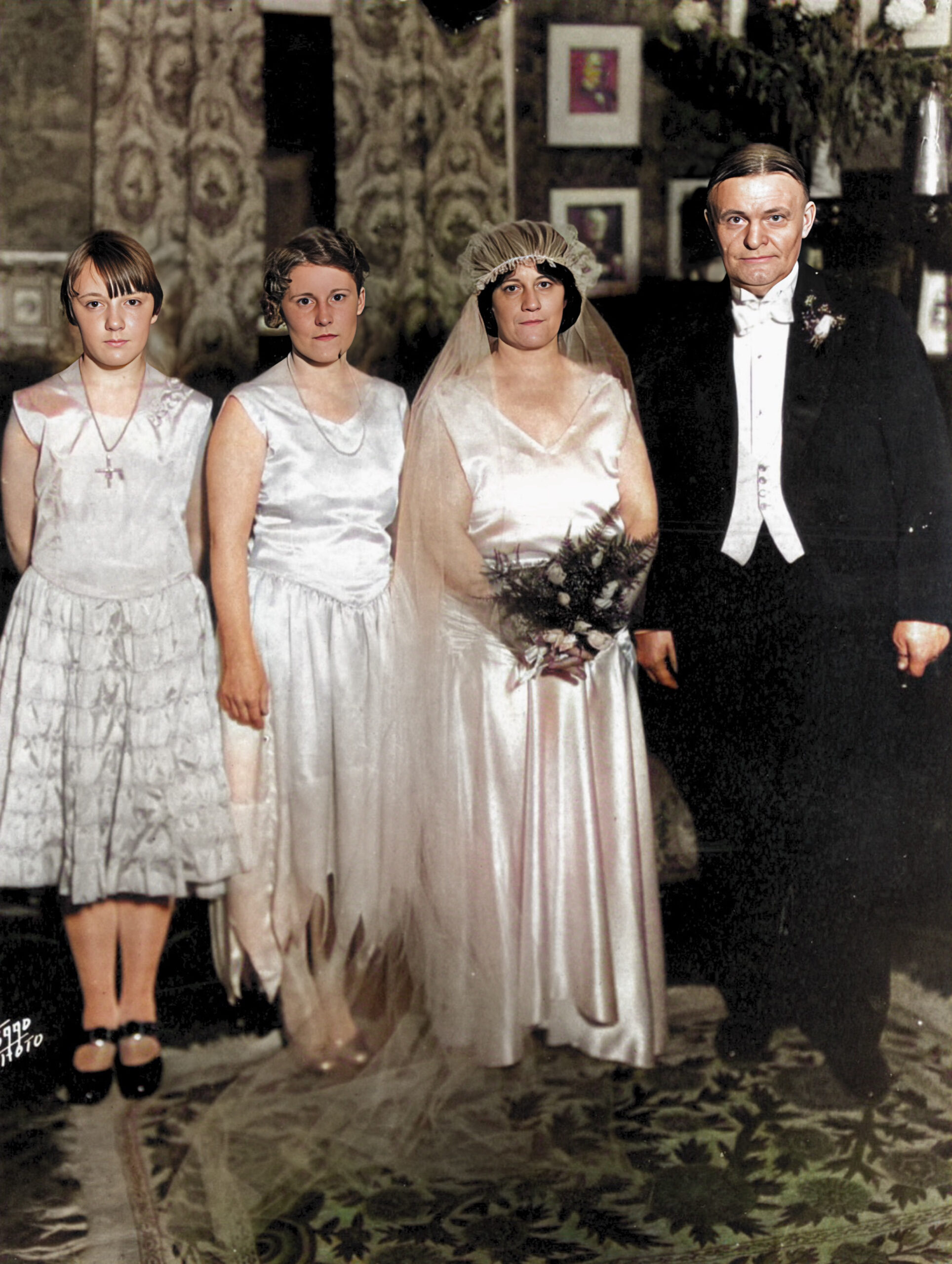
Press photo dated Dec. 5, 1927. MRS KATHERINE LANGLEY, CONGRESSWOMAN FROM KENTUCKY, HAS DAUGHTER SECRETARY. Mrs. Katherine Langley, elected to Congress from Kentucky to succeed her husband, John W. Langley, at her desk in the House Office Building dictating to her daughter, Mrs. Catherine Bentley, who will serve as her secretary.
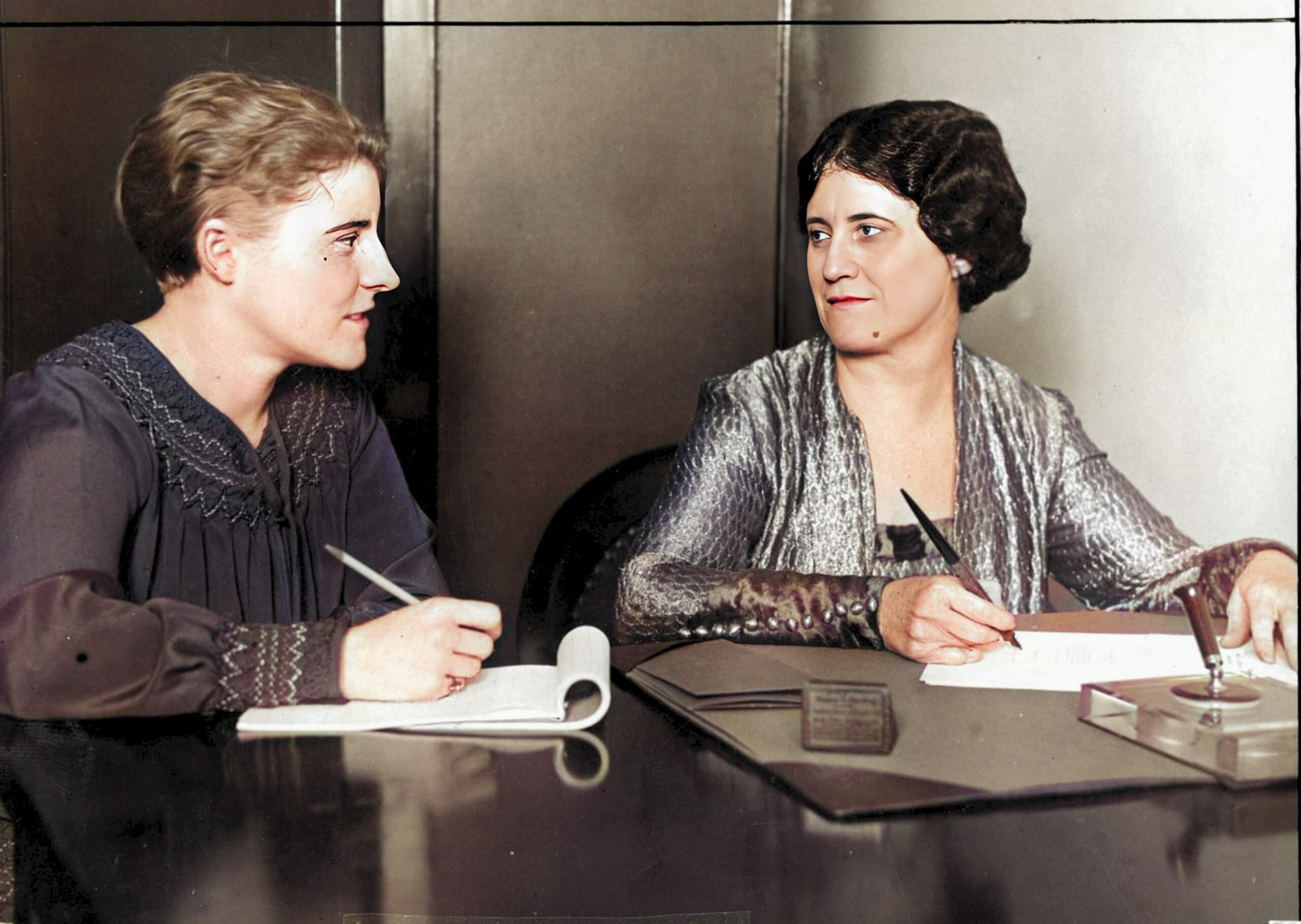
Press photo dated Dec. 7, 1927. “THE LADY FROM KENTUCKY,” An informal photograph of Mrs. Katherine Langley, ‘The lady from Kentucky’, elected to the Seventieth session of Congress to succeed her husband, John W. Langley.
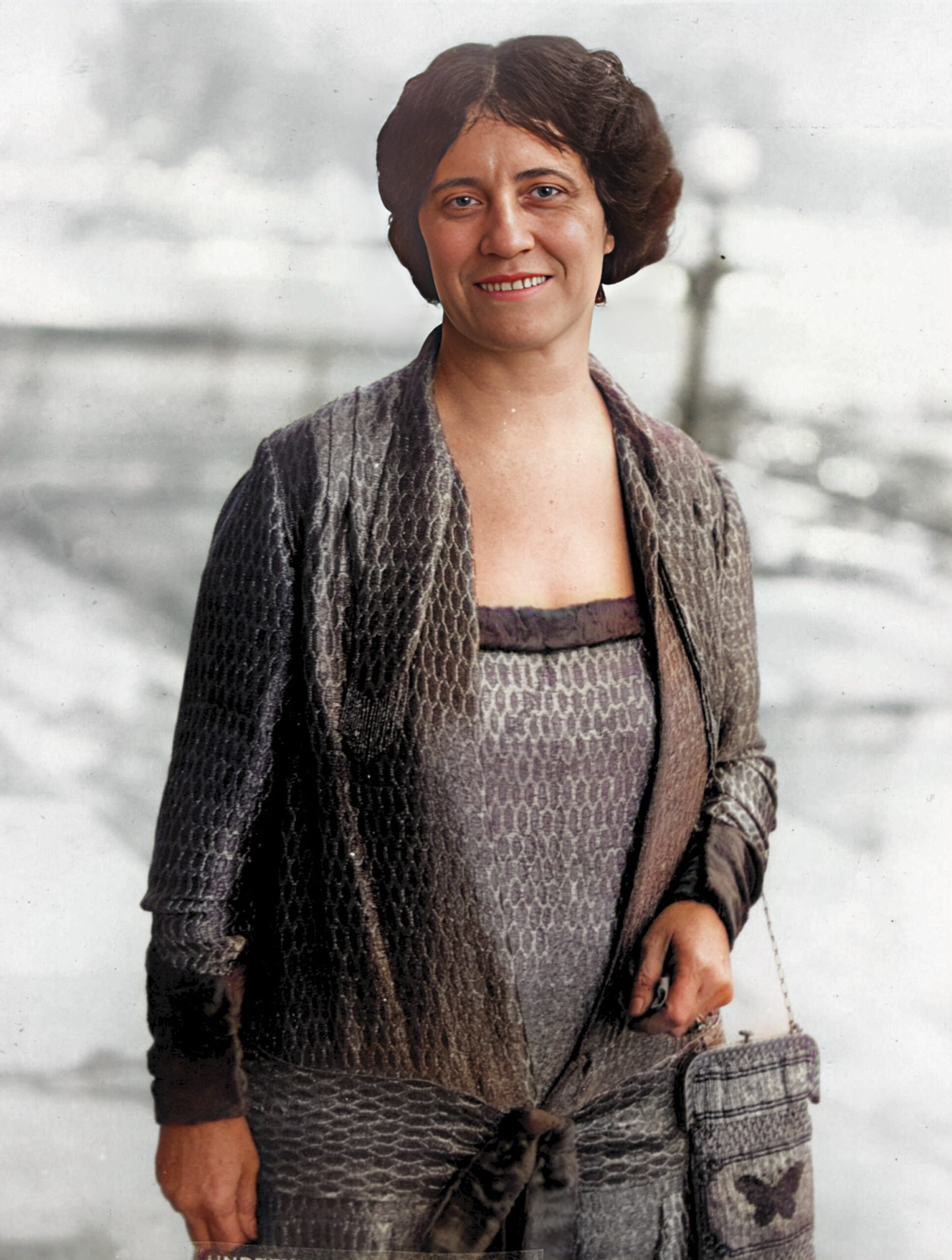
In 1928, Andrew J. May ran for Congress against Katherine Langley in a heavily Republican district and lost. Two years later he ran again and won in the 1930 election defeating Langley. May was elected as a New Deal Democrat to the Seventy-second Congress and to seven succeeding Congresses (March 4, 1931 – January 3, 1947). He was Chairman of the powerful Committee on Military Affairs during the Seventy-sixth through Seventy-ninth Congresses, and a consistent supporter of the Franklin D. Roosevelt administration.
Andrew Jackson (AJ) May
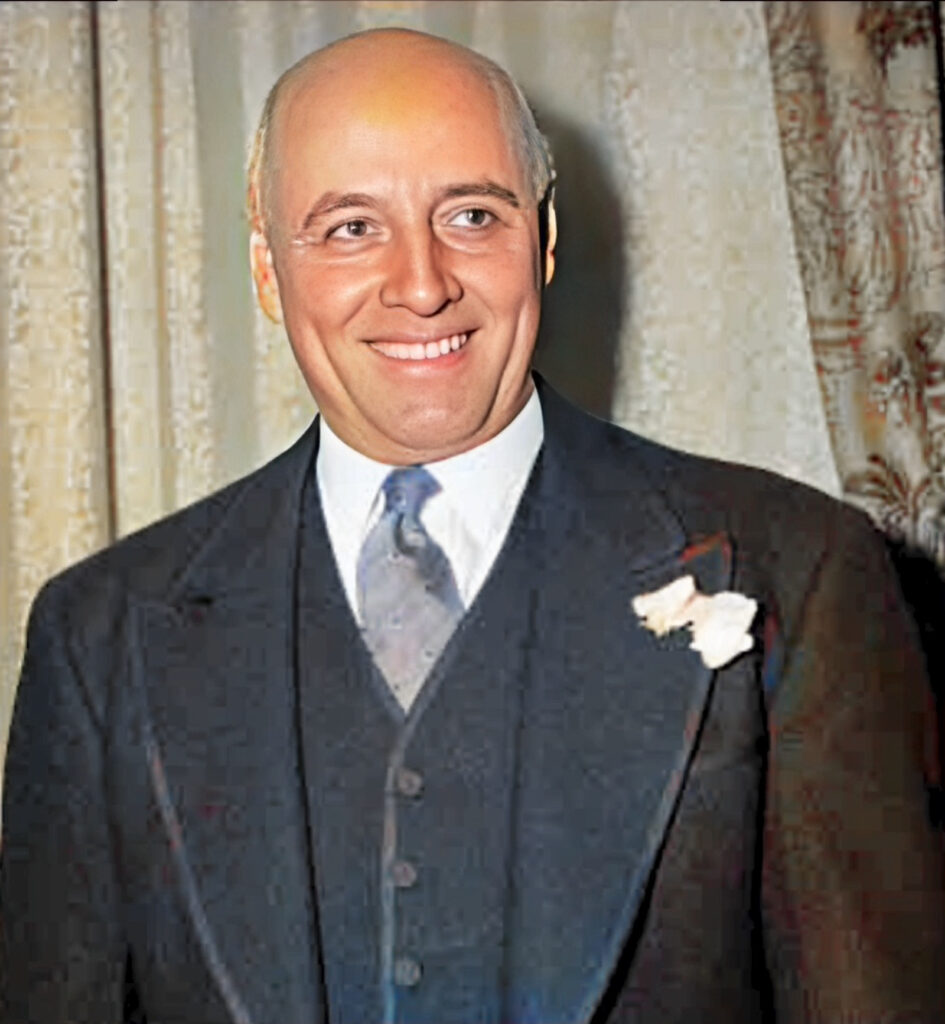
Andrew Jackson May, born June 24, 1875. Langley, Ky. Admitted to bar in Tennessee and Kentucky in 1899. Practices law in Prestonsburg, Kentucky
MAY & MAY Law-firm ( American Bar Association 1919 )
General practice. Firm consists of the Twins: May William H. May & Andrew J. May
William Harvey May, born at Langley, Kentucky., June 24, 1875; admitted to Bar, 1899, for Tennessee and Kentucky., educated in Floyd County, Ky. Law degree Southern Normal School., at Huntington, Tennessee. Commonwealth prosecuting Attorney for 31st Circuit Court, District composed of Pike Co., Letcher Co., Floyd Co., Magoffin Co., and Kentucky State Bar Association
Andrew Jackson May, born at Langley, Kentucky., June 24, 1875; admitted to the American Bar Association, 1899, educated in Public Schools, Prestonsburg and Floyd County, Kentucky., Law Degree from Southern Normal School University., Huntington, Tennessee. County Attorney,. 1902-1910.
Attorneys for Consolidation Coal Co., Standard Elkhorn Coal Co., of Garrett,Ky., Pike Floyd Coal Co., First National Bank of Jenkins, Bank of McRoberts, First National Bank of Whitesburg, First National Bank of Prestonsburg
Consolidation Coal Company had a company home reserved for May & May firm/ called the W.H. May’s home at the Jenkins Lakeside.
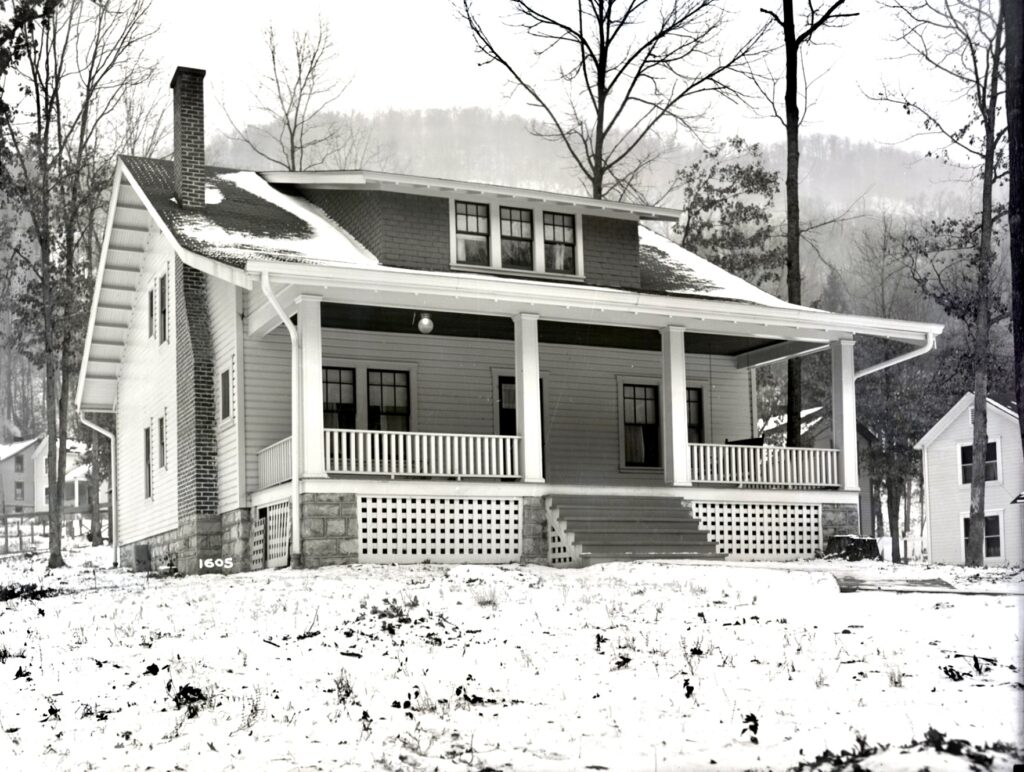
In 1946 Andrew J. May Questioned About War Profiteering Allegations
In 1946, US Senator James Mead began conducting investigations into war profiteering. Sometime shortly before or during the U.S. entry into World War II, May became involved with Murray Garsson and Henry Garsson, New York businessmen with no prior arms manufacturing experience who sought lucrative munitions contracts then being awarded by the U.S. Government. May was known to frequently telephone army ordnance and other government officials on Garson’s’ behalf to award war contracts, obtain draft deferments, and secure other favors for the Garsons and their friends. So numerous were these interventions that one ordnance official referred to them as “blitz calls.” After the war, a senate investigating committee reviewing the Garson’s munitions business discovered evidence that May had received substantial cash payments and other inducements from the Garssons. The Garssons weren’t sympathetic characters to the public because they made a lot of money on the war, and they were Jewish. Representative May got tied in with them in the public image and they all sort of got tarred with the same brush as people who somehow made out while people were dying, and illegally so. May had started a business called the Cumberland Lumber Company to build crates for the shipment of the Garson’s munitions. The government’s case was based on precept that the money that came to May as a result of the Cumberland Lumber Company was not really that. It was really compensation for making the phone calls to the war department. Ultimately the jury agreed.
Following news reports of irregularities concerning his conduct in office, May was an unsuccessful candidate for reelection in 1946 to the Eightieth Congress. The bribery scandal was intensified by testimony of excessive profit-taking in the Garsson munition business, and the fact that the Garsson factory produced 4.2-inch mortar shells with defective fuses, resulting in premature detonation and the deaths of 38 American soldiers. After less than two hours of deliberation [15] May was convicted by a federal jury on July 3, 1947, on charges of accepting bribes to use his position as Chairman of the Military Affairs Committee to secure munitions contracts during the Second World War. Murray and Henry Garsson also received prison terms. May appealed his verdict all the way up to the Supreme Court, which refused to hear his case. May was sent to prison at the age of 74 and served nine months. However, he continued to retain influence in Democratic party politics, and President Truman decided to grant May a full pardon in 1952. Unable to revive his political career, May returned home to practice law until his death. Andrew J. May died in Prestonsburg, Kentucky on September 6, 1959, and is buried in Mayo Cemetery.
The Real Smoke Screen
The Public Ledger: August 29, 1922
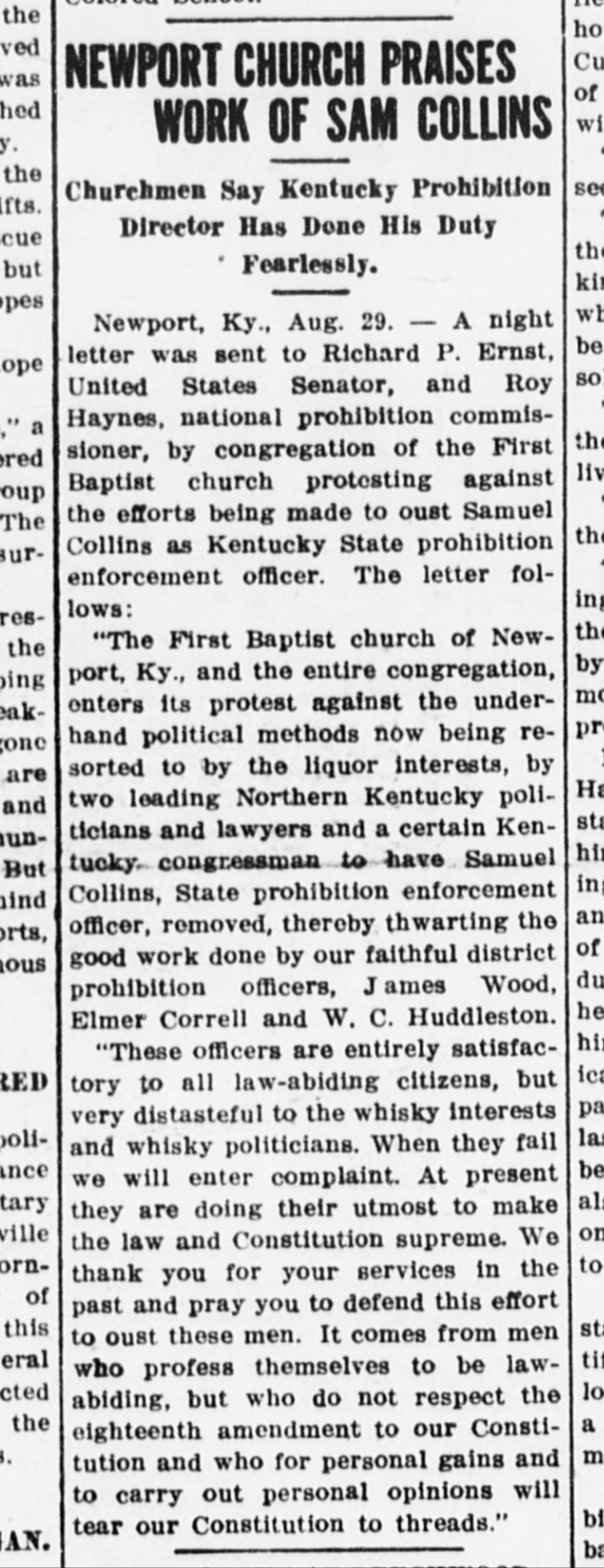
John W. Langley had known Sam Collins for 8 years, or maybe even longer. Letcher County was part of John’s 10th District, plus Langley probably did some stump speaking in Letcher Countyh for Teddy Roosevelt and Howard Taft. John was telling a story in his Bio about the time he had spent with his Grandma Langley. John notes how his Granny would have him cite the 23rd Psalm and write, even though he was just learning to write. When Grandma Delilah Langley died in 1878 an old friend of the family, Rev. Elijah W. Baker preached her funeral sermon. Elijah was a Circuit Rider Preacher for the Methodist Church and lived in the head of Millstone in Letcher. In the late 1800’s Elijah Baker had a son that was Letcher County Judge in Whitesburg, named Solomon Emery Baker. In 1900 S.E. Baker would resign as Judge to become Commissioner of Revenue for the US Government in this region. Samuel Collins was his U.S. Deputy Collector of Revenue. S.E. Baker resigned his U.S. Commissioner Revenue seat. Sam Collins resigned as Deputy Collector of Revenue to become U.S. Commissioner in December 1913.
In 1916 Samuel Collins approached John Langley seeking the appointment of United States Marshal for the Eastern District of Kentucky, contingent upon the election of our presidential nominee. John replied that he was willing to do so and advised him afterwards in writing. However, the past 36th Governor of New York, Charles E. Hughes, was defeated in his 1916 Presidential Bid against Woodrow Wilson which temporarily prevented any further action. Some two years later, Samuel Collins again appealed to Langley asking if his original promise was good in the event, providing we elected a Republican president in 1920. John’s answer was that he never allowed the statute of limitations to run out on his personal promises, and that he would once more back him for the job. The carbon copy of the letter containing that assurance was, John regrets to state, stolen from his files.
John W. Langley Honors His Promise To A Dear Friend
We return to the subject of the Marshalship by recounting John’s close acquaintance with then Senator Harding as well as Harry Daugherty, his campaign manager, so that John may explain why the Marshalship did not pass to Samuel Collins. As a matter of fact, the half-brother of the man who finally got the job was a life-long friend of John’s, and knowing his personal relations with Harding and Daugherty had asked John at Chicago to give him a personal note of introduction to both of these gentlemen. Unaware that Langley had already promised the position to Samuel Collins, he got a promise for his half-brother Roy Williams. Langley added that the individual who secured the promise was a district delegate to the convention and turned out to be the “original Harding man” of the Kentucky delegation, The promise he secured compelled John at the last moment to accept for Collins, subject to his approval, the post of Prohibition Director for Kentucky.
Here John was a little ahead of his story. On a visit made to President Harding on May 28, 1921, he urged Samuel Collins’ appointment as Marshal. The President’s reply was that there existed a tentative arrangement to give the Marshalship to another, adding that the only man who might be able to change the post to Samuel Collins was Col. A. T. Hert, and suggested that John go and see him. This John did, repeating the President’s words. It was then that Col. A.T. Hert suggested that it might be arranged to confer upon Samuel Collins the post of Prohibition Director in lieu of the Marshalship. John replied that he would have to wire Collins to see if that would be satisfactory to him, which John did immediately. Collins notified John that this job would be entirely satisfactory to him, adding that he did not want him embarrassed in any way about it, as Langley had been the best friend he ever had in the whole Kentucky crowd.
As written above, Samuel Collins was appointed to the position on June 18, 1921.
These facts above confirm that in John’s testimony no one whatsoever had suggested to him or influenced this appointment in any way. And in view of the above facts the most ludicrous part of the lying testimony of Mortimer, was when he said he was generally familiar with the incidents antedating Collins’ appointment, and it was made with his cooperation and in collusion with John for ulterior purposes. As a matter of fact, John never even Mortimer after Col. A.T. Hert made suggestion of the Prohibition Director switch, until Samuel Collins was actually appointed, assumed office and came to Washington for instructions.
It is well worth mentioning that in the last conversation John had with Collins after the alleged quarrel with him at Lexington, John told him that as soon as he reached Washington he would see if Col. Haynes would agree to Collins’ request that he combine the office of legal adviser with the assistant Prohibition Directorship and make the salary $4,000.00. This would justify Judge B. J. Bethurum, now Tax Commissioner of Kentucky, resigning the position of 28th Circuit Judge and taking this place. It will be noted in Judge Bethurum’s letter, reproduced elsewhere, that he says he met Collins on Sunday morning in Lexington and Collins said, “Judge, where have you been? Bethurum looked all over Lexington last night to show Samuel Collins a telegram from John Langley to the effect that it had been arranged for you to be assistant Prohibition Director at a salary of $4,000.00.” Judge Bethurum replied that he had a similar telegram from John which he had just received,” Bethurum then expressed his wonder that John was doing that in part for him, but that Samuel Collins had a suspicion that John W Langley was going to run for the Senate next time.
Collins testified that he did not remember a single thing as to any exchange of wires with John about his appointment. Let us examine the facts. When John reached Washington, Col. Haynes had left his office for the day, but early next morning John went up and discussed the matter with him, and he expressed himself favorably towards Collins’ proposition. Then he said for John to get a wire from Collins indicating his approval of the proposition.
John Langley said, “Shall he send this wire to you or to himself?” Haynes said, “let him send it to you and you bring it up here to yourself.” John immediately sent Collins an elaborate wire telling him of the arrangement and of Col. Haynes; suggestion that he, (Samuel Collins) send the wire direct to John and he would bring it up to him. John got the wire from Samuel Collins next morning, embodying what Col. Haynes had suggested that he say to him. John took Samuels Collins’ wire to Col. Haynes, who called in his assistant, Mr. Jones, and told him to make out the order for the appointment of Bethurum.
Could anyone believe that after all these circumstances, Collins could not remember anything whatsoever concerning them?
Soon afterwards, John got a certified copy of this telegram from Collins to him, but it disappeared from Langley’s files and John was convinced that with many other missing papers it was stolen. John eventually got another certified telegram copy, dated October 3, 1921.
The rumors of John W. Langley’s possible bid for U.S. Senate were causing some major concerns on two political fronts. Sitting, Democrat Augustus Owsley Stanley, an anti-prohibitionist and Progressive Conservative, an attorney from Fleming County who served on the Committee on Mines and Mining, that had jurisdiction over the Bureau of Mines and Geological Survey, a very powerful U.S. Senator that could influence the everyday operations of the Coal Corporations Industry in Kentucky. His term started as U.S. Senator on March 4, 1919, and ended December 3, 1923. He was defeated by Fredrick Mosley Sackett a Republican.
Augusta Owsley Stanley
The second U.S. Senator threatened by Langley’s rumors for bid for Kentucky U.S. Senate was Richard P. Ernst, up for re-election 1927. A life-long resident of Covington and former United States Senator. Richard Pretlow Ernst was born on February 28, 1858, in Covington. His parents were William Ernst and Sarah Butler Ernst. William Ernst was a past president of the Northern Bank of Kentucky and president of the Kentucky Central Railroad. Richard Pretlow Ernst was educated in the public schools of Covington and at the Chickering Academy in Cincinnati (graduated in 1874). Ernst earned a bachelor’s degree from Centre College in Danville, Kentucky in 1878. He received a law degree from the University of Cincinnati in 1880. That same year, he began practicing law in Covington and Cincinnati. He was a member of the Firm of Ernst, Cassatt & Cottle. Ernst married Susan Bent in 1886. The couple had two children, William Ernst and Sarah Ernst Darnell. Richard Ernst’s first venture into politics occurred in 1888, when he was elected to the Covington City Commission. He served in this position until 1892. In 1896, Ernst ran unsuccessfully for a seat in the United States Senate on the Republican ticket. He successfully ran for the U.S. Senate in 1920. He served in that position from March 4, 1921, to March 3, 1927. His bid for re-election in 1926 failed. Ernst returned to Covington in 1927 and resumed his law practice. He was active in many fraternal and professional groups in the Greater Cincinnati area. Ernst was chairman of the board of directors of Liberty National Bank in Covington; a member of the Hamilton County and Cincinnati Bar Associations; and a member of the Queen City Club of Cincinnati, the Covington Industrial Club and a 32nd degree mason. Ernst also served on the boards of Centre College, Danville; the University of Kentucky in Lexington; Pike County College, Pikeville, Kentucky and Western College for Women at Oxford, Ohio. Ernst was a dedicated member of the First Presbyterian Church of Covington.
The Grand Jury Indicted John W. Langley in Washington D.C., the big question is why Langley was not tried in the District of Columbia.
Transcribed from a letter sent to John W. Langley August 24, 1928
State Tax Commissioner Of Kentucky
Hon. John W. Langley,
Pikeville, Ky.