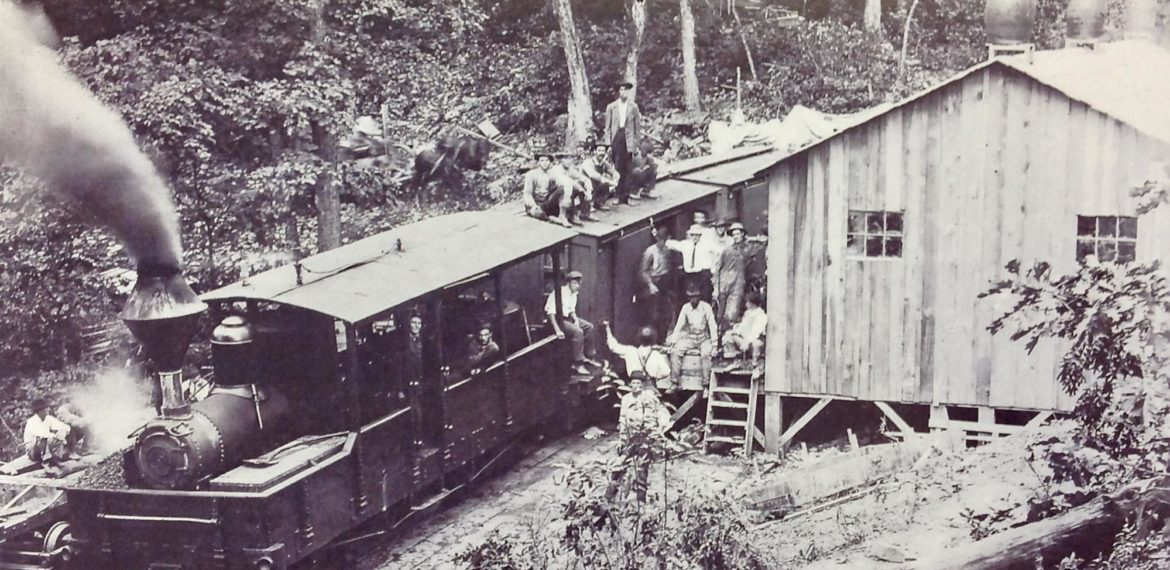
On March 24, 1911, The Big Sandy News published an article on page 1, announcing Langhorne and Langhorne of Richmond, Virginia, was awarded a contract for the construction of the Consolidated Coal Co.’s line of railroad from a connection with the Chesapeake and Ohio Railway at the mouth of Shelby Creek, in Kentucky, to the headwaters of Elkhorn Creek, 28 miles. The line follows streams named, and it is known as the Sandy Valley and Elkhorn Railway. The construction includes 28 bridges, varying in a length from 14 feet to 100 feet , all of single span steel girder construction. There will be two tunnels through sand rock, each 18 by 21 feet in dimensions, one of them 700 feet long and the other 230 feet long. The route lies through rough and rolling country. Rails, ties and bridge steel will be bought by A.T. Watson, purchasing agent, Fairmont, West Virginia. Frank Haas, of Fairmont, West Virginia, is the consulting engineer, and F.E. Englar of Pikeville, Kentucky is chief engineer. The directors are John Westley Mayo Stewart, president and treasurer; B.E. Whitman, secretary; S.S. Willis, John F. Hager and A.M. Kelly, of Ashland, Kentucky.
James Skene & Sons, and Skene and Richmond have contracted to do all concrete work on the new Shelby Creek railroad in Pike County, Kentucky, amounting to nearly 30,000 cubic yards. J.L. Richmond went to Pikeville Wednesday to start operations. Langhorne and Langhorne are already on the grotto doing grading and several car loads of Italian laborers have already shipped to Shelby. It is to be a rush job.
* * * * *
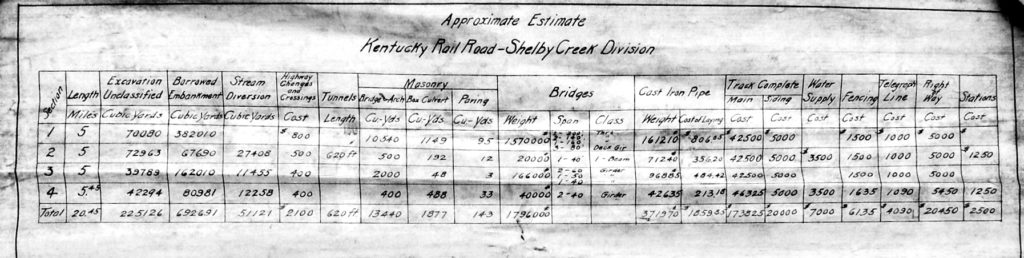
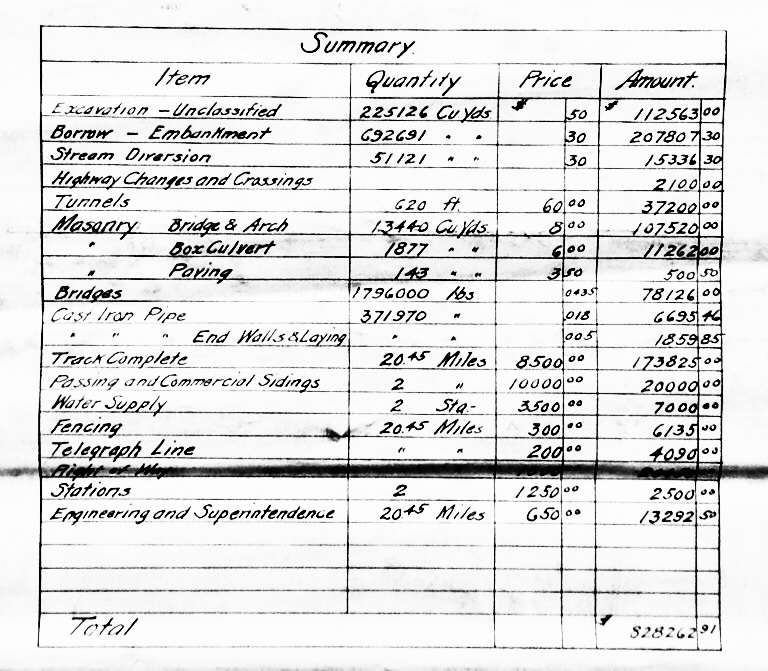
Below are the original estimates projected and compiled by P.F. Prindible, C.E., before the ink was dry on the contract for the C&O Railroad’s extension of the Big Sandy Railway from Whitehouse to Praise, Kentucky, in April 1902.
The Fairmont West Virginian reported on July 7, 1911 that the cost of the SV&E would be $60,000 per mile. Consolidation Coal designed, surveyed, planned, and paid for construction of the SV&E. The West Virginian stated that, upon completion, the B&O would acquire the line from Consolidation at cost plus interest and concluded with the statement that Consolidation was “spending money liberally.” Long before the first steam shovel loaded the first bucketful, railroad agents were visiting families along Shelby and Elkhorn creeks buying rights-of-way. There had actually been plans for a railroad up part of Shelby Creek for a decade, but 1911 was the magical year.
Below is a list of grantors to the Sandy Valley & Elkhorn Railroad. The date of sale follows each name, with one exception. Multiple same-name listings probably denote separate tracts owned by the same person or two owners, such as a father and son, with the same name living on adjoining tracts. Commissioner’s deeds were probably made in cases where owners were deceased, could not be located, or refused to sell voluntarily.
ADAM[s], G.W. & wife 11/20/02
ADDINGTON, BENTON & Wife 02/13/11
ADKINS, SPURLOCK 11/22/02
ADKINS, SPURLOCK 03/09/14**
ADKINS, SPURLOCK & wife 02/21/11
ALAMANDER [sic] & Wife 11/20/12
BARTLEY, CHARLES & Wife 02/14/11
BARTLEY, WILLIAM, et al 01/14/11
BELCHER, BOWLES & Wife 02/15/11
BELCHER, FLOYD S., et al 02-15-11
BELCHER, GEORGE H. 02/28/11
BELCHER, GEORGE H. & Wife 02/28/11
BELCHER, JORDAN 02/14/11
BELCHER, WILBURN 03/01/11
BENTLEY, EMERY 11/28/12
BENTLEY, JOHN D. 03/24/11
BRANHAM, G.W. 11/22/02
BRANHAM, RICHARD & Wife 02/15/11
BUMGARDNER, JACOB 02/14/11
BURKE, A.M. & Wife 03/03/11
BURKE, HIBBARD 02/17/11
CABLE, JAMES 02/28/11
CALL, W.P. 03/09/11
CHILDERS, SAM & Wife 02/14/11
DAMRON, ABRAM & Wife 08/05/11
DAMRON, DELLA & Husband 04/03/11
DAMRON, DELLA & Husband 02/16/11
DAMRON, ROBERT & Wife (No Date Given)
DAMRON, WILLIAM J. & wife 02/15/11
ELKINS, JAMES, et al 04/19/11*
ELSWICK, ELIZABETH, et al 03/16/11
FANNIN, VANNIE 04/19/11*
FANNIN, VANNIE & Husband 09/10/13**
FLEMING, ELIJAH, et al 02/13/11
GREER, DRUSILLA & Husband 03/01/11
GREER, JAMES W. & Wife 02/13/11
GREER, M.D.L. 05/01/15
HALL, BEN & Wife 02/17/11
HALL, BENJAMIN & Wife 05/21/13
HALL, GEO. W, & Wife 02/14/11
HARMON, K.L., et al 02/14/11
HATCHER, JAMES, et al 05/22/11
HUGHES, JAMES & Wife 02/16/11
ISON, DRAXIE 05/10/11
ISON, ELIHU K. 06/05/11
JOHNSON, APPERSON & wife 02/15/11
JOHNSON, B.F. & Wife 04/22/11
JOHNSON, URIAH & wife 02/16/11
JOHNSON, W.H.C. & Wife 04/19/11*
JOHNSON, WILLIAM & Wife 02/15/11
KEATHLEY, HEBER 04/19/11*
KEATHLEY, SAMUEL W. 02/28/11
KEATHLEY, WILLIAM 03/19/11
KEATHLEY, W.J. & Wife 02/15/11
KILLEN, MORGAN & Wife 03/24/11
KISER, BLUCHER & Wife 04/19/11*
MARRS, DAVID 06/20/11*
MARRS, ELIZABETH, et al 04/19/11*
MARRS, JOHN & Wife 02/15/11
MOORE, JOHN & Wife 04/19/11*
MOORE, JOHN 06/17/11
MOORE, JOHN 04/19/11*
MOORE, JOSEPH E. & wife 02/21/05
MULLINS, K.S. 03/06/11
MULLINS, T.J. & Wife 03/17/11
NEWSOME, SAMUEL 04/19/11*
OSBORNE, HAMILTON 02/17/11
OSBORNE, HAMILTON, et al 02/17/11
OSBORNE, PALMYRA, et al 03/14/11
OSBORNE, PALMYRA & Husband 02/07/11
OSBORNE, PRESTON & Wife 02/13/11
PICKLESIMER, ANNIE & Husband 03/10/11
PIKE Co. BOARD OF ED. 12/21/12
POLLY, J.B. 04/19/11*
POTTER, ABRAM 11/19/02
POTTER, ROBERT & wife 11/20/02
POTTER, LEVI 11/20/02
POTTER, LEVI & Wife 02/15/11
POTTER, LEVI & Wife 02/28/11
RAMSEY, SAM & wife 11/19/02
RAMSEY, SAMUEL 11/20/12
RAMSEY, SAMUEL & Wife 02/14/11
RATLIFF, A.S. & Wife 02/22/11
RATLIFF, JOEL 11/08/12
RATLIFF, JOEL & Wife 04/01/11
RATLIFF, R.H. 03/09/11
RATLIFF, R.H. 02/27/11
REECE, J. SMITH & Wife 04/13/11
REECE, MARY 02/15/11
REECE, WILLIAM 02/16/11
ROBERTS, BASIL, & Wife 03/06/11
ROBERTS, JOHN & Wife 09/11/11
ROBERTS, JOHN & wife 02/14/11
ROBERTS, JOHN & wife 02/25/11
ROBERTS, W.J. 03/30/11
SANDERS, A.D. & Wife 10/29/12
SANDERS, CELIA, et al 04/19/11*
SANDERS, E.T. 10/29/12
SANDERS, JACOB 10/29/12
SANDERS, TENNESSEE 10/20/13
SCOTT, DORCAS 04/19/11*
SCOTT, THOMAS 11/08/02
SCOTT, THOMAS, et al 04/19/11*
SMALLWOOD, DAVID K., et al 02/14/11
SMALLWOOD, W.H. 02/14/11
SMALLWOOD, SAMUEL 02/14/11
SMALLWOOD, SAMUEL & Wife 02/14/11
SYCK, RICHARD H. 02/17/11
TACKITT, BEN 02/19/13
TACKITT, G.W. & wife 02/12/03
TACKITT, SAMUEL G. & Wife 03/10/11
TRIVETTE, LEVI & Wife 04/19/11*
TRIVETTE, LEVI 04/19/11*
TRIVETTE, THOMAS & Wife 04/26/11
VANOVER, DICIE 03/10/13
VANOVER, SARAH 04/19/11*
VANOVER, WELLBORN & Wife 02/16/11
VENTERS, ROY & Wife 04/07/11
VENTERS, ROY 06/20/11*
WRIGHT, BENJAMIN & Wife 02/16/11
WRIGHT, ELIZABETH & Husband 02/14/11
YATES, H.E. & Wife 03/21/11
YATES, RICHARD & wife 11/22/02
*By Commissioner’s Deed
**Release
Note that some of the purchases above are dated years before the SV&E started construction in 1911. In fact, Sandy Valley and Elkhorn had been a registered railroad name for years. When the Elkhorn coal leases were sold to a Northern investment group just after the turn of the century, plans were made for a rail line to reach the reserves. Those rights-of-way from 1902, 1903, and 1905 were for strategic pieces of property. At that time, the route the railroad would follow was not firmly determined, so access was bought at the mouth of Shelby Creek for the main line, at modern Buckfield to shortcut through what was then called Yates Valley, at the mouth of Caney Creek to allow for passing up either Shelby or Caney creek, and finally near the mouth of Long Fork so the rails could take either the Long Fork and/or Shelby Creek route. All those choices would reach rich coal reserves, but, once the final decision was made that a railroad would be built, it was surveyed to go straight for the head of Elkhorn Creek.
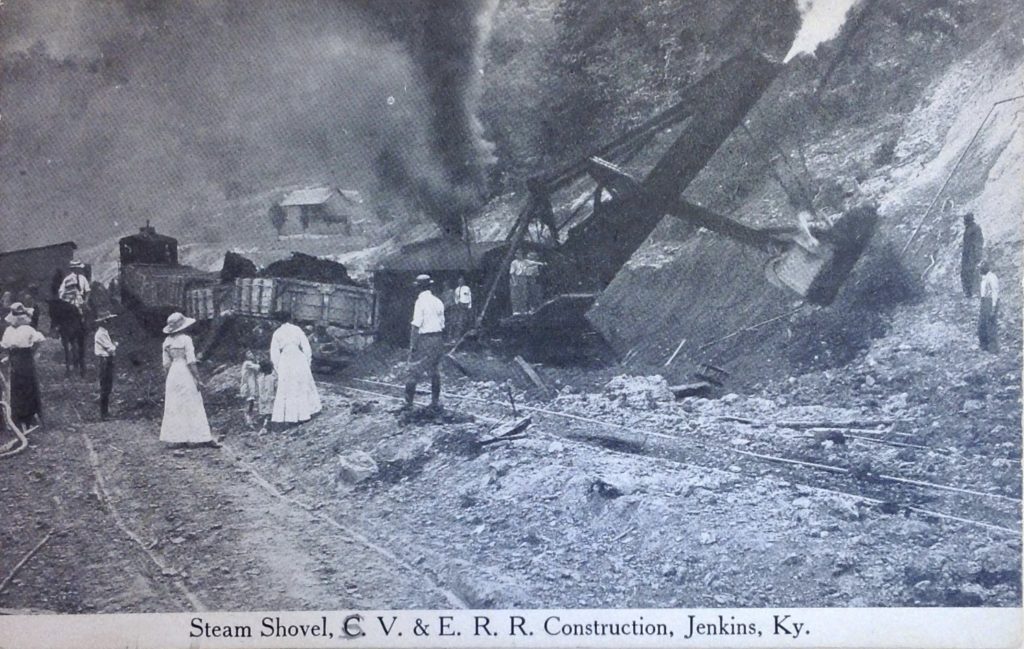
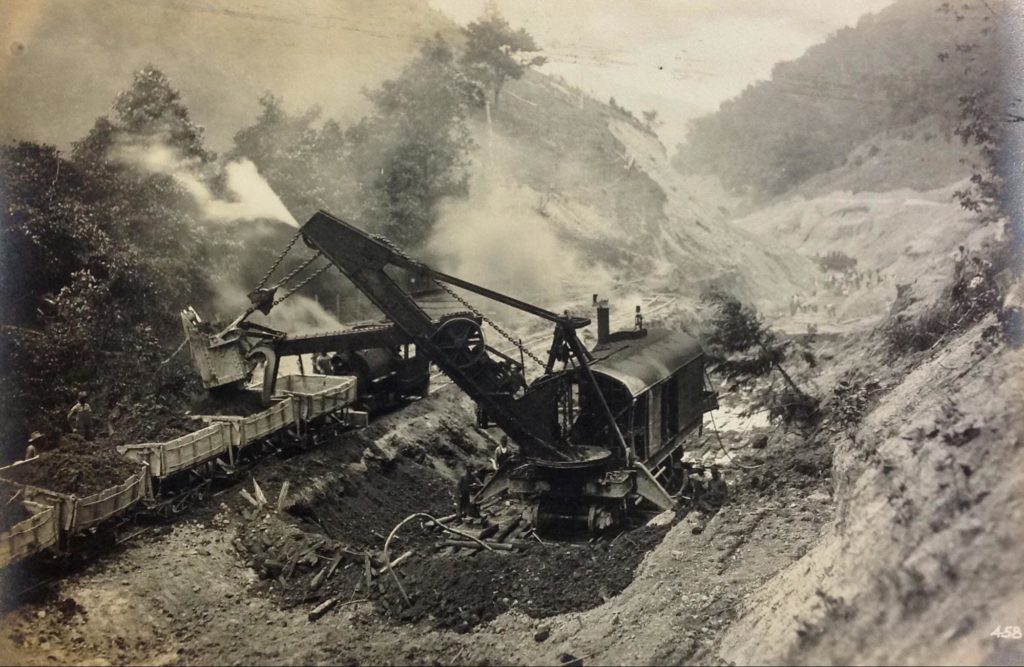
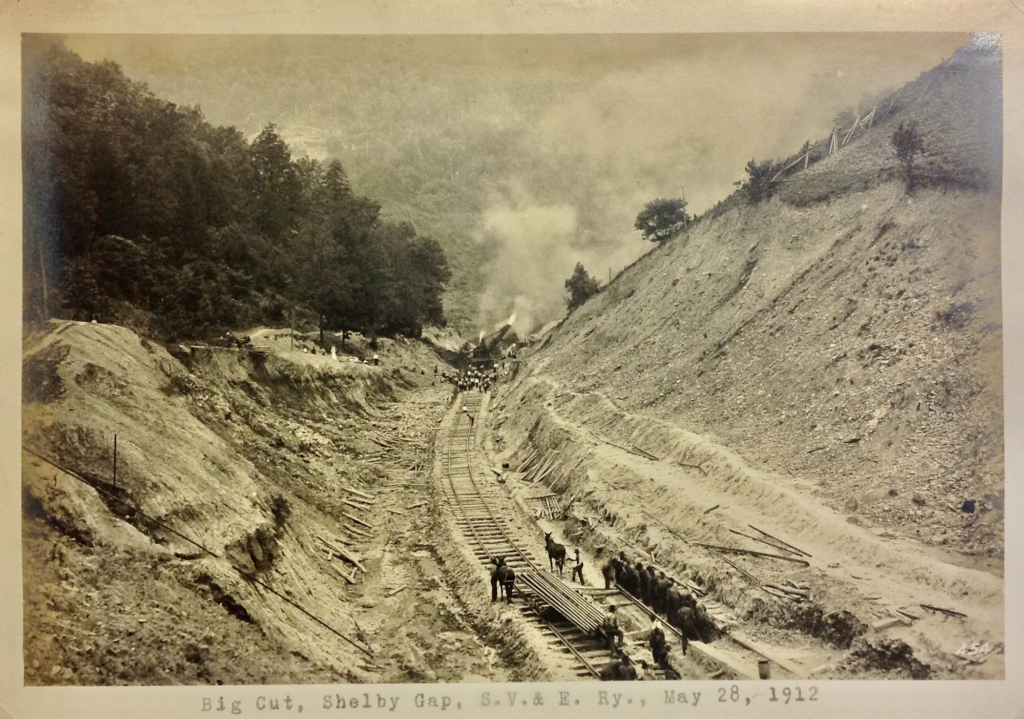
Starting the Big Cut through Shelby Gap with Langhorne & Langhorne Construction Co.’s steam shovel and equipment spread.
(Above, Below, and Following Page)
SV&E crew laying rail through Shelby Gap (Below)
SV&E unit supplying construction crew (Below)
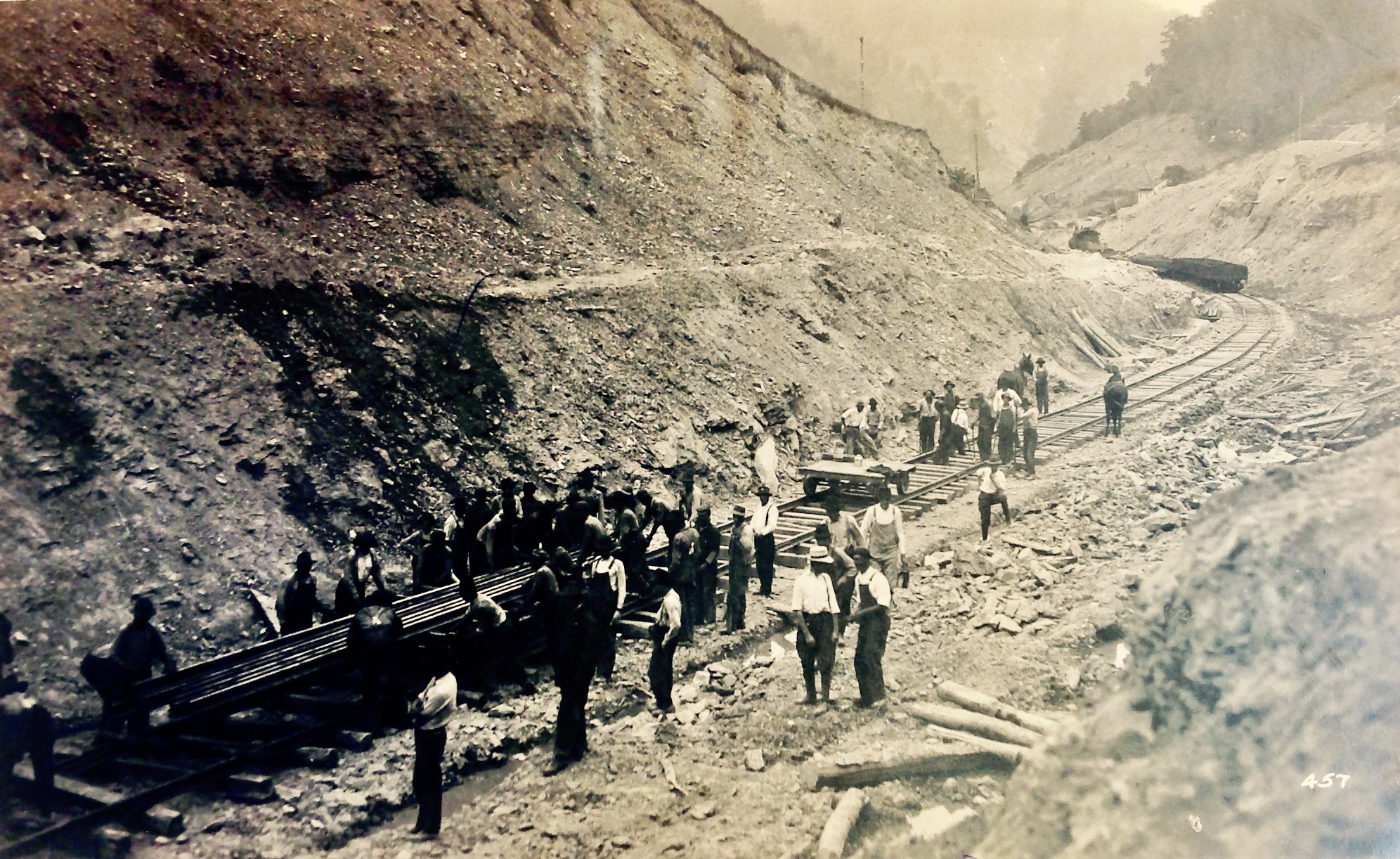
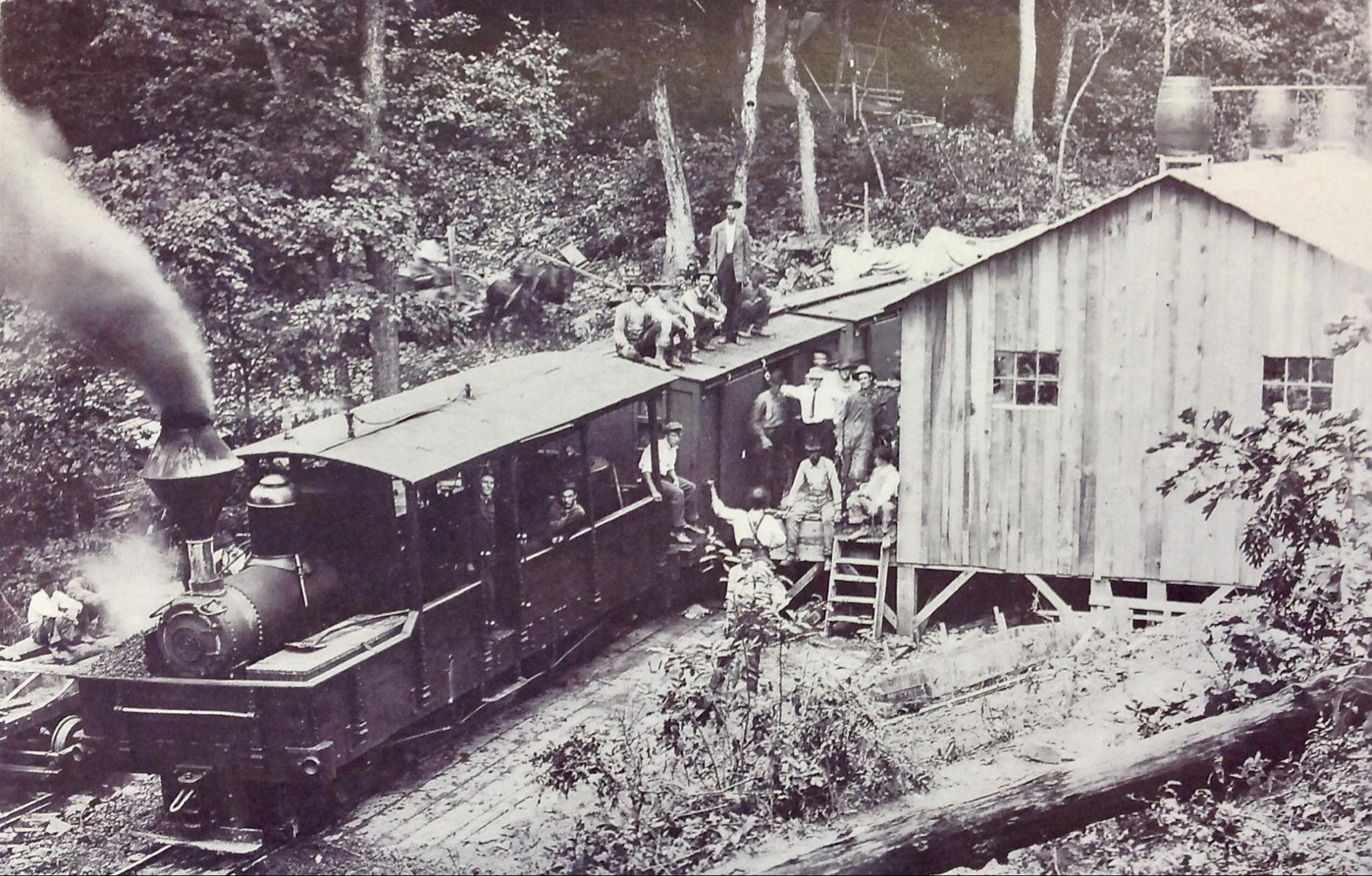
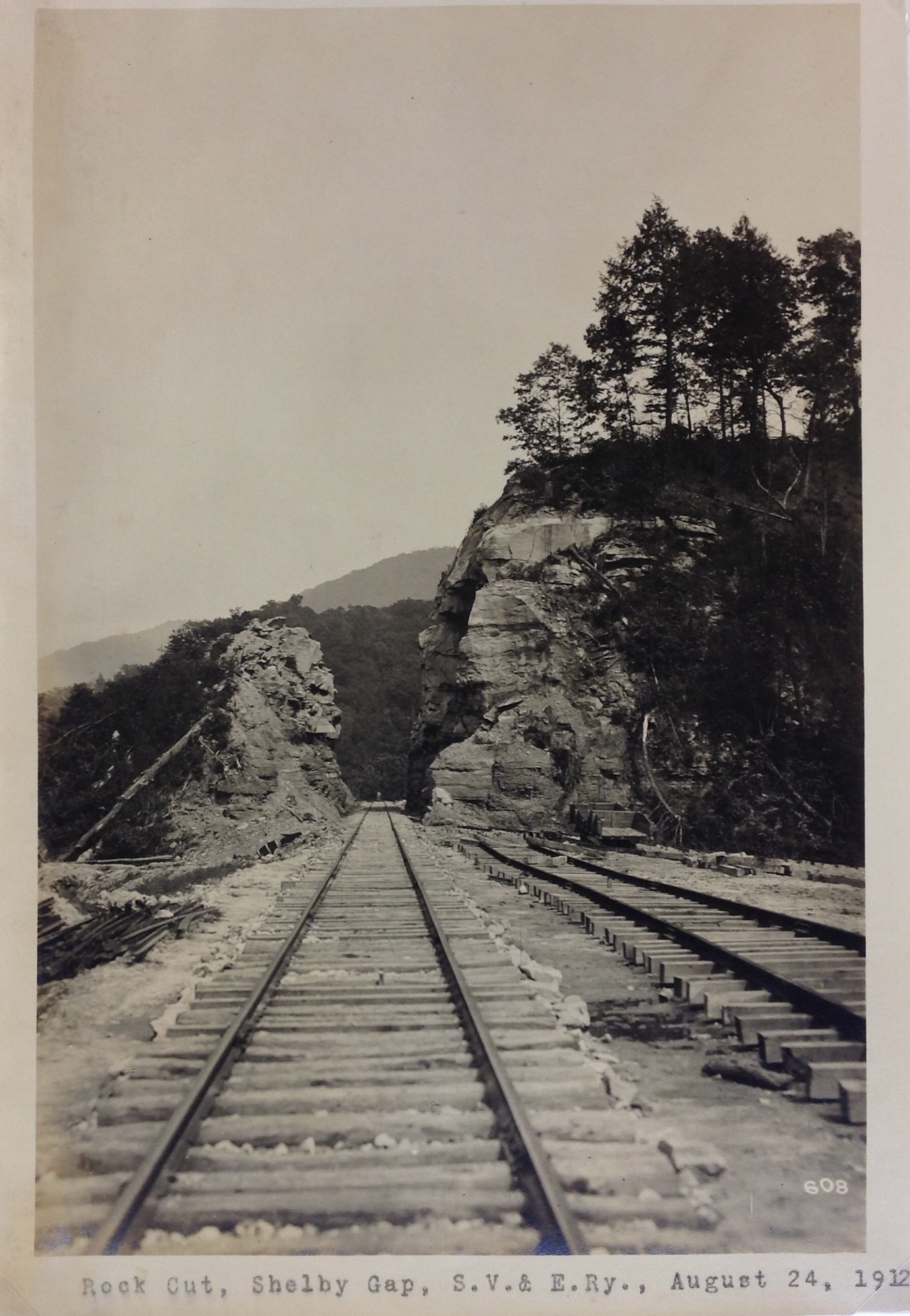
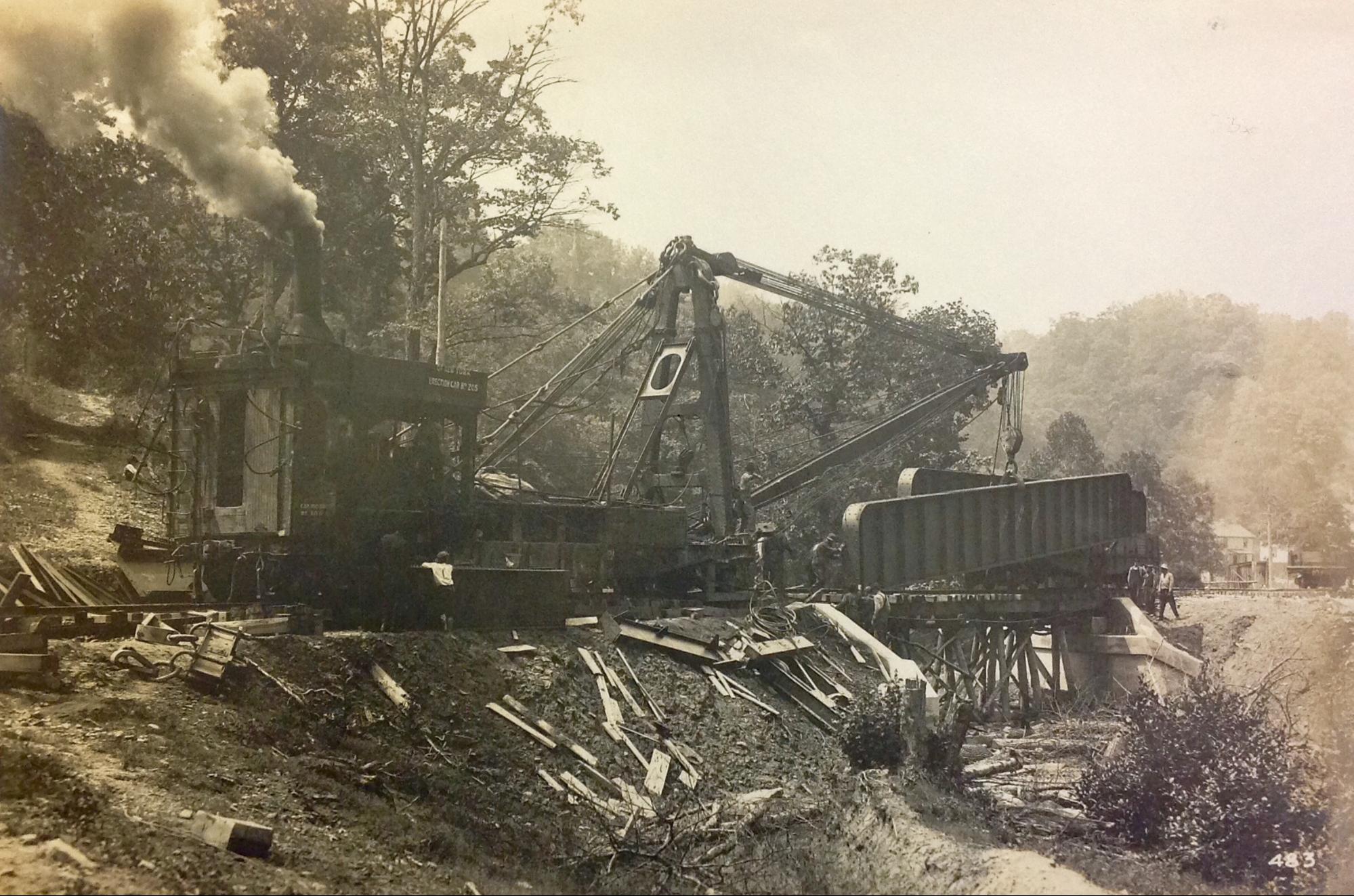
As the construction photos on the above pages show, building the railroad was a cart-before-the-horse affair. The excavation equipment went first, digging drain ditches, installing culverts, building the rail bed, and laying the ballast, all before crossties and rails were put down and spikes driven.
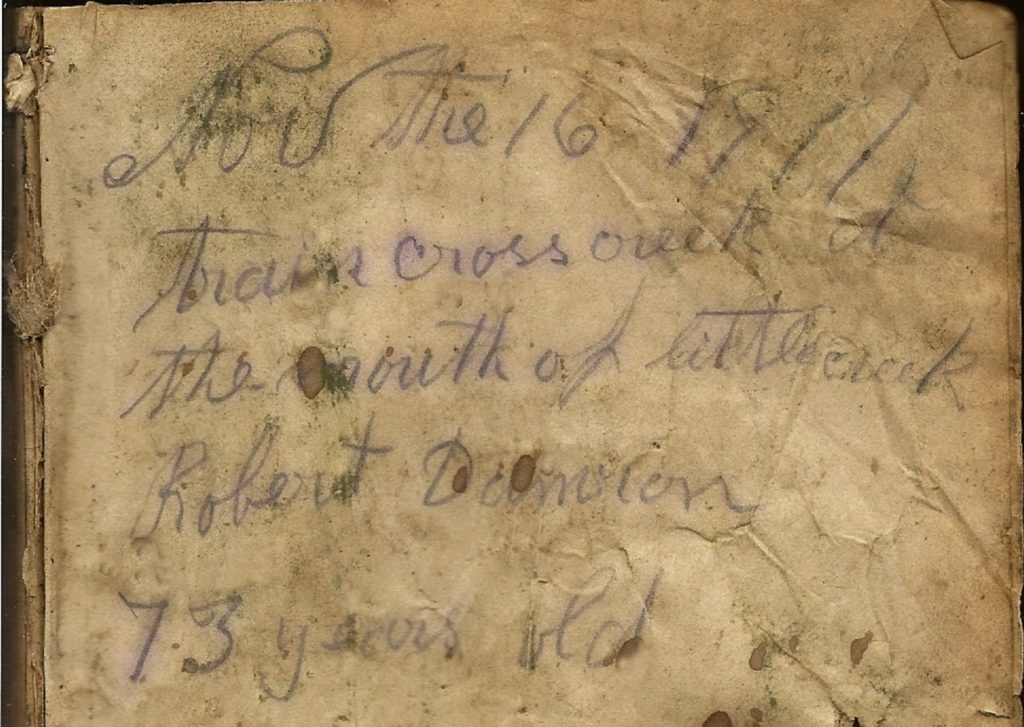
It was an occasion to remember when Robert Damron wrote on the fly leaf of his family Bible: “Nov. the 16th, 1911, train crossed over at the mouth of Little Creek. Robert Damron, 73 years old.” Excavation had started the previous March. Damron had seen the first construction train laying track in November.
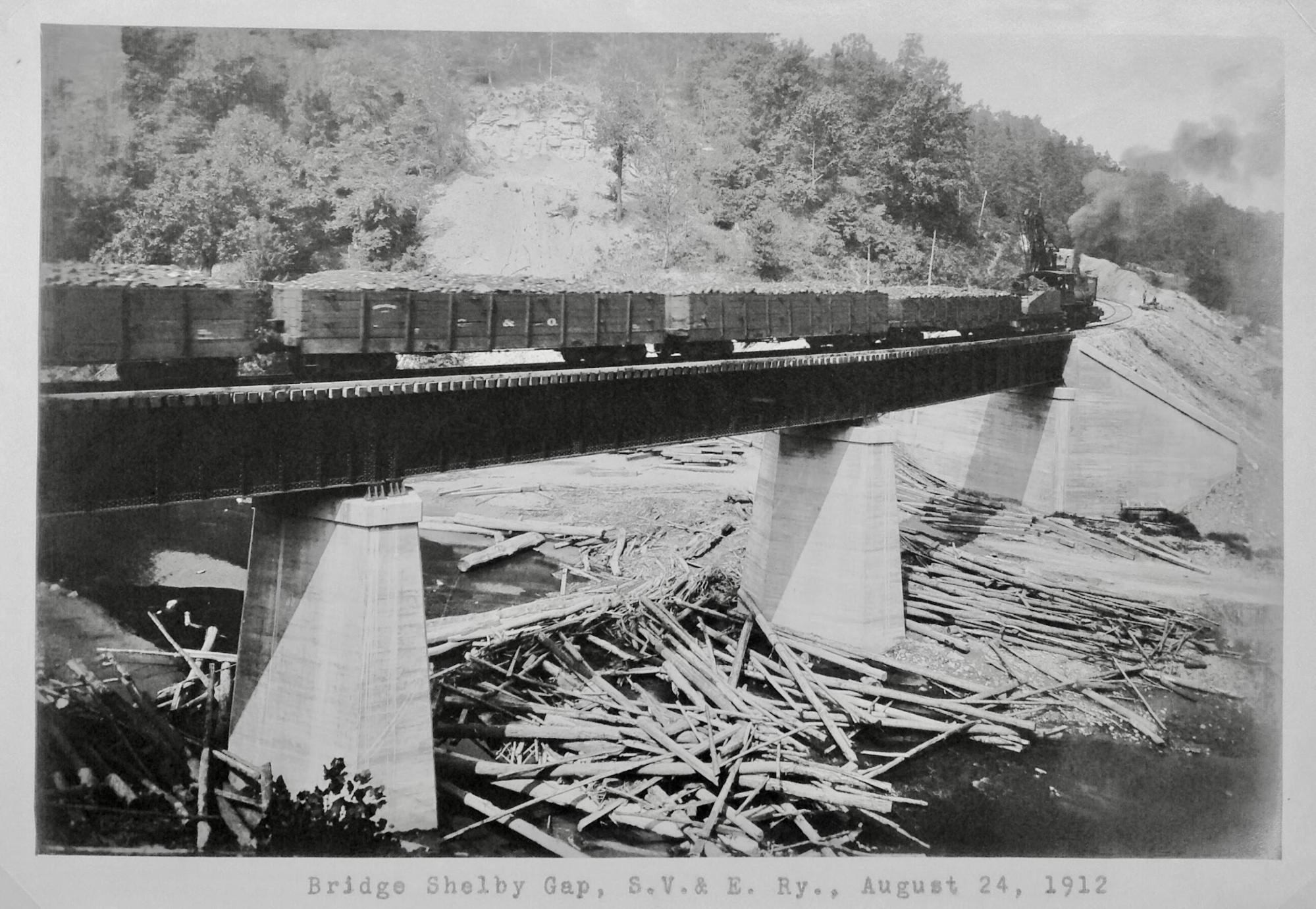
Bridge spanning Elkhorn Creek at Shelby Gap, looking downstream. Freight had been shipping to Burdine since June.
(Big Sandy News, 6/21/21, p. 8)
The timbers underneath the trestle in the photo above were the temporary pilings for stream crossing during the first stages of bridge construction (See photo on the page below).
There was a Virginian who came to Kentucky, probably with Langhorne’s SV&E construction team. He was a skilled engineer and operated the construction engine, but was remembered for his noticeable speech defect. Old-time railroaders who helped build the SV&E would laugh and tell the story about the time the engineer from the Mother State was asked to pull his locomotive across the temporary span, before the concrete pillars were in place, to see if it would indeed hold the load. The Virginian replied: “Huh-uh. ‘ou fellers wanna see if the bwidge can hold up my twain, ‘ou take the thwottle and woll ‘er acwoss your own self.”
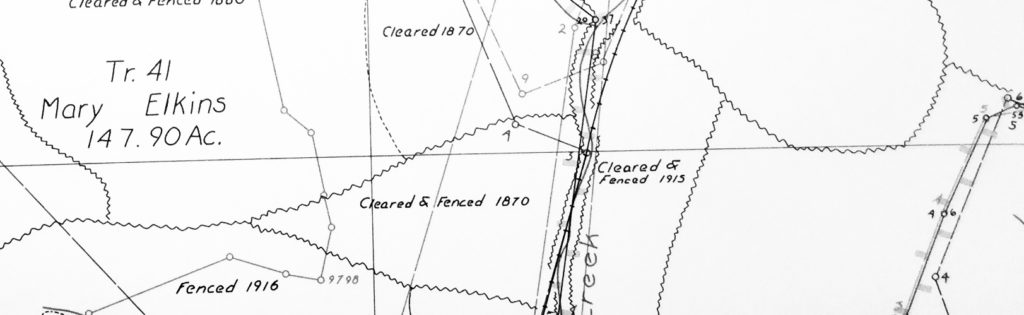
The Mary Elkins farm, later called the Sam Potter farm, between Rattlesnake and Bill Reece Branch on Shelby Creek.
Map (Below) Showing Location of Bridge Construction (Above)
A LINGERING MYSTERY
Joseph Zande was an Italian laborer who was killed while helping build the SV&E Railroad up Elkhorn Creek.
We were taught in grade school geography class that Italy is shaped like a boot. If we imagine that boot having a bootstrap, the northeastern region called Cadore would be where the strap hooks onto the boot. Thousands of miles apart, Cadore, Italy, and Pike County, Kentucky, have several things in common: both are mountainous regions; both were once poor areas; both are watered by one major river; and both are today developing a profitable tourist traffic due to their scenic beauty. At the beginning of the Twentieth Century, however, Cadore and Pike County were headed in different directions.
The Big Sandy valley was finally catching up from its arrested development brought about by the Civil War. The coal mines which had existed along the river from Peach Orchard to Prestonsburg to the mouth of Hurricane Creek were shut down during the war and remained idle for years afterward. By 1900 the valley’s coal could no longer be ignored. As had been the case for decades, where there were heavy loads and huge profits to be made, railroads followed. By 1911 the Sandy Valley and Elkhorn, known as the SV&E, was blasting and steam-shoveling its way up Shelby Creek. Its destination was Jenkins, a new town being built in Letcher County. There, at the head of Elkhorn Creek, was the Cavalier coal seam, one of extraordinary size and quality. The dry goods to build the town were coming through Pound Gap from Virginia, but the natural resources would be hauled out from the opposite end of town.
Pike and Letcher counties had never had large populations, and that would be to the detriment of Cadore. Many of the European stone masons who had been trained in the Old World style heard there was work to be had in America, the land of promise, then packed a few belongings and booked passage. Some soon found their way to the SV&E railroad construction project which began at Shelbiana near the beginning of 1911. That year when the SV&E started up Shelby Creek saw the lowest population in Cadore since the area had been taken away from Austria and made a part of Italy in 1866. Two who were part of that population loss were a father-and-son stone mason team, John and Joseph Zande. They came from the town of Auronzo, in northern Cadore, about 50 miles south of Salzburg, Austria. Joseph was born an Italian, but his father, John, a native of the same region, would have probably been an Austrian by birth.
As the SV&E came up Shelby Creek, the work centered around the blasters who handled the powder and set off the explosions to level the mountainsides into a railroad bed. Stone masons like Joseph and John were common laborers until, two miles up Shelby Creek, when the first steel trestle was set, they built an abutment wall downstream from the concrete bridge pier. It still stands today, over 100 years later.
The most dangerous work came in two spots, one just upstream from the mouth of Robinson Creek and the other at Virgie, where tunnels were blasted through the mountain. Work continued with the loose dirt and rock being used to build a flood-safe railroad bed through the bottoms. On New Years Day 1912, Hamilton Osborne and his family moved out of a log house near the mouth of Burke Branch and carried everything they owned down the unfinished railroad to their new farmhouse a mile away. The boys in that family would for the rest of their lives tell of how they would lie in their upstairs beds at night and listen to the beautiful songs the foreigners sang when they camped under the trestle at the upper end of their yard. The only problem, according to Corbett, one of the older boys, was that, “I couldn’t understand a word of it.”
The work was brutish and the foremen of the SV&E crews no doubt pushed their men toward Jenkins. Tempers were bound to flare, and they did. A story which was told and retold for decades involved a laborer who killed a foreman in a fight after taking all he could stand. The railroad crews had their own brand of drumhead justice and never bothered with calling a sheriff. The killer was sentenced to be shot. After a firing squad of two was found, the condemned man was tied to a tree. Upon a signal, both rifles sounded as one, but when the corpse was examined there were three bullet holes. How did the third wound happen? The foremen, who lived in a private railroad car, were the only ones allowed to have their wives with them. The wife of the dead boss had chosen her spot and fired with the signal, just to get a bit of satisfaction in knowing the job was well done. The killer was supposedly buried in a low spot between the railroad and mountainside just up the creek from where he was executed.
As the railroad went up Shelby Creek, it was also climbing higher in elevation. Once the rails came to Big Shelby Fork, or Shelby Gap, and cut through the gap onto Elkhorn Creek, the last leg of the trip to Jenkins, the stone masons were again called upon. Once the tracks cleared the gap, the trestles became taller and the railroad bed was built higher on the mountainside to make up for the drop in elevation between Shelby Gap and Elkhorn Creek only a couple of hundred yards ahead.
On February 25, 1912, according to all the stories I have heard from anyone who could remember, or whose parents or grandparents could remember, a strange thing happened. Joseph Zande, the 25-year-old mason, was working on a cut through the toe of a small spur that came off Pine Mountain toward Elkhorn Creek. The spur would have to be blasted in order to clear the way for the tracks. Unknown to Zande, another crew had already drilled and set a powder charge on the opposite side of the cut at the end of the previous day’s shift. While drilling the hole for his explosives, he cut into the live charge on the other side of the ridge and was literally blown apart.
Joseph Zande was buried in the Jerry Osborne cemetery, just a few yards away from the place he was killed. If you visit his grave today, you have your work cut out for you. There’s two ways to get there, neither of which is easy: one, wade Elkhorn Creek and cross the railroad bed; or, two, cross the trestle from the Jenkins end. Walking through the cut where Zande was killed, you will notice a retaining wall made of sandstone blocks nearly 18 inches thick. Look closely and you can see the marks of the star drills where the Europeans put their talents to good use. Once you get to the cemetery, you will find a grave surrounded by a rusting wrought iron fence set on a concrete footer. Inside the fence is a lone wreath of plastic flowers, probably from last Memorial Day. I was told years ago by Hazel Hall, now deceased, that she had heard the railroad bought Joseph’s headstone and erected the fence. His death certificate has a notation at the bottom that on February 22, 1917, within a few days of the fifth anniversary of his death, a copy of the certificate was sent to C. Greevecleev at 1127 Vine Street, Cincinnati. I haven’t been able to track down this name, but suspect that it had something to do with his grave marker.
All the storytellers who over the years have told me of Zande’s death, all of whom are deceased, have talked about, “The Italian boy who blew himself up when he drilled into a powder shot.” The last one to tell the story was a local businessman who said that he had heard the story since he was old enough to remember. Joseph Zande’s life ended on Elkhorn Creek, but the questions surrounding his death did not.
Somebody is wrong, seriously wrong, with the accounts of how he died! Some time ago I rambled around on the internet and found the Kentucky Vital Records Project at kyvitals.com. I had looked for Joseph Zande’s arrival date in America on ancestry.com and had gotten tantalizingly close to a hit, but ultimately no luck. With time to spare and nothing to lose but my skepticism that anything would come of it, I ran a search. Lo and behold, Joe Zande appeared. The boy’s death certificate was on line.
After reading the document, I was shocked, but not that it said he died at Jenkins. That was also put on his headstone, probably because Jenkins was the nearest town. To me, the astounding, and at first unbelievable, thing about that piece of paper, an account that flew in the face of everything I had heard since my teenage years about how his death occurred, was the statement by the attending physician that Zande had died from acute tubercular meningitis.
I have my ideas about the reasons behind the difference between the local Elkhorn Creek version of Joseph’s death and the official reason stated on his death certificate, ideas that also go toward explaining why the story of the executed laborer was never recorded and came close to dying when Corbett Osborne was laid to rest. Can so many people be wrong? Not to say that a few folks over the past 40 years can’t be mistaken, but three generations of children on Elkhorn Creek were raised hearing the same story from scores of different parents and grandparents, some of whom had lived at the time of the young man’s death..
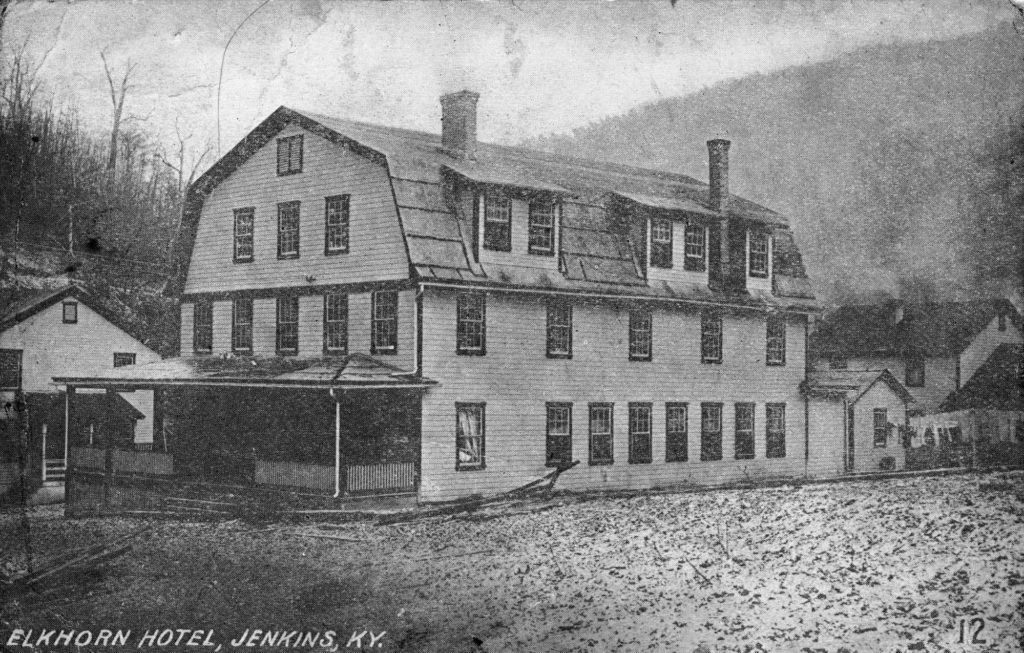
Whatever the true story of Joseph Zande’s death, we need to remember that at the beginning of the Twentieth Century it was immigrant laborers like him who gave their bodies, their health, and often their lives in pursuit of the American dream. The SV&E eventually sold to the C&O, but, decades later, once the Letcher County coal was gone, so were the profits. The trains stopped running and the tracks have been gone for years, but there are still reminders of the contributions made by men like the Zandes. On the downstream end of the spot where Zande died is a retaining wall of 18-inch-thick sandstone, much like the one two miles up Shelby Creek which was built in 1911. At one time there was a sizable Italian contingent in Jenkins, headed by men who wore coal dust and coveralls under the mountain but who put on their Sunday best for a photograph. Joseph Zande never became part of this Old World community. Although both his headstone and his death certificate state that he died at Jenkins, the Italian boy with the Austrian father probably never saw the town which had occupied so many of his thoughts and had been the ultimate object of his labor. If he did visit there, it was probably to spend some of his wages in the temporary store, visit the YMCA, or enjoy a young man’s Saturday night fling in the Elkhorn Hotel. He may have even visited some of his countrymen in the Italian section of Jenkins and dreamed of one day living in such a home. More than likely, however, 24-year-old Joseph died just a few miles short of his destination, having never visited the storied boom town at the head of Elkhorn Creek.
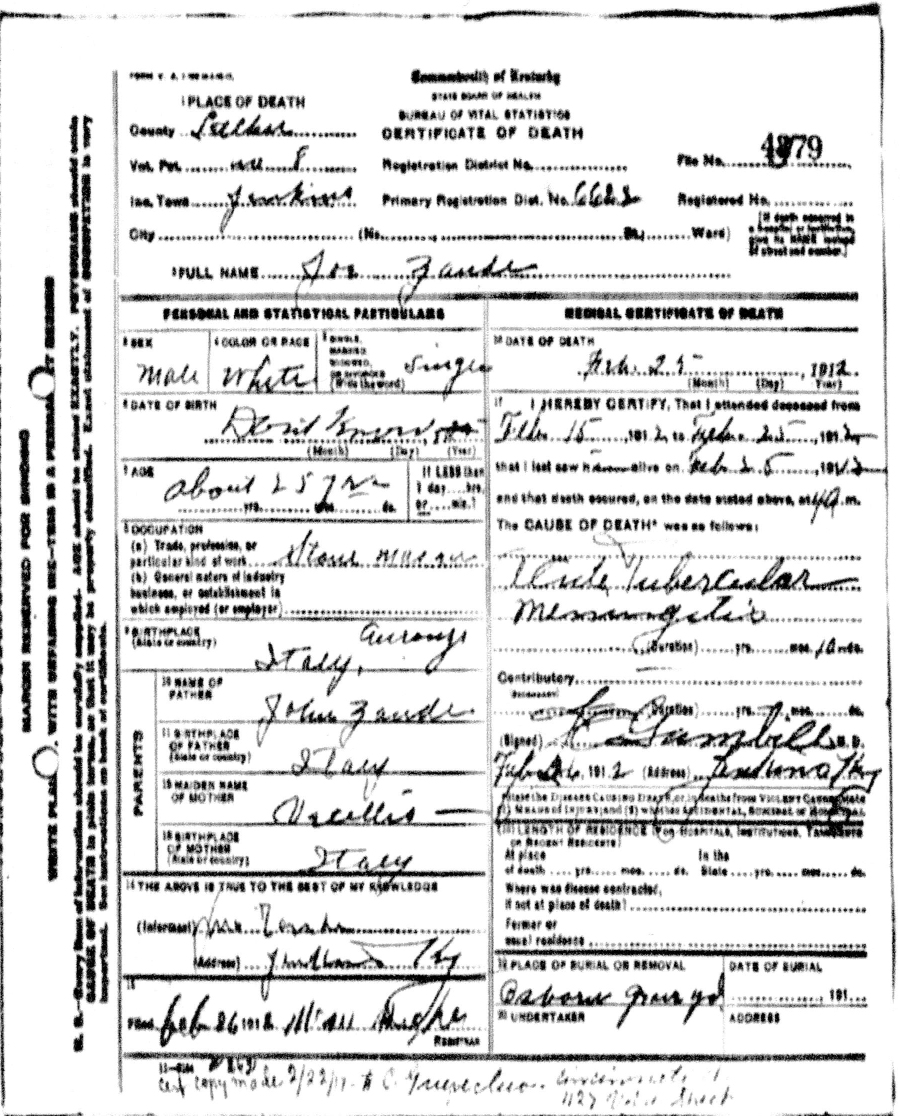
Who to believe, people who had heard the story or the company doctor?
FIVE MORE MYSTERIES
Italians like the Zandes were prized for their skill with stone. Blasting, cutting, sizing, and finishing, they were the ones for the job. There were other reasons railroads and coal mines hired immigrants: they were thousands of miles from home and, unlike the mountain men, could not walk away from a hateful job; most spoke little, if any, English, thus it was difficult to complain to management; economics had brought them to America and it was economics which forced them to stay; and, finally, there were scores of replacements waiting to take over for one who was killed or disabled. In short, the Italians and other foreign laborers were simply grist for America’s Gilded Age railroad machine.
Things often went wrong. As with Joseph Zande, they sometimes went terribly wrong. Unlike Zande, the names of some of the unlucky ones are lost to history. Six months before Zande’s death, the September 1, 1911 issue of The Big Sandy News reported the following account of an accident which occurred on August 26:
Saturday morning Drs. Thompson and Campbell [Gambill] were called by telephone to Shelby Gap to render medical and surgical aid to a number of Italians who were blown up on the railroad construction work of Ballard and Herring, contractors.
The men were working at the time of the explosion with others under an Italian foreman in a deep cut. A hole had been drilled down to the bottom of the rock cut– twenty-seven feet deep, in which seventeen kegs of blasting powder had been deposited, when all at once, for some unknown cause, the blast “went off,” instantly killing four Italians and fatally wounding another. Everything was done for the wounded man possible by the physicians but he died Monday morning at about eleven o’clock.
The contractors had the dead bodies carefully prepared for burial, ordered caskets from Pikeville, and had the men buried on a little hill near the camp.
Such accidents are to be deplored, but cannot be helped. They occur, and seemingly without any known cause, many times.
Foreign laborers, particularly the Italians, were often targets of discriminaion and persecution as related by The Citizen of Berea, Kentucky on October 19, 1911:
In an alleged effort to rid the section of the foreign element, dynamite was placed under the “shanty” where 12 Italian laborers were camping near Jenkins, and all were more or less injured, two of them perhaps fatally, in the explosion which followed. All would have been killed instantly, but the explosives were placed about the middle of the building, while the Italians slept in each end. The building was torn to shreds and it is miraculous that they escaped instant death.
AUTHOR’S NOTE: Several years ago, I spent an enjoyable Saturday with Attorney Lee Smith and his father, Henry. Early in the morning we visited an elderly lady in Jenkins who recalled her parents speaking of Zande’s death. We discussed that incident with her, then, out of the blue, she offered, “There’s five more buried on the mountainside across the creek in another graveyard.”
Henry Smith had for several years lived directly across Elkhorn Creek from Joseph Zande’s grave site and was familiar with the spot, but had never heard the story of “five more.” The second cemetery was behind and to the left of Henry’s former home, so we decided to visit that one also, climbing along a steep oil well road. It was almost totally in shade from trees that had grown up over the years. We searched as thoroughly as possible, but never found a dated headstone anywhere close to the time the railroad was built. We did, however, find many unmarked graves with only fieldstone markers.
I’m well satisfied that the “five more buried on the mountainside across the creek in another graveyard” are the ones cited in the newspaper article above.
Sadly, unlike Joseph Zande’s case, no one bought headstones and the identities of those five victims are lost to posterity.
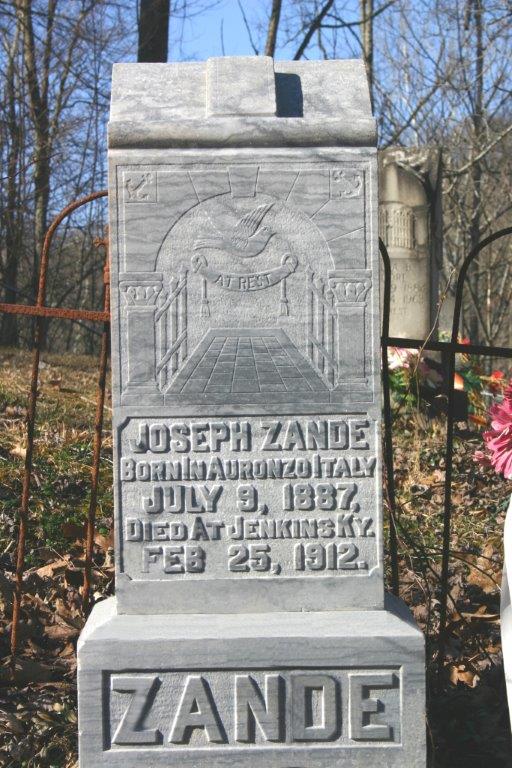
Joseph Zande’s headstone.
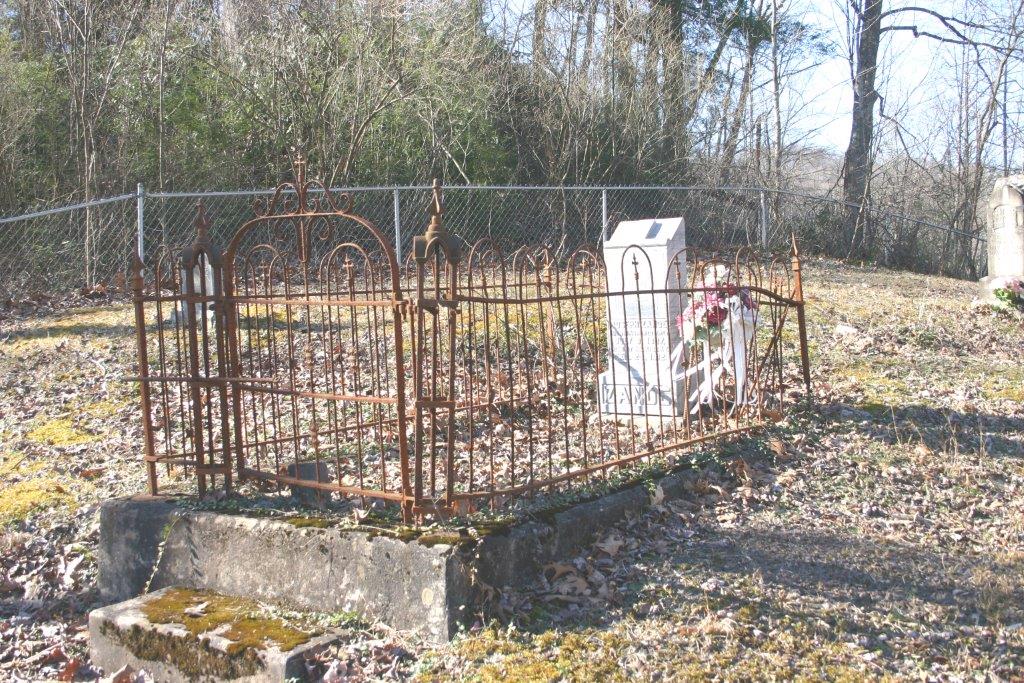
This wrought iron enclosure protects his memory.
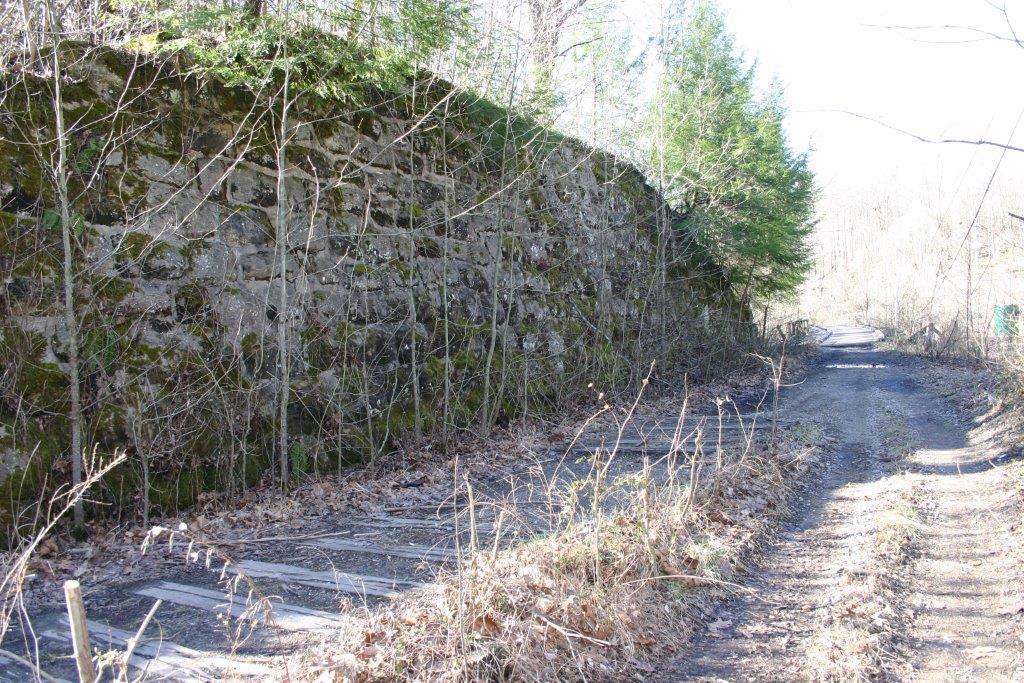
The railroad cut where Zande was killed. Locals said it was at the far end where the wall slopes downward.
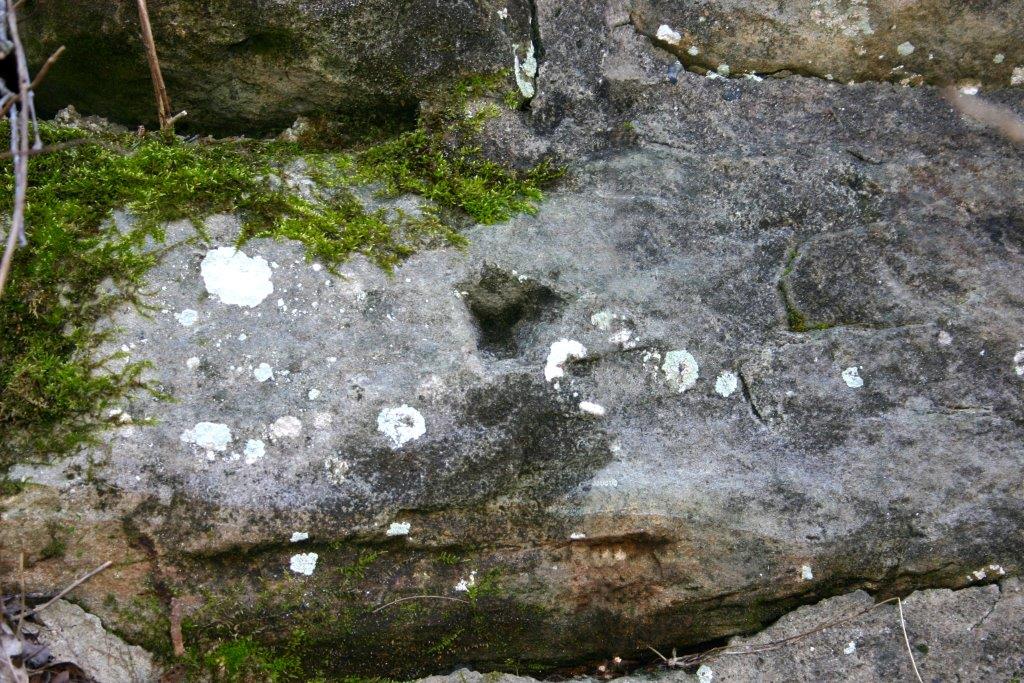
Star drill marks from 1912.
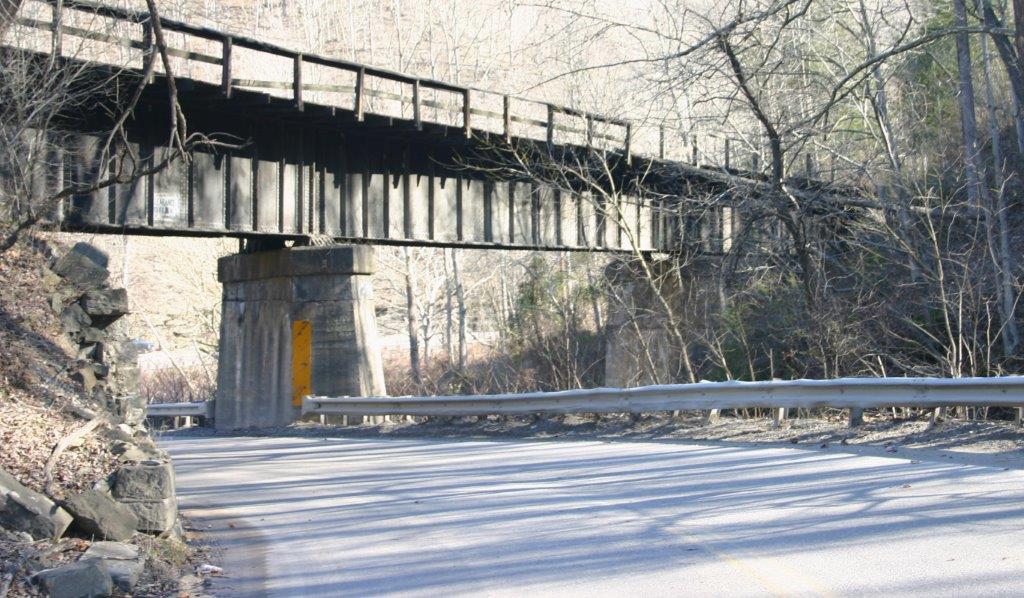
The fatal blast occurred a few yards past the far end of this trestle, which would have been opened for use shortly after Zande’s death.
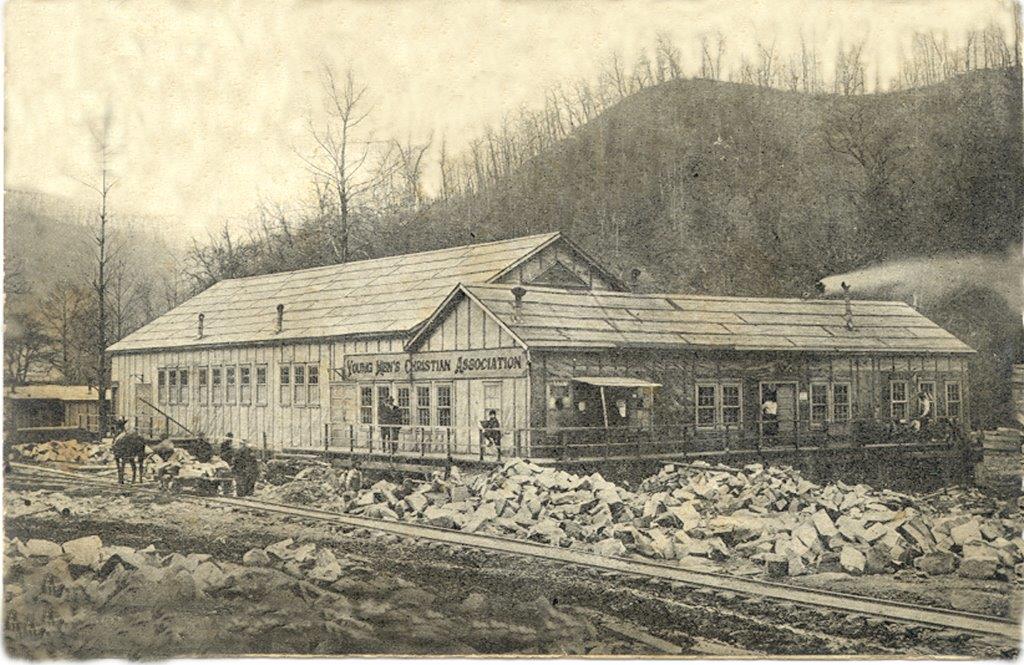
Jenkins YMCA (Above) and Hotel (Below),
the railroad workers’ havens at the end of the line.
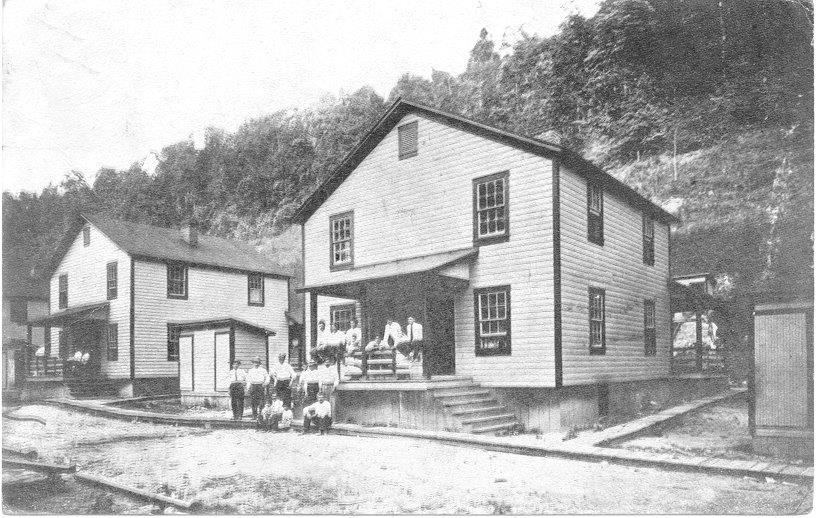
The Immigrant’s Dream: build a railroad, get a job as a miner, and save enough money to buy a home among folks sharing the same culture. (Photo: Italian Miners’ Homes in Jenkins)
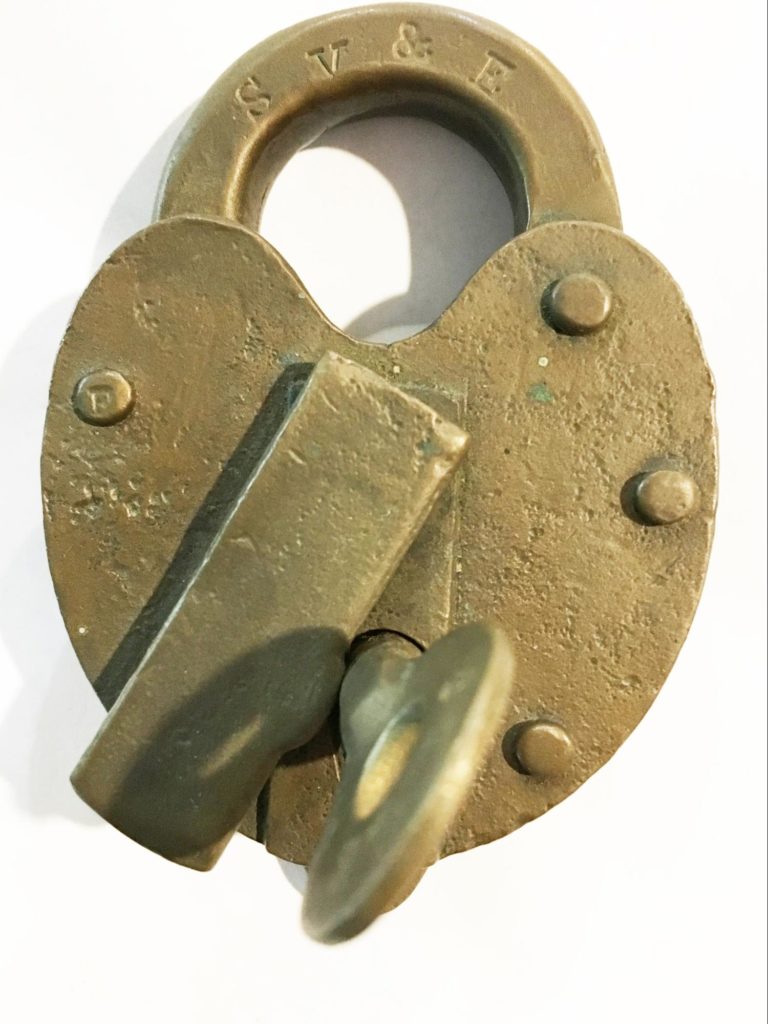
Railroad locks are some of the most sought-after collectibles from early railroad days. The SV&E example below is one of the few I have seen over the years.
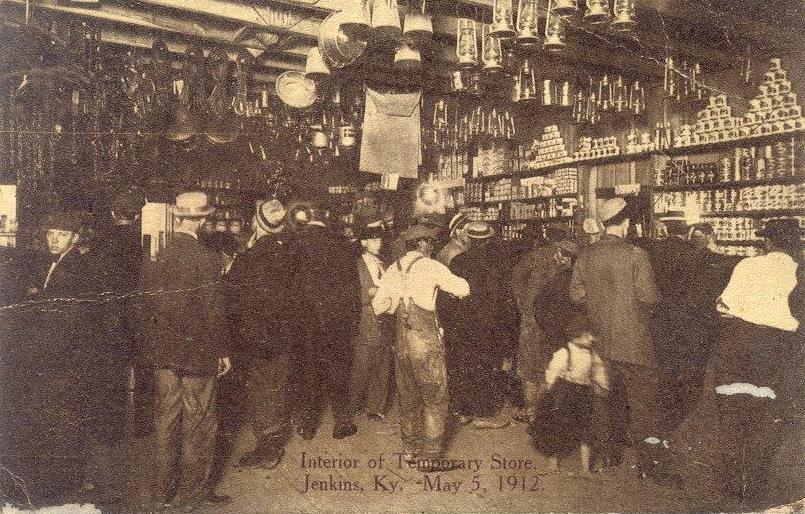
This Jenkins Company Store photo is dated May 3, 1912. Jenkins was initially supplied by a narrow gauge railroad which ran part of the way up the Virginia side of Pine Mountain, then transferred its freight to mule- and ox-drawn wagons for the final leg of the trip to Jenkins.
Jenkins sprang up practically overnight. Consolidation Coal management was very thorough in its planning. In the photo above can be seen the necessities of life in a small town, from kerosene lamps to shelves stocked with canned goods to wash pans and cooking utensils.
By the time this photo was taken, the SV&E Railroad would have been serving Jenkins. The hardware and other goods shown in this photo were probably brought up Levisa Fork to Shelbiana from Ashland, Louisa, Catlettsburg, or Pikeville on the C&O, then up Shelby and Elkhorn creeks to Jenkins on the SV&E.
The store did $12,000 in business during August 1912 alone. With inflation adjustment, that would equal $325,378 in today’s money.
The original C&O depot in Pikeville (Below) was a pass-through for SV&E shipments to feed and clothe Jenkins after mid-1912, as well as to build the town of Weeksbury shortly thereafter.
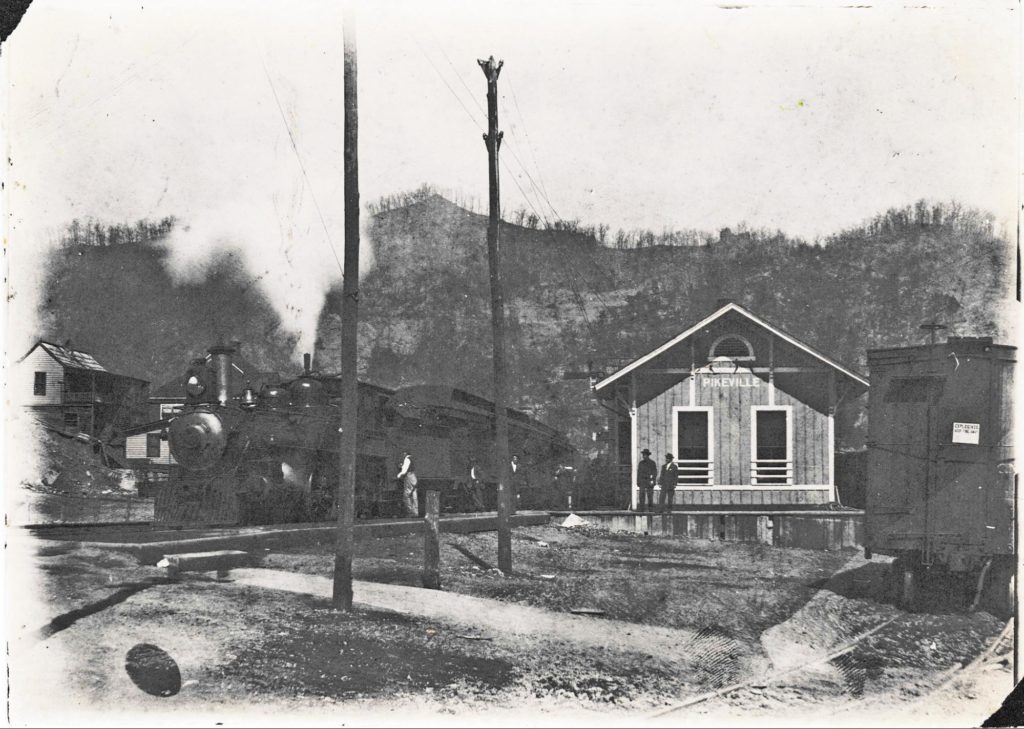
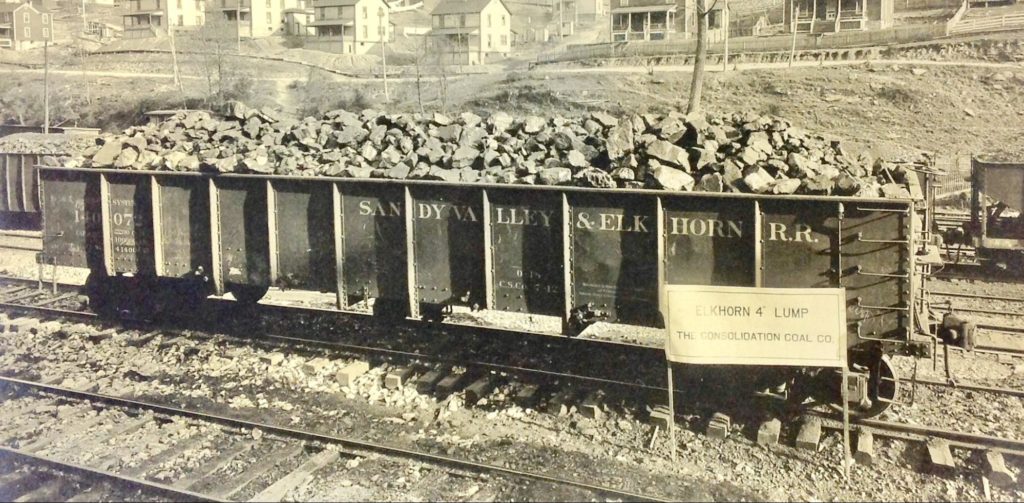
(Above) One of the 2,000 gondola cars ordered for the SV&E .
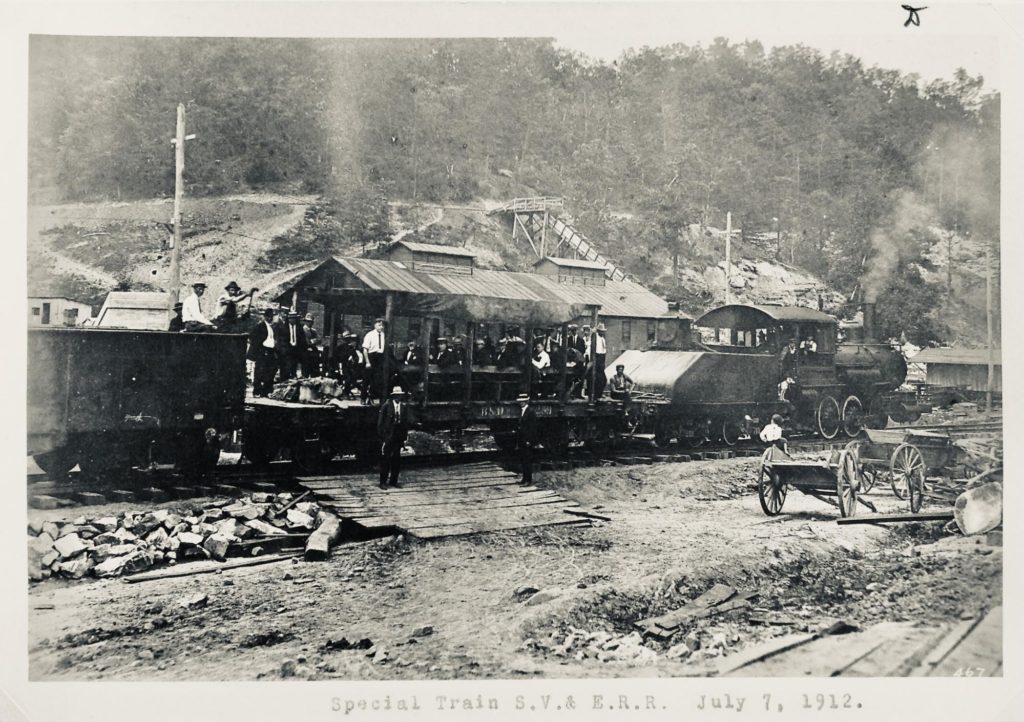
(Above) Special Train, July 7, 1912, with SV&E management aboard. The first passenger train would arrive a week later carrying officials of the three railroads the SV&E would serve. Regular passenger service began October 1.
The Big Sandy News of June 21, 1912, reported: “The people of Jenkins . . . are preparing to celebrate on July 15 the coming of the first regular passenger train on the Sandy Valley and Elkhorn into the industrial city. People for miles around, especially the country folk, many of whom never saw a railroad train, will be on hand to greet the coming of the train. Already freight trains are running into Burdine, a suburb of Jenkins.”
On July 12, officials of the C&O, B&O, and the Cincinnati, Hamilton & Dayton railroads left Ashland for an upriver tour of the C&O and B&O lines on the first passenger car to run from there to Jenkins. The Cincinnati, Hamilton & Dayton joined the C&O yard at Huntington to supply coal to Cincinnati and cities to the north.
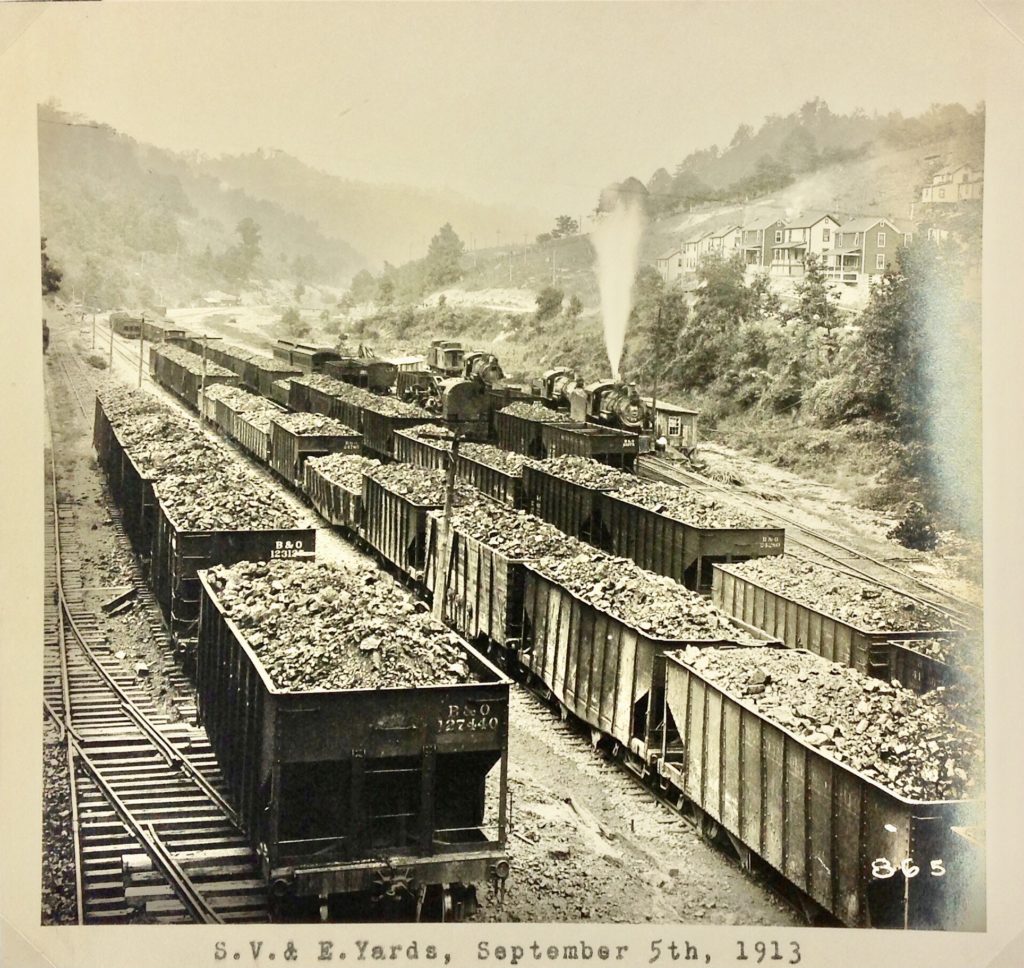
(Below) SV&E Railroad Yard, Jenkins. Look closely at the upper right-hand corner of the car on the left and notice the B&O logo. The SV&E was operated for a short time by the Baltimore & Ohio until it was sold to the C&O
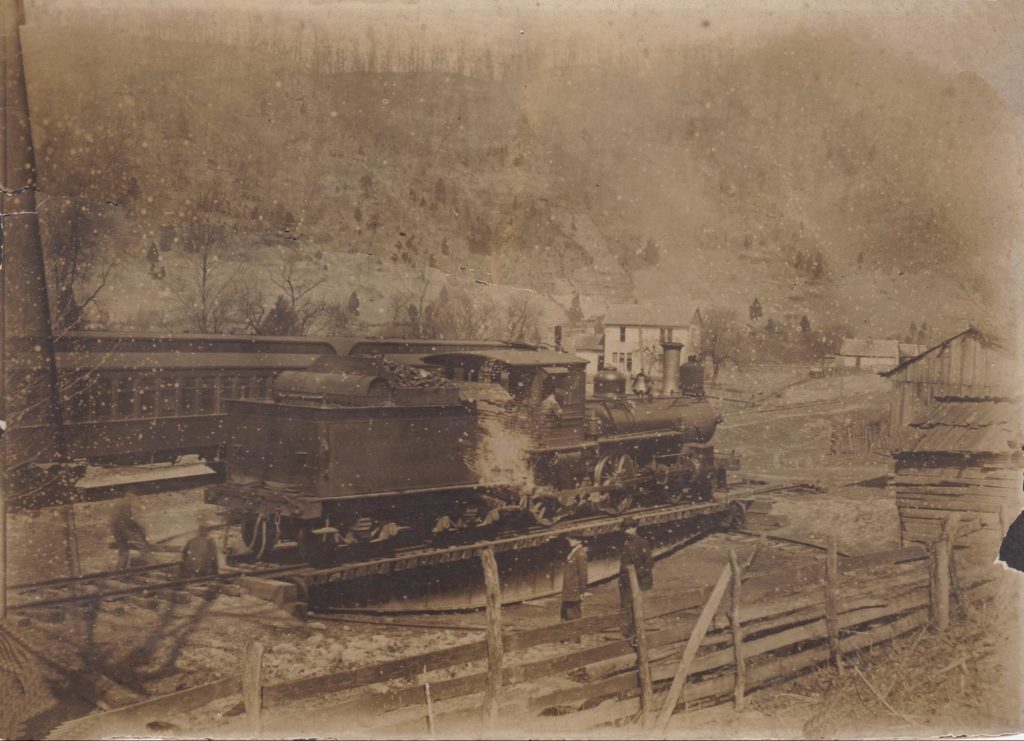
A turntable was a railroad necessity. Steam engines had to turn around to pull cars in the opposite direction. The one above was either at Jenkins or in Turntable Hollow at Pikeville.
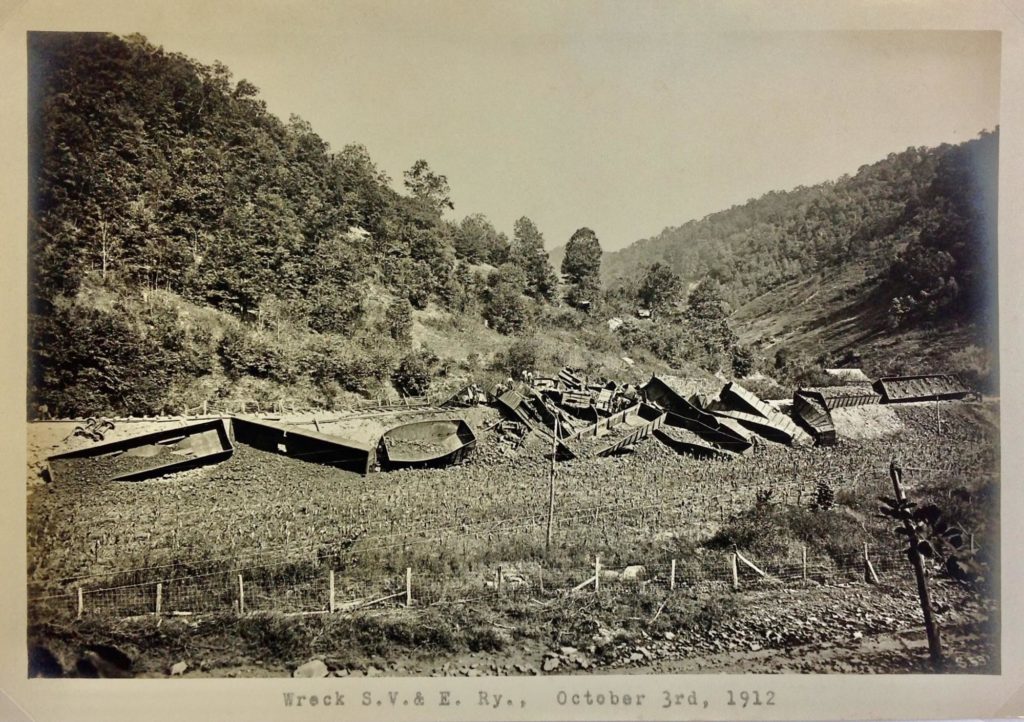
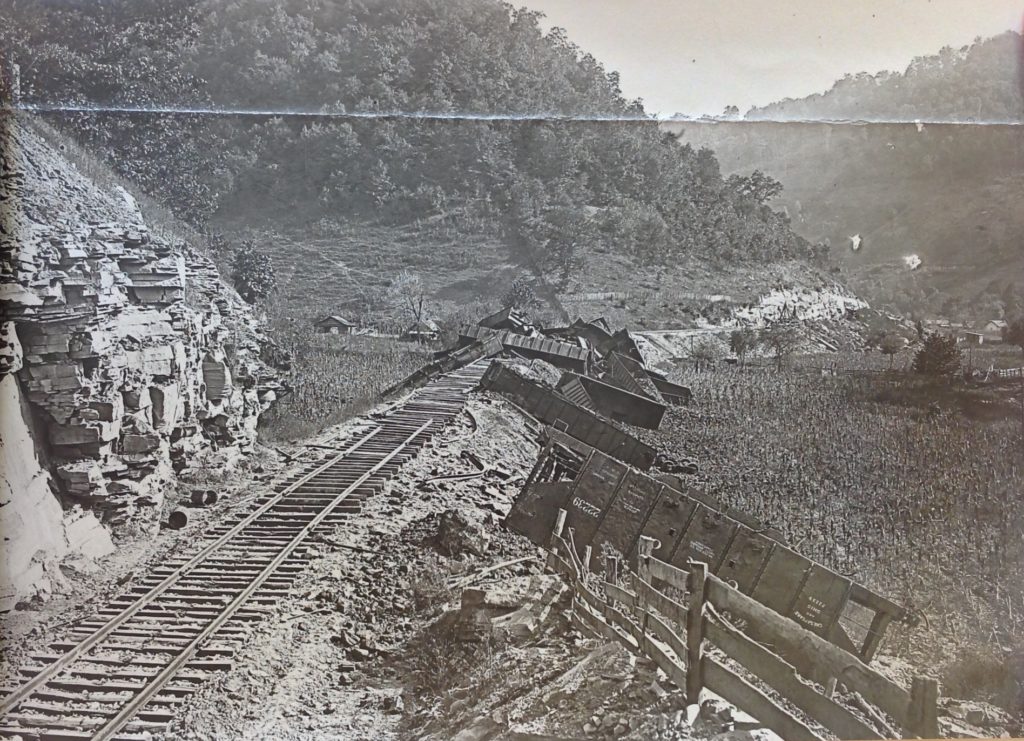
(Above and Below) A disastrous wreck occurred on the new Shelby Creek road Wednesday afternoon at 4 o’clock. A mixed train containing freight and passenger cars became uncontrollable on its way down at Shelby Gap, and when it reached the mouth of Three Mile Creek, which is three miles below Shelby Gap, ten cars of the freight section went into the ditch. Two brakeman [sic], Will and Leonard Kinney, and roadmaster, Howard Burpo, were aboard the wrecked cars. All three were injured, but Will Kinney was in the most critical condition. All three men were immediately removed to the Jenkins hospital and are improving with good chances of recovery.
Considerable damage was done to the tracks, and an engine and men with tools were forwarded from Shelbiana for the purpose of making repairs. (The Big Sandy News, 10/11/1912)
No sooner had the wreckage from the October 3 accident been cleared than there was another collision. The October 18 Big Sandy News reported:
A rear end collision, causing serious damage, occurred at the mouth of Long Fork of Shelby Creek Saturday night at 8:30. Passenger Train No. 1 was taking water at the Long Fork tank, when a mixed passenger and freight coming from Jenkins ran into the rear end of the passenger. As a result of the wreck, one passenger coach was burned, and another so seriously damaged that it can be of no further service, and three strangers who were passengers aboard the wrecked train were seriously, but not mortally injured.
This is the second smashup for the Shelby Creek road within the past nine days and it is time for those in charge to begin to take some care for life and property entrusted to their care.
Conductor Charles Levy was in charge of the mixed train, and it is said that neither train carried either headlights or rear markers.
Early railroad history is rife with accounts of collisions, which are easily understood when safety was neglected as in the case above, but more perplexing are those accidents and fatalities which involve persons walking along the rails. One prominent man in the Virgie area was killed in such an incident:
W.B. [William Burnside] Johnson, wealthy merchant and timber dealer, met an untimely death on a railway trestle near his home on the Shelby Creek railroad last Friday morning. Mr. Johnson and two of his sons, it is said, were walking home from the Vergie [sic] station, and as they were crossing the trestle a special passenger train bound for Jenkins overtook them. The young men had reached the other side in safety, but the train came upon Mr. Johnson on the bridge, and he was instantly killed.
Below) SV&E Railroad Tunnel, Virgie
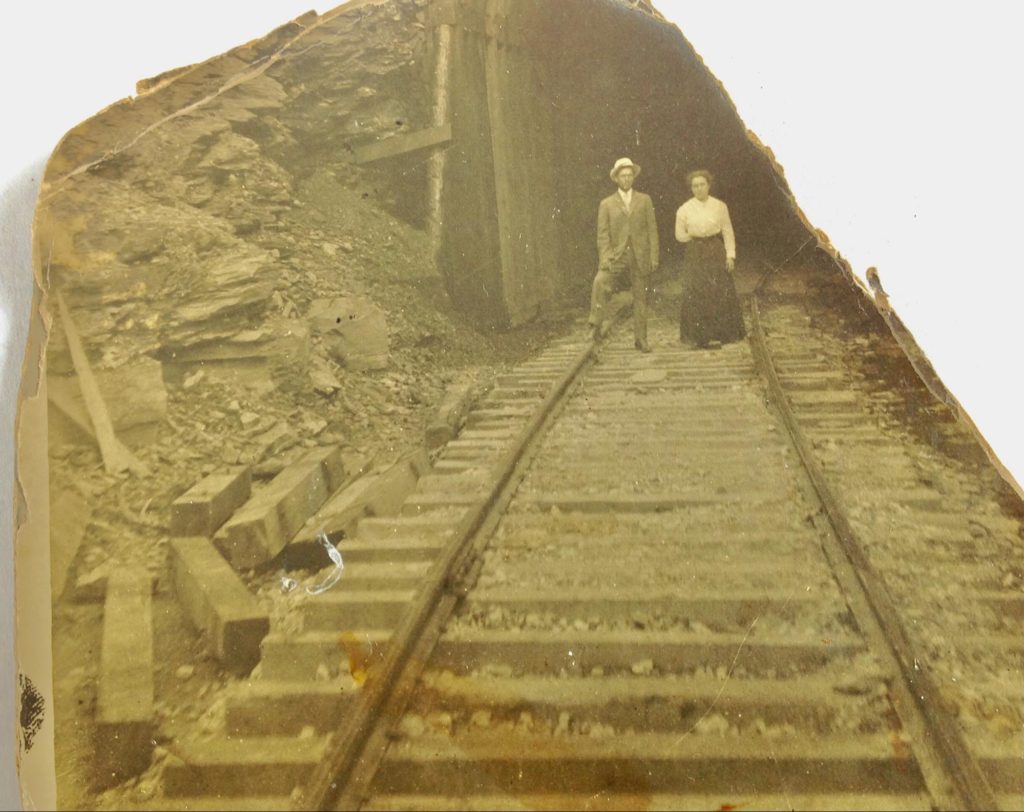
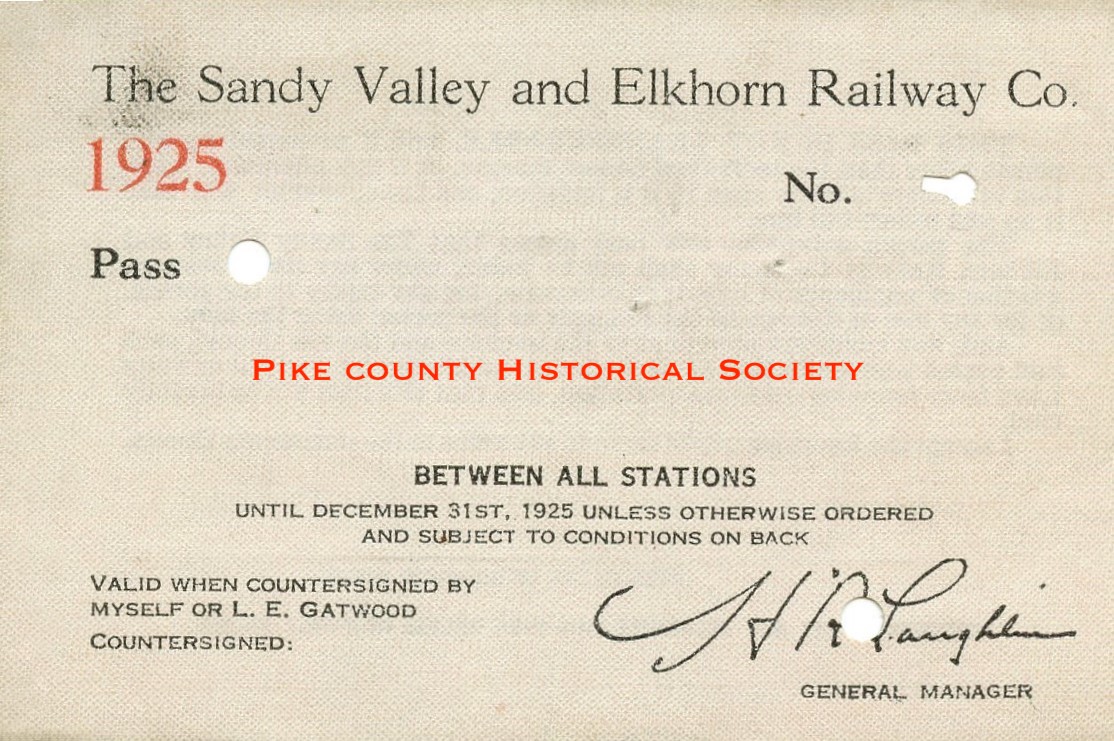
Rail Road Pass