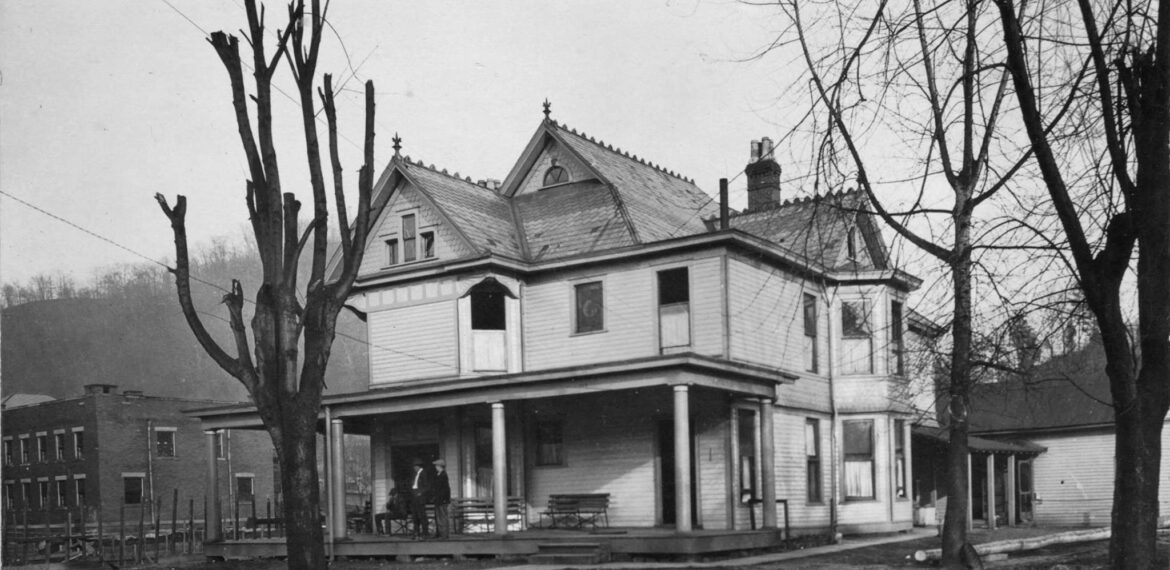
As we enter into another Landmark Centennial Celebration, on December 25, 1924. A 56 bed hospital opened its doors for the first time. The state of the art facility was named The Methodist Hospital of Kentucky. The Methodist Hospital of Kentucky and its predecessor Pikeville Methodist Hospital have served the Community of Pike County, and the East Kentucky Region very well for nearly 100 years. But there are very few more medical treatment facilities at Coal Camps and small rural doctors at or before the completion of The Methodist Hospital of Kentucky.
Trachoma
Trachoma , historically known as granulated lids, was highly contagious form of chlamydia that could cause irreversible damage or blindness to the eyes. The inside of the eyelids would scratch the eyes like sandpaper. As a result of this, the cornea of the eye would become red, inflamed, or even develop ulcerations. In 1900, statistics showed that half a million people in the United States had blindness, about sixty percent of those became blind as a result of trachoma. The eyelids become thickened and the eyelashes become distorted. Additionally, the tear ducts become clogged so that the eyes eyes are continually full of tears. Some developed photophobia or an extreme sensitivity to the light; this can also lead to the complete loss of the use of the eyes. Trachoma was, and is, a highly contagious disease that was most often communicable by drying the face on a towel shared by someone with the disease, and, in schools, it could be spread by pencils, the exchange of books, and other closed contact methods.
Soon after the Civil War, an alarming rate of blindness was starting to show its ugly face across the Appalachain Mountains of Kentucky, Virginia and West Virginia. When a full blown number of Trachoma cases starting appearing across the mountains. The infection according to Dr. Moore of Hunington, West Virginia. The disease was in introduced by soldiers under James A Garfield’s command, whose army operated very extensively in these regions of the Big Sandy River, North Fork of Kentucky River, parts of Clinch and Powell River in the fall of 1861 and 1862. Soon after the introduction of Trachoma Disease in mountains, it spread rapidly through the population because of lack of sanitary precautions. Mountian folks didn’t know an eye disease even existed. A large number of blindness started showing its ugly face in family relatives, the most common cause was simple as sharing a rag or towel to whip their face. After survey interviews with school kids in the early 1900, Trachoma Doctors were soon discover that some grandparents of school kids had been blind years, not knowing what cause it. What the introduction of the Mine Coal starting to pop up over the coal regions of Appalachain, the problems of Trachoma infection rates was nearing 10% of population.
In 1912, the United States Congress passed a bill that appropriated money which enabled the U.S. Public Health Service to study the prevalence of trachoma and other communicable diseases in the United States. In the Summer of 1912, an investigation into the prevalence of trachoma in the Eastern portion of the state of Kentucky was conducted by the U.S. Public Health Service at the request of Kentucky’s State Board of Public Health. The U.S. Public Health Service conducted surveys throughout the Appalachian region of the United States. The heaviest amounts of infection appeared to be in the junction of Kentucky, Tennessee, and the Virginias. The study conducted in 1912 in seven Kentucky counties found that, out of 4,000 people examined, 500 cases of trachoma were found. As time progressed, the study expanded to other Kentucky counties, and out of 18,016 people, 1,280 were found to have trachoma; that is about 7 percent suffering from trachoma. The type of disease was severe, and its mutilating effects were often seen in this population. Left untreated, the disease more or less remained throughout the lifetime of the individual leaving him or her in constant bodily discomfort, damage to the eye, and “constituted him a menace to his neighbor.” Essentially, untreated trachoma was a chronic disease that lefts its victims totally blind. In addition to the dangers of it spreading it was also a veritable scourge in the regions it affected. As such, in addition to the importance of the ophthalmologist, it was also critical to involve public health officers. It quickly became evident that in the thousands of cases of trachoma in Kentucky, prompt relief from a public health standpoint, as well as a personal standpoint to the patient, become a top priority. The U.S. Public Health Service determined that trachoma hospitals could be operated at a comparatively low cost and it became the duty of the State and local authorities to establish a sufficient number of these hospitals in infected regions to be within easy reach of trachoma patients.
One of the first Trachoma Hospitals established in the United States, was based in Hindman, Knott County, Kentucky in the fall of 1913. One huge reason for establishing a hospital base in Hindman was because the Trachoma infection rate in Knott County were about 10% of the population rate. After the Trachoma Hospital had accomplished its purpose at this location. The Trachoma Hospital was transferred to Pikeville, Kentucky in September, 1916. But the facility in Hindman still maintained one Doctor.
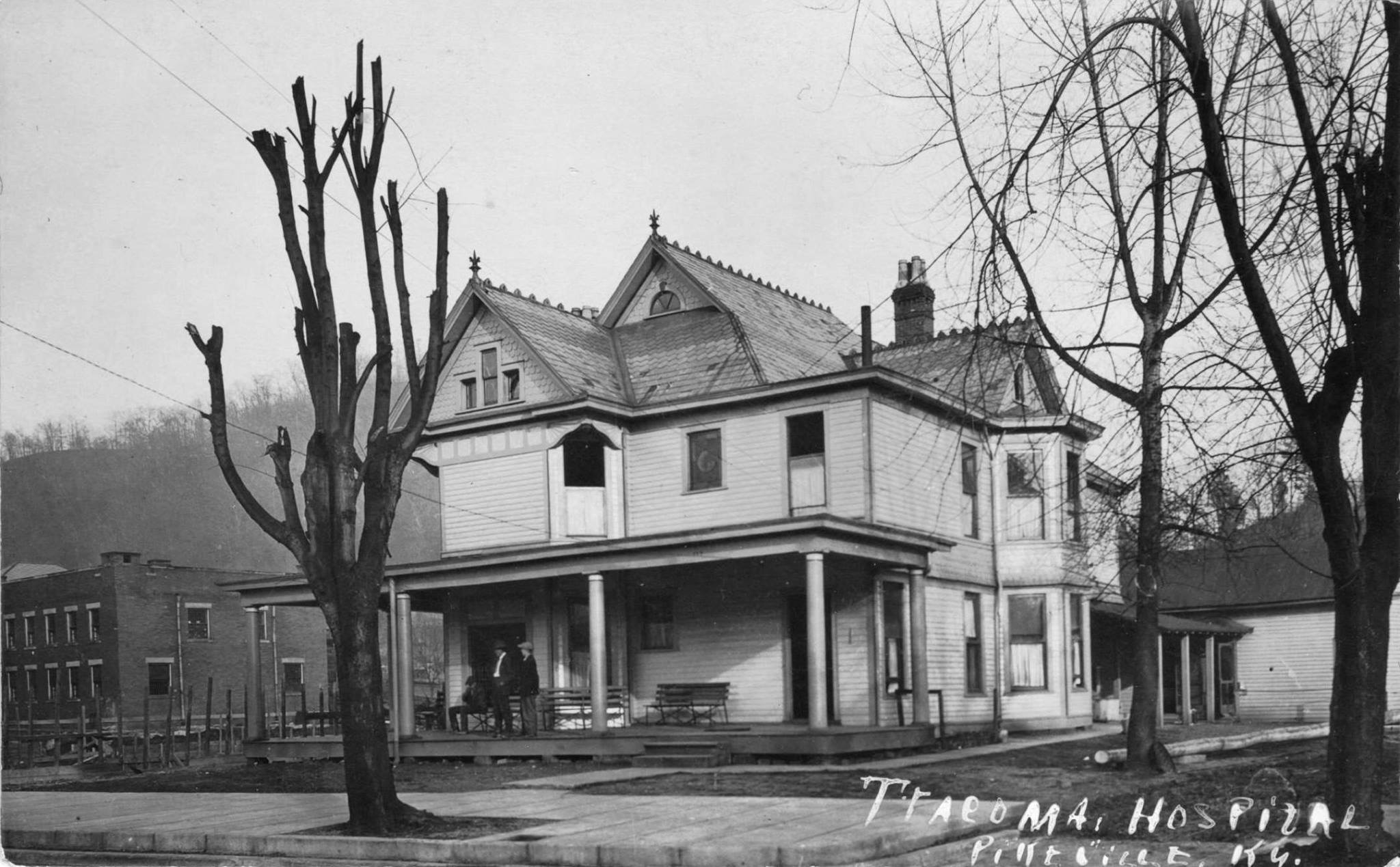
Pikeville provided an excellent, extra-large structure, accommodating 25 patients. The new location in Pikeville proved to be a good one, as is seen by the fact that the amount of work done is limited by only by the capacity of the institution. The enthusiasm of the patient and the people in general has constantly increased. The location for the Trachoma Hospital in the Fall of 1916 across Caroline Avenue on Main Street.
In the summer of 1917 a laboratory was also established in connection with the Trachoma hospital at Pikeville, was placed in the direct supervision of Dr. William B Wherry. Trachoma Hospital at Pikeville, treated patients from all over the country. Patients coming as far away from Seneca, New York, even from Chicago, Illinois. Officially at this time, the Trachoma Hospital would be the largest medical facility of its time.
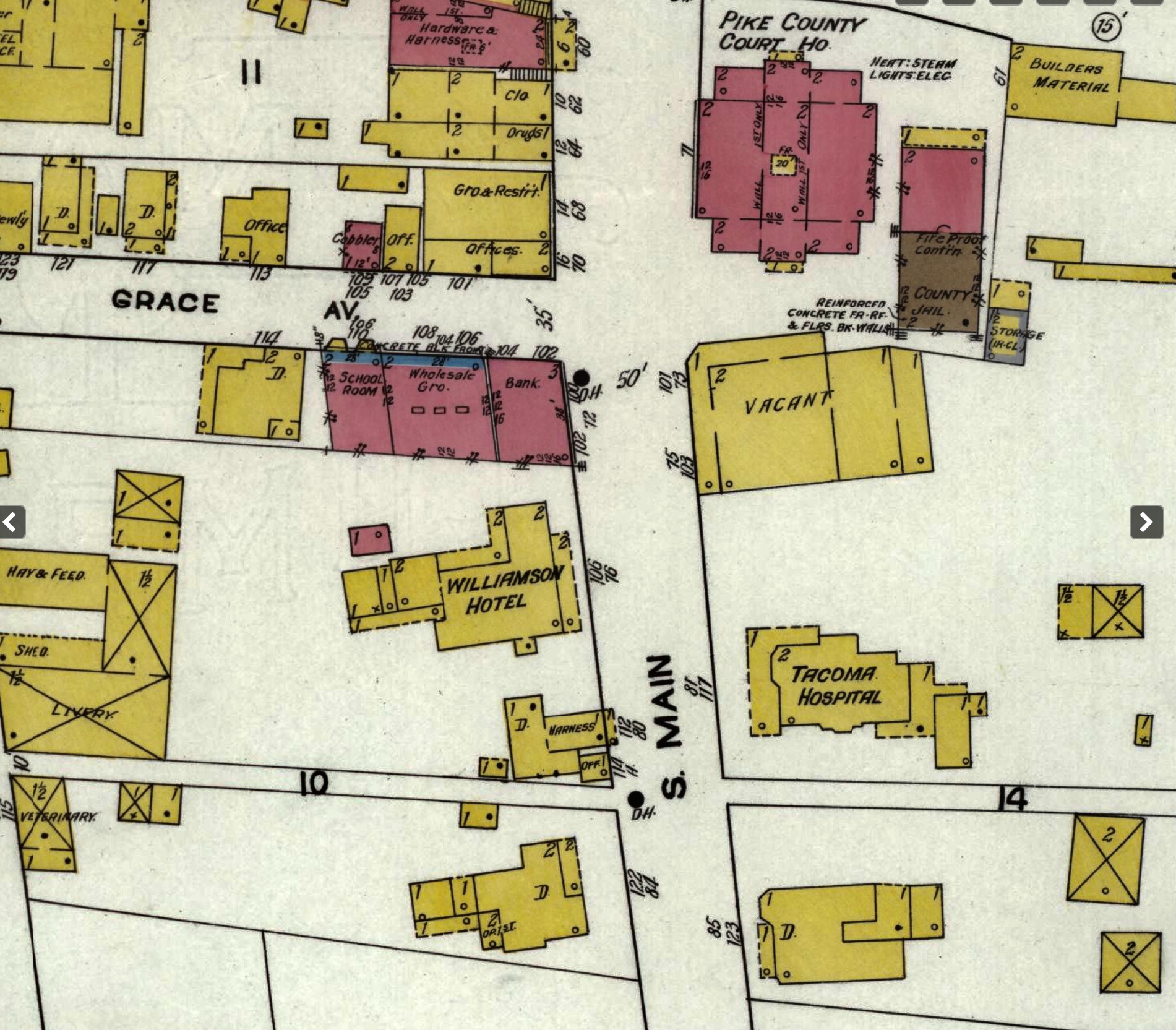
The Trachoma Hospital, located in Main Street, directly across from today’s US Bank Building.
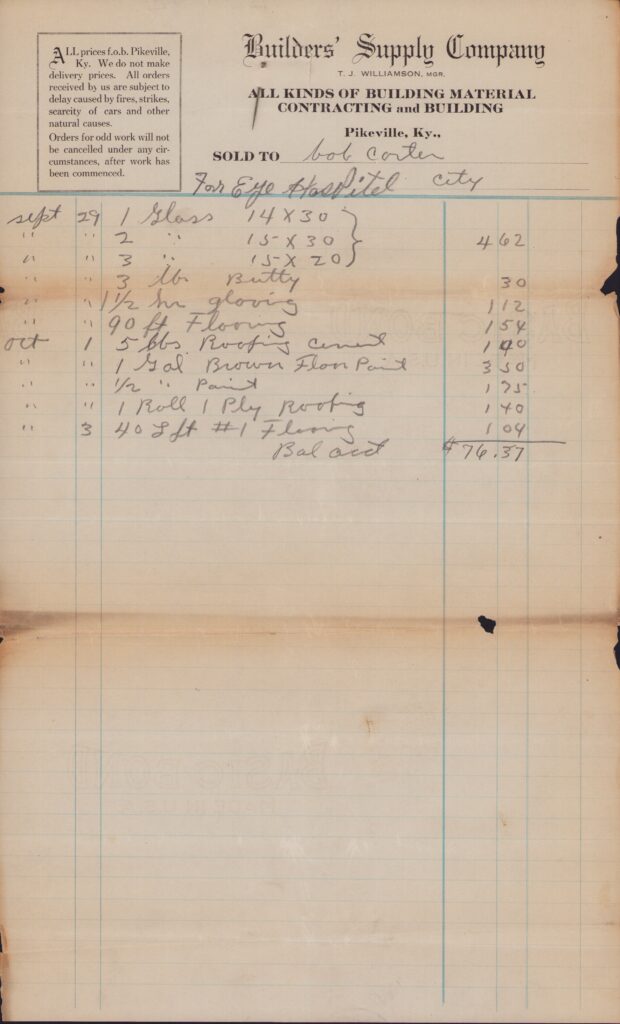
1923 Builders’ Supply #1
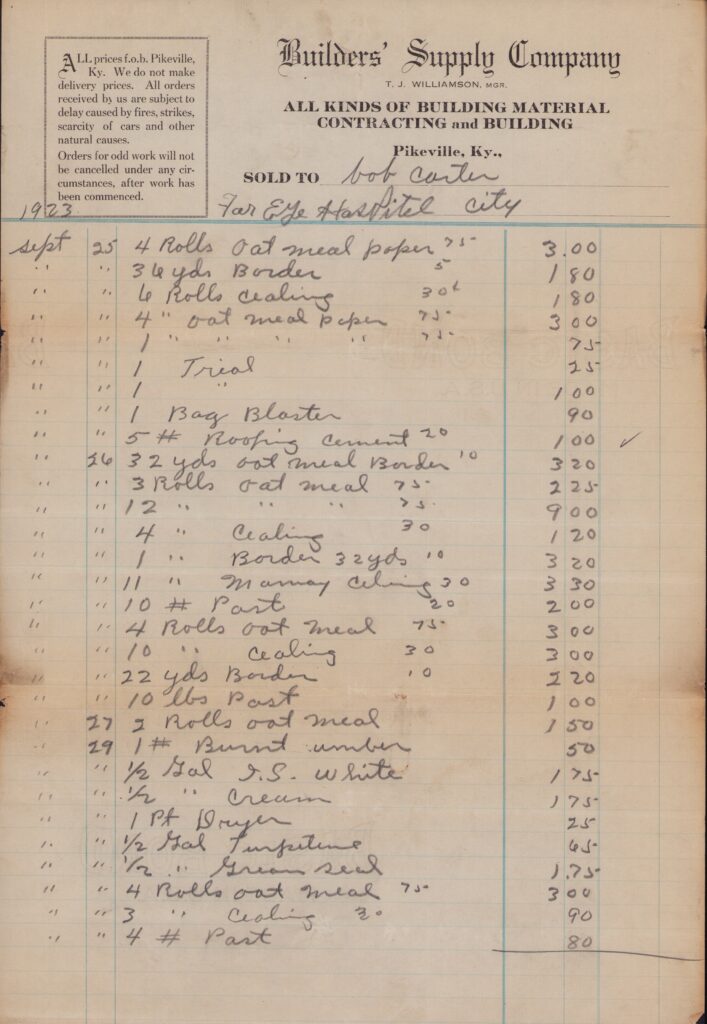
1923 Builders’ Supply #2
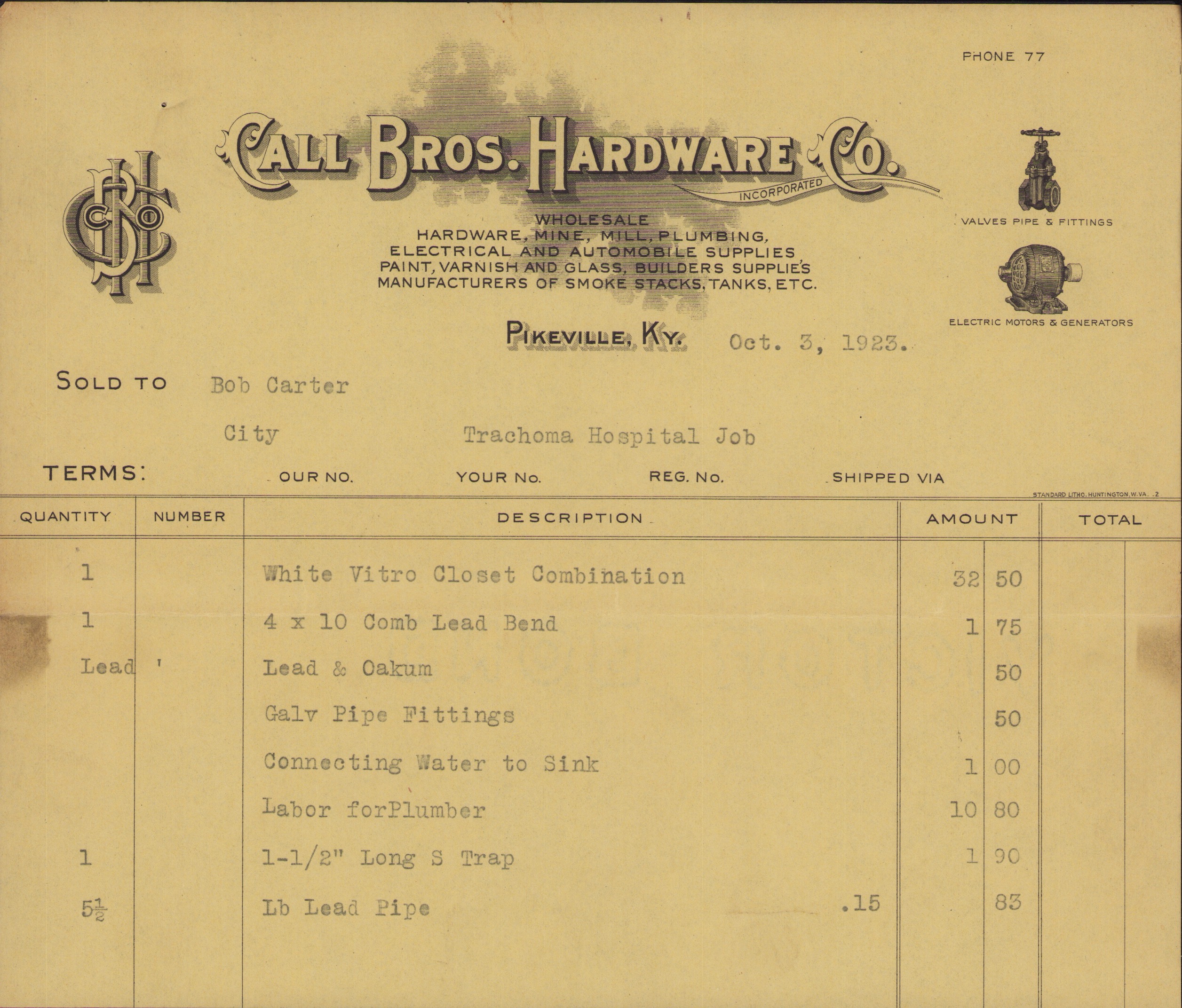
Call Brothers Hardware Co. #1
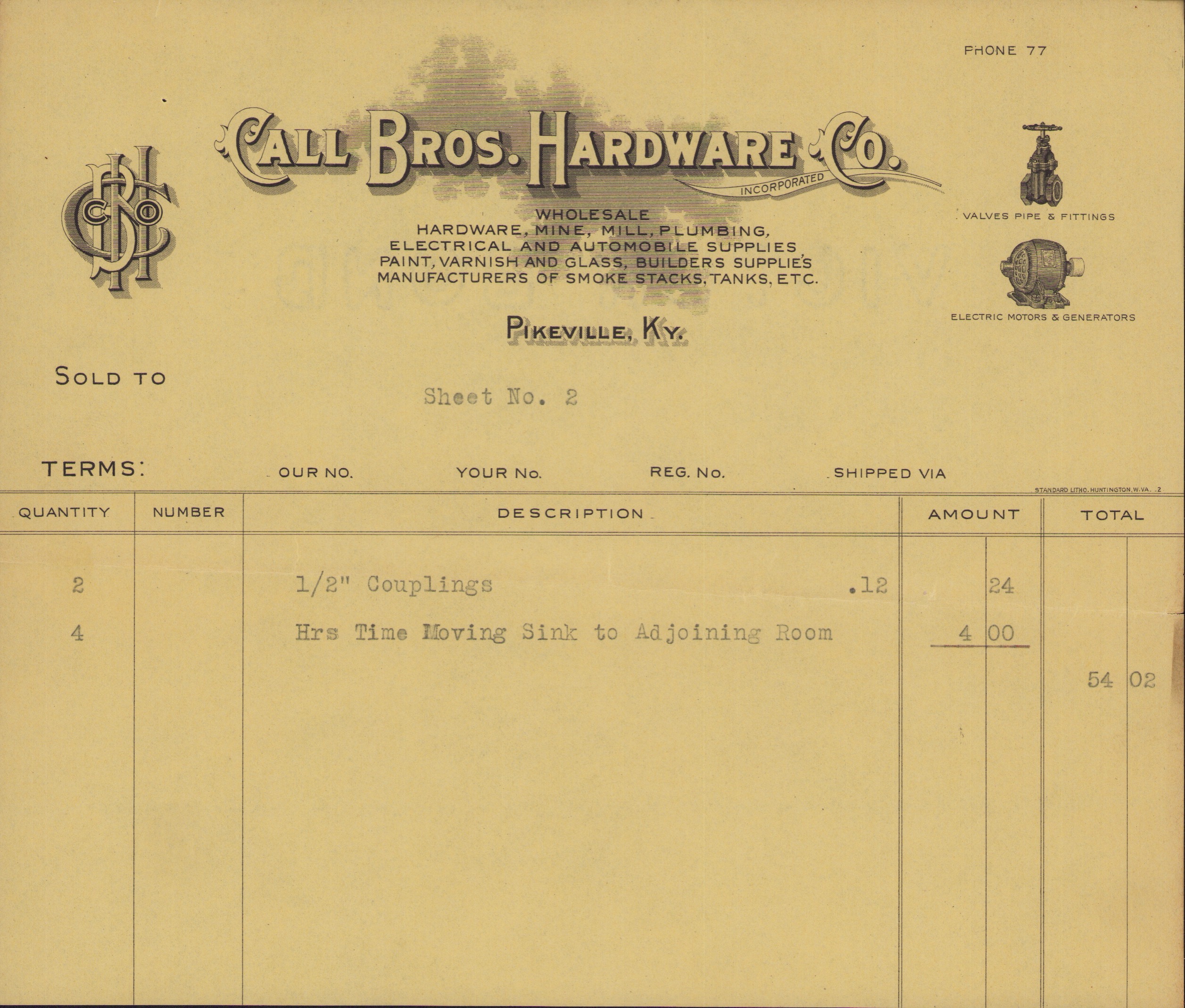
Call Brothers Hardware Co. #2
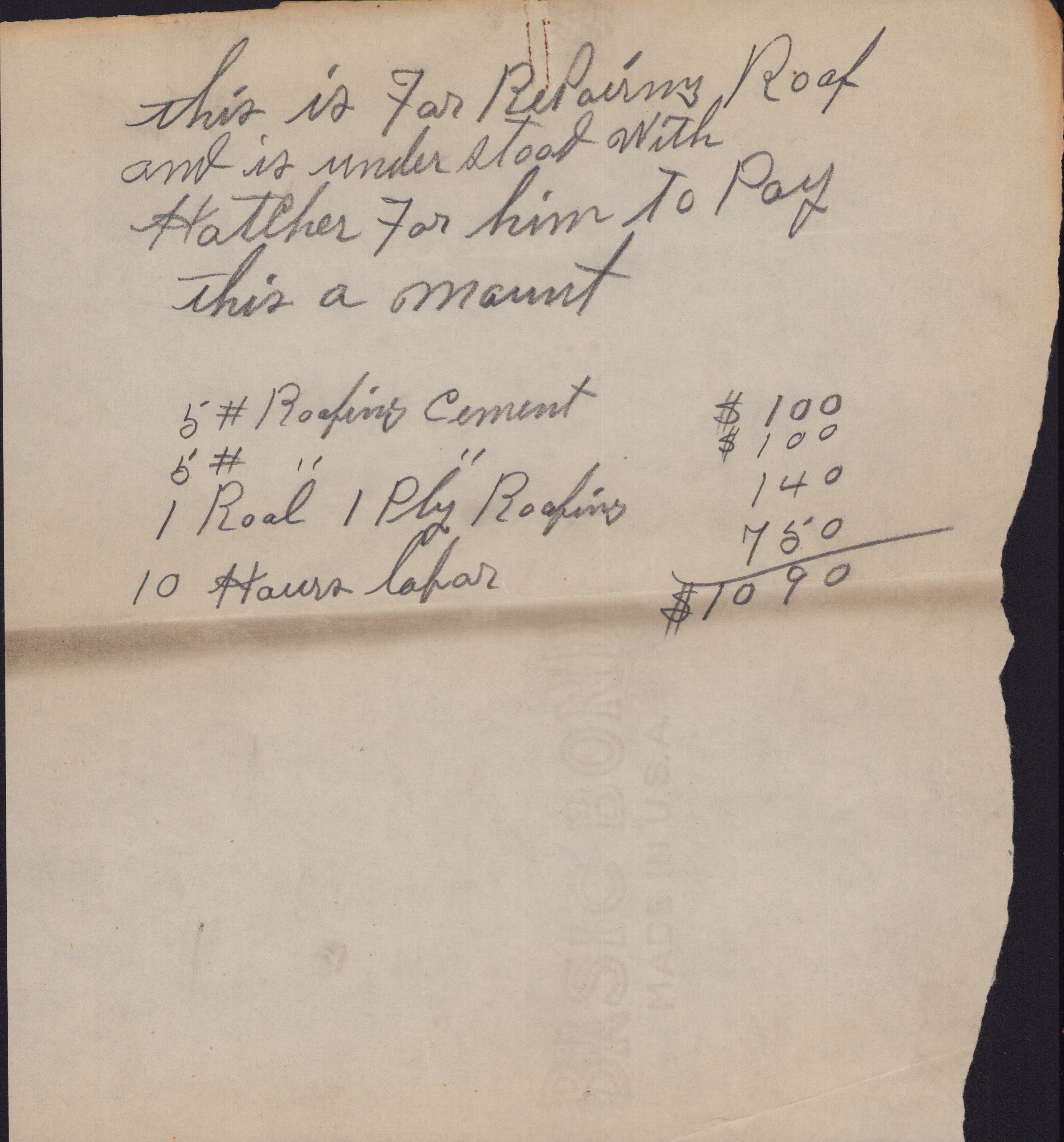
R.L. Carter, Labor & Material Statement 10/ 23/ 1923 #1
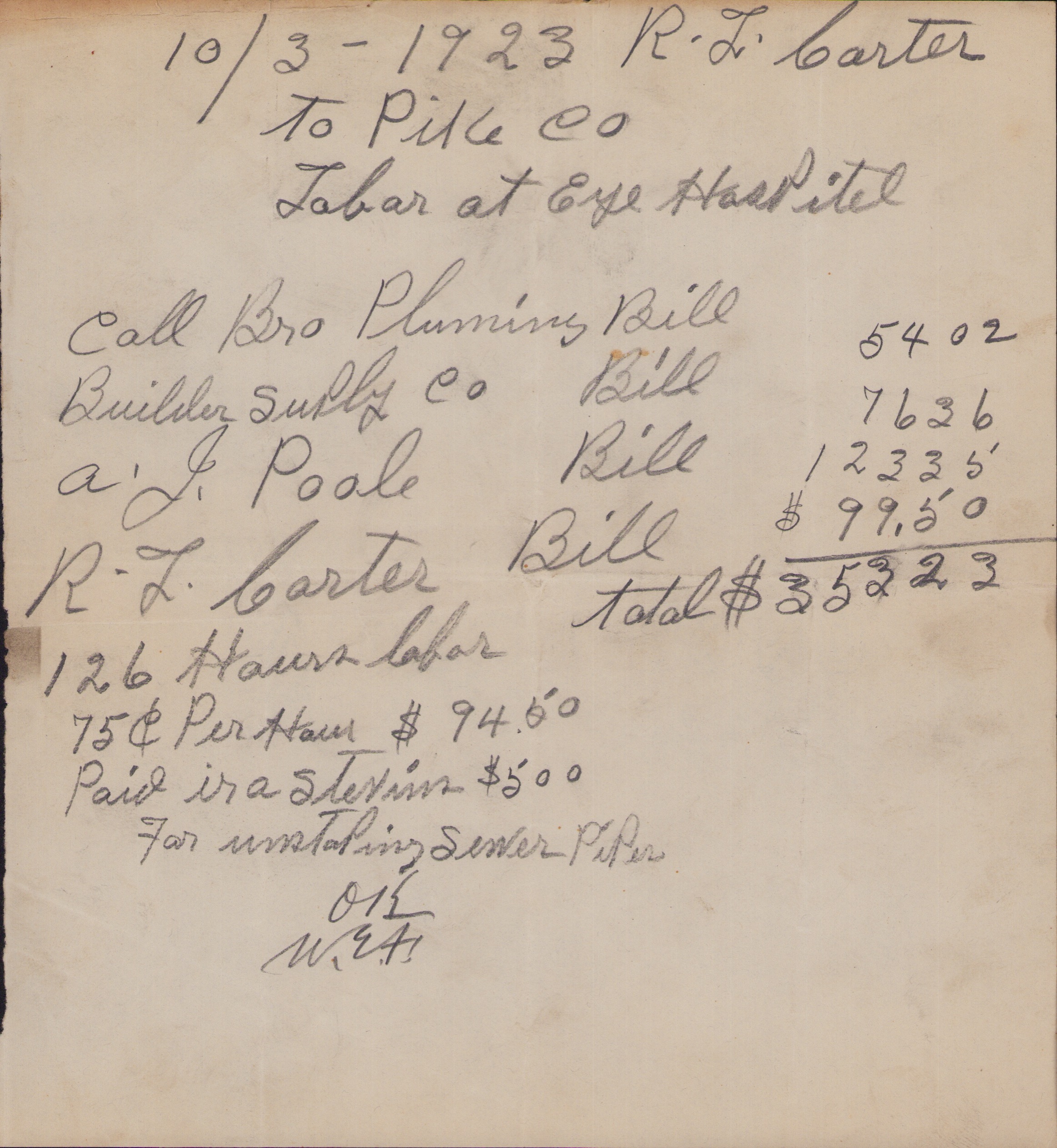
R.L. Carter, Labor & Material Statement 10/ 23/ 1923 #2
The Pike County News 1932