Table of Contents
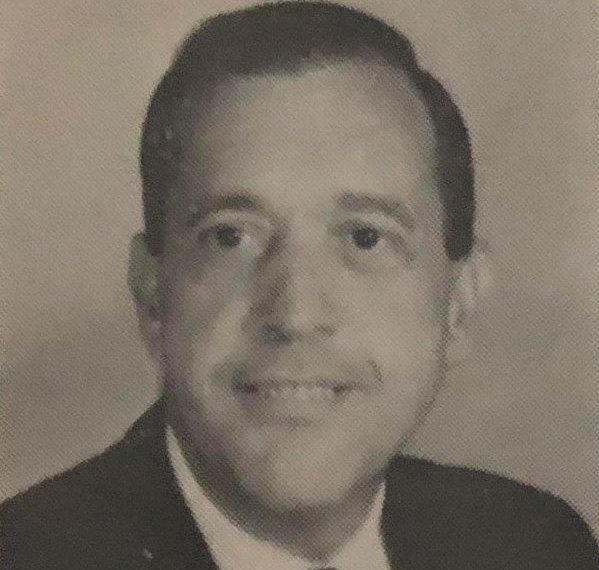
Quentin R. Howard is perhaps best remembered as the founder and editor of Wind, a nationally respected literary journal. To be fair, his reputation should not stop there. The Kentuckian who provided a forum for writers around the globe was himself a gifted story teller and poet.
Howard was born September 10, 1918 on a farm at Johns Creek in Pike County, Kentucky, the youngest of ten children. His rural upbringing would later inspire many of the rustic scenes in his prose and poetry. In the long narrative poem “Tell Me no Sad Tale,” he recalls:
Ten Summers I was called pisspants,
but I watched cocoons open, and
chased them up and down
over and out yonder.
The farm boy the neighbors called “a jasper,” who swam naked in the Big Sandy River and threw rocks at the bully twins “Cack and Mack,” had the sensitive heart of the poet.
Moma wrung a hen’s neck
for dumplings and Brother Barney…
For a month I burst eggs in my hands
to keep them from dying
later with wrung necks.
Young Quentin’s parents, though not impoverished, were, nevertheless, unable to provide him with an education beyond the rural schools. He earned money for college writing articles for The New York Times, Grit and The Christian Science Monitor. He earned a BA from Morehead, an MA from Vanderbilt and did graduate work at Peabody College in Nashville. He spent the next thirty years working as a teacher and high school principal.
Writing poetry from his farm on Johns Creek, he saw his work appear in numerous regional and national magazines and anthologies including Approaches, The Laurel Review, Bitterroot, Folio and Contemporary Kentucky Poetry. His poem “The Return” was published in Traveling American With Today’s Poets by Macmillan in 1977. Leaves of Laurel, a small volume of poems, was published in 1964. A collection of Howard’s essays, which first appeared in The Christian Science Monitor, was published by Pikeville College Press as Down a Dusty Road in 1967.
In 1971 he published the first issue of Wind, a journal of prose and poetry that ran for more than twenty years and became an outlet for well-known authors, as well as talented newcomers. Jesse Stuart and James Still were Wind contributors. Some of the first work of Shannon Ravenel, former director of Algonquin Books of Chapel Hill, appeared in its pages. The semi-annual journal, funded with Howard’s own money, was voted as one of the top 10 small literary magazines by Writers Digest in the mid-eighties.
In an article published in the Appalachian News Express in 2005, Bruce Hopkins provides the following snapshot of the author in his prime.
“Quentin Howard may be better remembered by his students at Johns Creek High School for his creative process. Before air-conditioning, classroom doors were opened to catch whatever breeze came through the halls and students would often hear Quentin at his typewriter in the principal’s office banging out a new poem and humming some old Baptist hymn. But if he made a typo the students were often treated to an astounding blast of well-delivered oaths until he put in a new sheet and began typing and humming again.”
Quentin Howard, farmer, educator, editor and poet died April 26, 1998 at age 79.
Contributor- Gayle Compton
In the Corn Land
In the corn land I move up one stalk,
watching tears streak tree thighs in prison weather.
Wandering lost,
I spoke to a canopied beech on Knob Hill,
waiting an eternity for a reply from the
depository holding old echoes.

I move up another stalk,
then spider-like
rest to spin a web.
I cheer at the escape:
A lone catbird dive-bombing a slap-happy cicada.

Far down the snake trail
lively Saturday music of banjo and violin
shake Aunt Sally's pump-knot hair
into flowing cornsilk.

As the C & O freight, 20 miles away,
clack, clack coal dust into prisms of sun,
hickories drop scaly bark in early summer.

Thoughts fog my view over this trespassed land, as
the dead cornfield offers woodchucks
a welcome feast on bones of its husks.

Suddenly, the green-faced boy
	(is it Milford?)
comes to me with the dusk
holding a yellow fish.

I turn away to watch the twins,
Cack and Mack, far below,
surrounded by birthing fodder shocks,
step off 15 paces from the diseased barn,
the shoot the Clabber Girl between the legs
with BB guns.

Why does Aunt Mattie keep ticing, ticing,
that them two bucks will grow up wild as
sassafras patches?


From Traveling America With Today's Poets 1977
Going Home
The C & O train, nosing through canyons of rock,
Noisily enters Floyd County late
Going eighty-two miles southeast from Ashland.

Fetid shacks, perched on gray cliffs
Reflect as mansions in the still dead river below.

My head splits with clacks of wheels on rainy rails.
(I wish I could escape the rain.)

With every stop, there are thirty-two, empty feelings
	claw at my insides,
Knowing I am getting closer home.

I am glad the fly-specked window
	further distorts my face.

I escape by watching the river mansions.
Suddenly, the pale woman in an ermine cloak
With swollen lips the color of overriped grapes
Drops tears from powder-puff eyes,
Walks on the river, still beckoning me to follow.

At Dwale, the nineteenth stop,
A black-shawled purple lady laboriously climbs aboard.
Empty booths call to her but she comes to me
Entices by my uniform and overseas stripes.

I feel her bony hips.
Her questioning eyes stare through me.

I wade quickly away from the river where I was baptized.

"My only grandson, my Bobby," the dry wrinkled lips move.
"You must have seen him at Brestogne?"
"Brestogne? What a strange name.  I only remember Tay
	Ninh Province."
"But why?"

Tears form but do not drop from eyes too old.
I offer no sympathy.
Inwardly, I laugh as I turn back to the dead river.

Suddenly, I see brass bands on parade,
Welcoming home a war hero.
There is no sound, because
There are no brass bands in my home town.


From The Kentucky Anthology: Two Hundred Years of Writing in the Bluegrass State